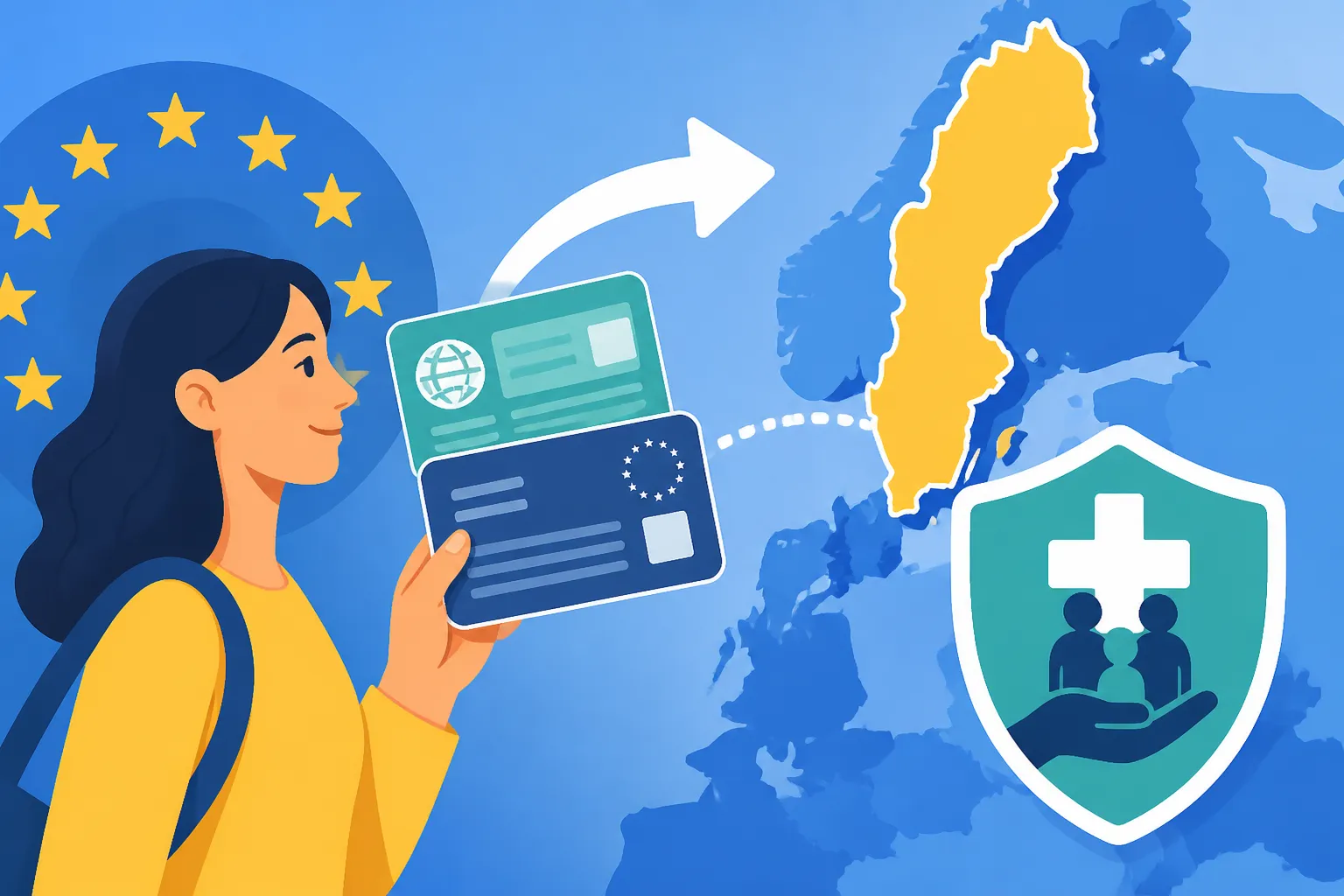
Transferring EU Health Rights to Sweden with an S1 or EHIC
Walking into a Swedish pharmacy or clinic and being asked for a personnummer you do not have yet is the ultimate expat initiation ritual. I spent my first four months in Stockholm carrying a tattered folder of paper documents just to prove I had the right to see a doctor without paying thousands of kronor. This guide solves the confusion by explaining how to use your EU health rights through the S1 form or EHIC to navigate the system smoothly.
Understanding the Foundation of EU Health Rights in Sweden
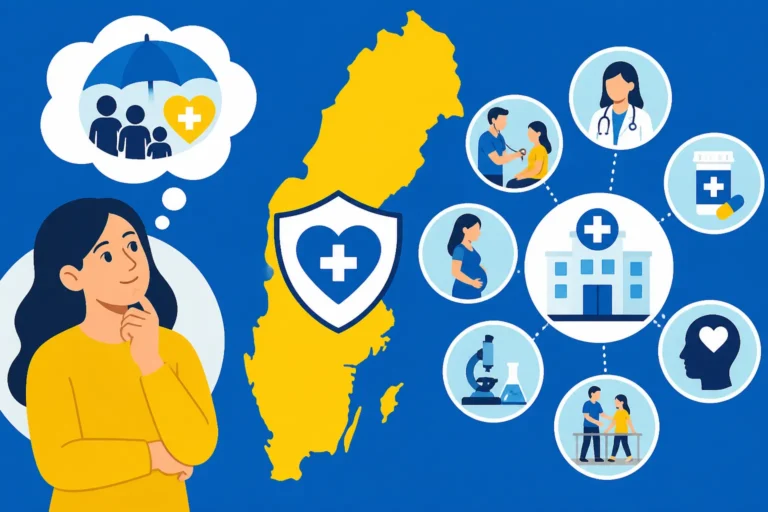
The Swedish healthcare system is world-class, but it is built almost entirely around the national identification number. For those of us moving from within the European Union, the European Economic Area, or Switzerland, the transition should be seamless in theory. The principle of mutual healthcare coverage ensures that as an EU citizen, you should not be treated differently than a local. However, the administrative reality is that Sweden’s "system says no" attitude can be a major hurdle if you do not have your paperwork in order before you arrive at the reception desk of a local clinic.
The primary mechanism for this mutual care is the coordination between national social security offices. When you move to Sweden, you are essentially asking the Swedish social security agency, Försäkringskassan, to take over the responsibility of your health coverage, or at least to recognize that your home country is still footing the bill. This is where Healthcare in Sweden for Foreign Residents: The Complete System Guide (2027) becomes essential reading, as it outlines how these high-level agreements translate into actual doctor visits.
One thing I realized early on is that Swedes assume everyone is already in the system. When you present an EHIC or an S1 form, you might encounter a receptionist who looks a bit puzzled. Do not take this personally; the system is so digitized that paper-based EU rights are becoming a rarity. You must be prepared to advocate for yourself and clearly state that under EU Regulation 883/2004, you are entitled to care under the same conditions as Swedish residents. Validation of your specific frustrations is necessary here: it is exhausting to explain your legal rights when you have a fever, but having the right forms makes that conversation much shorter.
The Principle of Mutual Healthcare Coverage
At its core, EU law dictates that you are entitled to "necessary care" when staying temporarily and "full care" when residing. This sounds simple, but the definition of "necessary" is often up to the treating physician. In my experience, this usually covers anything that cannot wait until you return to your home country. This includes everything from a sudden infection to chronic condition management that requires regular monitoring. Sweden is generally very good at honoring this, provided you can show that you are still covered by your home country’s social security system.
For those moving here permanently, the goal is to transition from being a visitor to being a resident. Until that transition is complete—which can take months due to Skatteverket's processing times—your EU rights are your only lifeline. You are effectively living in a "coverage gap" where you are no longer using your home country’s local clinics but aren't yet fully "folkbokförd" (population registered) in Sweden. Understanding how to bridge this gap is the difference between a stress-free move and a mountain of medical debt.
Why Your EHIC Is Not a Long-Term Solution
The European Health Insurance Card (EHIC) is designed for tourists and short-term visitors. If you are moving to Sweden to live, work, or study for more than a few months, relying solely on the EHIC is a risky strategy. While you can certainly Can EU Citizens Use Swedish Healthcare with an EHIC Card? for emergency situations during your first few weeks, the card does not grant you the right to elective surgeries or long-term primary care management in the same way a personnummer does.
The limitation of the EHIC is that it only covers care that becomes medically necessary during a stay. If you have a pre-existing condition that requires ongoing specialist visits, the EHIC might be rejected for routine check-ups because those are not considered "unforeseen." Furthermore, once you register with Skatteverket and state that you intend to live in Sweden for a year or more, your status changes. At that point, the Swedish authorities expect you to either be covered by the Swedish system through work or to have an S1 form.
Using Your European Health Insurance Card Upon Arrival
When you first step off the plane, your EHIC is your primary shield. If you trip on the cobblestones of Gamla Stan or come down with a severe case of the flu, this card ensures you pay the same "patientavgift" (patient fee) as a Swede. Without it, you could be charged the full "uninsured" cost of the visit, which can easily exceed 3,000 SEK for a simple consultation. I always tell new arrivals to keep a physical copy and a photo of the card on their phone, as losing the physical card can lead to a bureaucratic nightmare when trying to claim a refund later.
It is also important to note that the EHIC is only valid if you are not yet a resident of Sweden. The moment you are issued a personnummer, your EHIC from your home country effectively becomes invalid for use within Sweden, as you are now part of the Swedish social security net. During that middle period, Using Your EHIC for Care While Settling Into Sweden is a vital strategy, but you must be aware of the "necessity" clause that doctors use to determine if they can treat you under the card.
What the EHIC Covers and What It Does Not
The EHIC covers "medically necessary state-provided healthcare." In Sweden, this means you can access the public Vårdcentral (health center) and Akutmottagning (emergency room). You will pay the standard regional fee, which is usually between 200 and 400 SEK depending on where you are. What it does not cover is private healthcare. If you accidentally walk into a fully private clinic that doesn't have a contract with the region, the EHIC is worthless.
Crucially, the EHIC does not cover medical repatriation. If you are seriously ill and want to be flown back to your home country, the EHIC will not pay for that. This is why many expats choose to supplement their initial move with a policy from SafetyWing, which can handle the travel-specific medical risks that the EU's reciprocal agreements ignore. Having that extra layer of protection during the move provides peace of mind while you are waiting for the Swedish bureaucracy to process your residency.
Limitations for Permanent Residents
Once you have moved your "center of interest" to Sweden—meaning you have a job here, a long-term rental, and have applied for residency—the EHIC begins to lose its legal standing. If you are a worker, you are generally covered by the Swedish system from day one of your employment. If you are not working (perhaps you are a trailing spouse or a retiree), the Swedish authorities will look for either an S1 form or proof of comprehensive private health insurance.
Many expats struggle because they assumed the EHIC would cover them indefinitely while they looked for work. If your application for a personnummer is rejected because you lack "comprehensive sickness insurance," the EHIC will not satisfy that requirement. In these cases, looking into Comprehensive Sickness Insurance and the Maintenance Requirement in Sweden is critical to ensure your residency application isn't dead on arrival. For those in this specific limbo, a policy from Cigna Global is often used to meet the strict requirements set by the Swedish Tax Agency.
The S1 Form: Your Key to Full Healthcare Integration
The S1 form is the "golden ticket" for EU citizens moving to Sweden who are not immediately entering the Swedish workforce but have health rights in another EU country. This typically applies to state pensioners, posted workers (sent by an employer in another EU country), or the dependents of someone working in another EU country. The S1 form essentially tells Sweden: "This person is living in your country, but we (the home country) will reimburse you for their healthcare costs."
Getting an S1 form requires you to contact the health insurance authority in the country where you were last insured. You must do this before you leave, as it can be much harder to coordinate once you are already in Sweden. Once you have the form, you don't just keep it in your drawer; you must register it. This is a critical step in Registering with Försäkringskassan: When and Why You Need To because until the form is in their system, the local clinics won't see you as a fully covered resident.
Who Qualifies for an S1 Form?
The S1 is not for everyone. If you are moving to Sweden to take up a local job, you do not need an S1; you will be covered by the Swedish system through your employment and taxes. The S1 is specifically for those whose social security "attachment" remains in another country. Pensioners are the most common group. If you receive a state pension from Germany, for example, but move to a cottage in Småland, the S1 ensures you get full access to the Swedish health system while Germany pays the bills.
Another group is "posted workers." If your French company sends you to Stockholm for two years but keeps you on a French payroll, you remain in the French social security system. You will use an S1 to access care in Sweden. This form is also vital for the family members of someone working in another EU country. If you live in Sweden while your spouse works in Denmark (a common scenario in the Øresund region), the S1 form is how you maintain your health rights in Sweden.
How to Register Your S1 with Försäkringskassan
Once you arrive in Sweden with your S1 form, you must send it to Försäkringskassan. They will process it and issue a document (or update their internal system) that confirms your right to healthcare. This process can take several weeks, so do not wait until you are sick to start it. When you eventually visit a doctor, they will look into the national database, see your "EU-care" status, and treat you exactly like a local.
The beauty of the S1 is that it gives you "full" care, not just "necessary" care. This means you have access to the same specialist referrals, dental subsidies (for children), and long-term care as any Swede. It also allows you to benefit from The Högkostnadsskydd Explained: Sweden's Healthcare Cost Ceiling and Frikort, which caps the amount you pay for healthcare and prescriptions annually. Without the S1 or a personnummer, you might find yourself paying full price for every single prescription, which adds up quickly if you have a chronic condition.
| Feature | EHIC | S1 Form | Personnummer (Folkbokförd) |
|---|---|---|---|
| Intended User | Tourists / Short-term visitors | Pensioners / Posted workers | Long-term residents / Workers |
| Scope of Care | Medically necessary care only | Full healthcare rights | Full healthcare rights |
| Registration | None required (show at clinic) | Must register with Försäkringskassan | Automatic via Skatteverket |
| Duration | Valid until expiry (usually 2-5 years) | Permanent as long as status holds | Permanent as long as resident |
| Cost | Local patient fee only | Local patient fee only | Local patient fee only |
Navigating the Swedish System as a New Resident
Once your paperwork is submitted, you are in the "waiting room" of Swedish life. This is when you should begin Registering with a Vårdcentral: Your Guide to Primary Care in Sweden. Even without your final personnummer, many clinics will allow you to register using a "reserve number" if you can prove your EU rights with an EHIC or an S1 acknowledgment. Finding a clinic that is convenient for your home or work is the first step toward feeling settled.
You also need to understand that healthcare in Sweden is decentralized. There are 21 different regions, and while the rules are mostly the same, the fees and the digital platforms can vary. If you are in Stockholm, you will use the "Alltid Öppet" app; if you are in Skåne, the "Vård i Skåne" app. Regardless of the region, the 1177.se portal is your central hub for information, though you will need BankID to access its most useful features.
Getting Your Personnummer: The Gateway to Swedish Healthcare
The personnummer is the holy grail of Swedish life. It is the key that unlocks everything from gym memberships to BankID. For healthcare, it simplifies everything. Once you have it, you no longer need to carry your EHIC or S1 papers. Your coverage is confirmed the moment the receptionist types your 12-digit number into their computer. This is why Getting Your Personnummer: The Gateway to Swedish Healthcare is usually the first priority for any expat.
However, the wait for a personnummer can currently range from a few weeks to several months. During this time, the S1 form acts as your legal bridge. If Skatteverket asks for proof of health insurance to grant you the personnummer, the S1 form is accepted as "comprehensive sickness insurance." If you do not qualify for an S1, this is where you might need to purchase a private policy from a provider like Cigna Global to satisfy the tax agency’s requirements.
Understanding Patient Fees Across Sweden's 21 Regions
Even with your EU rights transferred, healthcare in Sweden is not entirely free. You will pay a "patientavgift" for every visit. The price varies: a GP visit in Stockholm might be 250 SEK, while a specialist visit might be 400 SEK. If you miss an appointment, you will be charged a "no-show" fee, which is often double the regular price—even if the visit was supposed to be free (like for children).
The good news is the high-cost protection system. Once you have paid a certain amount in fees (usually around 1,400 SEK in a 12-month period), you receive a "frikort" and all subsequent visits are free for the remainder of that year. To ensure your payments are tracked before you have a personnummer, you must ask the clinic to record your payments manually or on a physical "högkostnadskort." You can learn more about this in Understanding Patient Fees (Patientavgift) Across Sweden's 21 Regions.
Bridging the Gap: Private Insurance and Supplementary Coverage
Many EU expats are surprised to learn that private health insurance is a growing trend in Sweden. While the public system is excellent for emergencies and major illnesses, the wait times for non-urgent specialist care can be long. In fact, the "Vårdgaranti" (care guarantee) says you should see a specialist within 90 days, but this is not always met. This is where Private Health Insurance in Sweden: When Sjukvårdsförsäkring Is Worth It becomes a relevant discussion.
If you have a pre-existing condition and cannot afford a three-month gap in specialist oversight, or if you simply want the comfort of faster access, private insurance is a smart supplement. It does not replace your EU rights; rather, it sits on top of them. For the initial move, SafetyWing is excellent for covering the unexpected "travel" side of health risks, while Cigna Global offers more robust, long-term plans that include things like vision, dental, and faster specialist access.
Why Private Health Insurance in Sweden Might Be Necessary
The Swedish system is triage-based. If you are having a heart attack, you will receive the best care in the world instantly. If you have a nagging knee injury that makes it hard to exercise but isn't life-threatening, you might wait months for an MRI. Private insurance allows you to bypass these queues by going to private clinics that do not take public patients.
For many of us, the "wait and see" approach of Swedish doctors can be frustrating. There is a cultural tendency to recommend rest and paracetamol (Alvedon) before jumping to tests or antibiotics. If you are used to a more proactive medical culture, having a policy from Cigna Global can give you the option to seek a second opinion or a specialist consultation much faster than the public system might allow.
Comparing Options for Expats
When looking at private options, you should distinguish between "travel-medical" and "international health insurance." SafetyWing is tailored for digital nomads and those in transition. It is affordable and covers emergencies, making it perfect for that first month while you are waiting for your S1 to be processed. It’s the "safety net" for when the bureaucracy gets stuck.
For long-term residents who want a higher standard of service, Cigna Global provides comprehensive coverage that looks more like what you might have had in the US or UK. This includes elective surgeries and private hospital rooms. While the Swedish public system will always be your backbone—especially for major trauma or chronic illness—these private options provide the speed and "customer service" that the public system sometimes lacks.
Practical Scenarios and Common Obstacles
One of the most common issues I see is the "Missing S1" scenario. Someone moves to Sweden, applies for a personnummer, and gets a rejection letter from Skatteverket because they didn't provide proof of health insurance. They thought their EHIC was enough. If you find yourself in this spot, you have two choices: go back and get the S1 from your home country or buy a private policy that meets the "comprehensive" criteria.
Another hurdle is the "Reserve Number" confusion. When you visit a clinic without a personnummer, they will issue you a temporary ID in their local system. This number does not follow you if you move to a different region or even a different clinic. This can lead to fragmented medical records. Always ask for a copy of your journal (medical notes) if you are seeing different doctors while in the "reserve number" phase of your expat journey.
Dealing with Chronic Conditions
If you arrive in Sweden with a condition like diabetes or asthma, your first priority should be getting your prescriptions transferred. Swedish pharmacies cannot always fill a foreign prescription directly, even if it is from another EU country (though this is slowly changing). You will likely need to see a Swedish doctor at a Vårdcentral to have your medications entered into the Swedish e-prescription system.
Having your S1 form registered is crucial here because it ensures your medications are covered by The Högkostnadsskydd Explained: Sweden's Healthcare Cost Ceiling and Frikort. Prescription costs are capped at a certain amount per year (around 2,850 SEK), after which they are free. Without your EU rights properly transferred, you will be paying the full market price for every inhaler or insulin pen, which can be a massive financial burden.
The Wait Time Reality
Sweden’s healthcare system is under pressure, and wait times are a frequent topic of conversation at expat meetups. Even with an S1 form and a personnummer, you might wait two weeks for a routine GP appointment and several months for a specialist. This is not a reflection of your status as a foreigner; it is simply the reality of the current system.
To navigate this, I recommend using the digital health apps (like Kry or Min Doktor) for simple issues. These services are integrated into the public system, and if you have your EU rights in order, the cost is the same as a physical visit. They are a great way to get a quick referral or a prescription refill without waiting for a slot at your local Vårdcentral. Understanding the Private Health Insurance in Sweden: When Sjukvårdsförsäkring Is Worth It debate is often about deciding how much you are willing to pay to avoid these wait times.
Healthcare System Disclaimer
The information provided in this guide is for educational and informational purposes only. While every effort has been made to ensure the accuracy of the details regarding EU health rights and Swedish regulations, healthcare laws and administrative procedures at Migrationsverket, Skatteverket, and Försäkringskassan are subject to change. This guide does not constitute legal or professional medical advice. Always consult with the relevant Swedish authorities or a qualified legal professional regarding your specific residency and healthcare status. For medical emergencies in Sweden, always dial 112.