Can EU Citizens Use Swedish Healthcare with an EHIC Card?
Arriving in Sweden as an EU citizen often feels like you have a golden ticket to a seamless life, yet the reality of accessing a doctor can be a rude awakening. I remember standing in a chilly clinic lobby with a fever, clutching my blue card while the receptionist asked for a number I didn't have yet. This guide explains exactly how to bridge the gap between your European Health Insurance Card and full residency.
Understanding the Role of EHIC in the Swedish System
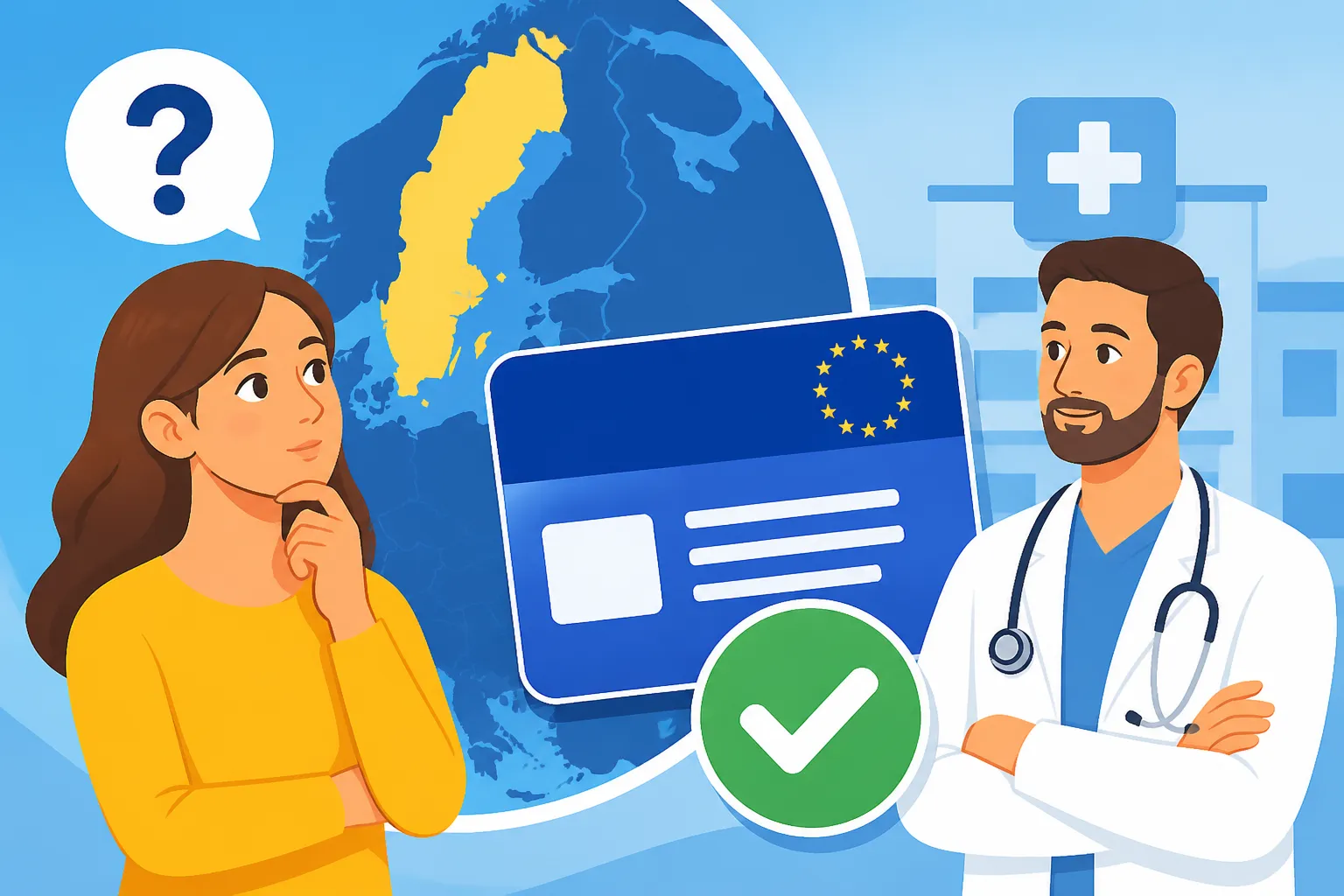
The European Health Insurance Card (EHIC) is designed to ensure that EU, EEA, and Swiss citizens can access state-provided healthcare during a temporary stay in Sweden. The fundamental principle is that you should be treated under the same conditions and at the same cost as a Swedish resident. However, the term temporary is the pivot point where many expats find themselves in administrative limbo. While the EHIC is a lifesaver for tourists, its application for someone moving here permanently is more nuanced.
In the eyes of the Swedish authorities, the EHIC is your primary safety net from the moment you cross the border until the day you are officially registered in the population register. This period can last anywhere from a few weeks to several months depending on the current backlog at Skatteverket. During this window, Using Your EHIC for Care While Settling Into Sweden is your only legal way to access subsidized care without paying the full "uninsured" rate, which can be astronomically high for even basic consultations.
What is Considered Necessary Care
The EHIC does not grant you a "free pass" for every possible medical procedure. It specifically covers what is known as necessary care. This is defined as medical treatment that cannot wait until you return to your home country. For example, if you develop an acute infection, break a bone, or require immediate stitches, the EHIC is your valid form of insurance. It also covers oxygen therapy and kidney dialysis, provided you arrange these in advance with the Swedish provider.
What it does not cover is planned care. If you move to Sweden specifically to have a knee surgery you were already waiting for in your home country, the EHIC will not foot the bill. For that, you would typically need an S2 form from your home health authority. Understanding this distinction is vital because if a Swedish doctor deems your visit "elective" or "non-urgent," you might be asked to pay the full cost upfront.
The Limitation of Habitual Residence
A common mistake among newcomers is assuming the EHIC lasts forever. Once you have established habitual residence in Sweden—meaning you have moved here with the intent to stay for at least a year—you are technically no longer a "visitor." At this point, the Swedish system expects you to transition into the national insurance framework. This transition is triggered by Getting Your Personnummer: The Gateway to Swedish Healthcare.
If you continue to use your EHIC long after you should have registered with the Swedish Social Insurance Agency (Försäkringskassan), you run the risk of your home country's insurance provider refusing to reimburse the Swedish state. This can lead to complicated retroactive billing issues. The EHIC is a bridge, not a permanent foundation, and its validity is often tied to your continued insurance status in your country of origin.
Practical Steps for Accessing Care as an EU Citizen
When you need to see a doctor before you have your personal identity number, the process is slightly different from what your Swedish neighbors experience. You cannot simply use the digital login systems that most locals rely on. Instead, you must navigate the system manually, which requires a bit more patience and paperwork. Your first point of contact should almost always be a local primary care clinic.
In Sweden, these clinics are called Vårdcentraler. Every neighborhood has one, and as an EU citizen, you have the right to choose which one you visit. However, without a Personnummer, you cannot easily register through a website. You will need to physically go to the clinic or call them to book an "unregistered" appointment. When doing so, mention immediately that you are an EU citizen with a valid EHIC.
Visiting a Vårdcentral Without a Personnummer
Upon arrival at the clinic, you will be asked for identification. A passport or a national ID card is essential, alongside your physical EHIC card. The staff will take a copy of your card and have you fill out a form declaring that you are not yet registered in Sweden. This documentation is what allows the clinic to bill the Swedish state, which in turn bills your home country.
It is worth noting that Registering with a Vårdcentral: Your Guide to Primary Care in Sweden is something you should look into even before you are sick. Knowing where your nearest clinic is located and confirming they are familiar with handling EHIC patients can save you significant stress during a medical emergency. Some smaller, private clinics that operate under regional contracts might be less experienced with the "blue card" protocol, so sticking to larger, public Vårdcentraler is often a safer bet for a smooth administrative experience.
Costs and Patient Fees
One of the biggest reliefs for EU citizens is that you will only pay the standard patient fee (patientavgift) that Swedes pay. This fee varies by region but typically ranges from 200 SEK to 400 SEK for a GP visit. Without the EHIC, that same visit could cost you 2,000 SEK or more. You are also entitled to the high-cost protection (högkostnadsskydd), which caps your annual spending on healthcare.
| Type of Care | With Valid EHIC | Without EHIC (Non-Resident) |
|---|---|---|
| GP Consultation | 200 – 300 SEK | 2,000+ SEK |
| Specialist Visit | 350 – 400 SEK | 3,500+ SEK |
| Emergency Room | 400 SEK | 5,000+ SEK |
| Hospital Stay | ~130 SEK/day | 10,000+ SEK/day |
| Prescriptions | Subsidized rate | Full Market Price |
Navigating the Transition Period
The months spent waiting for your Swedish ID number can be fraught with anxiety, especially if you have a chronic condition that requires regular medication or monitoring. While the EHIC covers "necessary" care, the definition of what is necessary for a chronic patient can be a grey area. If you require a repeat prescription for asthma or high blood pressure, most Swedish doctors will treat this as "necessary," but they may only give you a short-term supply until you are fully integrated into the system.
For those who find the uncertainty of the Swedish public system too daunting during this gap, private alternatives like SafetyWing can provide a much-needed layer of security. SafetyWing is particularly popular with digital nomads and those who are moving between countries, as it offers flexible medical coverage that acts as a buffer while you wait for your official Swedish residency to kick in.
The Role of Försäkringskassan
Once you have your Personnummer, your next critical step is Registering with Försäkringskassan: When and Why You Need To. This is the agency that manages social insurance, including your right to Swedish healthcare benefits. Even though you are an EU citizen, your rights are not automatically "active" in the Swedish database until you have notified them of your move.
During this registration process, they may ask for proof that you are no longer covered by your home country's health system. This usually involves an S1 form if you are a retiree or a posted worker. For most employees, simply showing a Swedish work contract is enough. Until this registration is complete, keep your EHIC in your wallet; it remains your primary proof of insurance in the interim.
Using 1177 Vårdguiden
If you are unsure whether your condition qualifies as "necessary care" under EHIC rules, your best resource is the national health line. By calling 1177, you can speak with a registered nurse who can provide advice in English. They can tell you whether you should go to an emergency room, a walk-in clinic (Närakut), or wait for a standard appointment.
When calling 1177 Vårdguiden: Navigating Sweden's National Health Advice Line and Portal, be clear about your status as an EU citizen. They can help you find a Vårdcentral that has experience with non-registered residents. This service is free to call and is the backbone of the Swedish medical triage system, providing a realistic assessment of how the system will view your specific medical need.
Long-Term Coverage and Private Options
For many expats, the Swedish public system's long wait times for specialists can be a shock, even after they are fully registered. While Healthcare in Sweden for Foreign Residents: The Complete System Guide (2027) details a system that is high-quality and affordable, it is not always fast. This is why some EU citizens choose to maintain or take out private health insurance.
A comprehensive plan from a provider like Cigna Global can offer much more than what the EHIC or the basic Swedish system provides. Cigna Global is often used by expats who want the ability to choose their doctors, access private hospitals with shorter waiting lists, and ensure they have global coverage that travels with them when they visit home or go on holiday. This is especially relevant if you are used to a different pace of care or if you have a complex medical history that requires consistent specialist access.
When Private Insurance is Necessary
While the EHIC is sufficient for basic safety, there are specific scenarios where it falls short. If you require medical evacuation, certain types of dental emergencies, or private room accommodations in a hospital, the public system (and by extension the EHIC) will not cover these costs. If you are an EU citizen who hasn't yet started working in Sweden, you are technically required to have "comprehensive sickness insurance" to be granted a right of residence in some cases.
For those navigating these legal requirements, Health Insurance Requirements for Non-EU Residence Permit Holders in Sweden offers a good comparison, even though the rules for EU citizens are more relaxed. The principle remains: you must prove you won't be a burden on the Swedish social system before you are fully contributing to it. In many cases, a private policy is the easiest way to satisfy Skatteverket that you are properly covered during your first year.
The S1 Form for Specific EU Groups
If you are an EU citizen who is a pensioner, or if you are still employed by a company in your home country (a "posted worker"), you should look into the S1 form rather than relying solely on the EHIC. The S1 form allows you to register for full Swedish healthcare benefits while your home country continues to pay for your coverage.
This is a much more robust solution than the EHIC because it grants you full access to planned care, not just necessary care. Transferring EU Health Rights to Sweden with an S1 or EHIC is a critical read for anyone in these categories. It ensures that you aren't stuck in a "tourist" category when you are actually a long-term resident with specific rights under EU coordination laws.
Summary of Actionable Advice for EU Newcomers
To ensure you aren't left with a massive bill or denied care, follow these steps as soon as you land in Sweden. First, verify the expiration date on your EHIC. If it expires in three months and your Personnummer takes six, you will have a dangerous gap. Second, find your local Vårdcentral and save their number.
Keep a folder (digital or physical) with your passport, your EHIC, and your Swedish housing contract. When you do go for care, be firm but polite about your rights. Sometimes, a newer receptionist might not be fully aware of the EHIC protocols for residents-in-waiting. Being able to explain that you are an EU citizen awaiting a Personnummer and that you are seeking "necessary care" will usually clear the path.
If you are worried about the transition, consider a short-term policy from SafetyWing or a long-term expat plan from Cigna Global. These can act as your primary insurance so you never have to worry about the specific definitions of "necessary care" or wait for a government clerk to process your ID. For more information on your rights, Understanding Patient Fees (Patientavgift) Across Sweden's 21 Regions will help you budget for the small out-of-pocket costs you will still encounter. Finally, remember that once you are working and registered, you can explore Private Health Insurance in Sweden: When Sjukvårdsförsäkring Is Worth It to see if you want to skip the public queues permanently.
Disclaimer on Health Information
This guide is intended for informational purposes only and does not constitute legal or medical advice. Healthcare regulations in Sweden and EU coordination rules can change frequently. Always verify your current insurance status with your home country’s health authority and consult the official Swedish Migrationsverket or Försäkringskassan websites for the most up-to-date requirements.