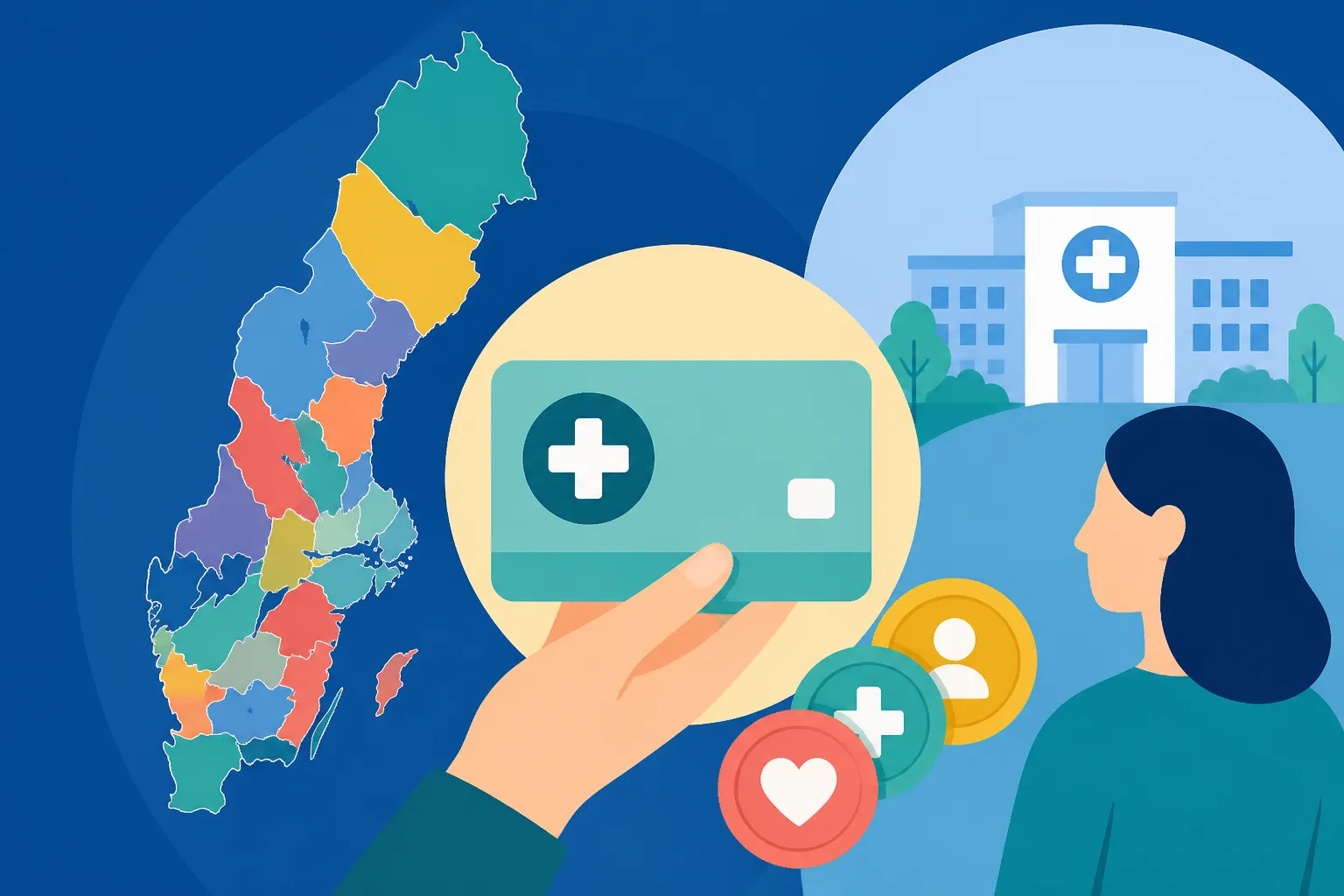
Understanding Patient Fees (Patientavgift) Across Sweden’s 21 Regions
Trying to figure out why your neighbor in Malmö pays less for a doctor’s visit than you do in Stockholm is a classic expat headache that no one warns you about. I remember sitting in a waiting room in Uppsala, clutching my residence permit and wondering if I had enough in my account for a simple consultation. This guide solves the mystery of the patientavgift by breaking down exactly what you will pay across Sweden's 21 regions.
The Foundations of the Swedish Patientavgift System
To understand how healthcare costs work here, you first have to accept that Sweden is not one giant healthcare monolith. Instead, it is divided into 21 distinct regions, each with its own political leadership and its own budget. This decentralization is why a visit to a primary care doctor, or a Vårdcentral, can cost 200 SEK in one city and 300 SEK just an hour’s train ride away. The patientavgift, or patient fee, is the out-of-pocket cost you pay at the point of service.
While the Swedish healthcare system is primarily funded through municipal and regional taxes, these small fees remain in place to help manage the flow of patients and ensure that the system is not overwhelmed by non-essential visits. It is a concept that often surprises newcomers who expect "free" healthcare. In reality, it is highly subsidized care with a predictable price tag. If you are just starting your journey, understanding Healthcare in Sweden for Foreign Residents: The Complete System Guide (2027) is the first step toward navigating these costs without any nasty surprises.
The fees you encounter are generally divided into three categories: primary care, specialist care, and emergency care. Primary care refers to your local health center where you see a General Practitioner (GP). Specialist care involves doctors who focus on specific fields, like dermatology or cardiology, and usually requires a referral. Emergency care is handled at the hospital (Akutmottagning). Each of these has a different price point, and the variation between regions can be significant. For instance, some regions might offer a discount if you choose a digital consultation through an app, while others maintain a flat fee regardless of the medium.
Primary Care Fees Across the Major Regions
When you first move here, your primary point of contact will be the Vårdcentral. You will need to learn about Registering with a Vårdcentral: Your Guide to Primary Care in Sweden early on, as this determines where you will pay your baseline fees. In Region Stockholm, as of 2026, a standard visit to a doctor at a Vårdcentral typically costs around 250 SEK. If you see a nurse instead of a doctor, that fee usually drops significantly, often to around 150 SEK or even 100 SEK in some cases.
In the south, Region Skåne often has slightly lower thresholds, sometimes hovering around 200 SEK for a GP visit. Meanwhile, in Region Västra Götaland (which includes Gothenburg), the fees are comparable to Stockholm but often feature different rules for "drop-in" visits versus scheduled appointments. It is a common frustration to find that a "quick" 10-minute check-up costs the same as a 30-minute diagnostic session. This is because the patientavgift is a flat administrative fee, not an hourly rate.
For those wondering What Does a GP Visit Cost at a Swedish Vårdcentral? in more rural areas, the prices are generally stable across the region, regardless of whether the clinic is in a major hub or a small village. However, the travel costs to get to those clinics can add up. Some regions in northern Sweden, like Norrbotten or Västerbotten, have specific provisions for long-distance travel for medical care, though the patient fee itself remains the standard regional rate. It is also worth noting that many regions now offer free primary care for those over the age of 85 and for children and teenagers under the age of 20.
Specialist Care and the Referral System
Moving from primary care to a specialist is where the prices begin to climb. In almost every region, seeing a specialist is more expensive than seeing a GP. In Stockholm, a specialist visit can cost up to 400 SEK. However, there is a catch: if you have a "remiss" or referral from your GP, the cost might be lower in certain regions than if you were to seek out a specialist yourself via an "egenremiss" (self-referral).
I found out the hard way that walking into a specialist clinic without a referral not only takes longer but can sometimes result in a higher administrative fee. Understanding How the Referral (Remiss) System Works for Seeing a Specialist in Sweden is crucial if you want to keep your costs down. The specialist fee applies whether you are seeing a psychiatrist, an orthopedic surgeon, or a gynecologist. If the clinic is part of the regional healthcare plan, the fee is regulated. If you choose a private clinic that does not have a contract with the region, you could be looking at the full market price, which is significantly higher.
In regions like Uppsala or Östergötland, the specialist fees are often set at a flat rate of around 350 SEK. If you require multiple tests or follow-up visits within a short period, these fees can accumulate quickly. This is where many expats start looking into supplemental options. For those who aren't yet fully covered by the Swedish state system or who want to avoid the regional queues, services like Cigna Global can provide an extra layer of security. Similarly, for digital nomads or those in Sweden on shorter permits, SafetyWing offers a flexible way to manage health costs that might fall outside the standard patientavgift structure.
Emergency Care and Inpatient Hospital Stays
No one wants to end up at the "Akuten" (Emergency Room), but if you do, the fees are a different beast entirely. Emergency room visits are the most expensive form of outpatient care. In most regions, a visit to the emergency department at a hospital will cost between 400 SEK and 600 SEK. This fee is meant to discourage people from using the ER for minor issues that could be handled by a Vårdcentral or an urgent care clinic (Närakut).
If your condition is serious enough that you are admitted to the hospital, the fee structure shifts from a per-visit charge to a per-day charge. This is known as "slutenvård." Currently, the daily fee for being hospitalized is capped at 130 SEK per day across most of Sweden. This covers your bed, your meals, and all the medical care you receive while in the ward. Compared to many other countries, this is incredibly affordable, but it can still be a shock if you are staying for a week or more.
There are exceptions, of course. For example, if you are admitted for psychiatric care or if you are a pregnant person in labor, the fees might be waived or adjusted. It is also important to note that if you are transported by ambulance, some regions charge a fee for the transport (often around 150 SEK), while others include it in the emergency room fee. If you are worried about these immediate out-of-pocket costs while you are still settling in, Using Your EHIC for Care While Settling Into Sweden can be a lifesaver for EU citizens, ensuring you only pay the local patient rate rather than the "uninsured" rate.
The High Cost Ceiling: Högkostnadsskydd
The best part of the Swedish system, and the thing that finally let me sleep at night, is the Högkostnadsskydd. This is a national "High-Cost Protection" scheme that ensures no one has to pay an infinite amount for healthcare in a single year. Regardless of which region you live in, there is a maximum amount you will pay for patient fees within a 12-month period. Once you hit that limit, you get a "Frikort" (Free Card), and all subsequent visits for the remainder of that 12-month period are free.
As of 2026, this ceiling is generally set around 1,400 SEK. This means that once you have spent 1,400 SEK on doctor visits, specialist appointments, and physical therapy, you stop paying. The system is digital in most regions; the receptionists can see in their computer system how much you have paid and will tell you when you have reached the limit. For a deep dive into the mechanics, you should check out The Högkostnadsskydd Explained: Sweden's Healthcare Cost Ceiling and Frikort.
It is important to remember that the 12-month period starts from the date of your first paid appointment—it is not based on the calendar year. This protection applies to all public healthcare and many private providers who are contracted by the region. However, it does not cover the daily fees for hospital stays (the 130 SEK per day mentioned earlier) or dental care, which has its own separate cost protection system. To see how this works in practice, read about How the Frikort Works Once You Reach the High-Cost Ceiling.
Regional Price Comparison Table
To give you a clearer picture, here is a breakdown of typical patient fees in several key regions. Please note that these are representative of standard fees for 2026 and can vary slightly based on the specific type of clinic or consultation.
| Region | Vårdcentral (GP) Fee | Specialist Fee | Emergency (ER) Fee |
|---|---|---|---|
| Stockholm | 250 SEK | 400 SEK | 400 SEK |
| Västra Götaland | 200 SEK | 300 SEK | 400 SEK |
| Skåne | 200 SEK | 350 SEK | 400 SEK |
| Uppsala | 220 SEK | 350 SEK | 400 SEK |
| Östergötland | 250 SEK | 350 SEK | 400 SEK |
| Västerbotten | 300 SEK | 350 SEK | 450 SEK |
| Dalarna | 250 SEK | 350 SEK | 400 SEK |
As you can see, while there are differences, the costs generally stay within a similar range. The most significant variation often comes down to how the region handles digital visits or nurse-led clinics. In some regions, a digital meeting with a doctor through a regional app might only cost 100 SEK, whereas the same meeting in a different region might cost the full 250 SEK.
Fees for Children, Seniors, and Vulnerable Groups
Sweden takes a very protective stance toward children and the elderly. In almost every region, healthcare is completely free for children and young adults under the age of 20. This includes GP visits, specialist care, and even emergency room visits. This is a massive relief for parents and one of the reasons why Family and Children's Healthcare in Sweden: BVC, Mödravård, and Beyond is such a highly-regarded part of the system.
For seniors, the rules vary more by region. Many regions have introduced free primary care for those over 85, and some are gradually lowering that age to 80 or 75. Additionally, certain types of healthcare are free for everyone, regardless of age or region. This typically includes care for infectious diseases that fall under the Communicable Diseases Act (Smittskyddslagen), such as COVID-19 or certain STIs.
If you are a newcomer waiting for your documentation, you might be asking, Can I See a Doctor in Sweden Before I Get My Personnummer?. The answer is yes, but you may be charged a higher "non-resident" fee unless you are from the EU/EEA or have adequate insurance. This is where SafetyWing or Cigna Global can be particularly useful, as they can bridge the gap while you wait for the Swedish Tax Agency to process your registration.
Late Cancellations and Missed Appointment Fees
This is the one area where the Swedish system is unforgiving. If you miss an appointment or cancel it less than 24 hours (sometimes 48 hours depending on the region) in advance, you will be charged. And here is the kicker: you will often be charged even if the visit was supposed to be free (like for a child) or if you have a Frikort.
The missed appointment fee is usually higher than the standard patientavgift. In Stockholm, for example, a missed appointment can cost 400 SEK plus an administrative fee. The logic is that you have taken a slot that someone else could have used. Always make sure to cancel via 1177 Vårdguiden: Navigating Sweden's National Health Advice Line and Portal if you can't make it.
This rule applies across all 21 regions. Even if you are sick with a different ailment and can't come in, the 24-hour rule usually stands unless you can provide a very compelling reason. It is one of those small cultural "rules of the road" that you learn quickly after your first invoice arrives in the mail. If you are struggling with the digital tools, you can learn How Do I Log Into 1177.se with BankID? to manage your appointments more effectively.
Payment Methods and Invoicing
Sweden is famously a cashless society, and this extends to the doctor's office. You will almost never be able to pay with physical bills or coins at a Vårdcentral or hospital. Most clinics prefer that you pay by credit or debit card at the reception desk before or after your appointment.
If you don't want to pay on the spot, or if the reception is closed, they will send an invoice (faktura) to your registered home address. Be aware that most regions add an administrative fee (expeditionsavgift) of around 25-50 SEK to every paper invoice they send. If you have a digital mailbox like Kivra, the invoice will often show up there instead, which is a great way to avoid the extra paper fee and keep track of your spending toward the high-cost ceiling.
For those who are just arriving and don't have a Swedish bank account yet, paying these invoices can be a bit tricky. You might find it helpful to read up on How to Register with a Vårdcentral After Getting Your Personnummer to ensure your contact details are correct in the system, preventing lost invoices and late fees. If you are using international insurance like Cigna Global, you will usually pay the fee yourself first and then claim it back from the insurer, so keep every receipt you are given.
Private Healthcare vs. Public Patient Fees
It is a common misconception that private healthcare in Sweden is only for the wealthy. In reality, many private Vårdcentraler are "region-connected," meaning they have a contract with the local government. If you go to one of these private clinics, you pay exactly the same patientavgift as you would at a public clinic, and the cost counts toward your high-cost ceiling.
However, there is a separate tier of "fully private" healthcare. These are clinics that do not take regional funding. At these locations, a standard consultation could cost 1,500 SEK or more, and this will not count toward your Frikort. People usually use these clinics to skip waiting times or to see a specific world-class specialist. If your employer provides Private Health Insurance in Sweden: When Sjukvårdsförsäkring Is Worth It, you will likely be directed to these types of clinics.
For most expats, the regional-connected private clinics (like those run by Capio or Praktikertjänst) are the sweet spot. You get the efficiency of a private company but the regulated pricing of the Swedish state. This is especially useful in crowded areas, which is why many ask, Which Vårdcentral Should I Choose If I Just Moved to Stockholm?. By choosing a well-rated private clinic that is part of the "Vårdval" (Choice of Care) system, you get the best of both worlds.
Managing Your Healthcare Budget in Sweden
Navigating the patientavgift across 21 regions doesn't have to be a source of stress. Once you understand that there is a hard limit on what you can spend each year, the individual fees of 200 or 300 SEK become much easier to manage. The system is designed to be equitable, ensuring that those with chronic conditions or high medical needs are protected from financial ruin.
If you are planning your move or have just arrived, take the time to look up the specific "Patientavgifter" page for your region. Whether you are in the far north or the sunny south, the principles remain the same: pay your co-pay, track your progress toward the Frikort, and never, ever miss an appointment without calling ahead. If you have international coverage like SafetyWing, you have that extra safety net while you integrate into this system. Swedish healthcare may have its administrative quirks, but once you are in the system, it provides some of the most reliable and affordable care in the world.
Disclaimer
This guide is for informational purposes only and represents the healthcare fee structures in Sweden as of 2026. Patient fees and regional regulations are subject to change by the respective regional councils. Always consult the official 1177.se website or your local regional authority for the most current pricing and policy information. This content does not constitute professional medical or legal advice.