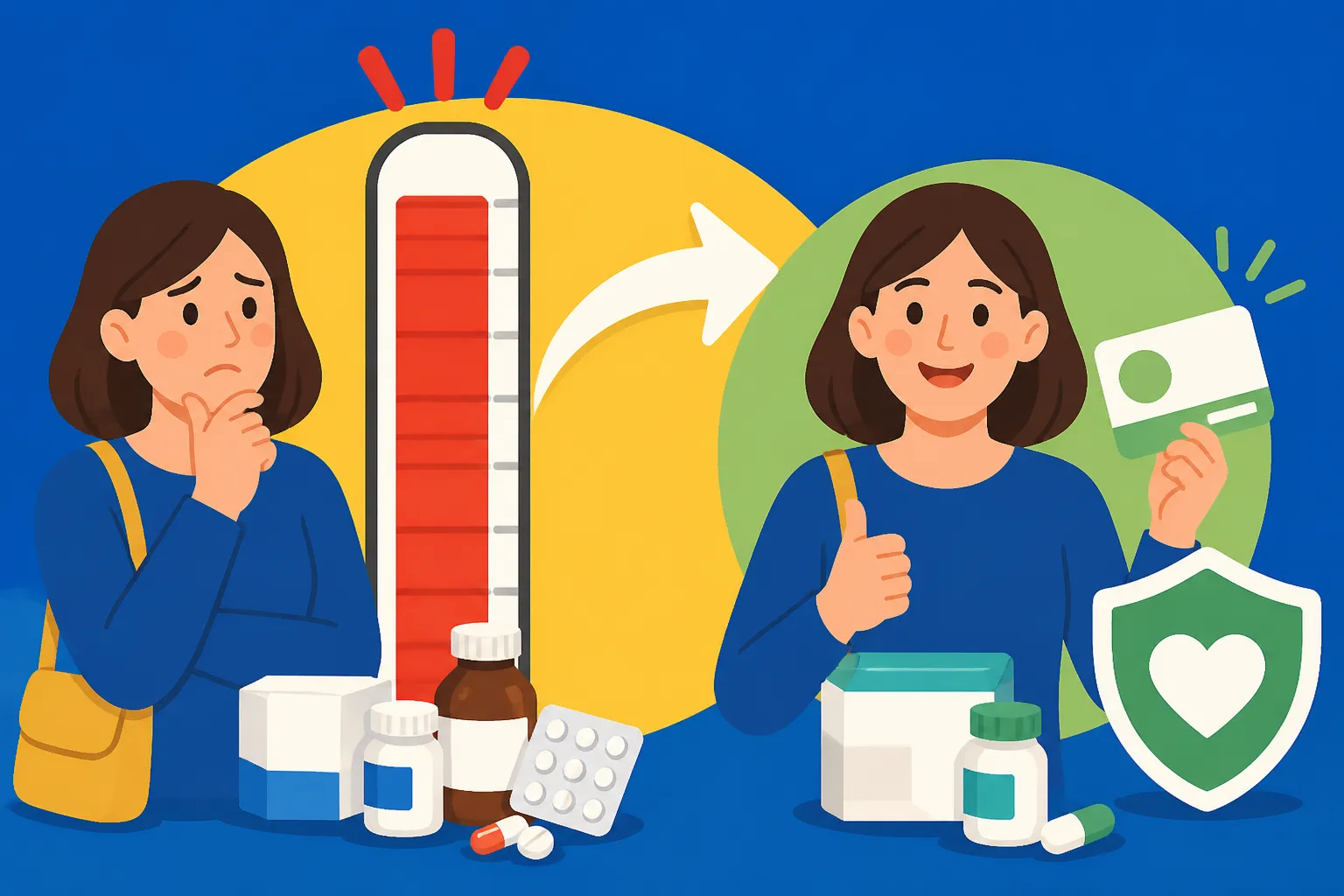
How the Frikort Works Once You Reach the High-Cost Ceiling
When moving to Sweden, many foreigners assume that the universal, tax-funded health system means you will never open your wallet at a doctor’s clinic or pharmacy. The reality hits during your first visit to a clinic, where you are charged a out-of-pocket fee just to step into the consultation room. Navigating these fees while managing a chronic illness or undergoing frequent treatments can feel overwhelming, but Sweden balances these costs with a built-in safety net. This guide explains exactly how the high-cost ceiling functions, how your exemption card triggers, and how to navigate the system smoothly so you never pay more than the legally mandated maximum for your medical care.
Decoding Sweden’s Healthcare High-Cost Protection System
Sweden operates a tax-funded health system designed to ensure financial barriers never prevent anyone from accessing necessary care. However, to discourage unnecessary clinic visits and offset administrative costs, adult patients pay a nominal fee for most outpatient appointments and prescriptions. To protect individuals who require frequent medical attention, the government established a mechanism known as högkostnadsskydd (high-cost protection). To understand how this safety net operates across different areas of treatment, check out The Högkostnadsskydd Explained: Sweden’s Healthcare Cost Ceiling and Frikort.
The fundamental principle of high-cost protection is simple: once your cumulative out-of-pocket spending on qualifying medical services reaches a designated threshold within a set timeframe, the state caps your expenses. Beyond that limit, the regional healthcare authority or national pharmacy system covers one hundred percent of your qualifying fees. When you hit this threshold, you receive a frikort (free card or exemption certificate), which grants you free covered care for the remainder of your qualifying period.
Understanding this mechanism is vital for expats, particularly those managing long-term conditions, families with recurring healthcare needs, or anyone undergoing extended diagnostic testing. While the concept sounds straightforward, the execution involves distinct tracking mechanisms, sliding scale discounts, and separate administrative databases depending on whether you are visiting a physician or picking up medication from a pharmacy.
The Philosophy Behind Patient Fees and Cost Caps
Sweden’s healthcare system is decentralized, divided among 21 autonomous regional councils (regioner). Each region retains the right to determine its own specific patient fees for routine visits, specialist consultations, emergency room visits, and missed appointments. Because fees vary across regional borders, a routine GP consultation might cost slightly more in Stockholm than it does in Skåne or Västra Götaland. For a broader breakdown of regional pricing differences, read Understanding Patient Fees (Patientavgift) Across Sweden’s 21 Regions.
Despite these regional pricing discrepancies, the national government enforces a strict uniform limit on the total amount an individual can be required to pay in out-of-pocket medical fees within a twelve-month period. This upper bound guarantees that healthcare costs remain predictable, safe, and equitable regardless of where you reside in Sweden. The fees you pay at public clinics, contracted private practices, and regional health centres all feed into this single protected total.
The philosophy combines personal financial responsibility for minor, infrequent healthcare utilization with collective safety for heavy healthcare consumers. It ensures that patients facing severe diagnoses, chronic illnesses, or complex rehabilitation schedules are never bankrupted by their treatment protocols. Once you pay up to the ceiling, the system steps in fully.
Outpatient Care versus Prescription Medicines: Two Separate Ceilings
A common point of confusion for newcomers in Sweden is the distinction between outpatient healthcare fees and prescription drug costs. These two areas do not share a single financial bucket. Instead, Sweden maintains two completely independent high-cost protection schemes, each with its own separate spending limit, rules, and tracking mechanism.
The first ceiling covers medical consultations and outpatient care. This includes visits to your registered primary care doctor, nurse visits, specialist consultations, physical therapy sessions, and X-ray or diagnostic imaging appointments. Once your combined payments for these services cross the outpatient statutory threshold, you are issued an outpatient frikort.
The second ceiling covers prescription pharmaceuticals dispensed through licensed pharmacies (apotek). This system operates on a staggered, tier-based discount system rather than a flat fee per visit. As your total spend on subsidized medications accumulates, your percentage discount increases until you reach the total prescription cap, at which point your medicines become entirely free for the remainder of your period. For a detailed guide on pharmacy policies, see Prescription Medicines in Sweden: Recept, Refills, and the Cost Cap.
How the Twelve-Month Rolling Window Calculates Your Expenses
Neither of Sweden’s high-cost protection systems runs on a standard calendar year starting January 1st and ending December 31st. Instead, both systems operate on an individualized twelve-month rolling period that begins on the exact date of your first qualifying expense.
For instance, if you pay for your first eligible doctor’s visit on March 14th, your personal twelve-month high-cost cycle begins on March 14th and expires on March 13th of the following year. Every qualifying fee you pay between those two dates accumulates toward your ceiling. If you reach the financial threshold on June 20th, your frikort activates immediately and remains valid through March 13th of the following year.
Once the twelve-month cycle ends, your accumulated spend resets to zero, regardless of whether you reached the ceiling or held a frikort. Your next rolling year will not begin until you make your next paid medical visit or pharmacy purchase. This rolling structure guarantees that every resident gets a full 365 days of accumulation time starting from their actual point of care.
SWEDISH HIGH-COST CEILING CYCLE MECHANISM
Day 1: First Paid Visit —> Accumulates qualified payments for 12 months
Ceiling Reached —> Frikort Issued: 100% Covered Care Begins
12 Months from Day 1 —> Cycle Resets to Zero (Frikort Expires)
Reaching the Ceiling and Unlocking Your Outpatient Frikort
Reaching the outpatient spending cap is an automatic process for most residents in Sweden today, thanks to centralized digital databases. However, knowing how the tracking mechanism operates behind the scenes helps prevent accidental overpayments and ensures your exemption is correctly applied at every appointment.
When you present your Swedish personal identity number (personnummer) at a reception desk, the clinic’s administrative system cross-references your payment history against the national and regional healthcare registries. If your payment pushes your total over the limit, the system prompts the receptionist to issue your digital frikort on the spot.
Tracking Your Expenses in the Regional Database
Historically, patients in Sweden had to carry a physical paper card (högkostnadskort) and request that clinic receptionists stamp it with ink after every paid appointment. While paper tracking still exists as a backup for specific edge cases, the vast majority of regions now rely on an integrated electronic tracking database (e-frikort).
Every time you pay a qualifying patient fee (patientavgift) at a public clinic or an approved private clinic under regional contract, the system automatically logs the transaction against your personal identity number. You do not need to ask for special receipts or manually log your visits if you are registered within the public system. To learn more about setting up your base clinic, consult Registering with a Vårdcentral: Your Guide to Primary Care in Sweden.
You can log into Sweden’s national health portal online at any time to inspect your current accumulated balance, check how close you are to reaching the limit, and view the exact expiration date of your current frikort. If you have registered your contact details in the portal, you will often receive an automated message when your digital card triggers.
What Medical Services Count Toward Your Outpatient Limit
Not every service provided inside a clinic or hospital qualifies for high-cost accumulation. The high-cost ceiling is strictly designed around necessary medical consultations and therapeutic procedures. Knowing which services count helps you anticipate your out-of-pocket budget accurately.
Services that count toward the outpatient ceiling include:
* Consultations with general practitioners at your local health centre (vårdcentral).
* Specialist consultations, whether accessed through a direct booking or an official referral (remiss).
* Outpatient psychiatric consultations and psychological therapy sessions within the public system.
* Physiotherapy, occupational therapy, and speech therapy conducted by licensed regional staff.
* X-rays, ultrasound scans, mammograms, and other specialized diagnostic imaging tests.
* Treatments provided by district nurses, diabetic nurses, or specialized clinic staff.
Services that generally do not count toward the outpatient ceiling include:
* Inpatient hospital stays (which incur a small flat daily fee, capped separately).
* Missed appointments or late cancellations (you are charged a fee even if you hold a valid frikort).
* Health certificates, medical evaluations for driving licenses, or employment physicals.
* Elective cosmetic procedures or non-medically necessary treatments.
* Vaccinations for international travel.
What Happens When You Visit Multiple Regions or Private Providers
Because healthcare in Sweden is divided across 21 regions, moving between regions or receiving care while traveling domestically can occasionally complicate your digital record. Fortunately, national regulations require regions to honor qualifying expenses incurred anywhere within the realm.
If you receive medical treatment in a region other than your primary place of residence, the treating clinic should log your fee into the shared national database. However, if the local clinic uses an isolated internal system, you may need to ask for an itemized receipt (kvitto) showing your paid patient fee. You can then submit this receipt to your home region’s administration to have the amount added to your running balance.
Private healthcare providers fall into two distinct categories in Sweden. Private clinics operating under a regional agreement (vårdavtal) operate under the standard public fee structure, and all fees paid to them accumulate toward your frikort. Conversely, fully private clinics operating without a public contract set their own un-subsidized rates; fees paid to these independent providers do not count toward your public ceiling, and holding a public frikort will not exempt you from their charges.
If you rely on comprehensive private health coverage like Cigna Global to access private specialists outside the regional system, those expenses run completely parallel to Sweden’s public frikort scheme. Private insurance can bridge long waiting lists, but its costs do not count toward your public high-cost card.
The Prescription Medicine Frikort System
The high-cost protection system for prescription pharmaceuticals (apotekets högkostnadsskydd) functions differently from the outpatient medical care cap. Managed nationally by the Dental and Pharmaceutical Benefits Agency (Tandvårds- och läkemedelsförmånsverket, or TLV), this system uses a tiered staircase model to gradually reduce your out-of-pocket costs as your medication expenses grow.
Instead of paying a flat patient fee for every medicine until a threshold is reached, you pay full price initially, then progressively lower percentages of the retail cost, until your total personal out-of-pocket expenditure hits the prescription cap. At that moment, your prescription frikort is activated, and covered medications become free for the rest of your twelve-month cycle.
How the Staggered Discount Tier System Works
The pharmaceutical scheme measures two separate monetary figures throughout your rolling year: the total retail value of the medications you purchase, and the actual out-of-pocket amount you pay from your own pocket.
When your twelve-month cycle begins, you pay 100% of the cost of your subsidized prescription drugs until your out-of-pocket payments cross the first threshold. Once you cross this baseline, the state step-by-step subsidizes an increasing percentage of the drug price:
- Tier 1 (Base Level): You pay 100% of the drug cost out of pocket up to the first threshold.
- Tier 2 (Initial Discount): Once the first threshold is reached, you pay 50% of the retail price for subsequent purchases.
- Tier 3 (Intermediate Discount): As your purchases continue, your out-of-pocket portion drops to 25% of the retail price.
- Tier 4 (Advanced Discount): In the final discount tier, you pay only 10% of the retail price of covered medicines.
- Tier 5 (Prescription Frikort): Once your cumulative personal spend reaches the maximum statutory out-of-pocket limit, you pay 0%. You hold a drug frikort for the remainder of your twelve-month period.
This stepped model prevents sudden financial shocks for patients requiring high-cost specialized pharmaceuticals. The moment a prescription’s retail price would push your personal spend into a higher discount bracket, the discount applies immediately to that specific transaction.
PHARMACEUTICAL HIGH-COST STAGGERED DISCOUNT TIERS
| Accumulation Level | Discount Provided | You Pay (% of drug price) |
|---|---|---|
| Initial Purchases (Base) | 0% Discount | 100% of retail price |
| Threshold 1 Reached | 50% Discount | 50% of retail price |
| Threshold 2 Reached | 75% Discount | 25% of retail price |
| Threshold 3 Reached | 90% Discount | 10% of retail price |
| Final Ceiling Reached | 100% Subsidised | 0% (Prescription Frikort) |
Generic Substitution and Out-of-Pocket Price Differences
To maintain a sustainable health budget, Sweden enforces generic substitution at pharmacies through a system known as Periodens Vara (Product of the Month). The state agency selects the lowest-priced generic version of a drug each month for each active ingredient and dosage.
If your doctor prescribes a brand-name medication, the pharmacy staff will offer to swap it for the cheapest equivalent generic option. If you accept the generic substitute, the full cost applies directly to your high-cost protection accumulation.
However, if you decline the generic alternative and insist on receiving the higher-priced brand-name medicine without a specific medical exemption from your doctor, you must pay the price difference out of pocket. Crucially, this extra price difference does not count toward your high-cost ceiling. Similarly, if a specific pharmaceutical product is excluded from the national benefit scheme entirely, its full cost falls on you and will not help you reach your frikort.
Registering and Managing Prescription Protection Online
Unlike outpatient care, which is tracked across regional databases, pharmaceutical high-cost protection is managed in a single national database maintained by the Swedish eHealth Agency (E-hälsomyndigheten).
Every commercial pharmacy chain in Sweden connects directly to this database. When you buy prescription medication, you show photo identification, and the pharmacist pulls up your prescription records alongside your current position on the discount staircase. You do not need to bring receipts or physical cards between different pharmacy chains; your record updates instantly whether you buy from Apoteket, Kronans Apotek, Apotek Hjärtat, or an online provider.
You can inspect your exact pharmacy balance, view active electronic prescriptions (e-recept), and give consent for family members to collect medications on your behalf by logging into the national eHealth portal or accessing the pharmacy portal through 1177.se.
Practical Scenarios and Special Exceptions in the Frikort System
While Sweden’s high-cost system is comprehensive, specific population groups and health situations fall into unique operational categories. Understanding how the rules apply to your individual immigration status, family unit, or health scenario ensures you never face unexpected charges.
Navigating Healthcare Without a Personnummer
One of the most frustrating hurdles for new arrivals in Sweden is accessing the healthcare system before receiving a personal identity number (personnummer). If you fall ill during your first few weeks or months, you will likely be issued a temporary coordination number (samordningsnummer) or a temporary medical reserve number (reservnummer). To understand this transitional phase, read Can I See a Doctor in Sweden Before I Get My Personnummer?.
Patients without a personnummer can still access medical care and are protected by the maximum ceiling limits under Swedish law, provided they are lawfully resident or entitled to care under EU/EEA coordination rules. However, electronic database tracking may not function automatically for temporary numbers.
If you pay patient fees under a temporary reserve number:
1. Keep every physical paper receipt (kvitto) provided by the clinic or pharmacy.
2. Ensure the receipt clearly states your name, date of birth, the date of service, and the patient fee paid.
3. Once your permanent personnummer is issued and you are registered in the population register (folkbokföring), visit a public health administration office or your local vårdcentral.
4. Submit your physical receipts to have your historic payments retroactively entered into your electronic högkostnadsskydd account.
If you arrive in Sweden as a digital nomad, tourist, or remote worker without local registration, standard international medical insurance like SafetyWing provides protection against urgent, unforeseen medical costs during your transition. Relying on travel insurance until your formal residence and healthcare registration complete protects you from paying non-resident fees out of pocket. If you are still waiting on tax authority processing times, review Getting Your Personnummer: The Gateway to Swedish Healthcare.
Coverage Gaps and Supplemental Coverage Options
While the public frikort protects you from runaway primary care and prescription costs, it does not cover every expense you might encounter during a health issue. Major gaps exist in three main areas: missed appointment fines, non-subsidized medical products/supplies, and income replacement during extended illness.
If you miss a scheduled medical appointment or cancel less than 24 hours in advance, you will be billed a penalty fee equal to or double the standard patient fee. This fine is charged even if you hold a valid outpatient frikort. The system uses this penalty to protect clinical capacity, and there are no exemptions for high-cost cardholders.
Furthermore, extended sick leave requires income protection beyond basic care caps. While public healthcare caps your direct doctor fees, your day-to-day living expenses while unable to work are handled through the social insurance agency. Supplementary private policies or comprehensive expat plans like Cigna Global often include benefits for expedited private specialist appointments, private hospital accommodations, and international medical transport that fall outside public frikort parameters.
Dental Care, Inpatient Stays, and Excluded Services
Dental care in Sweden is entirely separate from general medical care for adults aged 24 and older. The outpatient medical frikort has no validity at dental clinics, whether you visit public dental providers (Folktandvården) or private dentists. For a detailed breakdown of adult dental costs, review Dental Care in Sweden: Folktandvården, Costs, and the Tandvårdsbidrag.
Adult dental care operates under its own distinct high-cost protection model:
* The state covers a state dental subsidy (statligt tandvårdsstöd) via an annual allowance (tandvårdsbidrag).
* Dental high-cost protection covers a percentage of costs above a specific threshold over a twelve-month period.
* The dental protection ceiling is significantly higher than the general medical ceiling, meaning adult patients still pay substantial out-of-pocket sums for major dental work.
Inpatient hospital stays (sluten vård) also operate under a separate flat daily rate rather than the outpatient fee schedule. When you are admitted to a hospital ward overnight, you pay a small fixed daily fee for room and board. This daily fee is capped at a very low maximum monthly ceiling, ensuring long hospital stays remain affordable, but it is billed independently from your outpatient frikort.
COMPARISON OF SWEDISH HEALTHCARE COST CEILINGS
| Category | Covered Services | Tracking Method |
|---|---|---|
| Outpatient Medical | GPs, Specialists, Scans, Physio | Regional e-Frikort DB |
| Prescription Medicines | Subsidized Rx Drugs | National eHealth Agency |
| Adult Dental Care | Fillings, Crowns, Extractions | Dental Portal (FK) |
| Inpatient Stays | Hospital Ward Accommodation | Direct Hospital Billing |
Step-by-Step Guide to Managing Your Frikort via 1177.se
Sweden’s national digital health portal, 1177.se, provides complete visibility over your healthcare records, appointments, and high-cost balances. Managing your frikort online ensures you know exactly when your coverage begins and allows you to catch administrative mistakes early.
Checking Your Status and Claiming Digital Exemption
Checking your current progress toward your high-cost ceiling takes only a few minutes once you possess a Swedish BankID. If you need help accessing online systems, read How Do I Log Into 1177.se with BankID?.
To review your outpatient frikort status:
1. Navigate to 1177.se and click on Logga in (Log in).
2. Authenticate using your Mobile BankID or electronic ID.
3. Scroll to the administrative services section and select Högkostnadsskydd or E-frikort.
4. View your active balance. The interface shows the exact monetary amount remaining before your ceiling is reached, alongside a chronological log of registered clinic payments.
5. If you have already passed the threshold, the portal displays a digital card showing your Frikort Number and its official expiration date.
When you visit a medical clinic, you do not need to print this card or show your smartphone screen in most cases. When the receptionist inputs your personal identity number into the payment terminal, the system automatically checks the digital database, identifies your active frikort, and zeroes out the consultation fee for that visit.
CHECKING YOUR FRIKORT DIGITAL STATUS
1. Log into 1177.se using Mobile BankID
2. Select ‘Högkostnadsskydd / Frikort’ under Personal Services
3. Inspect accumulated balance and remaining threshold amount
- Verify digital Frikort status and expiration date
Handling Manual Paper Receipts and Reimbursement Claims
Occasionally, the automatic electronic registration system fails. This can happen if a private clinic’s IT terminal suffers an outage, if you visit an isolated provider in a rural area, or if you receive cross-regional care that does not synchronize automatically.
If you pay a qualifying patient fee that does not appear in your digital 1177 log within a few business days, follow these steps to claim manual credit or a cash reimbursement:
- Collect Paper Documentation: Obtain a physical, stamped receipt (originalkvitto) from the treating clinic. The receipt must explicitly list your personal identity number, the date of treatment, the clinic’s organization number, the fee paid, and a clear statement that the payment was for a patient fee (patientavgift).
- Download the Reimbursement Form: Log into 1177.se or visit your regional health authority’s website to download the reimbursement form for patient fees (Blankett för återbetalning av patientavgift).
- Submit the Claim: Mail the completed form along with your original paper receipts to your region’s central patient fee office (Patientavgiftsenheten).
- Receive Your Refund: If the addition of the missing receipt pushes your historical total over the high-cost ceiling, the regional office will issue your frikort retroactively and deposit any excess fees directly into your linked Swedish bank account.
By keeping track of your appointments and understanding the distinction between outpatient care and prescription drug caps, you can confidently navigate Sweden’s healthcare system without financial surprises.
Comparison of Swedish High-Cost Protection Categories
The following table summarizes the key differences across Sweden’s distinct cost protection schemes, helping you quickly identify how your care is tracked and capped.
| Feature / Category | Outpatient Care (Sjukvård) | Prescription Drugs (Läkemedel) | Adult Dental Care (Tandvård) |
|---|---|---|---|
| Covered Services | GP visits, specialists, physio, X-rays, public therapy | Subsidized prescription medicines | Examinations, fillings, extractions, crowns |
| Tracking System | Regional e-frikort database | National eHealth Agency (E-hälsomyndigheten) | Social Insurance Agency (Försäkringskassan) |
| Calculation Method | Accumulation of flat patient fees | Tiered staircase discount (50%, 75%, 90%, 100%) | State subsidy tier above high baseline thresholds |
| Reset Cycle | 12 months from first paid visit | 12 months from first drug purchase | 12 months from first eligible dental procedure |
| Exemption Document | Digital Outpatient Frikort | Automatic 100% Pharmacy Discount | Automatic percentage discount at payment |
| Exclusions | Missed appointments, travel vaccines, non-contracted private clinics | Non-subsidized drugs, brand price differences | Cosmetic dentistry, non-eligible procedures |
Disclaimer
This article is for general informational purposes only and does not constitute professional advice. Laws, prices and regulations vary by location and change over time. Consult a qualified professional for guidance on your specific situation.