Where Do I Get an STI Test in Sweden?
Navigating sexual health in a new country can feel incredibly daunting, especially when you are trying to figure out which clinic is which and how much it might cost. I remember the sheer anxiety of my first few months in Stockholm, staring at the 1177 website and wondering if I needed a referral just to get a routine check-up. This guide breaks down exactly where to go, how the Swedish law protects your health, and the practical steps to getting tested for STIs without the administrative headache.
Specialized Sexual Health Clinics SESAM
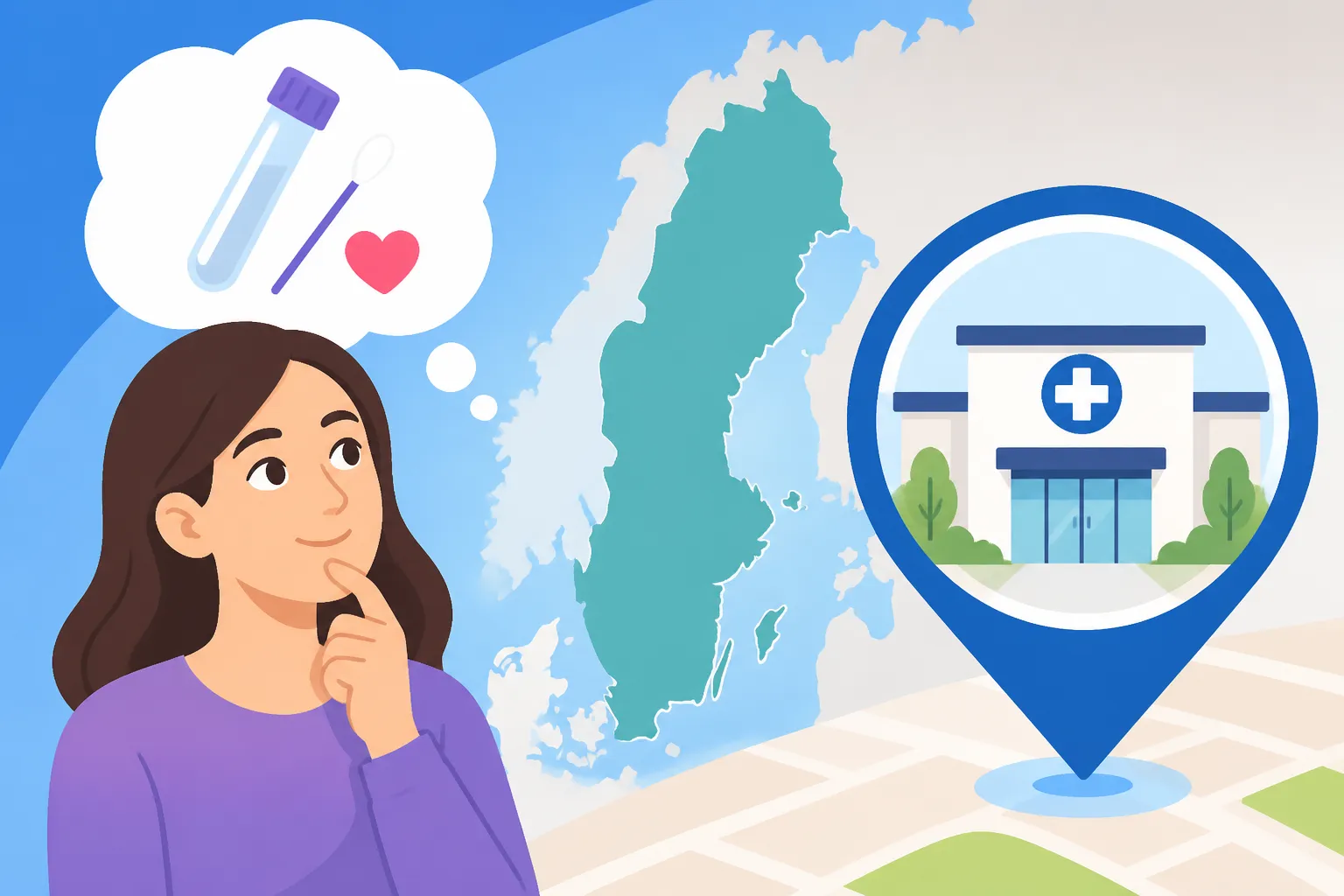
When you are looking for an STI test in Sweden, your first and best option is often a specialized clinic known as SESAM (Sexuell hälsa och samlevnad). These clinics are dedicated entirely to sexual and reproductive health. Unlike a general doctor's office, the staff here deal specifically with STI testing, contraception, and counseling every single day. They are pros at making you feel comfortable, and they are used to seeing international residents who might not be familiar with the local system.
In major cities like Stockholm, Gothenburg, and Malmö, you will find these clinics centrally located. For example, SESAM City in Stockholm is a very popular choice for expats because of its central location and experience with non-Swedish speakers. Most of these clinics offer both drop-in hours and bookable appointments. However, a word of advice from someone who has waited two hours in a cramped waiting room: always try to book an appointment in advance if you can.
If you are a young person, usually under the age of 23 or 25 depending on the region, you can also visit an Ungdomsmottagning (Youth Clinic). These are fantastic resources that provide free testing, free condoms, and even free birth control in many cases. The atmosphere is very relaxed and non-judgmental. If you are older than the age limit, SESAM is your primary destination. For those who want more personalized care or faster access to specialists beyond the public offering, international plans like Cigna Global can sometimes offer paths to private providers, though the public SESAM clinics remain the gold standard for STI-specific care.
The Role of the Vårdcentral in Sexual Health
If you don't live near a specialized SESAM clinic, your local primary care center, or Vårdcentral, is your next port of call. Every resident in Sweden is linked to one of these centers based on where they live. I highly recommend Registering with a Vårdcentral: Your Guide to Primary Care in Sweden as soon as you arrive so that you have a "home base" for all health concerns, including sexual health.
At a Vårdcentral, you can book an appointment with a General Practitioner (GP) or sometimes a nurse specializing in sexual health. You simply call them up or use the 1177 digital service to request an "STI-provtagning" (STI testing). While the Vårdcentral is convenient, keep in mind that it is a general clinic. You might be sitting in the waiting room next to someone with a flu or a broken toe. If you prefer a higher level of privacy or a clinic that specializes solely in this field, the SESAM clinics mentioned above are generally preferred by the expat community.
One thing to note is that the Finding a Doctor in Sweden: GPs, Specialists, and the Referral System process is quite streamlined once you are in the system. You do not usually need a referral to get an STI test; you can contact the clinic directly. If you are still waiting on your administrative paperwork, you might be wondering, Can I See a Doctor in Sweden Before I Get My Personnummer? The answer is yes, but the process for STI testing specifically is governed by a very important law that makes it easier for everyone, regardless of their residency status.
Understanding the Communicable Diseases Act Smittskyddslagen
Sweden has a very strict but helpful law called the Smittskyddslagen (The Communicable Diseases Act). This law is designed to prevent the spread of serious infections within the community. It covers diseases like Chlamydia, Gonorrhea, Syphilis, HIV, and Hepatitis. Because the government wants to encourage everyone to get tested and treated, testing for any disease covered by this act is completely free of charge.
Under this law, you have both rights and obligations. Your right is to receive free testing, treatment, and even medication if you test positive for one of these "community-dangerous" diseases. Your obligation, however, is to participate in "smittspårning" or contact tracing. If you test positive for Chlamydia, for example, a nurse or doctor will ask you to provide the names and contact details of your previous partners so the clinic can reach out to them anonymously.
This can feel like an invasion of privacy to newcomers, but it is handled with extreme professional discretion. They will never tell your partners who pointed them in their direction; they will simply inform them that they may have been exposed and need to come in for a free test. This proactive approach is a big reason why How Sweden's Tax-Funded Healthcare Works: Regions, Costs, and Coverage remains effective at keeping infection rates relatively low compared to other countries.
Home Testing Kits and the 1177 Portal
For those who are tech-savvy and prefer the privacy of their own bathroom, Sweden offers an excellent home testing system. This is managed through the national health portal, 1177.se. If you have a Swedish electronic ID, you can order a test kit for the most common STIs, like Chlamydia and Gonorrhea, directly to your mailbox.
The process is remarkably simple. You log in, answer a few questions about your symptoms (or lack thereof), and order the kit. It arrives in a plain, discrete envelope. You follow the instructions to provide a sample—usually a urine sample or a swab—and then you mail it back in a pre-paid envelope. A few days later, you can log in to see your results. If the result is positive, the clinic will contact you to arrange for a follow-up visit and free treatment under the Smittskyddslagen.
To use this service, you really need to understand How Do I Log Into 1177.se with BankID? because that digital signature is the key to almost all health services in Sweden. Once you are in, exploring What Can I Actually Do on the 1177 Health Portal? will show you just how much you can manage online, from renewing prescriptions to checking your lab results. For expats who travel frequently or haven't fully settled into the Swedish digital ecosystem yet, having a plan like SafetyWing can provide some peace of mind for general medical queries, but for the actual STI kits, the 1177 portal is the primary gateway.
Testing Costs and Eligibility for Newcomers
A common question I hear is: "Do I have to pay if I'm not a citizen?" The answer depends on what you are being tested for and your residency status. As mentioned, if you are being tested for something covered by the Communicable Diseases Act, it is free for everyone—including tourists and those without a Personnummer. The Swedish state prioritizes public health over administrative status in these cases.
However, if you want a "full panel" test for things not covered by the act, such as Mycoplasma genitalium or Herpes (when no symptoms are present), you might be charged a standard consultation fee. This is where Understanding Patient Fees (Patientavgift) Across Sweden's 21 Regions becomes relevant, as the cost can vary slightly between Stockholm and, say, Skåne.
| Service Type | Cost for Residents | Cost for Non-Residents (No EHIC) | Covered by Smittskyddslagen? |
|---|---|---|---|
| Chlamydia Test | Free | Free | Yes |
| HIV Test | Free | Free | Yes |
| Gonorrhea Test | Free | Free | Yes |
| General GP Consultation | 200 – 300 SEK | Full Cost (approx. 1500+ SEK) | No |
| Syphilis Test | Free | Free | Yes |
| Home Test Kit (via 1177) | Free | Not Available | Yes |
If you are a newcomer still navigating the Getting Your Personnummer: The Gateway to Swedish Healthcare process, make sure you mention that you are there for an STI check specifically. This ensures the staff apply the correct billing rules. For those who want more comprehensive health coverage that includes private specialist visits for non-urgent reproductive health, Cigna Global is a popular choice for expats who want to supplement the public system.
What to Expect During Your Appointment
The actual process of getting tested in Sweden is very clinical and efficient. When you arrive at a SESAM clinic or Vårdcentral, you will check in at the reception. If it is your first time, you may need to fill out a short questionnaire about why you are there and if you have any symptoms.
Usually, the test involves a few different components:
- Urine Sample: This is most common for Chlamydia and Gonorrhea testing for men. You generally need to avoid urinating for at least an hour or two before the test for it to be accurate.
- Swabs: For women, or for rectal/throat tests, the nurse or doctor will use a small cotton swab. In many Swedish clinics, they actually allow you to perform the swab yourself in a private bathroom, which many people find much more comfortable.
- Blood Test: This is required for HIV, Syphilis, and Hepatitis. A nurse will take a small amount of blood from your arm.
- Physical Exam: If you have visible symptoms like a rash or sores, the doctor will perform a physical examination to determine if it might be Herpes or another condition.
The staff will also talk to you about Sexual and Reproductive Health Services in Sweden for Newcomers and offer advice on contraception or safe sex practices. They are very used to speaking English, so do not be afraid to ask questions. If you are feeling overwhelmed by the terminology, you can always ask them to explain the "Smittskydd" rules again.
Results and Follow-Up Care
Wait times for results are generally quite short. For home tests, you usually get a digital notification within 3 to 7 working days. For in-person clinic visits, it's often the same. If your results are negative, you might not even get a phone call; many clinics only contact you if something is found, or they will ask you to check the 1177 portal yourself.
If you do test positive, don't panic. The Swedish healthcare system is designed to handle this with zero judgment. You will be given a prescription for the necessary medication. In Sweden, if the medication is for an STI covered by the law, you often don't even have to pay for the prescription at the pharmacy. You will also be scheduled for a follow-up talk about contact tracing.
For those who are not yet fully covered by the Swedish social security system, or for digital nomads moving between countries, having a plan like SafetyWing can be useful for the initial consultation if you have symptoms that aren't clearly an STI, but for the treatment of the STI itself, the Swedish public clinics are your primary resource. If you find yourself needing more extensive care or surgery for related health issues, understanding 1177 Vårdguiden: Navigating Sweden's National Health Advice Line and Portal will help you navigate the broader medical landscape.
Privacy and Anonymity in the Swedish System
One concern many expats have is how their data is stored. Sweden is a highly digitized society, and almost everything is linked to your Personnummer. Your health records are stored in a central system that is accessible by medical professionals. However, there are very strict privacy laws regarding who can see your "STI-journal."
If you go to a SESAM clinic, your records are kept within the medical system, but they are not just "open" for anyone to browse. Employers, for instance, have absolutely no right or ability to see your medical records. If you are extremely concerned about anonymity, you can sometimes request to be tested under a "reserve number" if you do not have a Personnummer, but once you are a resident, your testing will be part of your official record. This is actually a benefit, as it allows for better long-term care if you ever need to see a specialist or manage a chronic condition.
Practical Tips for Your First Visit
To make your experience as smooth as possible, here are a few veteran tips I've picked up over the years:
- Bring ID: Even if testing is free, they need to verify who you are. Bring your passport or Swedish ID card.
- Timing: For the most accurate results, it's usually recommended to wait at least 1-2 weeks after a potential exposure before getting tested for Chlamydia/Gonorrhea, and up to 3 months for a definitive HIV result (though modern tests are accurate much sooner).
- Language: Most medical professionals in Sweden speak excellent English. If you are nervous, you can state clearly at the start: "I'm a bit nervous and English is my first language; can we do the appointment in English?"
- 1177 is your friend: If you are unsure which clinic is open or has drop-in hours, call 1177. They have an English-language option and can tell you exactly which clinic in your neighborhood is currently accepting patients.
Getting an STI test is just one part of staying healthy while living abroad. By utilizing the SESAM clinics and the free services provided by the Smittskyddslagen, you can ensure your sexual health is looked after without it costing a fortune or causing unnecessary stress.
Disclaimer
This article provides general information about navigating the Swedish healthcare system and should not be taken as professional medical or legal advice. Healthcare regulations and costs can change. Always consult with a qualified medical professional or contact 1177 Vårdguiden for specific medical concerns and the most up-to-date information regarding STI testing and treatment in your region.