What Can I Actually Do on the 1177 Health Portal?
Navigating Swedish healthcare often feels like deciphering a complex code while you are feeling under the weather. I remember staring at the 1177 homepage for thirty minutes during my first winter in Stockholm, wondering if I’d ever see a doctor without calling a clinic twenty times. This guide breaks down exactly how to use the 1177 portal to manage your health efficiently from your sofa.
Understanding the Digital Heart of Swedish Health
When you first arrive in Sweden, you’ll quickly realize that the country is obsessed with digitalization. This isn't just about paying for coffee with your phone; it extends to the very core of the medical system. The 1177 Vårdguiden platform is the national hub for everything related to your well-being. It is more than just a website; it is an integrated system that connects your local clinic, your pharmacy, and your regional hospital. For those of us who have lived here for years, it becomes the first point of contact whenever a fever strikes or a weird rash appears.
Operating within Healthcare in Sweden for Foreign Residents: The Complete System Guide (2027) requires a shift in mindset. You are expected to be an active participant in your care. The portal allows you to skip the dreaded early-morning phone queues at your local clinic, known as a Vårdcentral. While many expats initially worry that a digital portal will feel cold or impersonal, I’ve found it to be a lifesaver. It provides a written record of your interactions, which is incredibly helpful when you are still trying to master the nuances of Swedish medical terminology.
If you are a newcomer still waiting for your residency documents, you might find yourself in a bit of a limbo. During this phase, services like SafetyWing can provide a vital safety net while you wait to gain full access to the Swedish system. However, once you have your Personnummer and a digital ID, the 1177 portal becomes your primary tool. Even if you hold private coverage through Cigna Global, you will still likely use 1177 to view your public medical records and track your prescriptions, as the Swedish system is highly centralized.
The Magic of the Personal Dashboard
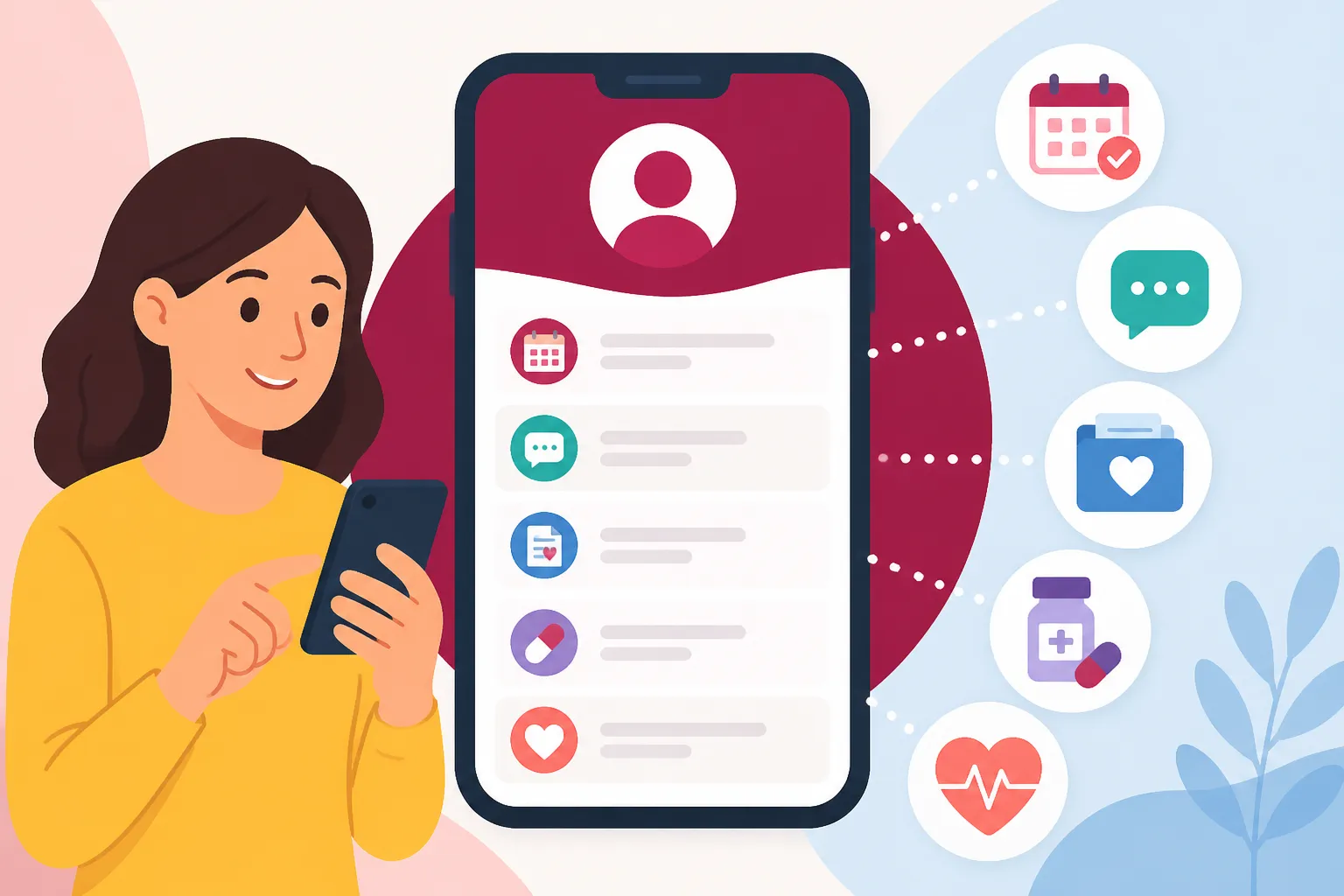
The "Mina Sidor" (My Pages) section is where the real work happens. Once you log in, you are greeted with a dashboard that summarizes your recent activity. This is where you can see upcoming appointments, recent messages from your doctor, and links to your personal medical records. I personally check this dashboard every time I have a blood test; the results often appear here before the doctor even has a chance to call me. It gives you a sense of agency over your health that is often missing in other countries' systems.
Beyond just viewing data, the dashboard acts as a communication hub. You can see a list of all the clinics you are currently registered with. If you haven't done so yet, Registering with a Vårdcentral: Your Guide to Primary Care in Sweden is your first step. Once registered, that clinic will show up in your "Mina Sidor," and you can start interacting with them directly. It’s a bit like having a direct line to your doctor’s office without the hold music.
One of the most underrated features of the personal dashboard is the ability to act as a proxy for your children. If you have kids under 13, their profiles are linked to yours. You can book their vaccinations, read their doctors' notes, and check their prescriptions just as easily as your own. I’ve lost count of how many times I’ve used this at 10 PM to check if my daughter’s antibiotic refill was actually sent to the pharmacy.
Logging in and Accessibility
To get the most out of 1177, you absolutely must have BankID. Without it, you are limited to the public information pages, which are helpful for general advice but won't let you see your personal data. If you are struggling with this step, you should look into How Do I Log Into 1177.se with BankID? to get sorted. The login process is the same whether you are using a computer or the 1177 app on your phone.
I highly recommend downloading the app. The Swedish medical system moves at its own pace, and getting a notification on your phone that a new message has arrived from your midwife or surgeon is much better than constantly refreshing a web browser. The app is also quite secure; it requires biometric or PIN authentication every time, which is reassuring given the sensitivity of the data inside.
For those who are not yet fluent in Swedish, the portal can be a bit daunting. While the general health advice pages have an "Other Languages" section, the actual interactive "Mina Sidor" is predominantly in Swedish. I usually keep a translation tab open or use a browser extension to help. Over time, you’ll learn the key words: Boka tid (book time), Recept (prescription), and Journal (medical record). Don't let the language barrier stop you; the efficiency of the digital system is worth the extra effort of translating a few buttons.
Managing Your Medical Calendar and Contacts
The most frequent reason I log into 1177 is to manage my appointments. In the "old days," you had to call the Vårdcentral at precisely 8:00 AM, wait in a queue, and hope for a callback. Now, many clinics allow you to book directly through the portal. You can see a calendar of available slots for nurses, doctors, or physiotherapists. It’s incredibly satisfying to book a routine check-up in thirty seconds while sitting on the bus.
However, a word of advice from a veteran: not all appointments can be booked this way. If you have a complex issue or need a specialist, you might still need a referral. You can track the status of these referrals under the "Remisser" tab. This transparency is great because it allows you to see exactly when your GP sent the request and whether the specialist hospital has received it. It takes the guesswork out of the waiting game that is so common in public healthcare systems.
If you find that public wait times for specialists are too long, this is where having secondary insurance like Cigna Global can be a game-changer. You can use 1177 to keep your public records updated while using your private provider to get faster access to care. This hybrid approach is common among expats who want the best of both worlds: the stability of the Swedish public system and the speed of private insurance.
Booking and Rescheduling Appointments
When you book through 1177, you often have the option to describe your symptoms in a text box. My tip? Be as detailed as possible. The nurses who screen these bookings appreciate knowing exactly why you’re coming in. It helps them allocate the right amount of time. If you need to reschedule, the portal usually allows you to do so up to 24 hours before the appointment. Be careful, though—missing an appointment or canceling too late often results in a "no-show" fee, even if you have reached your cost ceiling.
The portal also handles digital visits. Since the pandemic, Sweden has embraced video consultations. If your clinic offers this, you’ll receive a link within the 1177 message system. You just log in at the appointed time, and the doctor appears on your screen. It’s perfect for when you’re too sick to leave the house or just need a quick consultation to discuss test results.
I’ve found the rescheduling feature particularly helpful during the dark Swedish winters when everyone seems to get sick at once. If a slot opens up earlier than your original appointment, you can often snag it by checking the portal occasionally. It’s much more efficient than calling the clinic and asking for "cancellation slots," which the staff rarely have time to check manually for you.
Direct Messaging with Your Healthcare Team
The "Kontakta mig" (Contact me) or messaging feature is a total revelation. You can send a message to your specific doctor or nurse at your registered Vårdcentral. This is perfect for non-urgent questions like "Should I continue this medication?" or "Can I get a copy of my test results?" You can also use this feature to ask Can I Message My Doctor Online in Sweden? regarding follow-up care after an initial visit.
Usually, the clinic will respond within two to three working days. It’s not an instant chat, so don't use it for emergencies. But for the small things that don't require an actual visit, it saves so much time and stress.
Another great use for the messaging system is requesting a "sjukintyg" or sick note. If you’ve been ill for more than a week, your employer will likely require one. You can often message your doctor to request an extension or a digital copy of a note they’ve already written. For more on this, check out How Do I Get a Sick Note from a Doctor in Sweden? to understand the legal requirements for your workplace.
| Feature | Best Used For | Response/Access Time |
|---|---|---|
| Boka Tid | Routine check-ups, vaccinations, nurse visits | Instant (if slots available) |
| Meddelanden | Non-urgent questions, follow-up, clarifications | 2-3 working days |
| Journalen | Viewing test results, doctor's notes, history | Varies by region (usually 0-14 days) |
| Recept | Checking refills, seeing medication history | Instant |
| Högkostnadsskydd | Tracking your spending toward free care | Instant |
Reading Your Records and Prescriptions
The "Journalen" (The Journal) is perhaps the most powerful part of the 1177 portal. In Sweden, you have a legal right to read your own medical records. This includes notes from your GP, reports from hospital stays, and even the comments made by radiologists on your X-rays. For an expat, this is invaluable. It allows you to take those notes and translate them at your own pace, ensuring you didn't miss anything important during the actual consultation.
I will warn you: reading your own journal can be a bit intimidating. Doctors often use very direct, clinical language. In Sweden, it is standard for notes to be quite brief and factual. Don't be offended if a doctor describes you as "well-nourished" or "appears in no acute distress"—these are just standard medical observations. Having access to these records also makes it much easier if you ever move cities or need to share your history with a specialist abroad.
If you are using SafetyWing for travel-related medical needs or Cigna Global for international coverage, having a digital copy of your Swedish records makes filing claims or getting second opinions much smoother. You can literally copy and paste your history into a secure document to share with other providers. It’s a level of transparency that I wish every country adopted.
Accessing Your Medical History (Journalen)
When you click into your Journal, you can see entries from different healthcare providers. It’s organized by date and provider. One thing to note is that some regions have a "delay" on showing certain results—for example, pathology reports might be hidden for a week to give the doctor time to review them and contact you first. This prevents patients from seeing potentially scary news without any context.
You can also see who has looked at your journal. This is part of Sweden's strict privacy laws. Every time a healthcare professional opens your file, a "log" is created. If you see an entry from a clinic you’ve never visited, you have the right to question it. This gives you peace of mind that your data is only being accessed by those who actually need it for your treatment.
I often use the Journal to keep track of my vaccinations. It’s so easy to forget when you last had a Tetanus shot or a Flu jab. Instead of digging through old papers, I just log into 1177, scroll back a few years, and there it is. It’s also where you can find records of your kids' growth charts and developmental checks, which is great for filling out school forms.
Managing Recept and Refills
The "Läkemedel" (Medicines) section is where you manage your prescriptions. In Sweden, paper prescriptions are a thing of the past. Everything is "e-recept." When a doctor prescribes something, it’s sent to a central database. You can go to any pharmacy (Apotek) in the country, show your ID, and they will see it. 1177 allows you to see how many refills you have left on a particular medication.
This is especially helpful for chronic conditions. You can see the exact name of the drug, the dosage, and when the prescription expires. If you’re running low, many clinics allow you to request a refill (förnyelse av recept) directly through the portal with a single click. No phone call needed. You should definitely read Prescription Medicines in Sweden: Recept, Refills, and the Cost Cap to understand how the pricing works, as it's quite different from other systems.
I also use this section to check the "Frikort" status for medicines. Just like with doctor visits, there is a cap on how much you pay for prescriptions in a 12-month period. Once you hit that cap, your medications are free. The 1177 portal tracks this automatically, showing you exactly how much more you need to spend before you reach the threshold.
Tracking Costs and Regional Variations
One of the most helpful administrative features of 1177 is the ability to track your spending toward the high-cost ceiling. Healthcare in Sweden isn't entirely free, but it is heavily subsidized. You pay a set fee for each visit until you reach a certain amount within a rolling 12-month period. After that, you get a "Frikort" (Free card), and your visits are free for the remainder of that year.
Monitoring this on 1177 is a breeze. Under the "Högkostnadsskydd" tab, you can see a list of all the payments you’ve made at public clinics and hospitals. It’s all automated; you don't need to keep paper receipts. For a detailed breakdown of how this works, see The Högkostnadsskydd Explained: Sweden's Healthcare Cost Ceiling and Frikort. This feature is a lifesaver for families or those managing chronic illnesses, as it helps you budget for medical expenses.
It is worth noting that while 1177 is a national portal, healthcare in Sweden is managed by 21 different regions (Regioner). This means that the interface might look slightly different if you move from Stockholm to Skåne. Some regions are more advanced in their digital offerings than others. For instance, in some areas, you can book almost any appointment online, while in others, you can only book a few specific types of visits.
Monitoring the High-Cost Protection
The 1177 portal acts as the official record for your high-cost protection. If you ever visit a private doctor who is covered by the public reimbursement system, they will report the fee to this central system. This ensures that every krona you spend counts toward your Frikort. I’ve found that even the small fees for things like X-rays or specialist consultations are logged within 24 hours.
When you finally reach the ceiling, a digital "Frikort" appears in your 1177 account. You don't even need to show it at the clinic; when they scan your ID, their system will automatically see that you have reached the limit and won't charge you. It’s one of those "it just works" moments that makes the Swedish system feel so advanced.
If you are covered by SafetyWing or Cigna Global, you should still track these costs. Sometimes, your private insurance will cover the co-pays (patientavgift) that you pay out of pocket before reaching the ceiling. Having the digital record from 1177 makes it much easier to provide proof of payment to your insurance company for reimbursement.
Navigating Regional Differences in the Interface
If you travel within Sweden and need care, 1177 is still your friend. You can change your "region" setting on the site to see local advice, clinic locations, and opening hours for the area you are currently in. This is vital because the phone numbers and local procedures for "Nästakuten" (Urgent Care) vary by region.
Some regions also use the portal to send out invitations for screenings, like mammograms or cervical smears. These will appear in your "Inkorgen" (Inbox). I highly recommend checking this regularly, as these invitations are often time-sensitive. Missing a screening in Sweden can sometimes lead to a long wait for a new appointment, as the system is very much based on a high-volume, scheduled queue.
Finally, remember that the 1177 portal is supported by the 1177 phone line. If you are ever confused by what you see in the portal or aren't sure which clinic to contact, you can always call 1177 from any phone in Sweden. They have nurses available 24/7 who can see your records (with your permission) and guide you on what to do next. It’s the perfect fallback for when the digital world feels just a little too complicated.
Disclaimer
This guide is for informational purposes only and is based on personal experience and current public information about the Swedish healthcare system as of 2026. Healthcare regulations, costs, and digital features can change. Always consult the official 1177.se website or a medical professional for advice specific to your health and legal status in Sweden.