How Do I Get a Sick Note from a Doctor in Sweden?
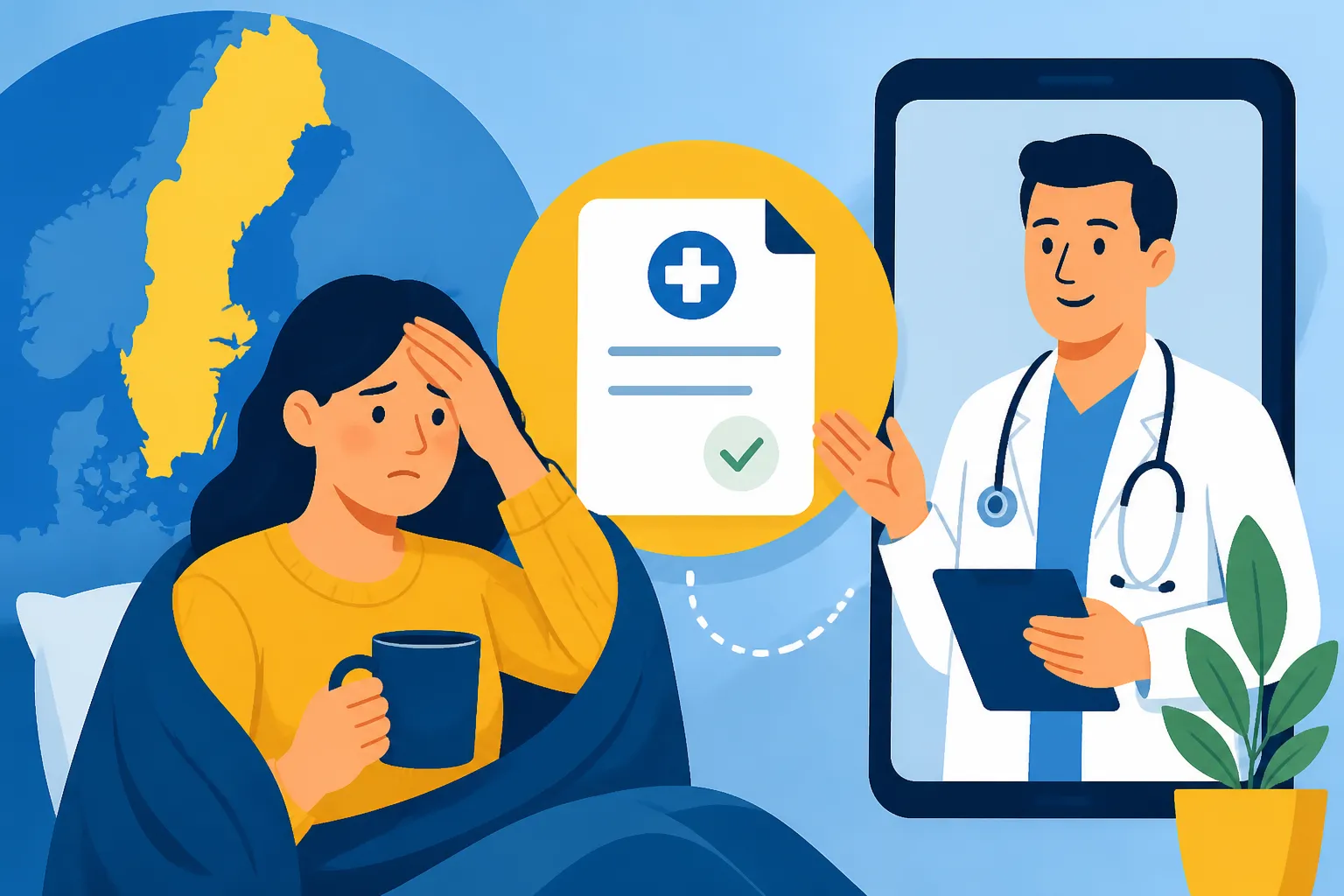
Waking up with a fever in a foreign country is a special kind of stress, especially when you are staring at your Swedish work contract and wondering if you are about to lose your job for staying in bed. I remember my first winter in Stockholm, shivering under three duvets, desperately googling how to prove to my boss I wasn't just faking it. This guide solves that panic by walking you through the exact process of getting a sick note in Sweden, from the first day you call in sick to the moment you upload your digital certificate.
The Swedish Philosophy of Sick Leave and Self-Certification
One of the biggest culture shocks for expats moving to Sweden is the level of trust built into the initial sick leave process. Unlike many countries where you might need a doctor’s note for a single day of absence, Sweden operates on a "self-certification" model for the first week. This means that if you have a common cold, the flu, or a migraine, you are generally expected to stay home and rest without bothering a doctor immediately. This system is designed to keep primary care clinics, or vårdcentraler, from being overwhelmed by minor illnesses that just need time and tea to resolve.
During these first seven days, you are essentially your own doctor. You simply notify your employer on the first morning of your illness—usually via email, Slack, or a dedicated HR portal—and you are "self-certified." However, it is vital to understand that while you don't need a note, there is a financial deduction called karensavdrag. This is a standard deduction from your sick pay that roughly equals one day of work. For more on the financial side of being ill, you can read about Sick Pay in Sweden: Sjukpenning, Sick Notes, and Your Rights to understand how your salary is affected during this period.
If you are a newcomer still waiting on your documentation, you might wonder Am I Entitled to Sick Pay from My First Day of Work in Sweden? Generally, if you have a valid employment contract, you are covered, but the administrative side requires your employer to have your details on file. The trust-based system works well, but it has a very hard deadline: Day 8. If you are still too sick to work on the eighth calendar day of your illness (this includes weekends!), the trust ends, and the bureaucracy begins. This is the moment you must provide a läkarintyg, or medical certificate.
Navigating the Day 8 Requirement
The "Day 8 Rule" is the most important concept to grasp regarding sick notes in Sweden. It is important to count calendar days, not just working days. If you fall ill on a Wednesday and you are still sick the following Wednesday, that is Day 8. If you don't have a doctor's note by this point, your employer is legally allowed to stop paying your sjuklön (sick pay). In fact, many HR systems will automatically flag your absence if a digital certificate hasn't been uploaded by the morning of the eighth day.
The first thing you should do if it looks like your illness will linger is to contact your local clinic. If you haven't done so yet, Registering with a Vårdcentral: Your Guide to Primary Care in Sweden is a prerequisite for a smooth experience. While you can technically visit any clinic, being registered at one near your home makes booking much faster. You should aim to call them around Day 5 or 6 if you aren't feeling better, as getting a same-day appointment on Day 8 can be a gamble.
When you call, you should clearly state that you need a "sjukintyg" or "läkarintyg" for your employer. Swedish doctors are very accustomed to this request. They will evaluate whether your "capacity to work" (arbetsförmåga) is reduced. It is a common misconception that the doctor needs to provide a detailed diagnosis of your illness to your boss. In reality, the version of the sick note that goes to your employer usually only states that you are unable to work and for how long; the specific medical details are kept private between you, the doctor, and Registering with Försäkringskassan: When and Why You Need To for insurance purposes.
How to Book an Appointment for a Sick Note
The most efficient way to secure a sick note is through the digital portal 1177.se. This is the backbone of the Swedish healthcare system. To use it effectively, you will need a BankID. If you are still in the early stages of your move, Getting Your Personnummer: The Gateway to Swedish Healthcare is the first step toward obtaining that digital ID. Once you have it, you can log in and see your specific vårdcentral.
Once logged in, you can often "message" your clinic or use their online booking system. If you are unsure how to use the portal, check out How Do I Log Into 1177.se with BankID? for a step-by-step walkthrough. If your clinic doesn't have open slots, you can call them. Be prepared for a "callback" system: you dial their number, enter your phone number, and a computer tells you exactly what time a nurse will call you back. This prevents you from sitting on hold for hours.
During the phone call with the nurse, be honest about your symptoms. If you have a physical job, like construction or nursing, the threshold for a sick note might be different than if you have a desk job that allows for remote work. The nurse will decide if you need an in-person visit or if a video consultation is sufficient. For those who have private insurance like Cigna Global, you may have access to faster private specialist appointments, but for a standard sick note, the public vårdcentral is the standard route.
Digital Health Apps and Remote Sick Notes
In recent years, digital healthcare providers like Kry, Min Doktor, and Doktor.se have revolutionized how expats get sick notes in Sweden. These apps allow you to book a video call with a doctor within hours. This is an absolute lifesaver if your local vårdcentral is fully booked and you are approaching your Day 8 deadline. Most of these apps are integrated into the regional healthcare system, meaning the cost is the same as a physical visit.
However, there is a caveat: digital doctors are often restricted in how long a sick note they can issue. Usually, they can provide a certificate for up to 14 days. If your illness is complex or requires a physical examination (like a broken bone or a severe respiratory infection), they may insist that you visit a physical clinic. For travelers or those on short-term assignments who might use SafetyWing for their coverage, these digital apps are often the easiest way to interface with a doctor who speaks perfect English and can issue a note quickly.
When the doctor issues the note digitally, it is sent directly to your "Intyg" (Certificates) section on 1177.se. From there, you can choose to send it electronically to Försäkringskassan. For your employer, you can usually download a PDF version that hides your specific diagnosis but confirms your inability to work. This digital integration is one of the perks of Healthcare in Sweden for Foreign Residents: The Complete System Guide (2027), as it removes the need to mail physical papers back and forth.
Understanding the Costs and Logistics
Healthcare in Sweden is not free, but it is highly subsidized. A visit to a GP for a sick note will typically cost between 200 SEK and 300 SEK, depending on your region. This fee counts toward your high-cost protection ceiling. If you are ever confused about who to call or where to go, 1177 Vårdguiden: Navigating Sweden's National Health Advice Line and Portal is the best resource for non-emergency guidance.
| Sickness Duration | Documentation Needed | Who Pays Your Salary? | Key Action Item |
|---|---|---|---|
| Day 1 | None | None (Karensavdrag) | Notify employer immediately |
| Day 2 – 7 | None (Self-certify) | Employer (80% of salary) | Rest and recover |
| Day 8 – 14 | Medical Certificate | Employer (80% of salary) | Book GP appointment by Day 6 |
| Day 15+ | Extended Certificate | Försäkringskassan | Submit note to the Social Insurance Agency |
If your illness extends beyond 14 days, the responsibility for paying you shifts from your employer to the state (Försäkringskassan). At this point, the requirements for the sick note become much stricter. The doctor must provide a very detailed plan for your "rehabilitation" and explain exactly why you cannot perform your specific job duties. This is where having a consistent relationship with one doctor at your vårdcentral becomes incredibly valuable.
Potential Hurdles for Foreign Residents
The most common hurdle for expats is the lack of a personnummer. If you only have a samordningsnummer (coordination number), you can still see a doctor and get a sick note, but you cannot use BankID to manage it digitally. You will likely receive a physical paper certificate (the "blue form") that you must manually scan and email to your HR department. It feels a bit prehistoric compared to the digital system, but it is legally valid.
Another common frustration is the Swedish medical approach to minor infections. You might feel like death warmed over, but a Swedish doctor might refuse a sick note if they believe you are capable of working from home. Be very specific about your "functional limitations." Instead of saying "I feel tired," say "I cannot sit at a computer for more than ten minutes without extreme dizziness" or "I cannot lift heavy objects due to back spasms." Swedish sick notes are about functionality, not just symptoms.
If you are covered by a policy like Cigna Global or SafetyWing, you might have the option to see a private doctor. While this can be faster, ensure the private doctor uses the standard Swedish certificate format if you intend to claim sjukpenning from Försäkringskassan later. Most established private clinics in Sweden are well-versed in this, but it’s always worth double-checking.
Handling Disputes and Second Opinions
What happens if your doctor refuses to give you a sick note, but you truly feel you cannot work? This is a rare but stressful scenario. In Sweden, you have the right to request a second opinion, though you will likely have to pay for a new appointment at a different clinic. Your employer also has the right to question a sick note if they have reasonable grounds to suspect it is invalid, though this is legally difficult for them to pursue if the certificate is signed by a licensed Swedish physician.
If you find yourself in a dispute with your employer regarding your sick leave, this is the time to contact your union (fackförbund). Unions in Sweden are incredibly powerful and can provide legal counsel if an employer is unfairly pressuring you to return to work while you have a valid läkarintyg. Remember, your health is protected by law in Sweden, and the sick note is your legal shield.
Important Considerations for Long-Term Illness
If your condition is chronic or requires long-term recovery (such as burnout/stress-related illness, which is taken very seriously in Sweden), the sick note process becomes a recurring monthly task. You will need to meet with your doctor regularly to "renew" the certificate. During these meetings, the focus will shift toward a "rehabilitation plan." Sweden’s goal is always to get you back to work, even if it’s only for 25% or 50% of your normal hours at first.
The Swedish system allows for "partial" sick leave. Your doctor can write a note for 25%, 50%, or 75% sick leave. This means you might work four hours a day and be "sick" for the other four. This is a fantastic way to ease back into the workforce after a major health event without the "all-or-nothing" pressure found in other corporate cultures. Just ensure your HR department is kept in the loop, as partial sick leave requires a different calculation in the payroll system.
Disclaimer on Medical and Legal Advice
This guide is intended for informational purposes only and is based on the experiences of expats living in Sweden. Healthcare regulations, sick pay thresholds, and immigration requirements are subject to change by the Swedish government, the Swedish Social Insurance Agency (Försäkringskassan), and regional health authorities. This article does not constitute professional medical advice, legal counsel, or a guarantee of benefits. Always consult with a licensed medical professional for health concerns and contact your employer’s HR department or a legal expert for specific advice regarding your employment contract and rights in Sweden.