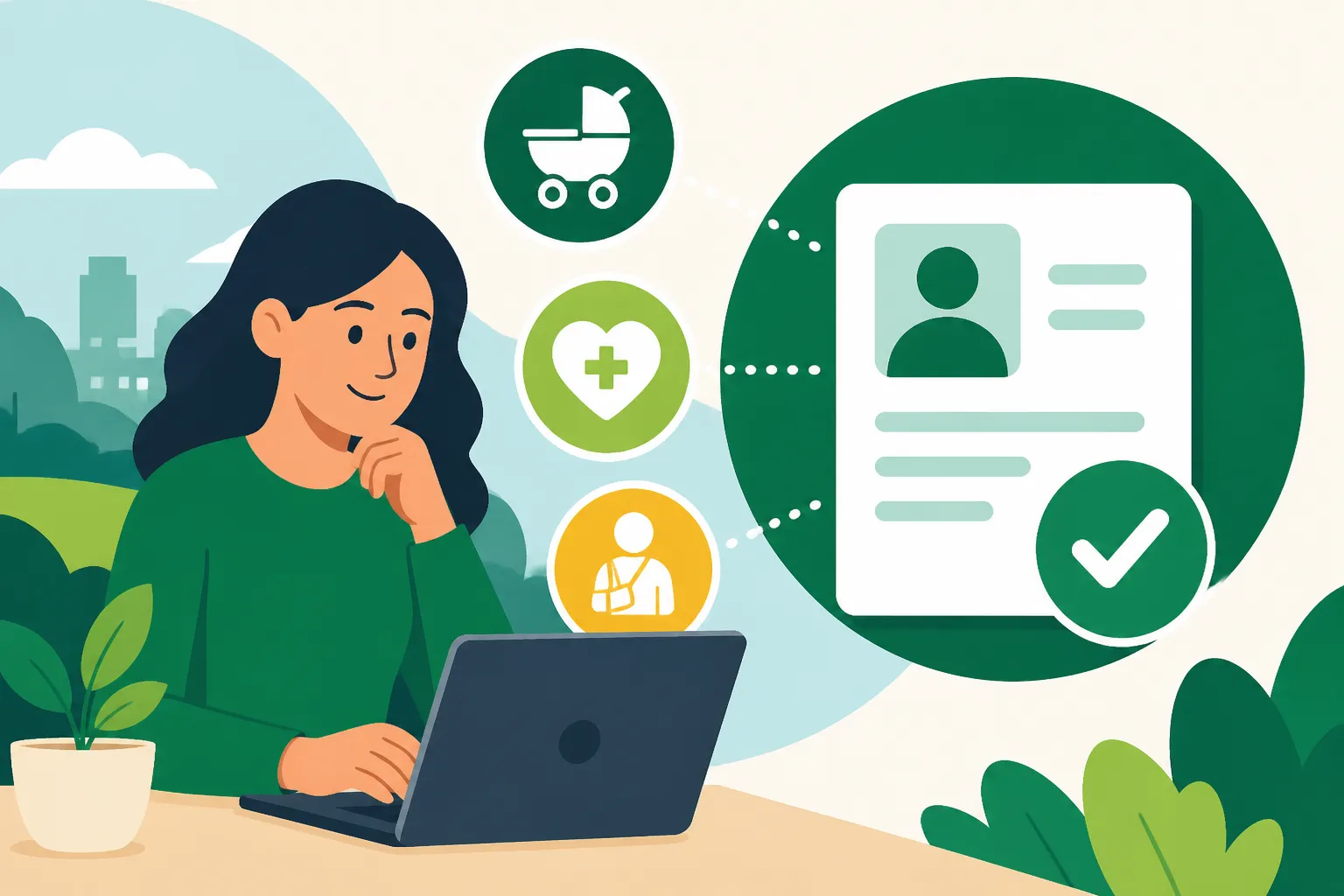
Registering with Försäkringskassan: When and Why You Need To
Moving to Sweden often feels like a series of "I thought I was done" moments, especially when it comes to the endless dance of paperwork. I distinctly remember the relief I felt when my Personnummer finally arrived in the mail, thinking I was officially "in" the system, only to realize months later that I wasn't actually covered for sick pay or parental leave because I hadn't filed a separate application with the social insurance agency. This guide solves the mystery of why getting your ID card is only half the battle and details exactly how to navigate the essential step of registering with Försäkringskassan.
Understanding the Role of Försäkringskassan in Sweden
When you first arrive in Sweden, the sheer number of authorities you need to interact with can be overwhelming. You have Skatteverket for your taxes and population registration, Migrationsverket for your permit, and then there is the formidable Försäkringskassan. Many newcomers mistake the Swedish healthcare system for a single, unified entity, but in reality, it is split between the regions (which handle the medical care) and Försäkringskassan (which handles the money). While your Healthcare in Sweden for Foreign Residents: The Complete System Guide (2027) will explain how to see a doctor, Försäkringskassan is the agency that ensures you don't go broke while doing so.
The Critical Distinction Between Care and Coverage
It is a common misconception that having a Personnummer automatically entitles you to every benefit in the Swedish welfare state. In my first year, I assumed that since I was paying taxes, I was "covered." However, Försäkringskassan operates on a residence-based and employment-based system. You are "insured" for certain things just by living here, like basic healthcare, but for cash benefits like sick pay (Sjukpenning) or parental leave, you must be formally registered in their database. If you aren't in their system, your first attempt to claim money for a sick day or a dental visit might result in a frustrating "identity unknown" error.
This agency is essentially the keeper of the social safety net. They manage everything from the money you get when you stay home with a sick child to the subsidies that make your annual dental check-up affordable. Without registration, you are essentially a ghost in the financial side of the Swedish welfare system. Even if you have already been Registering with a Vårdcentral: Your Guide to Primary Care in Sweden, the clinic and the social insurance agency don't always talk to each other as efficiently as you might hope.
Why Your Personnummer Is Only the Starting Line
The Personnummer is your "key" to Sweden, but Försäkringskassan is the "gatekeeper" to specific funds. When you receive your 12-digit number from Skatteverket, you are entered into the population register, but that does not trigger an automatic enrollment in social insurance. Many expats wait until they actually get sick or pregnant to contact Försäkringskassan, only to find out there is a six-month backlog for processing new registrations.
Registering early is about peace of mind. It’s about making sure that when life happens—whether that's a broken leg or a new baby—the administrative plumbing is already connected. This is why Getting Your Personnummer: The Gateway to Swedish Healthcare is only step one. Step two is proving to Försäkringskassan that you meet the requirements to be insured in Sweden, which often involves showing your work contract, your permit, and proving your intent to stay for at least one year.
The Coordination Between Authorities
Sweden loves its "samordning" or coordination, but it isn't always seamless for the end-user. Skatteverket tells the state you exist and where you live. Försäkringskassan then needs to decide if you belong to the Swedish social insurance system or if you are still covered by your home country. This is particularly complex for EU citizens who might have lingering ties to their previous social security systems.
The agency will look at your "center of vital interests." Are you working here? Is your family here? Do you plan to stay? Once they "insure" you, you are officially part of the Swedish system. This status is what allows you to eventually apply for The Högkostnadsskydd Explained: Sweden's Healthcare Cost Ceiling and Frikort, ensuring your medical costs never exceed a certain annual cap.
The Core Benefits of Registration
You might wonder why you should bother with more forms if you are healthy and don't have children. The truth is, the benefits of being registered with Försäkringskassan extend into almost every corner of daily life in Sweden. From the moment you step into a dentist's office to the time you decide to take a long summer holiday, being in the system changes your financial reality.
Sick Pay and Financial Security
One of the most immediate benefits is Sjukpenning. In Sweden, if you are employed and fall ill, your employer pays your sick pay for the first 14 days (after one "qualifying" day of no pay). But if your illness stretches beyond those two weeks, Försäkringskassan takes over. If you aren't registered, this transition can become a bureaucratic nightmare. I've known people who had to go weeks without income because their registration was still "pending" while they were too sick to work.
Understanding Sick Pay in Sweden: Sjukpenning, Sick Notes, and Your Rights is vital for anyone working here. It isn't just about the flu; it's about long-term security. If you are involved in an accident or develop a chronic condition, Försäkringskassan is the entity that pays your "salary" while you recover. Without that registration, you are effectively working without a net, which is why some expats choose to bridge the gap with private providers like Cigna Global to ensure they have comprehensive international coverage while the Swedish system processes their entry.
Parental Benefits and VAB
If you have children or are planning to, Försäkringskassan will become your best friend. Sweden is famous for its generous 480 days of parental leave, but none of that money—the Föräldrapenning—comes to you automatically. You have to apply for it, and you can't apply for it effectively if you aren't already registered as a resident insured in Sweden. This also applies to Child Health in Sweden: How Barnavårdscentralen (BVC) Supports Families, where the medical care is free, but the parental benefits for attending those appointments come through the social insurance office.
Then there is "VAB" (Vård av barn), the holy grail of Swedish parenting. If your child wakes up with a fever and can't go to preschool, you stay home and "vabba." The state pays you roughly 80% of your salary to be a caregiver for the day. It’s a culturally sacred right in Sweden, but it relies entirely on your registration. I remember the first time my son got sick; I was so stressed about the office until my Swedish colleague said, "Just vabba!" It only works, however, if you've done the legwork with Försäkringskassan beforehand.
Dental Subsidies and the EHIC
Dental care in Sweden is not free for adults, which often comes as a shock to newcomers. However, the state provides an annual dental care subsidy (Tandvårdsbidrag) that is automatically deducted from your bill at the dentist—but only if you are registered with Försäkringskassan. If you are curious about the costs, checking Dental Care in Sweden: Folktandvården, Costs, and the Tandvårdsbidrag will show you how much you can save.
Additionally, once you are registered, you can request your European Health Insurance Card (EHIC) from Försäkringskassan. This little blue card is essential for any travel within the EU. It proves that you are covered by the Swedish system, allowing you to access healthcare in other EU countries at the same cost as locals. Without registration, you can't get the card, and you might find yourself needing to rely on a travel-specific policy like SafetyWing to cover medical emergencies while you wait for your Swedish status to be finalized.
When You Should Register
The "when" is just as important as the "why." In the expat community, there is a lot of conflicting advice. Some say "wait until you're sick," while others say "do it day one." As someone who has seen the "wait and see" approach backfire, my advice is always to be proactive. The Swedish system moves slowly, and it does not accelerate for your emergencies.
Immediately Upon Arrival
The ideal time to register is as soon as you have your Personnummer. Why wait? If you are moving to Sweden with a long-term permit (more than one year), you are expected to be part of the social insurance system. By submitting your registration (form 5456) early, you allow the agency to conduct their investigation into your status while you are healthy and employed. This is the smoothest path.
During this waiting period, it is often wise to maintain some form of private health insurance. Whether it's Cigna Global for high-end, comprehensive medical needs or SafetyWing for a more flexible, nomadic style of coverage, having a backup prevents you from being caught in a vacuum. You might find yourself asking, Can I See a Doctor in Sweden Before I Get My Personnummer?, and the answer is usually yes, but it will be expensive without a private policy or a settled registration.
When Your Circumstances Change
You also need to contact Försäkringskassan whenever your life in Sweden takes a major turn. If you move from being a student to a full-time employee, your insurance status changes from "residence-based" to "employment-based." This can affect the level of benefits you are entitled to. Similarly, if you are Moving to Sweden as a Sambo or Spouse: The Rules apply to you, your registration might be tied to your partner’s status or your own independent work.
If you leave Sweden for more than six months, you are also technically required to notify them. The system is built on the assumption that you are living and working here. If you move away but keep claiming benefits, the repercussions can be severe, including being barred from the system in the future. Always keep them updated on your address and employment status to ensure you are Registering with Försäkringskassan: When and Why You Need To correctly based on your current reality.
The Waiting Time Reality
Let's be realistic: Försäkringskassan is not known for its speed. Depending on the time of year and the complexity of your case (especially for EU citizens with "S1" forms), it can take anywhere from two to six months to process a registration. During this time, you are in a sort of "limbo." You can still go to the doctor, but you might have to pay higher fees upfront and claim them back later.
It is often advised to treat the registration like a background task. File the paperwork, keep a copy of your submission, and then go about your life. If you need to Booking Doctor Appointments Online Through 1177.se with BankID, you can usually do so once you have your ID, but the financial settlement in the background might take longer to catch up.
The Registration Process Step-by-Step
The process isn't necessarily difficult, but it is meticulous. The Swedish authorities value "order och reda" (order and tidiness), so if your application is missing a signature or a copy of your work contract, it will likely be tossed to the bottom of the pile.
Filling Out Form 5456
The main gateway to registration is Form 5456, titled "Information when moving to or working in Sweden." You can find this on the Försäkringskassan website. It asks for basic details: when you arrived, where you moved from, if you have family, and what your employment status is.
| Document Needed | Why It Matters |
|---|---|
| Work Contract | Proves you are contributing to the system and entitled to employment-based benefits. |
| Residence Permit | Confirms your legal right to stay in Sweden for the required duration. |
| Passport/ID Copy | Verified your identity against the Skatteverket database. |
| Civil Status Documents | Necessary if you are applying for family-related benefits or have dependents. |
Make sure you fill out every section. If you are unsure about a question, it is better to call their helpline than to guess. They have an English-speaking service that is surprisingly helpful, though the wait times on the phone can be legendary. This is a great time to also look into How Do I Register at a Vårdcentral When I First Arrive in Sweden? so you have your local clinic sorted at the same time.
The Importance of Documentation
Don't just send the form alone. Attach everything. If you are an EU citizen, you might need to show that you have Comprehensive Sickness Insurance and the Maintenance Requirement in Sweden met if you aren't working yet. If you are a non-EU expat on a work permit, your contract is your most important shield.
The agency will sometimes send a follow-up letter asking for more information. Do not ignore these! They usually give you a 14-day window to respond. If you miss the deadline, they will close your case, and you’ll have to start the whole months-long process from scratch. I’ve been there, and believe me, it’s a soul-crushing experience to realize you’re back at square one because a letter got lost in your hallway.
Digital vs. Paper Submissions
While Sweden is incredibly digital, your initial registration often requires a physical signature. Once you are "in," everything becomes much easier. You’ll be able to log in to "Mina Sidor" (My Pages) using your BankID. From there, you can see your insurance status, apply for the EHIC, and report VAB in seconds.
Getting that first foot in the door is the hard part. Once you have Getting BankID: Sweden's Essential Digital Identity, you will feel like a true Swedish citizen, able to handle your entire life from your smartphone. But remember, BankID requires a bank account, and a bank account usually requires a Personnummer, which brings us back to the importance of following the proper order of operations.
Special Considerations for Different Residency Statuses
Not every expat enters the system through the same door. Your country of origin and the type of permit you hold will drastically change what Försäkringskassan expects from you.
EU/EEA Citizens and the S1 Form
If you are from the EU, you have the "Right of Residence," but that doesn't mean you are automatically covered by Swedish social insurance. If you are working for a Swedish employer, you are covered from day one. However, if you are a pensioner or a posted worker, you might need an S1 form from your home country. This form tells Sweden, "This person is still insured by us, but please give them care as if they were one of yours."
Dealing with the S1 can be tricky. It requires coordination between two national bureaucracies. While this is being sorted, many EU expats use Cigna Global to ensure they have seamless coverage that doesn't rely on the speed of two different government offices. You should also check Can EU Citizens Use Swedish Healthcare with an EHIC Card? to see how your transition period will be handled.
Non-EU Residents and Insurance Requirements
For those coming from outside the EU, your residence permit is your primary ticket. Most work permits require your employer to provide certain insurances as a condition of the permit. However, these are private insurances (like occupational pension and life insurance) and do not replace the need to register with Försäkringskassan for state benefits.
If you are on a permit shorter than one year, you might not be able to get a Personnummer at all. In this case, you will be issued a The Coordination Number (Samordningsnummer) Explained, which allows you to work and pay taxes but offers very limited access to social insurance. In these scenarios, having a robust private policy like SafetyWing isn't just a luxury—it's a necessity to avoid massive out-of-pocket medical bills.
Students and Researchers
International students are a unique category. If you are here for a program longer than a year, you can get a Personnummer and register with Försäkringskassan. If your program is shorter, you are generally expected to have your own insurance. Many universities provide a basic policy, but it often has gaps, particularly for non-emergency care or dental work. Always read the fine print of your student insurance before you assume you are fully covered.
Comparing Social Insurance with Private Options
Even once you are fully registered with Försäkringskassan, many expats (and an increasing number of Swedes) choose to supplement their coverage. The Swedish system is fantastic for emergencies and chronic care, but it can have long wait times for specialists and elective surgeries.
Why Supplemental Insurance Matters
Private health insurance (Sjukvårdsförsäkring) in Sweden is designed to bypass the queues. While the public system is bound by The Vårdgaranti: Your Right to Timely Care in Sweden—which promises care within 90 days—private insurance can often get you into a specialist's office within a week.
For expats who are used to a higher level of "concierge" service or who simply cannot afford to wait months for a non-urgent procedure, providers like Cigna Global offer a level of international portability and speed that the public system isn't built for. It’s about having a choice. You use the public system for your GP and your kids' check-ups at the BVC, but you use your private policy when you need a fast MRI or a second opinion from a world-class specialist.
When to Rely on Public vs. Private
The public system is unbeatable for maternity care, emergency trauma, and long-term illness. You will never pay more than The Högkostnadsskydd Explained: Sweden's Healthcare Cost Ceiling and Frikort limit for these services. However, for things like mental health support or specialized physiotherapy, the public waitlists can be daunting.
| Feature | Swedish Public Insurance (Försäkringskassan) | Private International Insurance (e.g., Cigna Global) |
|---|---|---|
| Cost | Tax-funded + small patient fees | Monthly premium |
| Wait Times | Can be long for non-emergencies | Generally very fast (days/weeks) |
| Coverage | Comprehensive, includes parental/sick pay | Medical-focused, often covers more "extras" |
| Portability | Limited to EU (via EHIC) | Usually worldwide coverage |
| Choice of Doctor | Usually limited to your region | Freedom to choose almost any provider |
Bridging the Gap for Newcomers
For your first few months in Sweden, you are essentially "unprotected" by the state until your registration is processed. This is the "danger zone." Many people think they are safe because they have a work contract, but as we discussed, the money for long-term sick leave comes from the agency, not your boss.
Using a flexible provider like SafetyWing during this transition period is a smart move. It covers you while you are waiting for that magic letter from Försäkringskassan to arrive. Once you are officially in the system and have your Personnummer, you can decide if you want to keep a private policy for the added speed and comfort or if you are happy relying solely on the Swedish state.
Disclaimer
The information provided in this article is for general informational purposes only and does not constitute legal, financial, or professional medical advice. While we strive to keep the information up to date and correct, Swedish regulations and processing times at Försäkringskassan can change frequently. Always consult the official Försäkringskassan website or a qualified legal professional regarding your specific residency and insurance status in Sweden.