How Much Does Giving Birth Cost in Sweden?
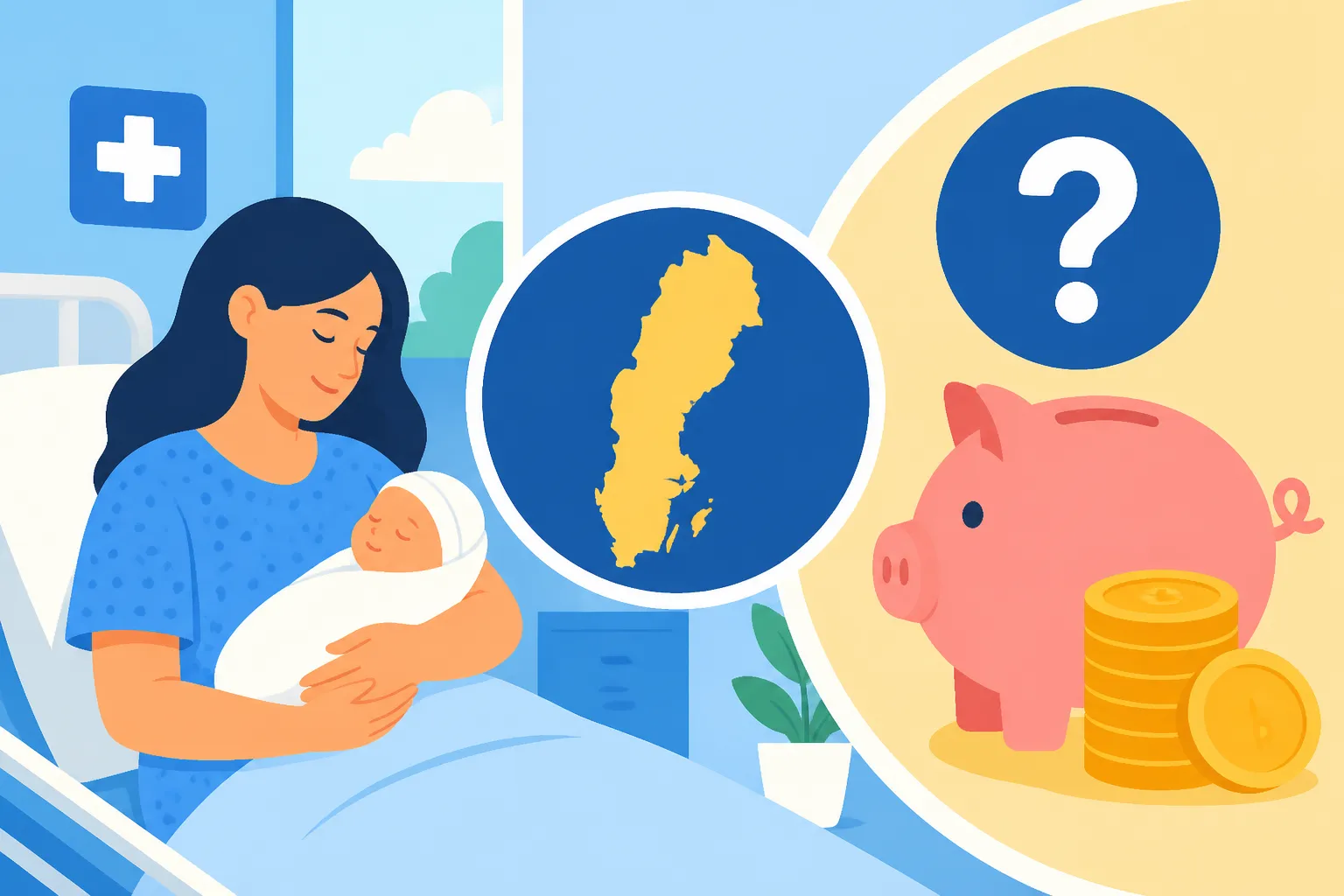
The prospect of navigating a foreign maternity ward while battling a mountain of Skatteverket paperwork is enough to make any expectant parent lose sleep. I remember the panic I felt when I first arrived in Stockholm, staring at my growing belly and wondering if I’d end up with a five-figure hospital bill just because my residency card hadn't arrived yet. This guide dismantles the mystery of maternity costs in Sweden, covering everything from hospital fees for residents to the steep prices faced by those still waiting for their official status.
Healthcare Costs for Residents with a Personnummer
If you are a registered resident in Sweden, the cost of giving birth is remarkably low, but it is not technically "free" in the way many people assume. The Swedish system is tax-funded, meaning you have already paid for the bulk of your care through your monthly salary deductions. However, there are minor out-of-pocket expenses known as patient fees that apply to almost everyone.
The Role of the Patient Fee
In most Swedish regions, prenatal care—which includes your regular check-ups at a Mödravård, Midwives, and Giving Birth clinic—is completely free of charge. This is a huge relief compared to the high costs of "boutique" prenatal care in other countries. You will see your midwife (barnmorska) frequently, and these visits, including standard ultrasounds and blood tests, are covered by the state once you are registered with the population register.
The "cost" only really kicks in when you are admitted to the hospital (förlossningsavdelning) for the actual delivery. For residents, you typically pay a daily administrative fee for the hospital bed and your meals. This fee is usually around 100 to 200 SEK per day. If you have a straightforward delivery and stay for two days, your total bill might be as low as 400 SEK. It is a staggering contrast to the thousands of dollars or euros you might pay elsewhere. For those concerned about reaching a limit, The Högkostnadsskydd Explained: Sweden's Healthcare Cost Ceiling and Frikort ensures that you never pay more than a set annual limit for outpatient care, though hospital stay fees are handled slightly differently.
Hospital Stay Charges for Partners
One thing that catches many expats off guard is that while the birthing parent’s costs are heavily subsidized, the partner’s stay is not. If your partner stays with you in a family room (familjerum) at the hospital, they will be charged a significantly higher rate than you. This is because they are not the "patient."
Usually, a partner can expect to pay between 400 and 800 SEK per night, which includes their bed and meals. While this is still much cheaper than a hotel, it is one of the few "hidden" costs of giving birth in Sweden. I remember being surprised when we got a separate invoice for my husband’s toast and coffee three weeks after we brought the baby home. You should also consider the cost of Family and Children's Healthcare in Sweden: BVC, Mödravård, and Beyond as you transition from the hospital to home care.
Medications and the Cost Ceiling
During your pregnancy, you might be prescribed iron supplements, folic acid, or more specific medications for conditions like gestational diabetes. While you pay for these at the pharmacy (Apotek), Sweden has a national subsidy system for prescriptions. Once you spend a certain amount within a 12-month period, the rest of your prescriptions for that year are free.
This system is incredibly beneficial if you experience complications that require expensive medication. You can read more about how this works in our guide on Prescription Medicines in Sweden: Recept, Refills, and the Cost Cap. It provides a vital safety net, ensuring that your health and the health of your baby are never compromised by the cost of essential drugs.
Costs for Non-Residents and Those Without a Personnummer
This is where the situation becomes significantly more complex and, unfortunately, more expensive. If you are in Sweden on a shorter permit or are still waiting for your personal identity number, you may be classified as a "non-resident" for healthcare purposes. In this scenario, the region (Region Stockholm, Region Skåne, etc.) will bill you the full "actual" cost of the medical services provided.
The True Cost of an Unsubsidized Birth
Without the subsidy provided to residents, the price of giving birth in a Swedish hospital is quite high. A standard, uncomplicated vaginal delivery can cost anywhere from 30,000 SEK to 65,000 SEK depending on the region and the length of the stay. If a C-section is required, or if there are complications requiring neonatal care (IVU), the bill can easily climb toward 100,000 SEK or more.
For many expats, this is a terrifying prospect. If you find yourself in this "limbo" period, it is essential to check if you qualify for care under other rules. For instance, Can EU Citizens Use Swedish Healthcare with an EHIC Card? explains how the European Health Insurance Card can cover "necessary care," which includes maternity services, at the same rate as a Swedish resident. However, if you are from outside the EU and haven't secured your residency yet, you are in a high-risk financial zone.
Private Insurance as a Safety Net
For those moving from non-EU countries, having a robust private health insurance policy is often a requirement for the residence permit itself. Brands like Cigna Global offer comprehensive plans that can cover maternity care, provided you have passed the initial waiting periods. If you are already pregnant before arriving, it is much harder to find coverage, but for those planning a family, a Cigna Global policy can provide peace of mind that you won't be hit with a 50,000 SEK bill.
Alternatively, for digital nomads or those on very short-term assignments, SafetyWing provides travel medical insurance that can cover emergencies. However, it is important to note that most basic travel policies, including many from SafetyWing, do not cover routine "planned" childbirth. You must meticulously check the fine print of your policy to see if maternity care is included or if it is strictly for complications of pregnancy.
Navigating the Invoicing Process
If you do not have a personnummer at the time of birth, the hospital will usually ask for your passport and any insurance details. They will then send an invoice to your registered address several weeks later. This is a common point of frustration, as How Long Does It Take to Get a Personnummer After Moving to Sweden? can vary wildly, and you might receive your number just after the bill arrives.
If you receive your personnummer retroactively (valid from a date before the birth), you can often contact the hospital's billing department to have the invoice adjusted to the resident rate. This requires patience and often several phone calls in Swedish (or very polite English), but it can save you tens of thousands of kronor.
Optional Choices and Hidden Expenses
Even for those with full coverage, there are several optional costs that can add up during the nine-month journey and the immediate aftermath of the birth.
Prenatal Tests and NIPT
While basic ultrasounds (usually one around week 12 and another around week 18-20) are free for residents, many parents choose to have additional screening. The Non-Invasive Prenatal Test (NIPT) is a blood test that screens for chromosomal abnormalities. In many Swedish regions, this is only offered for free to parents over a certain age (often 35 or 40) or those with high-risk factors.
If you don't meet the criteria but still want the test for peace of mind, you will need to pay for it privately. This typically costs between 5,000 SEK and 8,000 SEK. Private clinics like Vasamamma or Mama Mia in the major cities offer these services. While it’s a significant expense, many expats find it worth the cost for the extra reassurance it provides.
Dental Care and Pregnancy
A less-discussed cost is dental care. Pregnancy can significantly impact your oral health due to hormonal changes, yet dental care for adults in Sweden is not part of the standard tax-funded healthcare system. You have to pay for your own check-ups and treatments.
Fortunately, the Tandvårdsbidrag (dental care subsidy) can help lower these costs. Every resident gets an annual credit to use toward dental visits. It’s highly recommended to use this during pregnancy to prevent issues like pregnancy gingivitis, which can lead to more expensive problems later. You can learn more about these costs in our article on Why Is Adult Dental Care So Expensive in Sweden?.
Postnatal Support and the BVC
Once you leave the hospital, your care transfers from the midwife to the Barnavårdscentralen (BVC). This is a specialized clinic for children's health. The good news here is that Child Health in Sweden: How Barnavårdscentralen (BVC) Supports Families is entirely free for everyone living in Sweden, regardless of whether you have your personnummer yet (though having one makes the admin much easier).
You won't pay for the regular weigh-ins, vaccinations, or developmental checks that occur during the first few years of your child's life. This is a massive financial relief and ensures that every child in Sweden starts life with equal access to high-quality healthcare.
Cost Comparison Table
To help you visualize the potential expenses, here is a breakdown of common costs associated with giving birth in Sweden based on residency status.
| Service / Item | Resident (Personnummer) | EU Citizen (EHIC) | Non-EU (No Insurance) |
|---|---|---|---|
| Prenatal Midwife Visits | 0 SEK | 0 SEK | ~1,500 SEK per visit |
| Routine Ultrasounds | 0 SEK | 0 SEK | ~2,500 SEK per scan |
| Standard Vaginal Delivery | ~200 SEK (Daily fee) | ~200 SEK (Daily fee) | 30,000 – 50,000 SEK |
| C-Section Delivery | ~200 SEK (Daily fee) | ~200 SEK (Daily fee) | 60,000 – 100,000+ SEK |
| Partner Overnight Stay | 400 – 800 SEK | 400 – 800 SEK | 400 – 800 SEK |
| NIPT (Optional) | 5,000 – 8,000 SEK | 5,000 – 8,000 SEK | 5,000 – 8,000 SEK |
| Newborn Care (BVC) | 0 SEK | 0 SEK | 0 SEK (Usually) |
Final Practical Tips for Expats
Navigating the financial side of Swedish birth is mostly about timing and paperwork. If you are planning a move, try to ensure your residency application is submitted as early as possible. If you are already here and pregnant, don't panic. The Swedish healthcare system operates on the principle of "care first, bill later." They will never refuse to assist a person in labor based on their ability to pay or their residency status.
If you are worried about the high costs of being a non-resident, consider a short-term bridge with a provider like SafetyWing if you are still traveling, or a more permanent solution like Cigna Global if you are settling in but haven't entered the state system yet. These private options can act as a buffer against the astronomical "actual cost" invoices that Swedish regions send to those outside the system.
Lastly, remember to keep every receipt. If you end up paying for care while waiting for your personnummer, you might be able to Claim Back Money I Paid for Care Before Registering in Sweden once your status is formalized. It requires diligence, but the Swedish administrative machine, while slow, is generally fair.
Disclaimer
This guide provides an overview of healthcare costs in Sweden based on current regional policies and general expat experiences. Healthcare regulations, patient fees, and residency requirements can change and may vary significantly between Sweden's 21 regions. Always consult with your local Vårdcentral, the Swedish Social Insurance Agency (Försäkringskassan), or Migrationsverket for the most up-to-date information regarding your specific legal and financial situation.