Buying Over-the-Counter Medicine at a Swedish Apotek
Walking into a Swedish pharmacy for the first time can feel like wandering into a high-end boutique where the most essential items are hidden behind a counter. I remember standing in the middle of a brightly lit Apotek Hjärtat, dizzy with a fever, wondering why I couldn't find a simple bottle of cough syrup. This guide solves the mystery of the Swedish Apotek, ensuring you know exactly how to find, buy, and identify the over-the-counter (OTC) medicines you need to stay healthy.
Navigating the Swedish Apotek System
The Swedish pharmacy landscape changed significantly in 2009 when the state monopoly ended, leading to the variety of brands you see today like Apoteket AB, Apotek Hjärtat, Kronans Apotek, and LloydsApotek. Despite the different names, they all follow strict national regulations. When you enter, the first thing you’ll notice is the aesthetic: clean, clinical, and often very quiet. For a newcomer, the lack of "giant-sized" bottles of painkillers—common in the US or UK—can be a bit of a shock.
Identifying a Pharmacy in Sweden
You can spot a pharmacy by the word "Apotek" and usually a green cross or a specific brand logo. Unlike some countries where pharmacies are tucked inside large department stores, Swedish pharmacies are often standalone units in shopping malls or on main high streets. If you are ever in doubt about where to go for health advice, you can check 1177 Vårdguiden: Navigating Sweden's National Health Advice Line and Portal to find the nearest location or get advice on whether your symptoms require a doctor or just a trip to the Apotek.
Most pharmacies follow standard retail hours, meaning they might close at 6:00 PM on weekdays and have very limited hours on weekends. In larger cities like Stockholm, Gothenburg, or Malmö, you will find 24-hour pharmacies, but these are rare. If you’re moving here, it’s worth mapping out your local 24-hour option before you actually need it.
Layout and Service: Self-Service vs. Counter Service
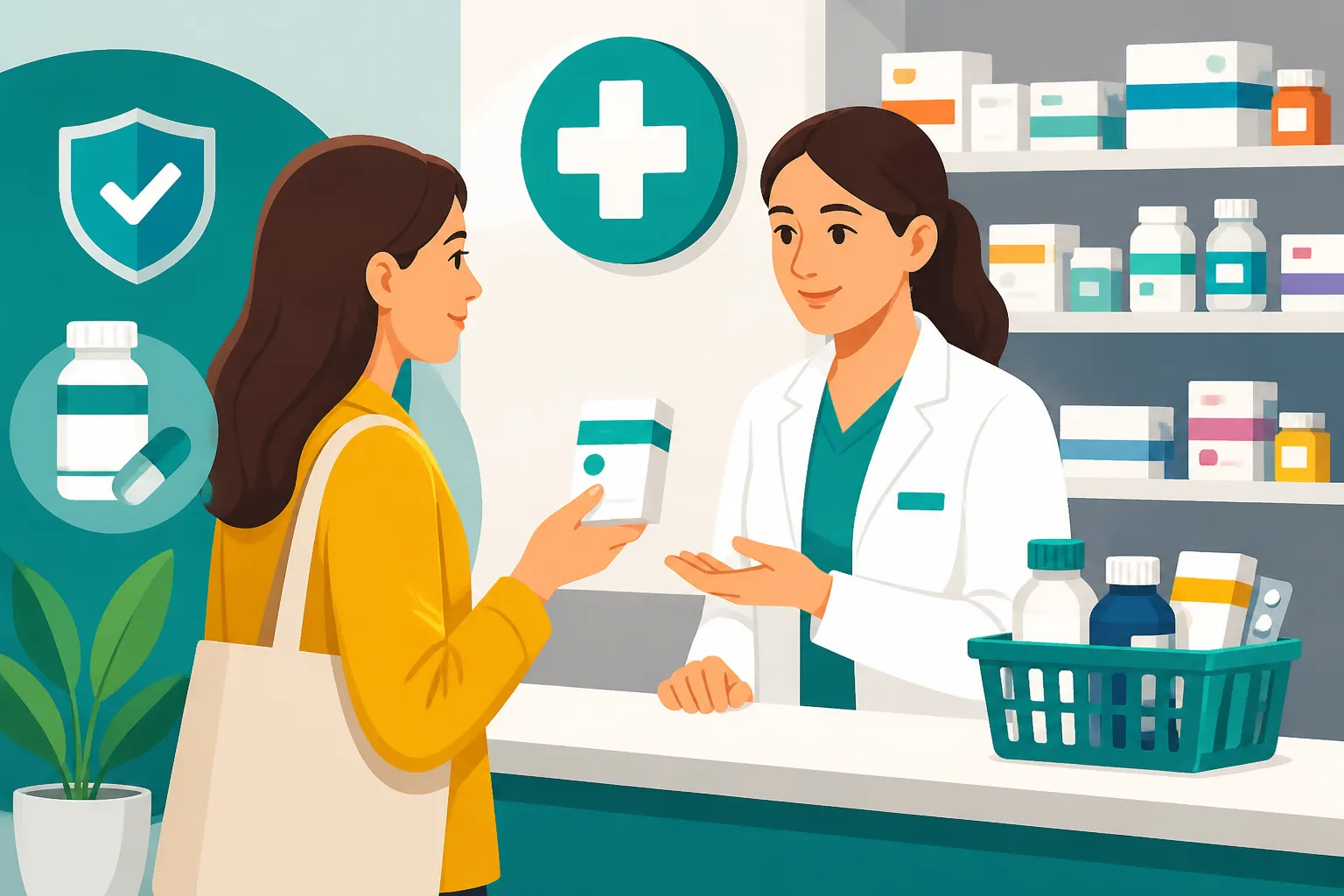
Swedish pharmacies are divided into two distinct zones. The front of the shop is self-service, where you will find bandages, skincare, vitamins, and very basic OTC medicines like certain throat lozenges. However, most "active" OTC medicines—the ones that actually treat pain, fevers, or allergies—are kept in a specific section that may require you to talk to a pharmacist.
If you see a ticket machine (kösystem) near the entrance or the back counter, take a ticket immediately. Swedes love their queues. Even if you only want to ask a quick question about which cream is best for a rash, you generally need to wait for your number to be called. This is also where you would go if you were Buying Over-the-Counter Medicine at a Swedish Apotek that is kept behind the counter for safety or age-verification reasons.
Language and Communication with Staff
One of the few reliefs of being an expat in Sweden is that almost every pharmacist speaks impeccable English. They are highly trained—often having completed a five-year Master of Science in Pharmacy. Don't be afraid to describe your symptoms in detail. They are legally allowed to give quite comprehensive medical advice for minor ailments.
If you are currently covered by a plan from Cigna Global or SafetyWing, you might be used to different brand names. The staff can help you find the Swedish equivalent of what you use back home by looking at the active ingredients. This professional guidance is part of the service, and they are generally very conservative with their recommendations, often suggesting rest and water before reaching for the heavy-duty meds.
Common Over-the-Counter Medicines and Swedish Names
In Sweden, you won't find brands like Tylenol, Advil, or Benadryl. Instead, you'll encounter a new set of household names. Understanding these equivalents is the first step toward feeling at home. The Swedish system relies heavily on the generic name of the drug, but specific brands dominate the shelves.
Pain Relief and Fever (Värk och Feber)
The two kings of pain relief in Sweden are Alvedon and Ipren. Alvedon is the brand name for Paracetamol (Acetaminophen), and Ipren is Ibuprofen. You can find these in various forms: tablets, effervescent discs (brustabletter), and even suppositories for children. It is worth noting that "extra strength" varieties are tightly controlled.
If you have a high fever, the pharmacist might recommend alternating between these two, but they will always check if you are taking other medications. For those who are still navigating the broader medical system, knowing these basics is essential before you even think about Registering with a Vårdcentral: Your Guide to Primary Care in Sweden. Often, a doctor’s first question will be if you’ve already tried Alvedon or Ipren at the maximum recommended dose.
Digestive Issues and Stomach Health (Mage och Tarm)
Swedish food can be a change for the digestive system, especially with the abundance of dairy and whole grains. For heartburn, look for brands like Gaviscon or Novalucol. If you’re dealing with a more "urgent" stomach issue, Imodium is available under the same name.
For long-term stomach health, Swedes are big believers in probiotics. You will find a massive selection of these in the self-service aisles. If your stomach issues persist, the pharmacist might suggest a consultation with a GP, which you can learn about in our guide on Finding a Doctor in Sweden: GPs, Specialists, and the Referral System.
Cold, Flu, and Allergy Relief
When the Swedish winter hits, the "förkylning" (common cold) is inevitable. For nasal congestion, "Nässpray" (nasal spray) is incredibly popular—brands like Otrivin or Nezeril are everywhere. Be careful, though; Swedes are very wary of nasal spray addiction and will warn you not to use it for more than ten consecutive days.
Allergy sufferers (pollen is a major issue here in spring) should look for Clarityn or Allegra. These are often available in small packs in the self-service area, but larger packs might be kept behind the counter to ensure you’ve spoken with a professional about your symptoms.
| English Common Name | Swedish Brand/Name | Active Ingredient |
|---|---|---|
| Tylenol / Panadol | Alvedon / Panodil | Paracetamol |
| Advil / Motrin | Ipren / Ibumetin | Ibuprofen |
| Benadryl (Diphenhydramine) | Desloratadine (Generic) | Desloratadine |
| Claritin | Clarityn | Loratadine |
| Tums / Rolaids | Novalucol / Rennie | Calcium/Magnesium Carbonate |
| Neosporin | LHP / Bacimycin | Hydrogen Peroxide / Bacitracin |
| Pepto-Bismol | (No direct equivalent) | Use Dimetikon for gas or Gaviscon for acid |
Understanding Regulations and Age Restrictions
Sweden takes medicine safety very seriously. This is why you cannot buy a 100-pack of Ibuprofen at a convenience store. The regulations are designed to prevent accidental overdose and to ensure that people aren't self-medicating for conditions that require professional intervention.
The 18+ Rule and ID Requirements
To buy any medicine in Sweden, even basic painkillers, you must be at least 18 years old. This applies whether you are at a dedicated Apotek or a supermarket. If you look under 25, be prepared to show ID. For expats, a residence permit card or a foreign passport works, but once you have your Swedish ID card, life becomes much easier.
This age restriction is strictly enforced. If you are an expat parent, you can buy medicine for your children, but your teenager cannot go down to the shop to buy their own Alvedon. For more information on how the state supports child health beyond just medication, see our article on Family and Children's Healthcare in Sweden: BVC, Mödravård, and Beyond.
Medicine Sales Outside of Pharmacies
Since 2009, certain non-prescription medicines have been allowed to be sold in grocery stores (like ICA, Coop, or Willys) and petrol stations. However, the selection is very limited. You will typically only find:
- Small packs of Paracetamol and Ibuprofen.
- Nicotine replacement therapy (gum/patches).
- Certain nasal sprays and throat lozenges.
These items are usually kept behind the checkout counter or in a locked cabinet. You have to ask the cashier for them, and the same 18+ age limit applies. If you need anything more specialized—like hydrocortisone cream or specific allergy meds—you must go to a proper Apotek.
Quantity Limits and Safety Regulations
Don't be surprised if the pharmacist questions you if you try to buy multiple boxes of the same medication. There are informal and sometimes formal limits on how much a single person can buy to prevent stockpiling. This is part of the broader Swedish philosophy of "Lagom"—just the right amount.
The packaging in Sweden is also highly regulated. Most pills come in blister packs rather than bottles. This is a deliberate safety feature to make it harder for children to access the medication and to help adults track their dosage. If you have chronic conditions and are worried about how these limits affect your long-term health management, you might want to look into Managing a Chronic Condition in Sweden: Diabetes, Asthma, and More.
Managing Costs and Insurance for OTC Meds
Unlike prescription medications, which are covered by The Högkostnadsskydd Explained: Sweden's Healthcare Cost Ceiling and Frikort, over-the-counter medicines are paid for entirely out of pocket. There is no "high-cost protection" for the Alvedon you buy for a headache.
Out-of-Pocket Costs vs. Subsidized Prescriptions
OTC medicines in Sweden can be surprisingly expensive compared to other countries. A small box of 20 paracetamol tablets can cost between 30 and 50 SEK. If your doctor prescribes an "OTC" medicine for a chronic condition, it then becomes part of the subsidized system, which can save you a significant amount of money over time.
For those moving to Sweden on a temporary basis, or those who haven't yet received their Personnummer, these costs can add up. This is where having a robust international plan from Cigna Global or SafetyWing can be a lifesaver. While they typically don't cover a one-off box of painkillers, they are essential for more significant medical needs that might arise if your "minor" ailment turns out to be something more serious.
The Role of Private Insurance
While the Swedish public system is fantastic, the wait times for non-emergency issues can be long. Some expats choose Private Health Insurance in Sweden: When Sjukvårdsförsäkring Is Worth It to get faster access to specialists who can then write the prescriptions that move your medication costs from "full price OTC" to "subsidized prescription."
If you are using SafetyWing or Cigna Global, make sure you keep all your receipts from the Apotek. Even if a specific OTC medication isn't covered, the documentation of your visit and the pharmacist’s advice can be helpful if you later need to file a claim for a related doctor's visit or a more advanced treatment.
Generic vs. Brand Name Options
When you ask for "Ipren," the pharmacist might ask if you want "det billigaste" (the cheapest) option. This will be a generic version of Ibuprofen. In Sweden, generic medications undergo the same rigorous testing as brand names. Switching to generics can save you 20-40% on your total bill, which is a smart move if you are stocking up for the flu season.
Digital Health and Ordering Online
Sweden is one of the most digitized countries in the world, and the pharmacy sector is no exception. You can handle almost all your pharmacy needs from your smartphone, provided you have the "holy grail" of Swedish life: BankID.
Using 1177.se and BankID for Pharmacy Services
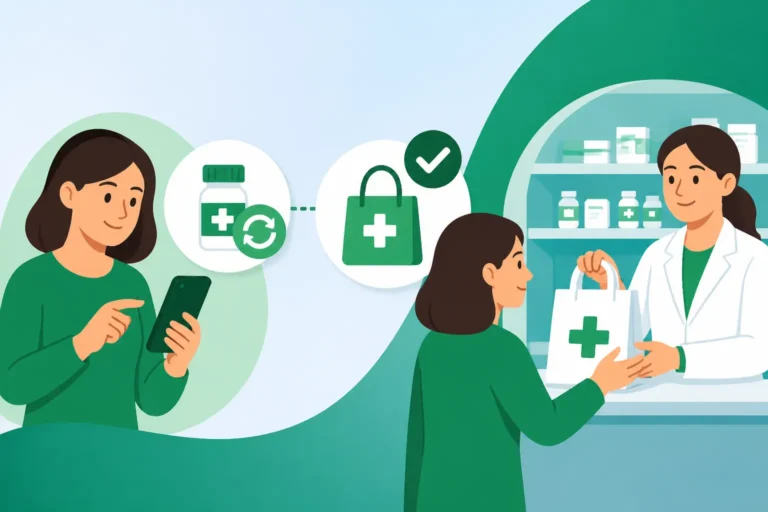
By logging into the 1177.se portal, you can see all your current prescriptions, but you can also find out which pharmacies near you have a specific OTC medication in stock. This saves you from trekking across town only to find that the local Apotek is out of the specific allergy eye drops you need.
For a deeper dive into the digital side of Swedish health, check out 1177 Vårdguiden: Navigating Sweden's National Health Advice Line and Portal. You can even use the portal to message your doctor if an OTC medicine isn't working and you think you need something stronger, as explained in Can I Message My Doctor Online in Sweden?.
Online Pharmacies and Home Delivery
Services like Apotea, MEDS, and Doz Pharmacy have revolutionized how residents Buying Over-the-Counter Medicine at a Swedish Apotek. These online-only pharmacies often have much lower prices than physical stores and offer incredibly fast delivery—sometimes within two hours in major cities.
The beauty of these platforms is the detailed product descriptions. When you're still learning the language, reading a product description on a screen where you can use a translation tool is much less stressful than trying to explain a fungal infection to a pharmacist in person.
App-Based Consultations and OTC Advice
Digital healthcare providers like KRY and Doktor.se often have integrated pharmacy services. After a video consultation, the doctor can recommend specific OTC medications, and the app will provide a direct link to buy them online. This seamless integration is part of why How Sweden's Tax-Funded Healthcare Works: Regions, Costs, and Coverage is considered so efficient, even if the "human" wait times can be frustrating.
Practical Tips for New Arrivals
Newcomers are often advised: don't wait until you're sick to find your local Apotek. The Swedish winter is dark and long, and a simple cold can feel ten times worse when you're trying to figure out a foreign pharmacy system in the rain.
Stocking Your First Swedish Medicine Cabinet
When you first move into your apartment, head to an Apotek and buy the "starter pack." This should include:
- A box of Alvedon (Paracetamol).
- A box of Ipren (Ibuprofen).
- A digital thermometer (febertermometer).
- A basic first aid kit (plåster and sårtejp).
- A bottle of hand sanitizer (handsprit).
Having these on hand prevents the "emergency" run to the supermarket at 9:00 PM when you realize they’ve just locked the medicine cabinet for the night. If you’re still in the process of setting up your life, you might also be wondering Can I See a Doctor in Sweden Before I Get My Personnummer?. The answer is yes, but having your own OTC supplies will save you a lot of hassle in those first few weeks.
Dealing with Emergency Needs After Hours
If it’s 2:00 AM and you have a medical emergency that can't wait, do not go looking for a pharmacy. You should call 1177 for advice or, in life-threatening situations, 112. For more on this, see Emergency Medical Care in Sweden: 112, Akutmottagning, and Urgent Help.
If you just need non-emergency medicine late at night, your only options are the 24-hour pharmacies in the major cities. In Stockholm, for example, the "CW Scheele" pharmacy near the Central Station is the most famous 24-hour spot. Be prepared for a bit of a wait, as it’s often the only place open for millions of people.
Important Considerations for Foreign Residents
Finally, remember that the Swedish approach to medicine is "less is more." You might find that doctors and pharmacists are reluctant to suggest antibiotics or strong painkillers for things that might be treated with OTC options in your home country. This can be frustrating, but it’s a deeply ingrained part of the medical culture aimed at reducing drug resistance and long-term side effects.
If you are coming from a country where you can buy high-dose codeine or strong antibiotics over the counter, you will need to adjust your expectations. Everything in Sweden is about the "Vårdgaranti"—the guarantee of care—but that care is often paced and conservative. To understand your rights as a patient, check out The Vårdgaranti: Your Right to Timely Care in Sweden.
By understanding the Apotek system, you’re not just buying medicine; you’re taking a major step in successfully navigating Swedish society. Stay healthy, keep your BankID ready, and always take a queue ticket!
Disclaimer
This guide is intended for informational purposes only and does not constitute professional medical advice, diagnosis, or treatment. Always seek the advice of your physician or other qualified health provider with any questions you may have regarding a medical condition. Swedish healthcare regulations and available medications may change; always consult with a licensed Swedish pharmacist at an authorized Apotek for the most current information.