Emergency Medical Care in Sweden: 112, Akutmottagning, and Urgent Help
Waking up at 2 AM with a sharp, stabbing pain in your abdomen or a child with a dangerously high fever is terrifying enough, but doing it in a country where you don't fully understand the emergency protocols adds a layer of paralyzing anxiety. I remember my first midnight dash to a Swedish hospital, feeling completely lost regarding where to go or what to say. This guide solves that confusion, detailing exactly how to navigate 112, the ER, and urgent care help in Sweden.
Understanding the Swedish Emergency Hierarchy
When you are in the middle of a medical crisis, the Swedish healthcare system can feel like a series of locked doors if you don't know which key to use. Unlike some countries where the emergency room (ER) is a catch-all for any problem after 5 PM, Sweden operates on a strict hierarchy designed to keep the most intensive resources available for life-threatening situations. It’s a system built on efficiency, but for an expat, it can initially feel like a gatekeeping exercise.
When to Call 112 vs 1177
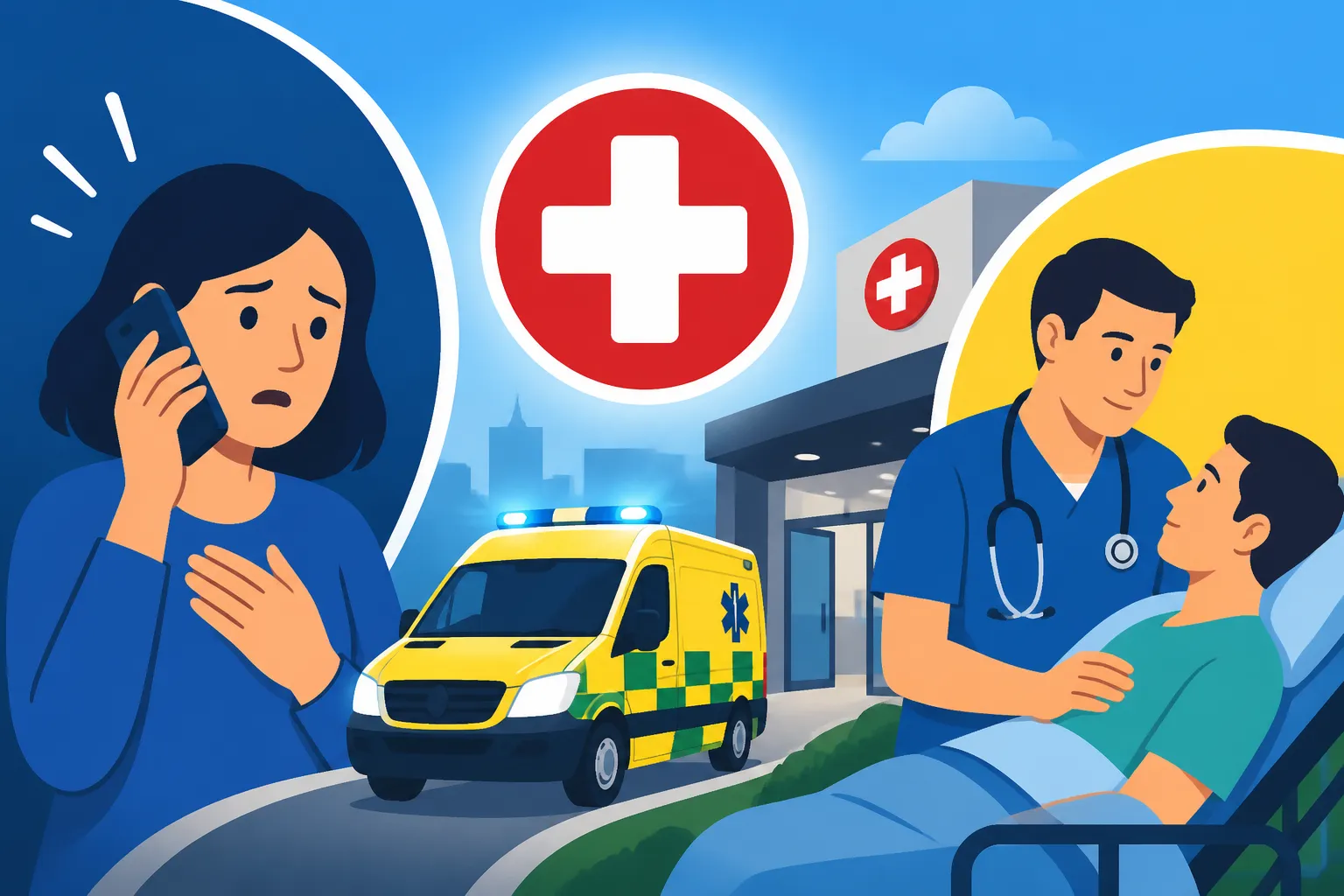
The distinction between 112 and 1177 is the most critical piece of information you can memorize. 112 is for immediate, life-threatening emergencies where every second counts—think heart attacks, unconsciousness, or major trauma. When you call 112 in Sweden, you are connected to SOS Alarm, which dispatches ambulances, police, and fire services. The operators are highly trained and usually speak excellent English, but they are there to manage "right now" crises.
On the other hand, 1177 is the national health advice line. If you are unsure if your situation is an emergency, call 1177 first. You will speak to a registered nurse who can assess your symptoms over the phone. I’ve called them for everything from suspicious rashes to persistent high fevers. They will tell you whether to wait for your local clinic to open, head to a "Närakut" (urgent care), or go straight to the "Akutmottagning" (ER). For more details on this service, see our guide on 1177 Vårdguiden: Navigating Sweden's National Health Advice Line and Portal.
The Role of the Akutmottagning (ER)
The Akutmottagning, or "Akuten," is the heavy-duty emergency department found at major hospitals. This is where you go for things that cannot wait but might not require an ambulance—severe allergic reactions, suspected meningitis, or major fractures. However, be warned: if you show up at the Akuten with a minor ailment, you will likely be redirected to a different facility or face an incredibly long wait.
The ER is structured around triage. When you arrive, you’ll be assessed by a nurse who assigns you a priority level. If you are breathing and conscious, you might see people who arrived after you being rushed in first. This is normal but can be incredibly frustrating when you’re in pain. This is a fundamental part of Healthcare in Sweden for Foreign Residents: The Complete System Guide (2026, where resources are allocated based on medical necessity rather than the order of arrival.
Identifying Local Närakut Centers
The "Närakut" is a brilliant Swedish invention that many expats overlook. It’s an urgent care center designed for things that are "urgent but not life-threatening." Think of broken wrists, deep cuts requiring stitches, or sudden high fevers that 1177 has flagged as needing an in-person checkup. They have X-ray machines and lab facilities but aren't equipped for major surgeries or intensive care.
Finding your nearest Närakut before you need it is a lifesaver. They usually have shorter wait times than the big hospital ERs and are much better suited for family mishaps. If you are traveling through Sweden or have just arrived and haven't secured long-term coverage, services like SafetyWing can be very helpful in navigating these costs, especially if you haven't yet received your Swedish personnummer.
Navigating the 112 Emergency Line
Calling for an ambulance is a high-stress moment. In Sweden, the 112 service is incredibly robust, but there are specific things you should expect to ensure the process goes as smoothly as possible. The system is centralized, meaning the operator is coordinating multiple services simultaneously while talking to you.
What Happens When You Call
When you dial 112, the operator will immediately ask "Vad har hänt?" (What has happened?) and "Vilket nummer ringer du ifrån?" (What number are you calling from?). They need to establish the nature of the emergency and your location instantly. Even if your Swedish is shaky, stay calm and speak English—they will understand you.
The operator stays on the line until they have all the necessary information, and in many cases, they will keep you on the phone to give medical instructions (like how to perform CPR or stop bleeding) until the ambulance arrives. They are also checking your location via GPS if you are calling from a smartphone, though you should always be ready to give an address or landmark.
Language Support and Communication
While almost all 112 operators speak English, there can be moments of miscommunication during high-stress calls. If you are with someone who speaks Swedish, let them handle the call. If you are alone and struggling, use simple, clear words. Instead of "I think my friend might be having a cardiac event," say "My friend has chest pain and cannot breathe."
Sweden also has a text-based 112 service for the deaf or hard of hearing, which requires pre-registration. For most expats, the standard voice call is the way to go. If your English is also limited, the operator can sometimes patch in an interpreter, but this takes extra time that you might not have in a true emergency.
Ambulance Services and Costs
Unlike in some countries where an ambulance ride can cost thousands of dollars, Swedish ambulance services are heavily subsidized. You will generally be charged a flat patient fee, which varies by region (usually between 200 and 400 SEK). If you are admitted to the hospital, this fee might even be waived or included in your daily hospital stay fee.
It’s important to note that an ambulance is not a "taxi to the front of the line" at the hospital. The paramedics will assess you, and if they determine your condition isn't critical, they may actually advise you to take a taxi to a Närakut instead of bringing you to the ER. This is part of the system's focus on resource management. If you are an expat from outside the EU, having insurance like Cigna Global ensures that these regional fees and any subsequent hospital costs are handled without you having to worry about the paperwork during a crisis.
The Reality of the Akutmottagning (Emergency Room)
Walking into a Swedish "Akuten" can be an overwhelming experience. It’s often crowded, clinical, and quiet. Understanding the mechanics of how the ER works will save you a lot of stress and help you manage your expectations regarding time and care.
Triage: Why You Might Wait Hours
Triage is the heartbeat of the Swedish ER. Within a short time of arriving, you will be seen by a triage nurse. They will take your vitals (blood pressure, pulse, temperature) and ask about your symptoms. Based on this, you are categorized. If you are categorized as "yellow" or "green," and a "red" or "orange" case (like a stroke or car accident victim) comes in, your wait time resets.
I have personally waited six hours in a Stockholm ER with a suspected broken foot. While it was agonizing, the staff were professional, and I knew that if my condition had been life-threatening, I would have been seen in seconds. This is the trade-off of a socialized system: high-quality care for all, but prioritized by severity.
What to Bring to the ER
If you are heading to the ER and it’s not a "leave right this second" situation, there are a few essentials you should grab. First, your ID (Swedish ID card, passport, or residence permit). Second, a list of any medications you are currently taking. Third, your phone charger—you will likely be there a while.
I also recommend bringing a snack and water, although most ERs have vending machines. If you have children, bring something to entertain them. The waiting rooms are often sparse. If you are still in the process of Registering with a Vårdcentral: Your Guide to Primary Care in Sweden, the ER staff will still treat you, but having your documentation ready will speed up the administrative side of your visit.
Patient Fees and Registration
When you first walk into the ER, you’ll usually find a reception desk or a self-service kiosk. You must register here. If you have a Swedish personnummer, the fee is usually around 400 SEK. If you don't have a personnummer or an EHIC card (for EU citizens), the fee can be significantly higher—sometimes 2,000 to 3,000 SEK just for the initial assessment.
The good news is that these fees are tracked. Once you reach a certain amount in a 12-month period, you are covered by the Högkostnadsskydd Explained: Sweden's Healthcare Cost Ceiling and Frikort. This means any further visits within that year are free. For expats, especially those waiting on Migrationsverket, it’s vital to keep your receipts if you haven't yet been entered into the system.
| Service Level | Typical Use Case | Estimated Cost (with Personnummer) | Wait Time |
|---|---|---|---|
| 112 / Ambulance | Life-threatening (Stroke, Heart Attack) | 200 – 400 SEK | Minutes |
| Akutmottagning (ER) | Severe injury, sudden serious illness | 400 SEK | 2 – 8 hours |
| Närakut (Urgent Care) | Broken bones, deep cuts, high fever | 250 – 400 SEK | 1 – 4 hours |
| Jourcentral | Minor illness outside clinic hours | 200 – 300 SEK | 1 – 3 hours |
| 1177 Vårdguiden | Medical advice and assessment | Free | 5 – 30 minutes (phone) |
Urgent Care for Non-Life-Threatening Situations
If your situation is painful or worrying but doesn't feel like a "hospital emergency," Sweden has several intermediate options. Using these correctly is the hallmark of a "pro" expat who knows how to work the system.
Using 1177 Vårdguiden as Your First Filter
I cannot stress this enough: always call 1177 unless someone isn't breathing. The nurses on the line have a massive database and specific protocols for every region in Sweden. They can tell you exactly which Närakut near you has the shortest wait time or which hospital has the specific specialist on duty.
They can also save you a trip entirely. Sometimes, what feels like an emergency is something that can be managed at home with over-the-counter medication until your regular doctor's office opens. This prevents you from sitting in a cold waiting room for six hours only to be told to take Alvedon (paracetamol).
Närakut: The Middle Ground of Care
The Närakut is your best friend for childhood accidents. When my toddler took a tumble and his arm looked "wrong," we headed to a Närakut. They had an X-ray tech on-site, confirmed a greenstick fracture, put on a temporary splint, and sent us to the specialist the next morning.
Most Närakuts are open from 8 AM to 10 PM. They are staffed by doctors and nurses who are experts in "emergency-lite" care. In cities like Stockholm, Gothenburg, or Malmö, there are several to choose from. If you have insurance through a provider like Cigna Global, you might also have access to private urgent care clinics that offer even faster service, though these are less common for true trauma.
Jourcentral: After-Hours Primary Care
A "Jourcentral" is essentially a primary care clinic (Vårdcentral) that stays open late and on weekends. They don't have the diagnostic tools (like X-rays) of a Närakut, but they are perfect for things like ear infections, sudden urinary tract infections, or worsening flu symptoms.
If your regular Vårdcentral is closed, 1177 will often refer you to a Jourcentral. It’s a great way to get a prescription or a quick physical exam without clogging up the ER. It’s also where you can get a "sick note" if your illness is preventing you from working and you’ve already used your self-certified sick days.
Specialized Emergency Services
Not all emergencies are physical. Sweden recognizes that mental health crises and dental agony require specific types of urgent intervention that a standard ER might not be best equipped to handle.
Psychiatric Emergency Care (Psykiatrisk Akutmottagning)
If you or someone you know is experiencing a mental health crisis, Sweden has dedicated psychiatric emergency rooms ("Psykiatrisk Akutmottagning"). These are separate from the medical ERs to provide a calmer, more specialized environment. You can go here if you are experiencing suicidal thoughts, severe psychosis, or a debilitating panic attack.
The staff includes psychiatrists and specialized nurses. Accessing this care is vital, and the costs are usually the same as a standard ER visit. For longer-term support, you would typically transition to a regular psychologist, which we detail in our guide to Mental Health Support in Sweden: Psychologists, Therapy, and Referrals.
Dental Emergencies (Tandakuten)
A toothache can be as debilitating as a broken bone. However, dental care in Sweden is managed separately from medical care. If you have a dental emergency—a knocked-out tooth or an abscess—you need to look for a "Tandakut."
The public dental service, Folktandvården, usually has an emergency clinic in every major city that operates on weekends and holidays. Be aware that adult dental care is not subsidized in the same way as medical care. You will pay more out-of-pocket, even in an emergency. For more on this, see Dental Care in Sweden: Folktandvården, Costs, and the Tandvårdsbidrag.
Pediatric Emergencies (Barnakuten)
In many regions, children have their own emergency rooms called "Barnakuten." These are staffed by pediatricians and are designed to be less intimidating for kids. If your child is under 18, 1177 will often direct you to the nearest Barnakuten rather than the general Akuten.
The care here is exceptional. Sweden prioritizes children's health, and the wait times can sometimes be shorter because the triage is specific to pediatric needs. If you are a new parent in Sweden, knowing the location of your nearest Barnakuten is essential for peace of mind.
Healthcare Costs and the High-Cost Ceiling
One of the biggest worries for expats is the cost of emergency care. While Sweden's system is tax-funded, it is not "free" at the point of service. However, it is designed to be affordable for everyone living in the country.
Understanding Patient Fees in Different Regions
Sweden is divided into 21 regions, and each region sets its own patient fees. While they are generally similar, there are small differences. A visit to the ER in Stockholm might cost slightly more or less than one in Skåne. Generally, you can expect to pay between 250 and 400 SEK for an emergency visit.
If you don't have a Swedish personnummer, these fees can be much higher because the regional government isn't subsidizing your visit yet. This is where having a travel or expat insurance policy from a company like SafetyWing is crucial, as they can reimburse these higher "non-resident" fees while you wait for your residency paperwork to clear.
How the Högkostnadsskydd Protects You
The "Högkostnadsskydd" (high-cost protection) is a safety net that ensures nobody goes bankrupt due to medical bills. Once you have paid a certain amount in patient fees (currently 1,400 SEK within a 12-month period), you receive a "Frikort." This card makes all subsequent doctor visits and ER trips free for the remainder of that 12-month period.
This system is automatic for those with a personnummer and BankID. The database tracks your payments across different regions and clinics. If you’ve reached the limit, you simply show your ID, and the fee is waived. You can find more about How the Frikort Works Once You Reach the High-Cost Ceiling in our dedicated finance section.
The Role of Private Insurance
While public healthcare is the backbone of Sweden, many expats choose to supplement it with private insurance. Policies from Cigna Global or local "Sjukvårdsförsäkring" providers can offer faster access to specialists and private clinics for follow-up care after an emergency.
In a true life-or-death emergency, everyone goes to the same public hospitals—the private system in Sweden isn't built for major trauma. However, for the recovery phase—physiotherapy, specialist consultations, or elective surgeries—private insurance can significantly cut down the waiting time. You can read more about this in Private Health Insurance in Sweden: When Sjukvårdsförsäkring Is Worth It.
Administrative Hurdles for Newcomers
Navigating an emergency is hard enough without having to worry about administrative "Red Tape." For newcomers who haven't yet been fully integrated into the Swedish population register, there are a few things to keep in mind.
Emergency Care Without a Personnummer
If you are a non-EU citizen and don't have a personnummer yet, the hospital will still treat you. By law, Swedish hospitals must provide "care that cannot wait." They will likely issue you a "reserve number" (reservnummer) to track your medical records.
You will, however, be billed as a non-resident. This means you will receive an invoice for the full cost of the care, which can be thousands of kronor. If you have private insurance, you will need to pay this and then claim it back, or in some cases, the insurance provider can handle direct billing with the hospital.
Using your EHIC or Passport
If you are an EU/EEA citizen, your European Health Insurance Card (EHIC) is your most valuable document. It entitles you to emergency care at the same price as a Swedish resident. Always keep a photo of it on your phone at the very least.
If you don't have an EHIC or a personnummer, your passport is your primary form of ID. The hospital needs it to create your temporary file. Don't let the lack of a "Swedish number" stop you from seeking help; the doctors care about your health first and your ID second.
Follow-up Care and Referrals
After an emergency visit, you will often need follow-up care—stitches removed, a cast checked, or more tests. The ER will usually tell you to contact your "Vårdcentral" (primary care clinic) for this. If you haven't registered with one yet, you should do so immediately after your emergency.
Registration is usually done through the 1177.se portal with a BankID, or by visiting a clinic in person and filling out a form. Once registered, your records from the ER can be accessed by your GP, ensuring continuity of care. This is a vital step in the Swedish healthcare journey.
Practical Preparation for Emergencies
The best time to prepare for an emergency is when you don't have one. Taking thirty minutes today to set up your "emergency kit" will save you hours of panic later.
Setting Up Your ICE (In Case of Emergency) Info
Make sure your "ICE" contact is set up on your smartphone so that medical staff can access it even if your phone is locked. In Sweden, it’s also helpful to have your "Personnummer" (if you have one) written down somewhere accessible, like in your wallet.
If you have chronic conditions or severe allergies, consider getting a medical alert bracelet. While Swedish doctors are thorough, having that information immediately visible can be life-saving if you are unconscious.
Locating Your Nearest Facilities
Don't wait for a crisis to find out where your nearest "Akutmottagning" and "Närakut" are. Use Google Maps or the 1177.se website to find them now. I recommend actually driving or taking the bus to them once, just so you know exactly where the entrance is. Some hospital campuses in Sweden are massive and confusingly laid out.
Also, check the opening hours. While the Akuten is 24/7, many Närakuts close at 10 PM. Knowing where to go at 11 PM vs. 9 PM is a crucial bit of local knowledge.
Essential Swedish Medical Vocabulary
While English is widely spoken, knowing a few keywords can help you navigate hospital signs or explain your pain more clearly to a nurse who might be having a busy shift.
- Akutmottagning – Emergency Department
- Närakut – Urgent Care Center
- Vårdcentral – Primary Care Clinic
- Andningsnöd – Difficulty breathing
- Bröstsmärtor – Chest pain
- Medvetslös – Unconscious
- Olycksfall – Accident
- Smärta – Pain
- Feber – Fever
- Recept – Prescription
Disclaimer
The information provided in this article is for general informational purposes only and does not constitute professional medical or legal advice. While we strive to keep the information up to date and correct, healthcare policies and costs in Sweden can change. Always consult with 1177 Vårdguiden or a qualified healthcare professional in an emergency. If you are experiencing a life-threatening emergency, dial 112 immediately.