Does Sweden Have Air Ambulance Services for Remote Areas?
You are standing on a remote trail in the heart of Sarek National Park or perhaps enjoying the serenity of a cabin in the deep woods of Värmland, when suddenly, a medical emergency strikes. I’ve been there—that cold spike of adrenaline when you realize you are hours away from the nearest road, let alone a hospital. This guide solves the mystery of Sweden’s air ambulance infrastructure, explaining exactly how emergency medical flights work in the most remote corners of the country.
The Reality of Sweden’s Remote Geography and Emergency Care
Sweden is a land of vast contrasts, from the bustling streets of Stockholm to the nearly uninhabited stretches of the Arctic North. If you have recently moved here, you likely already know that while the cities are hyper-modern, the wilderness is truly wild. The Swedish healthcare system is designed to provide equal care regardless of where you live, but when "where you live" is an island in the Stockholm archipelago or a village in Norrland with more moose than people, the logistics change.
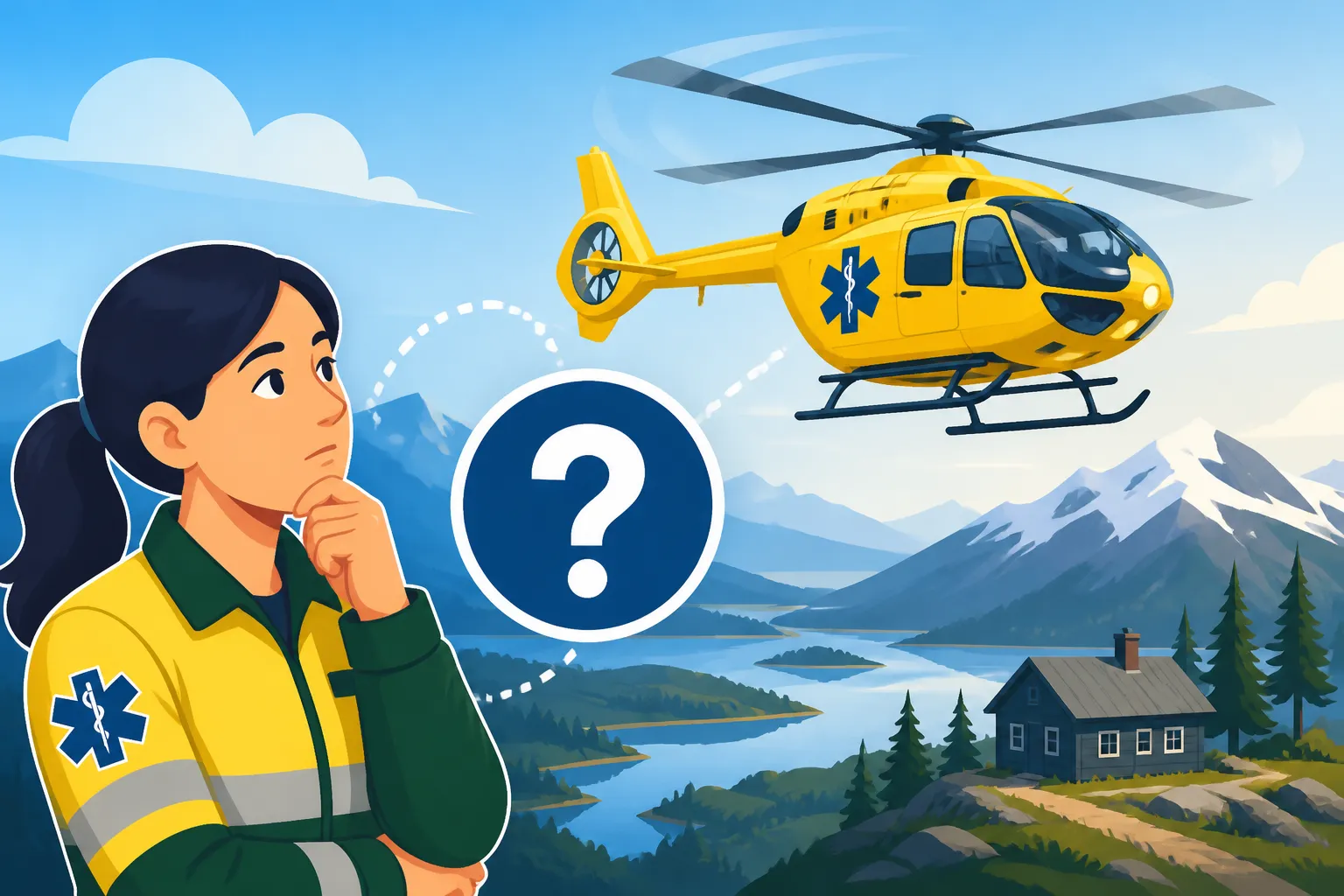
To bridge these massive gaps, Sweden relies on a sophisticated network of air ambulance services, known as Ambulanshelikopter (ambulance helicopters) and Flygambulans (fixed-wing ambulance planes). This isn't a single national entity but a highly coordinated effort between the 21 administrative regions. Most regions in the north, where distances are greatest, have their own dedicated aircraft or participate in a joint venture called Svensk Luftambulans (SLA).
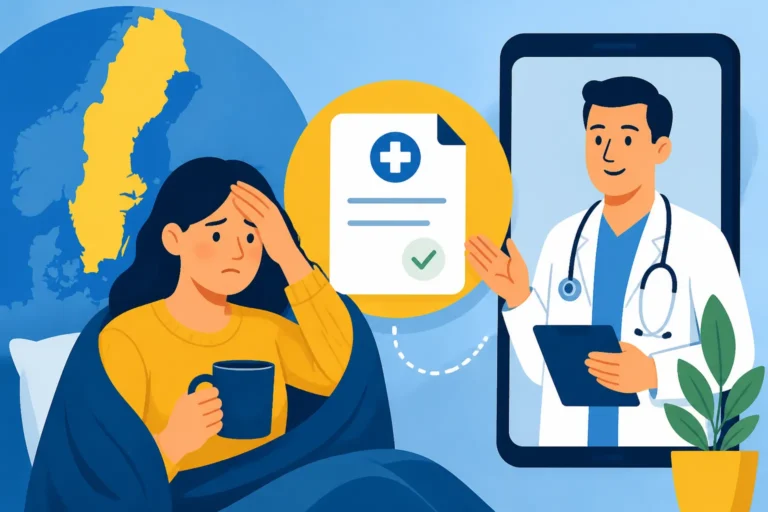
I remember talking to an expat friend who was terrified about moving to Jämtland because of her chronic heart condition. She was worried that if something happened, a ground ambulance would take four hours. In reality, the air ambulance system is the backbone of rural safety. These aren't just transport vehicles; they are flying intensive care units staffed by specialist doctors and nurses. If you are in a remote area, the system is designed so that the "hospital" comes to you before you are even moved. Knowing how to navigate this starts with understanding 1177 Vårdguiden: Navigating Sweden's National Health Advice Line and Portal, which is your first point of contact for non-emergency medical questions, though for air rescue, the process is much more immediate.
How the Dispatch Process Works for Air Rescue
If you find yourself in a situation where you or someone else requires an air ambulance, you will not be calling a specific flight company. In Sweden, everything goes through the national emergency number. You must dial 112. The operators at SOS Alarm are trained to determine if your situation warrants a helicopter based on the severity of the medical condition and your geographical location.
When you call 112, the dispatcher uses GPS tracking from your phone—which is why it is vital to have a charged device when venturing into the wild. If the dispatcher determines that a ground ambulance cannot reach you in time or at all, they will alert the regional air ambulance base. For tourists or expats who may not yet be fully integrated into the local system, having a plan like SafetyWing can be a literal lifesaver, as they often provide specialized support and coverage for travelers who might need coordination during such high-stress events.
In many cases, if you are in the mountains (the fjällen), the dispatch might involve the Fjällräddningen (Mountain Rescue), which is a branch of the Swedish Police. They often work in tandem with medical helicopters. While the police handle the search and rescue (getting you out of the crevasse), the air ambulance handles the medical stabilization (keeping you alive during the flight). It’s a seamless handoff that most foreigners find surprisingly efficient, provided you can clearly communicate your location. Understanding Is the 112 Emergency Line in Sweden Free to Call? is basic knowledge for anyone living here, as the call itself is always free, even if your phone has no SIM card or credit.
Costs and Coverage for Residents and Visitors
One of the most common questions I get from newcomers is: "Will I get a bill for ten thousand dollars if a helicopter picks me up?" This is a valid fear, especially for those coming from countries with private healthcare systems. In Sweden, the answer depends heavily on your residency status and the nature of the rescue.
If you are a registered resident with a Personnummer, the cost of an air ambulance is treated like any other emergency medical visit. You are covered by the regional health system. You will typically only pay a small patient fee ( patientavgift ), which is usually around 200 to 400 SEK, and this amount counts toward your The Högkostnadsskydd Explained: Sweden's Healthcare Cost Ceiling and Frikort. Once you hit the annual cap, usually around 1,400 SEK, the rest of your healthcare for the year is free.
For visitors or those still waiting for their residency to be processed, the situation is different. If you are from the EU, you should always carry your EHIC card. However, if you are a non-EU expat or a tourist, you are technically liable for the full cost of the flight, which can be astronomical. This is why private options like Cigna Global are so popular among the international community here; they provide that extra layer of financial protection so you aren't stuck with a massive debt following a traumatic accident.
| Service Type | Typical Response Area | Staffing Level | Cost for Residents |
|---|---|---|---|
| Ground Ambulance | Urban and accessible rural roads | Paramedics/Nurses | Standard patient fee |
| Ambulance Helicopter | Hard-to-reach terrain/Time-critical | Doctor & Specialist Nurse | Standard patient fee |
| Fixed-Wing Plane | Long-distance inter-hospital transfer | Specialist Flight Nurses | Covered by Region |
| Mountain Rescue | Alpine/Wilderness (Police-led) | Rescue Volunteers/Police | Free (if life-threatening) |
When you are first settling in, Understanding Patient Fees (Patientavgift) Across Sweden's 21 Regions is crucial because each region has slightly different rules, though the air ambulance protocols remain fairly consistent across the board.
The Infrastructure: Where Are the Air Bases?
Sweden’s air ambulance fleet is strategically placed to cover the maximum amount of territory in the shortest time. Major bases are located in places like Stockholm (Mölnvik), Uppsala, Gothenburg, and Östersund. In the far north, where the distance between hospitals is the greatest, bases in Gällivare and Lycksele are essential.
These helicopters are equipped with Night Vision Imaging Systems (NVIS), allowing them to land in pitch-black conditions or during the grueling Swedish winters. This is particularly important for the "winter darkness" months when the sun barely rises. If you are living in a remote area, you might notice that local communities often have designated "HEMS" (Helicopter Emergency Medical Service) landing sites—these are clearings that are kept maintained so the pilot can land safely even in deep snow.
If your condition is stable but you need to be moved from a small regional hospital in the north to a specialist facility in the south (like the Karolinska University Hospital in Stockholm), the system uses fixed-wing aircraft. These "flying ambulances" operate out of regional airports and handle the long-haul transfers that a helicopter isn't suited for. For expats moving into rural areas, knowing What Should I Do in a Medical Emergency Outside a Major Swedish City? will help you understand how these different layers of transport work together to get you to the right specialist.
Legal and Administrative Hurdles for Foreigners
Even though the medical care in Sweden is world-class, the administrative side can be a headache. If you are rescued by an air ambulance before your Personnummer is issued, the hospital might struggle to register you in their system. There are cases where newcomers receive invoices for the full cost of care simply because the hospital didn't have their insurance details on file.
Always keep your passport and your insurance documents (like your Cigna Global policy or your EHIC) easily accessible, even when you are out hiking. If you are an EU citizen, Can EU Citizens Use Swedish Healthcare with an EHIC Card? is a must-read, as it explains your right to be treated under the same conditions as a Swede. Without that card or a local ID, the billing department at the regional hospital will default to "international patient" rates, which are significantly higher.
Another thing to keep in mind is the Vårdgaranti, or Care Guarantee. While this usually applies to elective surgeries and specialist appointments, it also reflects the Swedish commitment to timely care. You can learn more about this in the guide on The Vårdgaranti: Your Right to Timely Care in Sweden. In an emergency context, this means the region is legally obligated to get you to a facility that can treat you, even if that requires a cross-country flight.
Preparing for a Remote Emergency
The best way to deal with the need for an air ambulance is to ensure you never need one, but life is unpredictable. If you are moving to a remote part of Sweden, there are three things you should do immediately:
- Download the "SOS Alarm" App: This app automatically sends your exact coordinates to the dispatcher when you call 112. In the vast forests of Dalarna or the islands of the Baltic, this can save the helicopter 20 minutes of searching.
- Verify Your Insurance: Whether you are using a global provider like SafetyWing for a short-term stay or a more comprehensive expat plan, ensure that "Emergency Medical Evacuation" is included. Not all basic travel insurances cover helicopter rescues from the wilderness.
- Learn Basic Swedish Medical Terms: While most flight doctors speak perfect English, being able to describe your location and your pain in Swedish can speed things up.
Visitors to the Swedish backcountry may see the yellow-and-green helicopters of the Svensk Luftambulans. Each time, I’m reminded of how lucky we are to live in a country that treats a hiker in the middle of nowhere with the same urgency as a person standing outside a major hospital. If you are still in the process of moving, make sure you check out Registering with a Vårdcentral: Your Guide to Primary Care in Sweden to get your basic health records started, which helps the system understand your medical history should an emergency occur.
Specialized Rescue Scenarios: Sea and Mountain
It’s worth noting that air ambulance services often overlap with the Swedish Maritime Administration (Sjöfartsverket) if you are on the water. If you are sailing in the Baltic and have a medical crisis, a search and rescue (SAR) helicopter might be the one to respond. These crews are highly trained for hoist operations, meaning they can lift you directly from the deck of a boat.
In the mountains, the response might be a mix of the police helicopter and a medical one. The police helicopter is there to find you and get you to a safe "landing zone," while the medical helicopter is there to provide the ICU-level care. It’s a complex dance of rotors and radio calls that happens behind the scenes while you are focusing on staying warm and calm.
For those living in the north or near the coast, Healthcare Outside the Big Cities: Rural Vårdcentraler and Regional Hospitals provides more context on where the helicopter will actually take you. Often, you won't be taken to the local small clinic but directly to a "Landstingssjukhus" (regional hospital) with a trauma center.
Final Considerations for Expats and Tourists
Sweden does indeed have a robust air ambulance service, and it is one of the most egalitarian systems in the world. As long as you are legally in the country and have the right documentation, you will be cared for. The fear of being "lost" in the Swedish wilderness is often mitigated by the sound of those approaching rotors.
If you are a newcomer, don't let the vastness of the Swedish landscape intimidate you. Whether you are worried about Emergency Medical Care in Sweden: 112, Akutmottagning, and Urgent Help or just trying to figure out the local pharmacy, the system is built to support you. Just remember: charge your phone, tell someone where you are going, and make sure your insurance is in order.
Disclaimer
This article is for informational purposes only and does not constitute professional medical or legal advice. Swedish healthcare regulations and insurance requirements can change; always consult with official sources like 1177.se or Migrationsverket for the most current information.