Is Therapy Covered by Swedish Public Healthcare?
Moving to a new country like Sweden often brings a "honeymoon phase" followed by the harsh reality of dark winters and social isolation. When I first moved to Stockholm, the loneliness hit me like a freight train, and I realized I needed professional help but had no idea if the system would even take me in. This guide breaks down exactly how to access therapy via the public sector, what it costs, and what to do if the waiting lists are too long.
The Foundation of Public Mental Health in Sweden
The short answer is yes: therapy is absolutely covered by the Swedish public healthcare system. However, the "how" is often where foreigners get tripped up. In Sweden, mental healthcare is not a separate entity you just call up on a whim. It is deeply integrated into the regional healthcare system. To even begin the process, you must understand that your local health center, or Vårdcentral, is the gatekeeper to everything.
When you are Registering with a Vårdcentral: Your Guide to Primary Care in Sweden, you aren't just picking a place for flu shots; you are choosing your primary access point for mental health support. In the Swedish model, the GP (General Practitioner) acts as the first line of defense. You book an appointment, explain your symptoms—whether it’s depression, anxiety, or burnout—and they determine the "level" of care you need. It can feel a bit clinical and bureaucratic at first, especially when you're feeling vulnerable, but this is the standardized path everyone must follow.
For those who are still in the process of Getting Your Personnummer: The Gateway to Swedish Healthcare, accessing these services can be more complex. Without that magic ten-digit number, you aren't fully integrated into the system, though you aren't entirely barred from care either. Most public clinics will require a personnummer to track your history and apply the cost-capping subsidies that make Swedish healthcare so affordable. If you are an expat just starting out and feeling the weight of the move, knowing this structure exists is the first step toward feeling better.
Navigating the Referral System and the Vårdcentral
Once you’ve sat down with a GP at your health center, they will evaluate your needs. This is where you might encounter the "remiss" or referral. If your needs are considered mild to moderate, the Vårdcentral often has its own "First Line" mental health team. This usually consists of a counselor (kurator) or a psychologist. I remember being surprised that I didn't have to go to a fancy hospital; my therapy sessions happened in the same building where I went for my blood tests.
If your situation is more complex, the GP will write a formal referral to a specialist psychiatric clinic (Psykiatrimottagning). You can read more about How the Referral (Remiss) System Works for Seeing a Specialist in Sweden to understand the administrative side. The referral contains your medical history and the doctor's assessment of your urgency. This is a critical moment because the "urgency" level often dictates how long you will wait.
It is also worth noting that Sweden leans heavily on Evidence-Based Practice. This means that if you are seeking therapy through the public system, you are most likely going to be offered Cognitive Behavioral Therapy (KBT). While KBT is highly effective for many, if you are looking for long-term psychoanalysis or niche therapeutic modalities, you might find the public offerings somewhat limited. This is one of the primary reasons some expats choose to look at Private Health Insurance in Sweden: When Sjukvårdsförsäkring Is Worth It, which can sometimes offer a broader range of therapeutic styles.
Costs and the High-Cost Protection System
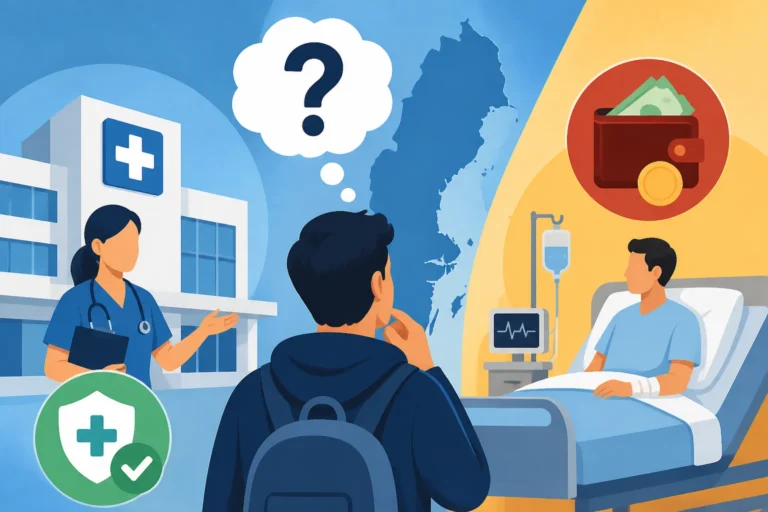
One of the most empathetic parts of the Swedish system is that your mental health won't bankrupt you. The cost of a therapy session at a public Vårdcentral or a referred specialist is the same as a standard doctor's visit. These fees vary slightly by region—for instance, Stockholm might charge differently than Skåne—but they generally range between 100 SEK and 400 SEK per session.
However, the real "safety net" is the high-cost ceiling. If you are Understanding Patient Fees (Patientavgift) Across Sweden's 21 Regions, you'll learn that there is a limit to how much you pay out of pocket in a 12-month period. Once you hit this limit (usually around 1,300 SEK to 1,400 SEK), the rest of your visits for the remainder of that year are free. This is called the "frikort."
| Service Type | Estimated Cost (Public) | High-Cost Protection Applied? | Access Method |
|---|---|---|---|
| GP Consultation | 200 – 300 SEK | Yes | Direct Booking |
| Counselor (Kurator) | 100 – 250 SEK | Yes | Via Vårdcentral |
| Psychologist (Public) | 200 – 450 SEK | Yes | Via Referral |
| Private Psychologist | 1,200 – 2,000 SEK | No | Direct Booking |
| Online Therapy Apps | Varies (often 100 – 250) | Usually Yes | App Download |
The Högkostnadsskydd Explained: Sweden's Healthcare Cost Ceiling and Frikort is a godsend for those requiring weekly therapy. It ensures that even if you need intensive support, the financial burden remains manageable. For an expat who might be struggling with a lower initial salary or the high cost of moving, this predictability is a massive relief.
Real-World Waiting Times and the Care Guarantee
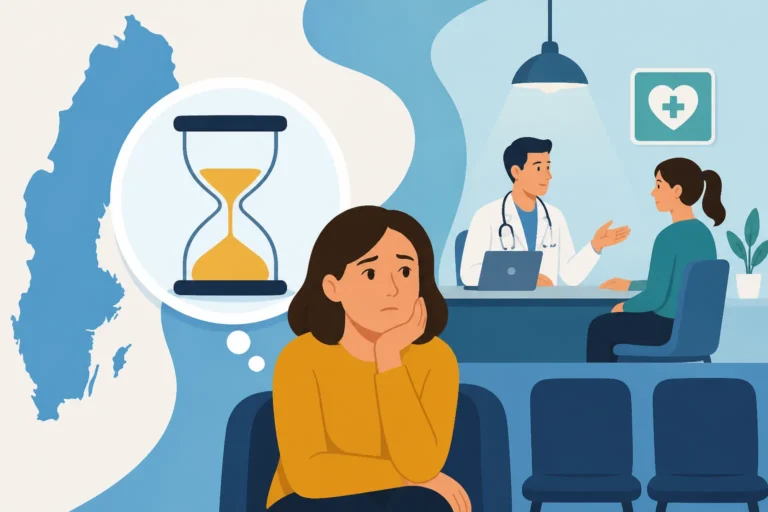
Now, for the "I've-been-there" reality check: the wait times can be grueling. Sweden has a "Vårdgaranti" or Care Guarantee, which states that you should see a specialist within 90 days of a referral being issued. You can find more details in the guide on The Vårdgaranti: Your Right to Timely Care in Sweden. While 90 days sounds reasonable on paper, when you are in the middle of a mental health crisis, three months feels like an eternity.
In major cities like Stockholm or Gothenburg, the demand for Mental Health Support in Sweden: Psychologists, Therapy, and Referrals often outstrips the supply. You might find yourself on a waiting list for months just to get your initial assessment. This is a common point of frustration for foreigners who come from countries where you can simply pay and see someone the next day.
If the wait is too long, you do have the right to seek care in another region, though this is logistically difficult for therapy. This is where many expats start looking into digital options. Apps like Mindler or Din Psykolog are integrated into the public system, meaning they accept the personnummer and the frikort, but they often have much shorter waiting times—sometimes just a few days. They are a fantastic bridge while you wait for a face-to-face spot to open up.
Private Alternatives and International Insurance
If you find that the public system is moving too slowly or you want a therapist who speaks your native language fluently (while many Swedish therapists speak English, nuances can get lost), you might consider the private route. Private therapy in Sweden is expensive, often costing upwards of 1,200 SEK per hour.
For those who are not yet covered by the Swedish social security system, or for those who want to skip the queues entirely, international insurance can be a lifesaver. Companies like Cigna Global offer plans that specifically include mental health modules, allowing you to choose your own therapist and have the costs reimbursed. This is particularly useful for corporate expats who need immediate support and can't wait for the Vårdcentral's administrative wheels to turn.
Another option for digital nomads or those on shorter permits is SafetyWing. While SafetyWing is primarily focused on travel medical insurance, their nomad insurance provides a safety net for unexpected medical needs and can be a crucial stop-gap while you are still How Long Does It Take to Get a Personnummer After Moving to Sweden? and waiting for full system access. Having a policy from Cigna Global or SafetyWing ensures that you aren't stuck choosing between your mental health and your savings account during those first difficult months of integration.
Specialized Support and Emergency Resources
If your needs go beyond general talk therapy—for example, if you require medication management or have a diagnosed condition like Bipolar Disorder or PTSD—you will be moved into "Specialistpsykiatri." This is a different tier of the system. Here, you will work with psychiatrists and specialized nurses. The process is still covered under the same fee structure, but the care is more clinical.
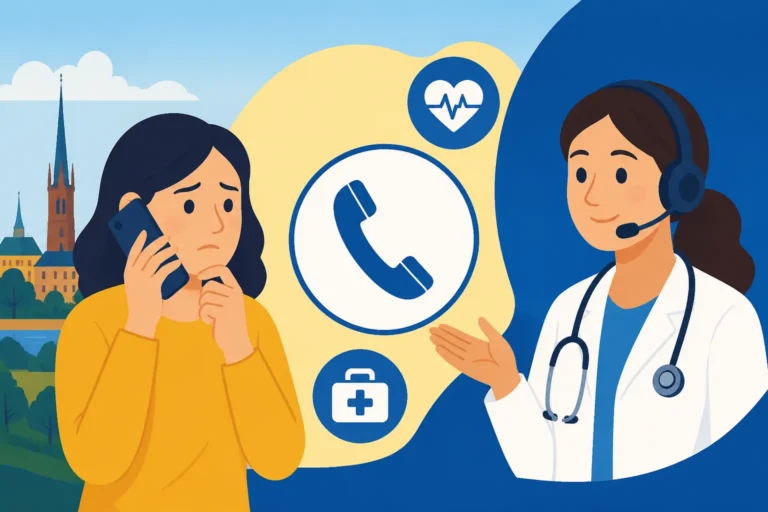
It’s also important to know what to do in a crisis. You should never wait for a referral if you are in immediate danger. Sweden has "Psykiatrisk Akutmottagning" (Psychiatric Emergency Rooms) in most major cities. These are walk-in clinics for urgent mental health crises. You can also call 1177 Vårdguiden: Navigating Sweden's National Health Advice Line and Portal at any time of day to speak with a nurse who can guide you to the nearest open facility.
For non-emergency but urgent advice, calling 1177 is the standard first step. They can tell you which clinics have the shortest wait times or if there is an "interim" support group you can join. In my experience, being proactive and showing up at the Vårdcentral in person to explain the severity of your situation can sometimes (though not always) help speed things up. Don't be afraid to advocate for yourself; the system is designed to be fair, but it also responds to those who clearly articulate their need for urgent help.
Navigating Language Barriers in Therapy
A common fear among expats is: "Can I do therapy in English?" The answer is generally yes. Most psychologists in Sweden are highly proficient in English. However, within the public system, you cannot always "choose" your therapist based on language. You are assigned to whoever is available at your clinic.
If you are struggling to express complex emotional states in English, or if English is also your second language, you have the right to an interpreter. This is a free service provided by the state. While having a third person in the room during therapy might feel awkward at first, Swedish medical interpreters are professionals bound by strict confidentiality rules.
If you find that the lack of a specific cultural or linguistic connection is hindering your progress, that is another scenario where using a private provider or a service covered by Cigna Global becomes beneficial. They often have directories where you can filter by language, ensuring you can speak your heart in the language that feels most natural to you. SafetyWing also provides access to a global network of providers, which can be helpful if you prefer tele-therapy with someone from your home country.
Summary of the Process for Newcomers
To make things as clear as possible, here is the step-by-step path you should follow if you need therapy in Sweden today:
- Register: Ensure you are registered at a Vårdcentral near your home.
- Book: Call or use the 1177 website to book a "läkarbesök" (doctor's visit) for mental health.
- Assess: Meet with the GP and be honest about your symptoms. Ask specifically about their "First Line" mental health options.
- Referral: If needed, ask for a "remiss" to a psychologist or specialist psychiatry.
- Wait or Pivot: Check the wait time. If it’s over 90 days, look into digital apps like Mindler or check your private insurance options via Cigna Global.
- Track Costs: Keep track of your payments so you know when you’ve reached the "frikort" limit for free care.
The Swedish system is robust and fair, but it requires patience and a bit of administrative "know-how." By understanding these layers, you can ensure that your mental health is looked after as you build your new life in the Nordics.
Disclaimer
This article provides general information and personal perspectives on navigating the Swedish healthcare system. It does not constitute professional medical advice, diagnosis, or treatment. Healthcare regulations and costs in Sweden can change; always consult 1177 Vårdguiden or a qualified healthcare professional for the most current information regarding your specific health needs.