Are Prescription Medicines Subsidised in Sweden?
One of the biggest shocks for new arrivals in Sweden is standing at a pharmacy counter, ready to pay a small fortune for a prescription, only to have the pharmacist ask for your ID and tell you the price has been slashed by 75%. I remember my first winter in Stockholm, clutching a stack of receipts and feeling completely overwhelmed by the "high-cost protection" jargon. This guide demystifies how prescription subsidies work, explaining the step-wise discount system and how you can ensure you aren't overpaying for your essential medications.
The Swedish High-Cost Protection for Medicines
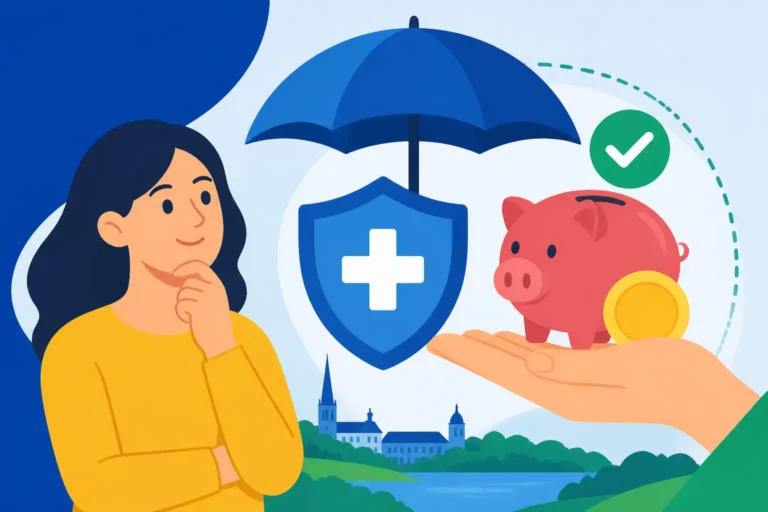
The Swedish healthcare system is designed so that no individual has to face financial ruin due to chronic illness or expensive medication. This is managed through a mechanism called the Högkostnadsskyddet för läkemedel (the high-cost protection for medicines). Essentially, it is a sliding scale of discounts that resets every 12 months. Unlike systems where you pay a flat co-pay, Sweden uses a "threshold" model where the more you spend within a year, the less you pay for each subsequent purchase.
For many expats, the initial confusion stems from the fact that this system is entirely automated and linked to your personal identity number. You don't need to carry a special card or file for reimbursement later. Once you are registered in the Swedish population register, every time you buy a prescription-only medicine that is "within the protection" (reimbursable), the pharmacy's computer system calculates your current discount level. It feels a bit like a loyalty program, but for your health, and it’s a lifesaver when dealing with the high cost of specialized drugs.
The 12-month period begins the day you make your first purchase of a subsidized medication. If you buy a pack of antibiotics today, your "year" starts now. For the next 365 days, every krona you spend on eligible medicine counts toward your progress through the discount tiers. Once that year is up, the counter resets to zero, regardless of where you were on the scale. This can be frustrating if you reach the free-tier (Frikort) just as your year is ending, but it provides a predictable cap on annual spending.
How the Step-Wise Discount System Works
The subsidy isn't an "all-or-nothing" deal. It works in tiers. For the first portion of your spending—currently up to 1,425 SEK as of recent adjustments—you pay the full price of the medication. This often catches newcomers off guard, as it can feel like the "free healthcare" promise is a myth during those first few pharmacy visits. However, once you cross that first threshold, the government begins to pick up a percentage of the bill.
Between 1,425 SEK and 2,743 SEK, you might only pay 50% of the cost. As your cumulative spending increases, your out-of-pocket percentage drops to 25%, and then to 10%. Finally, once you have personally spent a total of 2,850 SEK within your 12-month period, you reach the "high-cost ceiling." At this point, you receive a "free pass" (Frikort), and all subsequent eligible prescriptions are 100% subsidized by the state for the remainder of your 12-month cycle. To understand the broader context of these caps, it is helpful to read about The Högkostnadsskydd Explained: Sweden's Healthcare Cost Ceiling and Frikort.
It is important to remember that these thresholds are periodically adjusted by the government to account for inflation. While the logic remains the same, the exact krona amounts might shift slightly year to year. Even with these costs, the system remains significantly cheaper than private healthcare models in many other countries. If you are still waiting for your residence permit and don't yet have access to this system, you might find that Private Health Insurance in Sweden: When Sjukvårdsförsäkring Is Worth It is a necessary bridge.
Eligibility and the Role of the Personnummer
To access these subsidies, you must be covered by Swedish social insurance. For most expats, this happens automatically once you are Getting Your Personnummer: The Gateway to Swedish Healthcare. The pharmacy uses your personnummer to access a national database that tracks your spending across every pharmacy chain in the country. Whether you go to Apoteket, Apotek Hjärtat, or Lloyds, they all see the same "step" on your discount ladder.
If you are an EU citizen living here temporarily, you can often access these subsidies by showing your European Health Insurance Card (EHIC). However, the process is slightly more manual, and you must ensure the pharmacy records the purchase correctly to count toward your limit. For non-EU residents without a personnummer, the situation is more complex. You will likely have to pay the full market price for medications initially. This is why many expats rely on Health Insurance Requirements for Non-EU Residence Permit Holders in Sweden to cover these costs during the long waiting periods for civil registration.
During that "in-between" phase where you have arrived but aren't yet in the system, costs can add up quickly. Some newcomers have paid thousands of kronor for basic asthma inhalers because they didn't have their ID number yet. If you are in this position, using a provider like Cigna Global or SafetyWing can be vital for recouping those pharmacy costs. They often provide the "comprehensive health insurance" required by Migrationsverket while also acting as a financial safety net for prescription expenses.
What the Högkostnadsskydd Covers and What It Doesn’t
Not every item you find behind the pharmacy counter is eligible for a subsidy. The Swedish Medical Products Agency (Läkemedelsverket) and the Dental and Pharmaceutical Benefits Agency (TLV) decide which drugs are included in the high-cost protection. Generally, if a medicine is life-saving, treats a chronic condition, or is essential for a specific illness, it is likely covered.
However, there are "grey area" drugs. Some newer, more expensive brand-name drugs might not be fully subsidized if there is a cheaper, equally effective generic alternative available. If you insist on the brand-name version, you may have to pay the price difference yourself, and that extra amount will not count toward your high-cost ceiling. This is a common point of frustration for expats who are used to specific brands from their home countries. You can find more detail on this in the guide on Prescription Medicines in Sweden: Recept, Refills, and the Cost Cap.
Furthermore, certain categories of medicine are almost always excluded from the subsidy. These are often referred to as "lifestyle" drugs. For example, medications for hair loss, certain types of birth control for older adults (though many are free for those under 21 or 26 depending on the region), and travel vaccinations are typically paid for out-of-pocket. Understanding the specifics of Pharmacies and Prescriptions in Sweden: The Apotek System for Newcomers will help you plan your budget accordingly.
Included Medicines and the Reimbursement List
The list of reimbursed medicines is extensive, covering everything from insulin and blood pressure medication to antidepressants and specialized biologics. When a doctor issues a Prescription Medicines in Sweden: Recept, Refills, and the Cost Cap, they usually indicate if the drug is within the "benefit" (förmån). If it is, the subsidy is applied automatically at the point of sale.
A unique feature of the Swedish system is that it also includes certain "consumables" needed to administer medication. This includes items like needles for insulin pens, test strips for glucose monitoring, and certain types of wound care materials for chronic conditions. These items also count toward your high-cost ceiling, which is a massive relief for those managing complex health needs. If you are moving with a family, it's a relief to know that Are My Children Covered by Swedish Healthcare Through Me extends to these pharmaceutical benefits as well.
Exceptions: Lifestyle Drugs and Over-the-Counter Items
It is a common misconception that because you have a prescription, the medicine will be subsidized. Over-the-counter (OTC) medicines, like basic Paracetamol or Ibuprofen, are rarely subsidized, even if a doctor writes a "prescription" for them as a dosage instruction. You will almost always pay the full retail price for these at the Apotek.
Additionally, some medications are only subsidized for specific diagnoses. For example, a drug might be covered if you have a chronic condition but not if it’s prescribed for a temporary, non-essential use. This distinction is made by the TLV to keep the national health budget sustainable. If you find the public system's list too restrictive, you might look into how Cigna Global handles a wider range of international brand-name medications. For digital nomads or those on shorter stays, SafetyWing can also offer a layer of protection for unexpected medical needs that fall outside the state's subsidy list.
| Spending Tier (Annual) | You Pay | Government Pays |
|---|---|---|
| 0 – 1,425 SEK | 100% | 0% |
| 1,426 – 2,743 SEK | 50% | 50% |
| 2,744 – 4,815 SEK | 25% | 75% |
| 4,816 – 6,342 SEK | 10% | 90% |
| Above 6,342 SEK (Total value) | 0 SEK | 100% |
| Max Out-of-Pocket | 2,850 SEK | Unlimited |
Note: The total value of medicine refers to the market price before discounts. Once your personal spending reaches 2,850 SEK, you pay nothing more for the year.
Navigating the Pharmacy Experience in Sweden
Walking into a Swedish pharmacy (Apotek) is a very orderly experience. You usually need to take a ticket from a machine—look for the button that says "Recept" if you are picking up a prescription. Sweden is almost entirely digital, meaning you won't usually have a paper slip. Instead, the doctor sends an electronic prescription directly to a national server. You simply hand over your ID or personnummer, and the pharmacist pulls up your records.
This digital system is incredibly efficient. It allows you to How Do I Refill a Prescription at a Swedish Apotek at any pharmacy in the country, not just the one near your doctor's office. If you're traveling from Stockholm to Kiruna and realize you forgot your medication, any local Apotek can see your prescription and dispense it. You can also log into 1177 Vårdguiden: Navigating Sweden's National Health Advice Line and Portal to see exactly how many refills you have left and how close you are to your high-cost ceiling.
The Electronic Prescription System (E-recept)
The e-recept system is the backbone of Swedish pharmacy services. When you visit a Vårdcentral, the doctor enters your prescription into the system immediately. One thing that surprises many expats is that prescriptions are often "multi-buy." A doctor might authorize a year's worth of medicine, but the pharmacist will only let you pick up three months' worth at a time if you want the subsidy to apply.
This "three-month rule" is designed to prevent wastage. If you want to buy more than a three-month supply at once (for example, if you are going on a long trip), you can usually do so, but the subsidy will only apply to the first three months. You will have to pay full price for the remainder. This is a crucial detail for anyone planning to Can I Bring My Regular Medication into Sweden from Abroad or take Swedish meds outside the country.
Generic Substitution and the Product of the Month
Sweden is very strict about "generic substitution." To keep costs low for the taxpayer, pharmacies are legally required to offer you the cheapest available version of your prescribed medication that is currently in stock. This is known as the "Product of the Month" (Månadens vara).
The pharmacist will say something like, "The doctor prescribed Brand A, but Brand B is the exchangeable version for this month. It’s exactly the same active ingredient, but much cheaper. Is that okay?" If you say yes, the subsidy applies normally. If you refuse and insist on the more expensive brand, you must pay the difference out of your own pocket. This difference does not count toward your 2,850 SEK limit. It can be a bit of a shock when your pills change color or packaging every few months, but the medical efficacy is strictly regulated.
Comparing Public Coverage with Private Insurance Options
While the Swedish state subsidy is generous, it isn't perfect. There are long wait times for some specialist consultations where prescriptions are first issued, and as mentioned, the "list" of covered drugs can be restrictive. This is where private health insurance comes into play. Many expats working for international tech firms or in high-level positions are offered Private Health Insurance in Sweden: When Sjukvårdsförsäkring Is Worth It as a perk.
Private insurance often allows you to bypass the public queue for specialists, meaning you get your prescriptions written faster. Some premium plans, like those from Cigna Global, may also cover medications that the Swedish state considers "lifestyle" or non-essential. For those who travel frequently, SafetyWing offers a more flexible approach, ensuring that you have coverage even when you are outside the Swedish system's reach.
Why Expats Might Consider Supplementary Health Plans
The main reason to consider a supplementary plan is the "gap." If you are a new arrival, you might wait three to six months (or longer) for your personnummer. During this time, you are essentially a private patient. Without a plan from Cigna Global or similar, a single month of specialized medication could cost you more than an entire year's worth of premiums.
Furthermore, some expats prefer the continuity of care that international insurers provide. If you have a specific brand of medication that works for you and you don't want to deal with the "Product of the Month" substitutions at the Swedish Apotek, private insurance can sometimes bridge that financial gap. It's about buying peace of mind and flexibility in a system that is otherwise very standardized.
Practical Tips for New Arrivals at the Apotek
- Bring your ID: You cannot pick up a prescription without a valid ID (Swedish ID, passport, or EU ID card).
- Check the 1177 portal: Once you have BankID, use the 1177.se website to track your "High-Cost Status." It tells you exactly how many kronor you have left until your next discount tier.
- Talk to the pharmacist: They almost all speak excellent English and are very happy to explain the cost breakdown to you.
- Don't wait for the last pill: Sometimes a pharmacy needs to order a specific medication, which can take 24-48 hours.
Managing your health in a new country is a marathon, not a sprint. The Swedish system is incredibly supportive once you are inside it, but the transition can be bumpy. By understanding how the subsidies work and potentially using Cigna Global or SafetyWing to cover your initial months, you can navigate the administrative hurdles with much less stress. For more information on the broader health system, check out Healthcare in Sweden for Foreign Residents: The Complete System Guide (2027).
Disclaimer
This article is for informational purposes only and does not constitute legal or medical advice. Healthcare regulations and subsidy thresholds in Sweden are subject to change by governmental authorities. Always verify current rates and eligibility requirements with the Swedish Social Insurance Agency (Försäkringskassan) or the Dental and Pharmaceutical Benefits Agency (TLV).