Healthcare Outside the Big Cities: Rural Vårdcentraler and Regional Hospitals
Moving to a remote Swedish cottage or a quiet village in the woods is a dream for many expats, but the reality of accessing medical care when you are hours away from a major city can be a rude awakening. I remember the sheer anxiety of my first winter in a small town, wondering what would happen if my child got a fever in the middle of a snowstorm. This guide explains how to navigate the rural healthcare system, from local clinics to regional hospitals, so you are never left feeling isolated.
The Geographic Reality of Swedish Healthcare
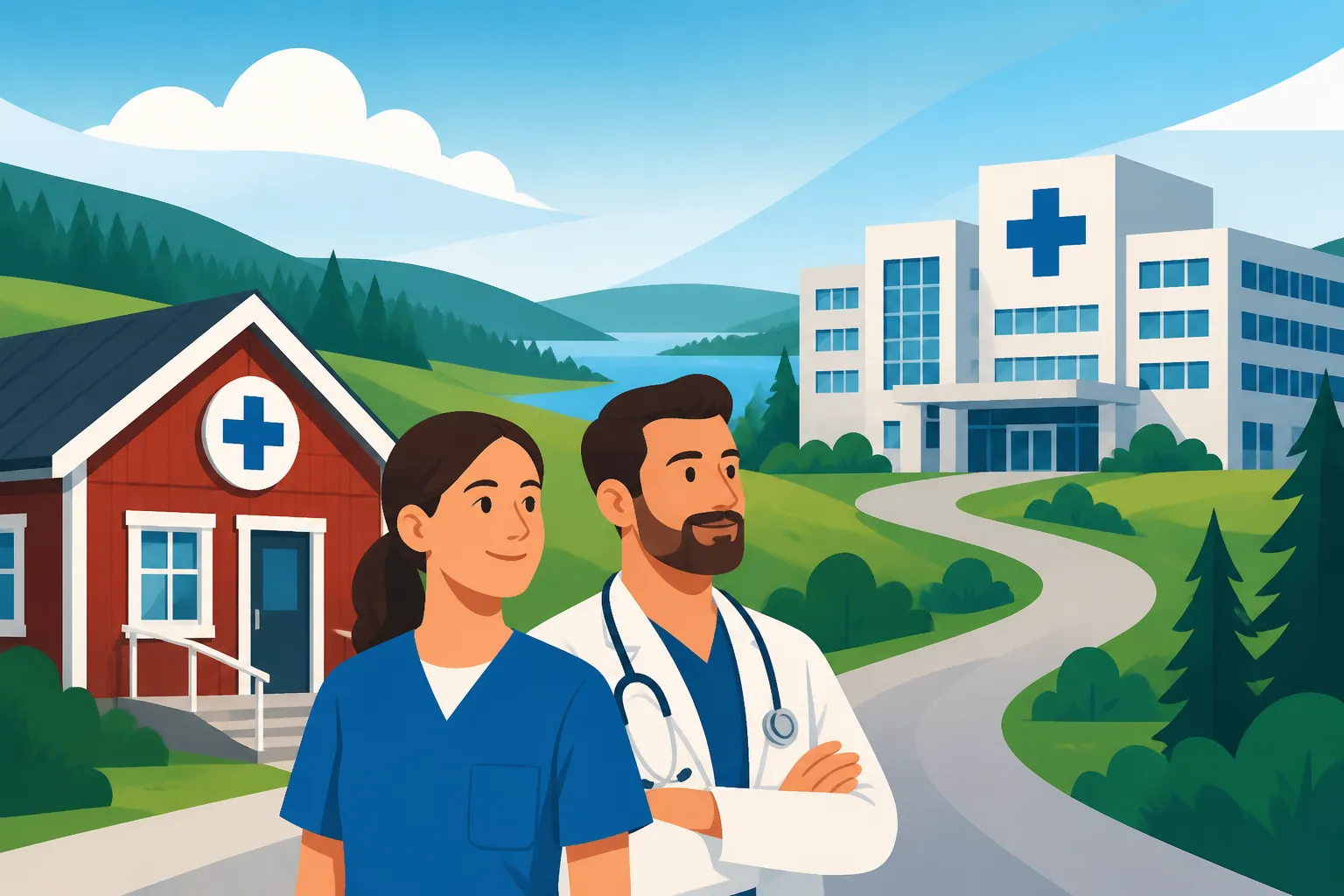
The Swedish healthcare system is highly decentralized, managed by 21 different regions. While this allows for local control, it creates a significant disparity between the dense urban centers like Stockholm or Gothenburg and the vast, sparsely populated areas of the north or the deep forests of Småland. In a city, you might have five clinics within walking distance; in a rural area, your local clinic might only be open three days a week, and the nearest hospital could be a two-hour drive away.
Understanding the Regional Divide
Each region in Sweden is responsible for its own budget, staffing, and service delivery. This means that Healthcare in Sweden for Foreign Residents: The Complete System Guide (2027) can look very different depending on whether you are in Skåne or Norrbotten. In rural regions, the challenge is often staffing. You will frequently encounter "stafettläkare" or locum doctors who are brought in on short-term contracts. While they are highly qualified, the lack of continuity can be frustrating for expats trying to build a relationship with a family doctor.
I’ve spent time in regions where the doctor changed every single month. It requires you to be a more proactive advocate for your own health. You cannot assume the new doctor has read every detail of your file from the previous one. In these areas, the region often prioritizes emergency and acute care over elective or preventative services, meaning wait times for non-urgent issues can stretch longer than they would in a metropolitan area.
The Logistics of Distance and Travel
One aspect of rural healthcare that surprises many newcomers is the system of "sjukresor" or medical travel. When you live in a remote area and need to visit a regional hospital for specialist care, the region often provides subsidized transportation or mileage reimbursement. This is a vital service when the nearest specialist is hundreds of kilometers away. You aren’t expected to just "figure it out" on your own if the system requires you to travel.
However, the logistics of these trips can be exhausting. A simple 30-minute consultation can turn into an all-day affair involving multiple buses or a long drive on icy roads. It is essential to understand that in rural Sweden, "access" to healthcare is guaranteed by law, but "convenience" is not. Residents in the north, for example, often view a four-hour round trip to the dentist as a normal part of life.
The Vårdcentral Your Rural Lifeline
In the Swedish system, the Vårdcentral (Primary Care Center) is the gatekeeper to all other services. In a rural setting, the Vårdcentral is more than just a doctor's office; it is often the community hub for vaccinations, maternal care, and mental health support. Understanding how to work within this local system is the most important step you can take after moving to the countryside.
Choosing and Switching Your Vårdcentral Through Vårdval
Even in the most remote areas, you have the right to choose which clinic you are registered with under the "Vårdval" system. While there might only be one clinic in your immediate town, you can choose one in a neighboring municipality if it offers better services or shorter wait times. Choosing and Switching Your Vårdcentral Through Vårdval is a straightforward process that can usually be done online through the 1177 portal.
When I moved to a more rural area, I initially stayed with the clinic closest to my house. But I quickly realized that a clinic 20 minutes further away had a better pediatric department. Making that switch was a game-changer for my family’s peace of mind. Don't feel obligated to stay with the nearest clinic if you feel their staffing is too unstable or if they lack the specific services you need, such as a dedicated physiotherapist or a psychologist.
Registration and the Personnummer Hurdle
For many expats, the biggest challenge is the initial setup. How to Register with a Vårdcentral After Getting Your Personnummer is the standard path, but in rural areas, the administrative staff might be less accustomed to dealing with foreign residents who are still waiting for their ID numbers. If you find yourself in this "limbo" period, you are still entitled to care, but you may have to pay a higher upfront cost or explain your rights more firmly than you would in a city.
In these instances, having a backup plan like SafetyWing can be incredibly helpful. While the Swedish system will eventually cover you, having international coverage during those first few months in a rural area provides a safety net if you need to seek private care or if the local clinic is struggling with your administrative status. It bridges the gap while the Swedish Tax Agency (Skatteverket) processes your residency.
Specialized Care and the Regional Hospital Network
If your local Vårdcentral cannot treat your condition, they will issue a "remiss" or referral to a specialist. In rural Sweden, this usually means traveling to a regional hospital (Länssjukhus). These hospitals are larger, better equipped, and handle everything from surgeries to complex diagnostic imaging.
How the Referral System Works for Seeing a Specialist in Sweden
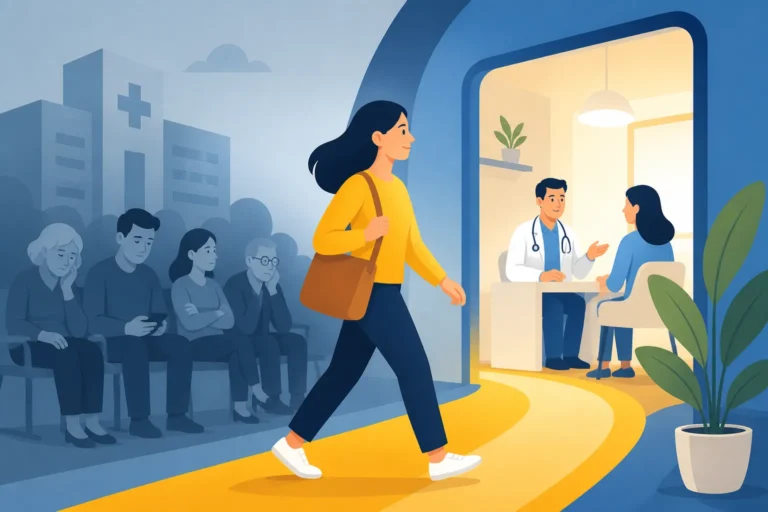
The referral system is the backbone of Swedish medicine. How the Referral (Remiss) System Works for Seeing a Specialist in Sweden is designed to ensure that hospital resources are used for those who truly need them. In a rural area, your GP at the Vårdcentral acts as a filter. They will perform initial tests and only send you to the regional hospital if it is strictly necessary.
The wait times for these specialist appointments can be significant. This is where The Vårdgaranti: Your Right to Timely Care in Sweden comes into play. If your region cannot provide you with a specialist appointment within 90 days, they are legally required to offer you care in another region, often paying for your travel and accommodation. In rural areas, this might mean being sent to a major university hospital in Umeå, Uppsala, or Stockholm to ensure you are treated within the legal timeframe.
The Reality of Specialist Travel
Traveling for specialist care is a unique experience in Sweden. For those living in the archipelago or the far north, this might even involve a helicopter or a boat. The regional hospitals are strategically placed to cover vast areas, but the "catchment" area for a single hospital can be the size of a small country.
When you receive your appointment letter, it will often include information about how to book a "sjukresa." I’ve found that the staff at regional hospitals are very sensitive to the fact that rural patients have traveled far. They often try to bundle multiple appointments or tests into a single day to minimize your travel. It’s always worth calling the department ahead of time to ask if they can coordinate your blood tests and consultation on the same afternoon.
Emergency Services and Remote Triage
In an emergency, the distance to a hospital becomes a life-and-death matter. Sweden has robust systems in place to handle emergencies in remote areas, but as a resident, you need to know exactly which numbers to call and what to expect.
Emergency Medical Care in Sweden 112 Akutmottagning and Urgent Help
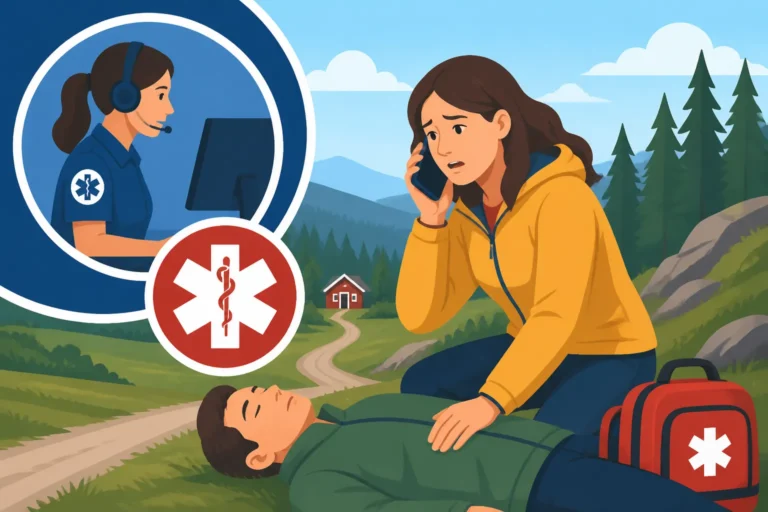
The emergency number in Sweden is 112. When you call from a rural area, the operators are trained to coordinate not just ambulances, but also air rescue if necessary. Emergency Medical Care in Sweden: 112, Akutmottagning, and Urgent Help is available to everyone, regardless of their residency status. In the countryside, an ambulance might take 30 to 45 minutes to reach you, so the operator will often stay on the line to guide you through first aid.
In many rural villages, there are "First Responders" (SMS-livräddare)—volunteers trained in CPR who are alerted to nearby emergencies via an app. Seeing a neighbor show up with a defibrillator before the ambulance arrives is a common and heartening part of rural Swedish life. It’s a community-based approach to a geographic problem.
What Should I Do in a Medical Emergency Outside a Major Swedish City
If your situation is urgent but not life-threatening, you should call 1177 before heading to the hospital. What Should I Do in a Medical Emergency Outside a Major Swedish City often involves being directed to a "Jourcentral"—an out-of-hours clinic that handles things like broken bones or severe infections that can't wait until Monday morning.
I once had to use a Jourcentral on a Saturday night in a small town. It was located inside the regional hospital but was staffed by a small, efficient team. They were able to do X-rays and provide a temporary cast, saving us a much longer trip to the main emergency room (Akutmottagning) in the next city. Always check 1177 first; they can see the real-time wait times and tell you which facility is best equipped to handle your specific injury.
Digital Solutions and Private Alternatives
The challenge of rural healthcare has led Sweden to become a world leader in digital health. For many expats, these digital tools are the secret to surviving the long wait times and distances of the countryside.
1177 Vårdguiden A Rural Lifeline
The 1177 portal is your most valuable tool. 1177 Vårdguiden: Navigating Sweden's National Health Advice Line and Portal allows you to book appointments, renew prescriptions, and even message your doctor. In rural areas, many Vårdcentraler now offer video consultations for routine follow-ups. This saves you the drive and allows you to speak with a professional from your living room.
Using BankID to log in to 1177 is essential. Once you are in, you can see your medical records and lab results. For someone living in a remote area, being able to see that your blood test results are "normal" without having to drive back to the clinic for a five-minute meeting is a massive relief.
Private Clinics and International Insurance
Sometimes, the regional queues are simply too long, or you need a level of comfort and speed that the local system can't provide. Private Clinics in Sweden: Faster Specialist Access Outside the Public System are more common in cities, but many offer digital consultations for patients across the country.
If you find that the rural public system is failing to meet your needs, especially for complex or chronic issues, having a private policy from a provider like Cigna Global can be a lifesaver. It allows you to bypass the regional referral system and see a private specialist in a city of your choice. While the public system is excellent for emergencies, private insurance offers a "fast track" for elective surgeries and specialized consultations that might otherwise take months to schedule in a rural region.
Medication and Pharmacy Logistics
In a big city, there is an Apotek (pharmacy) on every corner. In the countryside, getting your medicine requires a bit more planning. Rural pharmacies often have shorter hours and may not stock specialized medications on-site.
Pharmacies and Prescriptions in Sweden The Apotek System for Newcomers
When a doctor issues a prescription, it is sent electronically to a national database. You can go to any Apotek in Sweden, show your ID, and pick it up. Pharmacies and Prescriptions in Sweden: The Apotek System for Newcomers is highly efficient, but in a rural area, you should always call ahead. If they don't have your medicine in stock, it usually takes 24 to 48 hours for them to order it from a central warehouse.
In very remote villages, there are "Apoteksombud"—local grocery stores that act as agents for the pharmacy. You can order your prescription online or via phone, and it will be delivered to the local shop for you to pick up along with your milk and bread. This is a vital service for those who don't have easy access to a full-scale pharmacy.
Managing a Chronic Condition in Remote Areas
Living with a long-term illness in the countryside requires organizational skills. Managing a Chronic Condition in Sweden: Diabetes, Asthma, and More involves coordinating with your Vårdcentral for regular check-ups and ensuring your prescriptions are always renewed well before they run out.
I recommend using the 1177 app to track your "högkostnadsskydd" (high-cost protection). Once you spend a certain amount on healthcare and prescriptions in a year, the rest is free. In rural areas, where you might be visiting the doctor or pharmacy more frequently due to travel constraints, this safety net is particularly important.
Comparing Rural vs. Urban Healthcare Access
| Feature | Urban (Stockholm/Gothenburg) | Rural (Värmland/Norrbotten) |
|---|---|---|
| Vårdcentral Proximity | Usually within 5-10 km | Can be 30-60 km or more |
| Specialist Access | Multiple hospitals in the city | Requires travel to regional center |
| Staffing | Permanent GPs and specialists | Often relies on locum (stafett) staff |
| Emergency Wait Times | Long ER wait times due to volume | Shorter wait once you arrive, but longer transit |
| Pharmacy Hours | Many open late or 24/7 | Limited hours; use of "Apoteksombud" |
| Digital Integration | Used for convenience | Used as a primary necessity |
Final Thoughts on Rural Health
Living in rural Sweden is incredibly rewarding, but it demands a different mindset toward health. You cannot be passive. You must learn to use the 1177 portal, understand your rights under the Vårdgaranti, and perhaps most importantly, build a good relationship with the nurses at your local Vårdcentral. They are often the ones who stay for decades while the doctors come and go, and they are your best allies in navigating the regional system.
Whether you are relying on the public system or supplementing it with Cigna Global to ensure faster access to specialists, being prepared is the key to enjoying your life in the beautiful Swedish wilderness without fear.
Disclaimer
This article is for informational purposes only and does not constitute professional medical or legal advice. Healthcare regulations and regional services in Sweden can change. Always consult with the Swedish Social Insurance Agency (Försäkringskassan), Migrationsverket, or a qualified medical professional regarding your specific situation and rights.