Using Your EHIC for Care While Settling Into Sweden
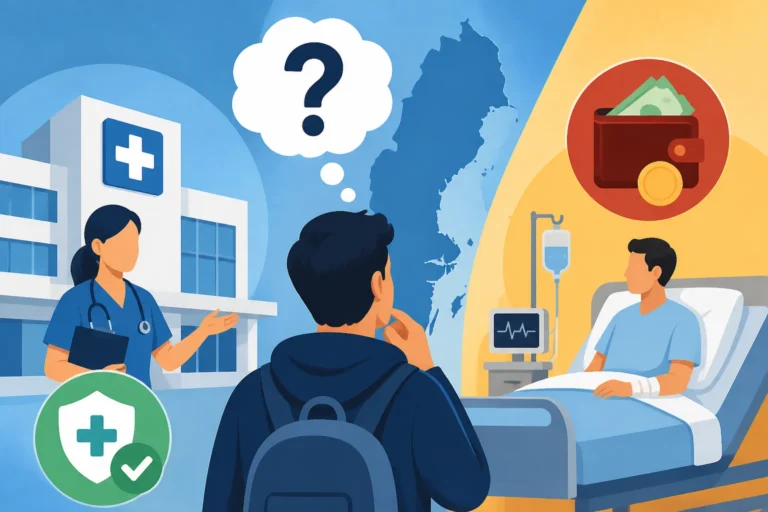
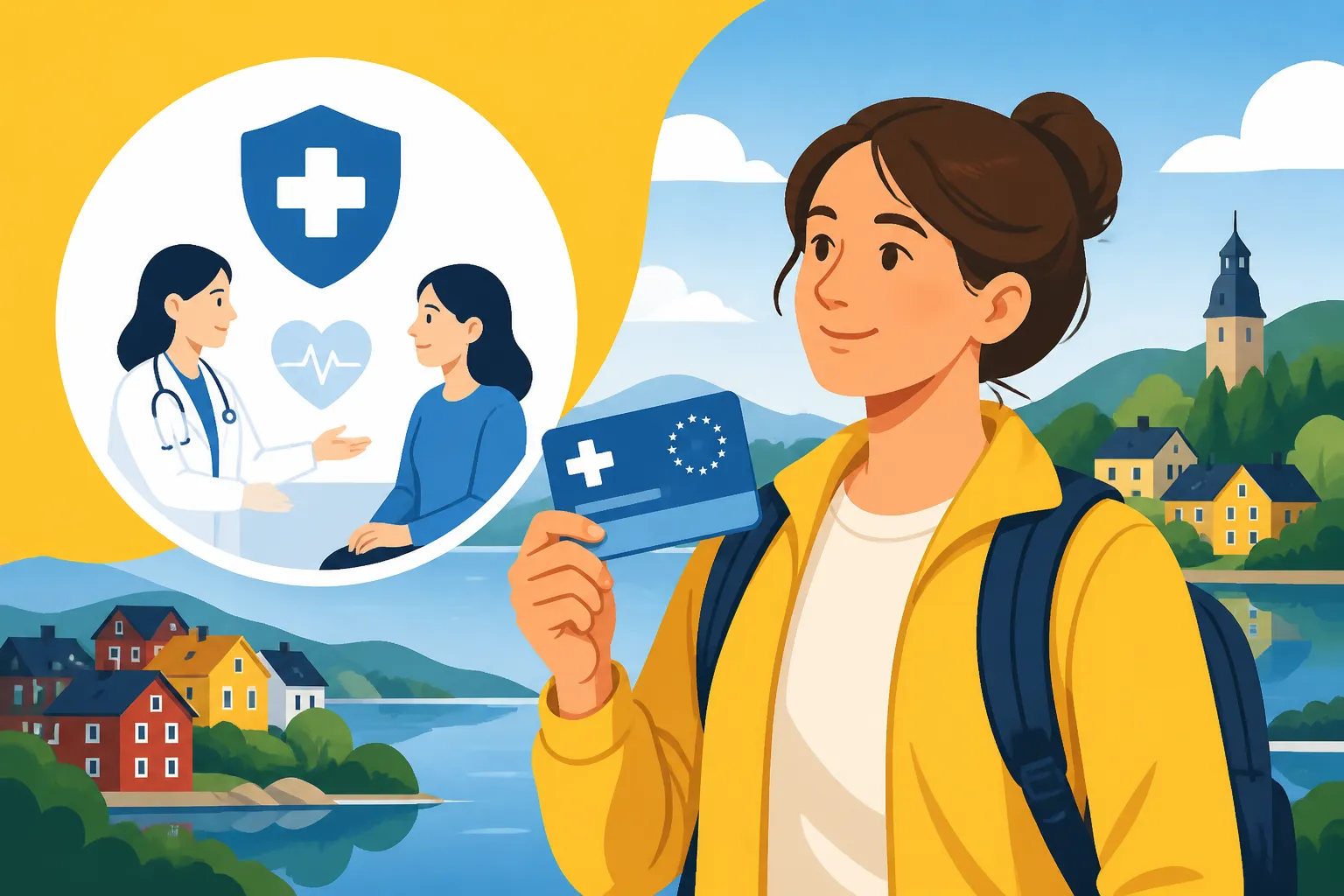
Arriving in Sweden without a personal identity number feels like being a ghost in a machine designed only for its citizens. I remember the cold sweat I broke into during my first week in Stockholm when a persistent fever kicked in; I had no Personnummer, no BankID, and no idea if my blue European Health Insurance Card (EHIC) was anything more than a plastic souvenir. This guide explains how to use your EHIC to bridge the medical gap while you wait for the Swedish bureaucracy to acknowledge your existence.
The Scope and Limits of EHIC Coverage in Sweden
The European Health Insurance Card is your first line of defense, but it is often misunderstood by new arrivals as a "get out of jail free" card for all medical needs. In reality, the EHIC is designed for "medically necessary" care. This means care that cannot reasonably wait until you return to your home country. If you wake up with a chest infection or break an ankle while moving boxes into your new apartment, you are covered. However, if you were hoping to use your EHIC to finally get that elective knee surgery you've been putting off back home, you will likely be disappointed.
Sweden's healthcare system is decentralized, managed by 21 different regions, yet they all adhere to the EU-wide rule that EHIC holders must be treated on the same financial terms as Swedish residents. This is a double-edged sword. It means you don't pay the exorbitant "uninsured" rates that can reach thousands of kronor for a simple consultation. Instead, you pay the standard patient fee (patientavgift). However, it also means you are subject to the same waiting times and triage priorities as everyone else. You aren't getting "tourist" priority; you are entering the system at the same level as the local person sitting next to you in the waiting room.
It is also vital to understand that the EHIC does not cover private healthcare providers unless they are contracted by the regional health authorities. If you wander into a high-end private clinic in Östermalm, they might not accept your EHIC at all. This is where many expats find themselves in a bind, as they assume "all doctors" in a socialized system are the same. For those who want more robust options or the ability to bypass the public system entirely, looking into Private Health Insurance in Sweden: When Sjukvårdsförsäkring Is Worth It can provide a safety net that the EHIC simply doesn't offer.
Medically Necessary vs. Elective Care
The definition of "medically necessary" is determined by the treating physician in Sweden. It isn't just for emergencies; it includes chronic condition monitoring and oxygen therapy, provided these were not the primary reason for your travel. For example, if you have asthma and require a check-up because your symptoms have flared up due to the dry Swedish winter, the EHIC covers you. The goal is to ensure you don't have to cut your stay short to seek treatment at home.
Conversely, if you are looking for a general "wellness check" or a preventative screening that isn't urgent, the clinic may classify this as non-necessary. In these cases, you might be asked to pay the full cost of the visit. This distinction often frustrates newcomers who are used to more liberal access to specialists in their home countries. Understanding How Sweden's Tax-Funded Healthcare Works: Regions, Costs, and Coverage is essential here, as it clarifies what the state considers a priority versus a luxury.
The Treated as a Local Principle
When you present your EHIC, you are essentially telling the Swedish state to treat you as if you are covered by the Swedish social security system. You will pay the same subsidized fee that a Swede pays. In 2026, this typically ranges between 200 and 400 SEK for a primary care visit, depending on the region. Without the card, that same visit could cost upwards of 2,000 SEK.
The principle of equal treatment also extends to prescriptions. Once a Swedish doctor writes you a script, you can take it to any Apotek. Because you have an EHIC, you should technically be eligible for the same subsidization levels as locals, though pharmacies sometimes struggle with the manual entry of EHIC data into their systems. It’s always a good idea to keep all receipts. If you're wondering about the logistics of medicine, Pharmacies and Prescriptions in Sweden: The Apotek System for Newcomers covers the nuances of the local pharmacy culture.
What EHIC Will Never Cover
There is a common misconception that the EHIC is a form of travel insurance. It is not. It will not cover the cost of mountain rescue if you get stuck while hiking in Abisko, nor will it pay for your flight home if you need a medical repatriation. If you are in the "in-between" phase—where you've left your home country's social security but haven't yet been fully absorbed into the Swedish system—you are at high risk.
During this transition, many expats rely on services like SafetyWing to cover those specific gaps that the EHIC ignores, such as emergency travel logistics or private hospital stays. The EHIC is a government-to-government agreement for basic health maintenance; it is not a comprehensive protection plan for a life in motion. If you are moving with a family, the stakes are even higher, making it worth investigating Family and Children's Healthcare in Sweden: BVC, Mödravård, and Beyond to see how the system handles the youngest residents.
Navigating the Swedish System with Your Card
When you first walk into a Vårdcentral (health center) with your EHIC, the receptionist's first question will almost certainly be for your Personnummer. When you explain you don't have one, there is often a moment of administrative friction. You must be firm but polite. Explain that you are an EU/EEA citizen with a valid EHIC and that you are currently in the process of settling.
The staff will need to manually record your EHIC details, including your card number and expiration date. They will often take a photocopy of the card and your passport. This process can take longer than a standard check-in, so arrive at least 20 minutes before your appointment. If you are unsure which clinic to visit, you can read about Choosing and Switching Your Vårdcentral Through Vårdval to understand how to pick a primary care site that suits your needs.
Accessing Primary Care at the Vårdcentral
The Vårdcentral is the gatekeeper of the Swedish system. You cannot simply book a specialist for a skin rash or a heart palpitation; you must go through a General Practitioner (GP) first. For EHIC holders, this is the most common point of contact. You will be asked to pay the regional patient fee upfront, usually by card, as Sweden is almost entirely cashless.
It is worth noting that some Vårdcentraler are more accustomed to EHIC holders than others. Clinics in central Stockholm or Gothenburg deal with international residents daily, whereas a small clinic in rural Dalarna might be less familiar with the protocol. If you find yourself facing a confused administrator, mention that you are seeking care under the EU regulations for "necessary care." For a deeper dive into this initial step, check out Registering with a Vårdcentral: Your Guide to Primary Care in Sweden.
The Referral System for Specialists
If your GP decides that your condition requires a specialist, they will issue a remiss (referral). As an EHIC holder, this referral is your golden ticket. Without it, accessing a specialist is nearly impossible in the public system, and if you try to go private, your EHIC will not help with the bill.
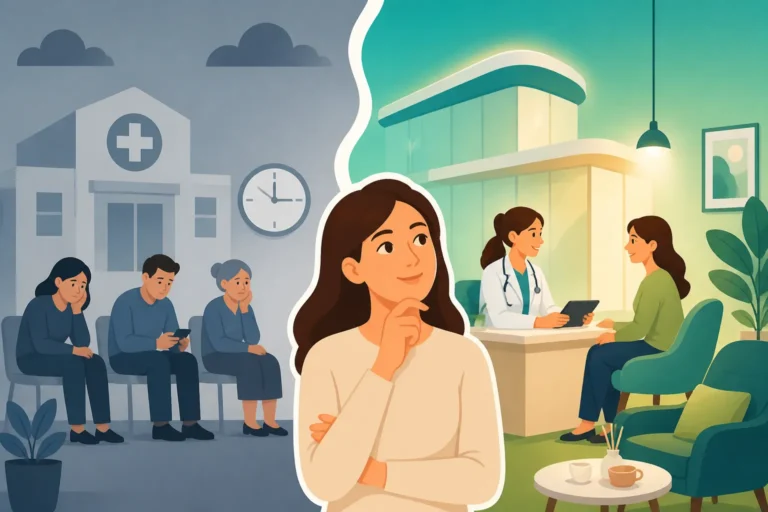
The waiting times for specialist care in Sweden can be significant, sometimes stretching into months. The EHIC technically covers you for this, but if the wait is too long, the doctor might suggest that the treatment is no longer "necessary" in the context of a temporary stay and should be handled in your home country. This is a gray area that causes much anxiety. To understand how the timeline works, you should look into The Vårdgaranti: Your Right to Timely Care in Sweden, which outlines the legal maximum wait times, though these can be harder to enforce as a non-resident.
Emergency Care and the Akutmottagning
In a true emergency, you do not go to a Vårdcentral; you go to the Akutmottagning (A&E/ER) at a hospital. Here, the EHIC is universally recognized. In life-threatening situations, care is provided first and administrative details are sorted later. However, for non-life-threatening but urgent issues, you will still be asked for your card upon arrival.
The fee for an emergency room visit is higher than a GP visit—often around 400 to 600 SEK—but the EHIC ensures you aren't charged the full "international" hospital rate, which can be staggering. If you are in a situation where you need to call an ambulance, remember the number is 112. For more details on what happens in these high-stress moments, refer to Emergency Medical Care in Sweden: 112, Akutmottagning, and Urgent Help.
| Service Type | Typical Cost with EHIC (Approx.) | Wait Time Expectations | Access Requirement |
|---|---|---|---|
| Primary Care (Vårdcentral) | 200 – 300 SEK | 1 – 7 days | Direct booking/Walk-in |
| Specialist Visit | 350 – 400 SEK | 13 – 90 days | Requires GP Referral |
| Emergency Room (Akut) | 400 – 600 SEK | 2 – 8 hours | Urgent need only |
| Hospital Stay (per day) | 120 – 150 SEK | N/A | Admission by doctor |
| Prescription Drugs | Subsidized | Immediate | Valid Swedish script |
The Transition: From EHIC to the Swedish Population Register
The most stressful period for any new expat is the "limbo" time between arriving and receiving that elusive 12-digit Personnummer. During this window, which can last from a few weeks to several months, your EHIC is your only legitimate link to healthcare. However, once you are registered in the population register (folkbokförd), your EHIC technically becomes invalid for use within Sweden, as you are now a resident covered by the Swedish system.
Many people try to keep using their EHIC because they haven't yet received their Swedish ID card or haven't set up BankID. This is a mistake. Once you are in the system, your healthcare is tied to your Personnummer. The transition is not always seamless, and Skatteverket (the Tax Agency) does not always communicate instantly with the healthcare regions. To navigate this move successfully, you need to understand the steps in Getting Your Personnummer: The Gateway to Swedish Healthcare.
The Waiting Game for Folkbokföring
While you wait for your Personnummer, you may be issued a reservnummer (temporary reserve number) by a healthcare provider. This is a local tracking number used by the hospital or clinic so they can find your records in their system. It is not a Personnummer and it doesn't give you access to online services like 1177.se.
During this time, keep your EHIC with you at all times. If you have a chronic condition, it is also wise to have a summary of your medical history from your home country, ideally in English. This helps the Swedish doctors decide what is "necessary" care under the EHIC rules. For those moving from within the EU, Can EU Citizens Use Swedish Healthcare with an EHIC Card? provides a specific breakdown of these rights.
Moving from Temporary to Permanent Status
Once the letter from Skatteverket arrives and you are officially a resident, you should stop using your EHIC for care in Sweden. You should instead register with a Vårdcentral formally. At this point, you are no longer a visitor; you are a taxpayer. This shift changes your relationship with the system. You are now eligible for the Högkostnadsskydd (high-cost protection scheme).
The EHIC does not contribute to your high-cost ceiling tally. Only once you are registered with a Personnummer do your patient fees start counting toward the limit (currently 1,400 SEK in a 12-month period), after which care is free. To see how this saves you money in the long run, read The Högkostnadsskydd Explained: Sweden's Healthcare Cost Ceiling and Frikort.
Why EHIC is Not a Long-Term Solution
The EHIC is predicated on the idea that you remain a resident of your home country. If you have moved to Sweden permanently, you will eventually lose your right to an EHIC from your original country. If you continue to use an EHIC after you've become a Swedish resident, your home country may eventually seek to recoup those costs from you, as you are no longer paying into their social security system.
Furthermore, the EHIC doesn't give you access to digital healthcare. In Sweden, almost everything is done through the 1177.se portal, which requires BankID. Without a Personnummer, you can't log in to see your test results, book appointments, or renew prescriptions online. This administrative hurdle is one of the biggest culture shocks for expats. You can learn more about managing this in 1177 Vårdguiden: Navigating Sweden's National Health Advice Line and Portal.
Costs, Fees, and the Reimbursement Maze
One of the most confusing aspects of using an EHIC in Sweden is the payment process. Unlike some countries where you might pay the full bill and then claim it back from your insurer, the Swedish system is designed to provide care at the "net" price. You pay the patient fee, and the Swedish region bills your home country's health authority directly for the remainder of the cost.
However, things don't always go according to plan. Sometimes a clinic might not know how to process the card, or they might charge you the full "uninsured" price by mistake. If this happens, do not panic. You have the right to seek reimbursement, but the process is tedious and requires meticulous record-keeping. If you find the public system's costs or waiting times too high, brands like Cigna Global offer more comprehensive private options that skip the reimbursement headache entirely by paying providers directly.
The Patientavgift: What You Pay Out of Pocket
The patient fee is non-refundable. Whether you are a Swede or an EHIC holder, this is your contribution to the system. It’s important to remember that these fees are per visit. If you see a doctor and then need an X-ray, you might be charged two separate fees.
In some regions, children under 18 receive free healthcare, and this usually applies to EHIC holders as well. However, you must still present the child's EHIC card to get this exemption. If you are confused about why you were charged 300 SEK in Stockholm but your friend in Skåne paid 200 SEK, Understanding Patient Fees (Patientavgift) Across Sweden's 21 Regions will explain the regional price differences.
How to Claim Reimbursement
If you were wrongly charged the full price for a visit, you generally have two paths for reimbursement. You can either apply to the Swedish Social Insurance Agency (Försäkringskassan) while you are still in Sweden, or you can apply to your home country's health authority when you return.
To claim through Försäkringskassan, you will need the original receipt (not a copy), a copy of your EHIC, and a copy of your ID. They will investigate if the care was "necessary" and, if approved, refund the difference between what you paid and the standard patient fee. This process can take months. For those who find this prospect daunting, having a secondary insurance like SafetyWing can provide a much faster claims process for unexpected medical bills.
The High-Cost Ceiling and EHIC Holders
As mentioned earlier, the Frikort (free card) system is generally reserved for those with a Personnummer. As an EHIC holder, you are technically a visitor, and visitors usually don't stay long enough to reach the 1,400 SEK limit. However, if you are in the middle of a long residency application and you have had many appointments, some regions may manually track your fees if you ask.
This is rare and requires a lot of "boots on the ground" advocacy with clinic administrators. Most EHIC holders simply have to accept that they will pay the patient fee for every visit until their Personnummer is issued. If you are struggling with chronic health costs during this wait, How the Frikort Works Once You Reach the High-Cost Ceiling offers a glimpse of the financial relief waiting for you on the other side of residency.
Practical Scenarios: When the EHIC Just Isn't Enough
Life doesn't always fit into the "medically necessary" box. There are several common scenarios where a new arrival in Sweden will find that their blue card is virtually useless. Knowing these gaps in advance can save you a significant amount of money and stress.
For instance, mental health support is a major area where EHIC holders struggle. While a crisis visit to an emergency psych ward is covered, long-term therapy or counseling for non-emergency issues is often deemed non-necessary for a temporary visitor. If you're struggling with the transition, you might need to look for Mental Health Support in Sweden: Psychologists, Therapy, and Referrals to see how to access these services as a resident versus a visitor.
Chronic Condition Management
If you move to Sweden with a condition like Diabetes or Crohn's Disease, you need a plan that goes beyond the EHIC. While the card will cover you if you run out of insulin or have an acute flare-up, it isn't designed for the routine, long-term management of your condition.
Swedish doctors may be reluctant to take over your long-term care plan until you have a Personnummer and are registered at a Vårdcentral. They will often suggest you get a 3-month supply of medication from your home country before moving. If you're in this position, Managing a Chronic Condition in Sweden: Diabetes, Asthma, and More is a must-read for planning your medical transition.
Private Alternatives and International Insurance
Because of the long wait times for certain procedures and the limitations of the EHIC, many expats choose to maintain a private international policy. Brands like Cigna Global are popular because they provide coverage for things the public system might deprioritize, such as faster access to specialists or private hospital rooms.
In some cases, having private insurance is even a requirement for your residence permit if you are a self-sufficient person or a student from a non-EU country. Even for EU citizens, the peace of mind that comes with knowing you can see a doctor tomorrow rather than in three weeks is often worth the premium. You can compare your options in Private Clinics in Sweden: Faster Specialist Access Outside the Public System.
Dental Care: The Big Exception
In Sweden, dental care is entirely separate from medical care. The EHIC covers "emergency" dental work—essentially, if your tooth is knocked out or you have an abscess that is causing a fever. It does not cover fillings, cleanings, or check-ups.
Even for Swedish residents, adult dental care is heavily privatized and only partially subsidized. As an EHIC holder, you will likely pay the full market rate for any dental work that isn't a medical emergency. This can be a massive shock to the system. To avoid a four-figure bill, read Dental Care in Sweden: Folktandvården, Costs, and the Tandvårdsbidrag before you book that cleaning.
Everyday Logistics for the EHIC Holder
Using the system without a Personnummer requires a bit more "manual" effort. You cannot use the apps that many Swedes use to "chat" with a doctor, nor can you easily book a time slot on a website. You will be doing things the old-fashioned way: by phone and in person.
Don't let the language barrier scare you. Almost every medical professional in Sweden speaks excellent English. When you call a Vårdcentral, there is often an automated callback system. You enter your phone number, and they call you back at a specific time. If the system asks for a Personnummer, usually you can just wait on the line or press a specific key to be connected to an operator. How Do I Get Care If I Don't Speak Swedish Yet? provides more tips on communicating with healthcare staff.
Finding an English-Speaking Doctor
While English is standard, some doctors are more comfortable with it than others. When booking your appointment over the phone, it is perfectly acceptable to ask, "Is it possible to see a doctor who is comfortable conducting the consultation in English?" They will almost always accommodate you.
If you are looking for specific cultural competency or want a doctor who understands a specific foreign medical system, you might have better luck in larger cities. For those in the capital, Which Vårdcentral Should I Choose If I Just Moved to Stockholm? offers some recommendations for clinics that are particularly expat-friendly.
Using 1177 Without a BankID
The 1177 Vårdguiden service is available to everyone, including EHIC holders. You can call 1177 at any time of day or night to speak with a registered nurse for medical advice. This is an incredible resource if you're unsure whether your symptoms warrant a trip to the doctor.
When you call, tell the nurse you don't have a Personnummer and are using an EHIC. They can't book an appointment for you, but they can tell you which Vårdcentral is open or which hospital has the shortest wait times. For a full breakdown of what the phone service can do, check out What Number Do I Call for Non-Emergency Medical Advice in Sweden?.
Disclaimer
This guide is for informational purposes only and does not constitute legal or medical advice. Healthcare regulations in Sweden and EU-wide EHIC policies are subject to change. Always verify current requirements with the Swedish Social Insurance Agency (Försäkringskassan) or the National Board of Health and Welfare (Socialstyrelsen).