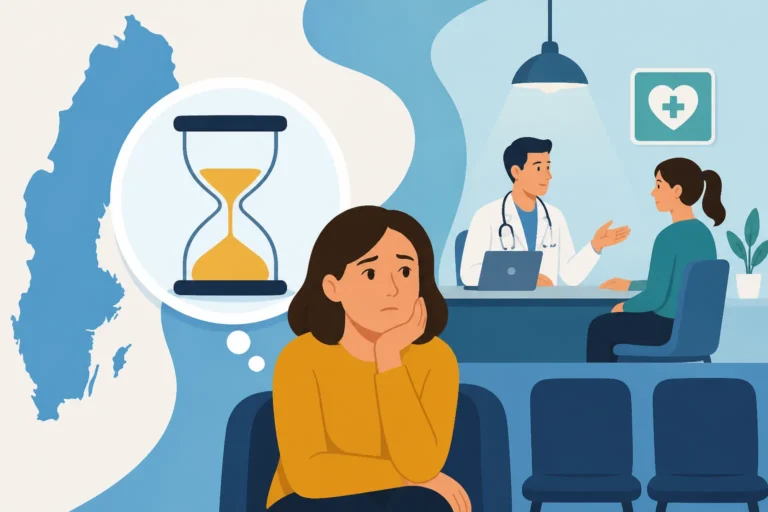
How Parental Leave and Healthcare Connect During Pregnancy in Sweden
When you first see those two blue lines in Sweden, the joy is often followed by a wave of administrative panic regarding which agency to contact first. I remember sitting in my Stockholm apartment, staring at the 1177 website and the Försäkringskassan portal, feeling completely lost about how my medical care would actually link to my future parental leave. This guide untangles that confusion, ensuring your healthcare and benefits work in perfect harmony.
Navigating Antenatal Care and the Medical System
In Sweden, the journey of pregnancy is managed almost entirely through the "Mödravårdscentral" (MVC) or "Barnmorskemottagning." Unlike many other countries where an OB-GYN is the primary point of contact, Sweden relies on a midwife-led model. This can be a significant cultural shift for many expats who are used to frequent doctor consultations and ultrasounds.
Registration and Your First Appointment
The moment you confirm your pregnancy, your first step is to contact a local midwife clinic. You do not need a referral from a general practitioner to do this. You can search for a clinic near you on the 1177 website or choose one based on recommendations from other expats. During the initial "inskrining" (enrollment) around week 8 to 12, your midwife will take a detailed medical history.
It is vital to understand Where Do I Go for Antenatal Care When Pregnant in Sweden? because the system is decentralized. Your midwife will be your primary contact throughout the entire nine months, performing blood tests, monitoring blood pressure, and checking the baby’s heartbeat. If you have a high-risk pregnancy, the midwife will facilitate a "remiss" (referral) to a specialist physician at the hospital, but for most, the midwife remains the sole guide.
The Role of the Barnmorska
The "Barnmorska" (midwife) is more than just a medical professional in the Swedish context; they are your advocate and the person who helps you navigate the transition into the social security system. They provide the "Moderskapsintyg" (Certificate of Pregnancy), which is the physical or digital document you must send to Försäkringskassan to trigger your parental leave rights.
I found that building a good relationship with my midwife was the key to a stress-free experience. They are trained to handle not just the physical aspects of pregnancy but also the emotional and educational components. They will often invite you to "Föräldragrupp" (parental groups), where you can meet other expectant parents in your neighborhood—a lifesaver for expats looking to build a local support network. If you are still waiting for your personal identity number, you might consider short-term coverage like SafetyWing to bridge any gaps in your initial medical coverage before the full state benefits kick in.
Ultrasound and Screening Protocols
In a standard Swedish pregnancy, you will typically only be offered one or two routine ultrasounds. The primary scan occurs between weeks 18 and 20 to check the anatomy and determine the due date. While this might feel sparse compared to other countries, it is the standard of care here.
Additional screenings, such as the KUB test (a combination of ultrasound and blood work for chromosomal abnormalities), are offered depending on your age and the region you live in. If you desire more frequent scans or specialized testing not covered by the public system, some residents opt for private clinics. Having a plan from Cigna Global can sometimes assist with these private routes, providing more flexibility and faster access to specialist consultations that sit outside the standard regional protocol. For a deep dive into the clinical side, see Maternity Care in Sweden: Mödravård, Midwives, and Giving Birth.
Understanding the Parental Leave Connection
The healthcare you receive during pregnancy is managed by your local "Region" (like Region Stockholm or Region Skåne), but your money and time off are managed by a federal agency called Försäkringskassan. The connection between these two is the "Certificate of Pregnancy" mentioned earlier. Without this medical verification, the administrative side cannot move forward.
Registering with Försäkringskassan
One of the biggest hurdles for foreigners is the registration process. You are not automatically "in" the system just because you have a job or a residence permit. You must actively apply to be registered with the Swedish Social Insurance Agency. This is a separate process from getting your Personnummer at the tax office.
You should prioritize Registering with Försäkringskassan: When and Why You Need To as soon as you arrive. If you wait until you are seven months pregnant to start this paperwork, you may face significant delays in receiving your payments. The agency needs to verify your "SGI" (Sjukpenninggrundande inkomst), which is the income level that determines how much you will be paid during your leave. If they cannot establish this in time, you might be stuck with the "basic level" payment, which is significantly lower than a standard salary-based benefit.
The 480 Day Benefit Explained
Sweden is world-famous for its generous parental leave, offering 480 days per child. These days are shared between two parents, with 90 days specifically reserved for each parent as a "use it or lose it" quota. The healthcare system supports this by encouraging both parents to attend midwife appointments and birthing classes.
Understanding Parental Leave in Sweden: Föräldrapenning and the 480 Days is essential for financial planning. For the first 390 days, you generally receive nearly 80% of your salary (up to a certain cap). The remaining 90 days are paid at a lower flat rate. Many expats are surprised to learn they can start using these days up to 60 days before the estimated due date if they feel they need to stop working early for health reasons.
Pregnancy Benefit or Graviditetspenning
If your job is physically demanding or involves a hazardous environment (like heavy lifting or exposure to chemicals), and your employer cannot reassign you to lighter duties, you can apply for "Graviditetspenning." This is a specific benefit that allows you to stop working and receive pay starting from the 60th day before your due date.
To qualify, your midwife must provide medical documentation of your pregnancy, and your employer must sign off on the fact that they cannot provide a safer workstation. It is a perfect example of how the medical side (your midwife's assessment) directly informs the financial side (Försäkringskassan’s approval). This benefit stops 11 days before your due date, at which point you transition to regular parental leave.
Cost and Insurance Considerations for Expats
A common question among newcomers is: "Is it really free?" The answer is "almost," but the details matter, especially if you are transitioning from another country’s insurance system or are in Sweden on a shorter-term permit.
Public System Costs and the High-Cost Ceiling
In Sweden, antenatal care provided by the midwife is free. However, there are small fees for hospital stays during and after the birth. These are usually nominal, often around 100 to 150 SEK per night, covering your meals and bed.
When asking How Much Does Giving Birth Cost in Sweden?, you should also factor in the "Högkostnadsskydd." This is a national cap on healthcare costs. Once you spend a certain amount on outpatient care within a 12-month period, you receive a "frikort" (free card) for the remainder of that year. This ensures that even if you require frequent specialist visits during a complicated pregnancy, your out-of-pocket expenses remain manageable.
Private Insurance for Peace of Mind
While the public system is excellent, some expats choose to maintain private international insurance. A policy from Cigna Global can be particularly useful if you want to ensure coverage for a private room in the hospital (which is not always guaranteed in the public system) or if you want the option to seek care in your home country.
Additionally, for those who are moving to Sweden and haven't yet secured their Personnummer, SafetyWing offers a "Nomad Health" option that can provide a vital safety net. Being "between systems" is a common expat frustration; having private coverage means you aren't reliant on a Swedish bureaucrat's speed to ensure you can see a doctor if an emergency arises in your first trimester. For more on this, read Private Health Insurance in Sweden: When Sjukvårdsförsäkring Is Worth It.
Comparison: Healthcare vs. Parental Benefits
| Feature | Managed By | Purpose | Cost to Patient |
|---|---|---|---|
| Antenatal Visits | Regional Healthcare (1177) | Medical checkups for mom and baby | Free |
| Hospital Birth | Regional Healthcare | Labor, delivery, and immediate care | Small daily fee (approx. 100-150 SEK) |
| Parental Pay | Försäkringskassan | Income replacement during leave | N/A (Benefit paid to you) |
| Ultrasounds | Regional Healthcare | Medical screening and dating | Free (standard routine) |
| Pregnancy Benefit | Försäkringskassan | Pay for physically demanding jobs | N/A (Benefit paid to you) |
Healthcare and Employment Rights
In Sweden, the law is very protective of pregnant employees. The integration of your health needs and your workplace rights is a cornerstone of the "Swedish Model." You are generally expected to be able to balance your medical appointments with your professional life without fear of retribution.
Time Off for Medical Appointments
Under most collective agreements ("Kollektivavtal"), you have the right to visit the midwife or attend antenatal classes during paid working hours. While this isn't a universal law for every single tiny company, it is the standard practice for the vast majority of employees.
If your employer is resistant, it’s worth checking your contract or speaking with a union representative. Sweden places a high value on "preventative care," and ensuring a healthy pregnancy is seen as a benefit to society and the employer in the long run. If you are feeling unwell but not yet ready for parental leave, you should look into Sick Pay in Sweden: Sjukpenning, Sick Notes, and Your Rights.
Sick Leave During Pregnancy
It is quite common for pregnant women in Sweden to be "sjukskriven" (put on sick leave) for conditions like severe pelvic girdle pain or extreme nausea. If your midwife or a doctor at the MVC determines that you cannot work due to pregnancy-related illness, they will issue a digital "Sjukintyg" (Sick Certificate).
The first 14 days of sick leave are paid by your employer (minus a "karensdag" or qualifying deduction). If the illness lasts longer than two weeks, Försäkringskassan takes over the payments. It is important to note that the agency has become stricter in recent years about what constitutes "illness" versus "normal pregnancy discomfort," so clear documentation from your medical provider is essential to ensure your benefits are approved.
The Sambo and Partner Involvement
Sweden’s healthcare system is incredibly inclusive of partners (often referred to as a "Sambo"). Partners are encouraged to attend all midwife appointments. When the baby is born, the partner is entitled to 10 "dagar i samband med barns födelse" (days in connection with the birth).
These are 10 extra days of paid leave, separate from the 480-day pool, intended to let the partner be at the hospital and help during the first week home. To access this, the partner must also be registered with the national insurance system. It is a vital period for bonding and physical recovery for the mother. If the partner needs to stay home later because the baby is ill, they will use a different system entirely; you can find details in How Does VAB Work When My Child Is Ill in Sweden?.
Postnatal Care and the Transition to Family Health
The "handover" from the pregnancy system to the childhood system is one of the most efficient parts of the Swedish bureaucracy. Once you leave the hospital, your "medical home" shifts from the midwife to a new specialist center.
The BVC System
Shortly after arriving home with your newborn, you will be contacted by (or you should contact) a "Barnavårdscentral" (BVC). This is a dedicated clinic for children from birth until they start school. The midwives at your MVC will have sent your birth records over digitally to ensure a seamless transition.
The BVC nurses handle all vaccinations, growth checks, and developmental milestones. This service is entirely free and is the primary way the state ensures every child in Sweden is healthy. I found the BVC to be an incredible resource for all those "new parent" questions that don't quite feel like emergencies. For more information on this transition, see Child Health in Sweden: How Barnavårdscentralen (BVC) Supports Families.
Mental Health Support for New Parents
Postpartum depression and anxiety are taken very seriously in the Swedish healthcare system. During your follow-up appointments at both the MVC (for the mother’s physical recovery) and the BVC (for the baby), nurses will often use standardized screening questions to check on your mental well-being.
If you are struggling, they can provide a direct "remiss" to psychologists who specialize in parental mental health. Because these referrals stay within the public system, the costs are covered under the same high-cost ceiling as other medical visits. If you prefer to find an English-speaking specialist or want to avoid waiting lists, check our guide on Mental Health Support in Sweden: Psychologists, Therapy, and Referrals. Having private insurance like Cigna Global can also be a major advantage here, as it often provides faster access to private counseling services that may not be available in your local region immediately.
Important Considerations for Non-EU Residents
If you are a non-EU citizen on a work permit or a "Sambo" visa, your rights to healthcare and parental leave are tied to your residence status. It is a common misconception that simply being in Sweden gives you full rights.
- The One-Year Rule: To be fully covered by the Swedish social security system and get a Personnummer, your residence permit must usually be valid for at least 12 months.
- Permit Renewals: If your permit expires while you are on parental leave, it can create a "gap" in your payments from Försäkringskassan. Always apply for your renewal as early as possible.
- Comprehensive Insurance: If you are here on a permit that didn't require you to be in the population register initially (like some student or specialized visas), you must ensure you have "Comprehensive Sickness Insurance." This is where brands like SafetyWing or Cigna Global are not just "nice to have"—they are often a legal requirement for your permit to remain valid.
The Swedish system is designed to be a "safety net," but it requires you to be an active participant. By linking your medical appointments with your Försäkringskassan registration early, you ensure that when the baby arrives, you can focus on your new family rather than on pending paperwork and unpaid bills.
Disclaimer
This article is for informational purposes only and does not constitute legal, financial, or medical advice. Swedish regulations regarding healthcare and parental leave are subject to frequent change. Always consult with Migrationsverket, Försäkringskassan, and your local healthcare provider (1177.se) for the most current and personal advice regarding your specific situation.