Healthcare in Sweden for Foreign Residents: The Complete System Guide (2027)
Moving to Sweden is often a dream of high-quality living and socialist efficiency, but the first time you fall ill, that dream can feel like a labyrinth of bureaucracy. I remember sitting in a cold waiting room in Stockholm, nursing a fever and being told I couldn't be seen because my personnummer was still "in process." This guide solves the mystery of the Swedish healthcare system, ensuring you get the care you need from day one.
Understanding the Swedish Healthcare Foundation
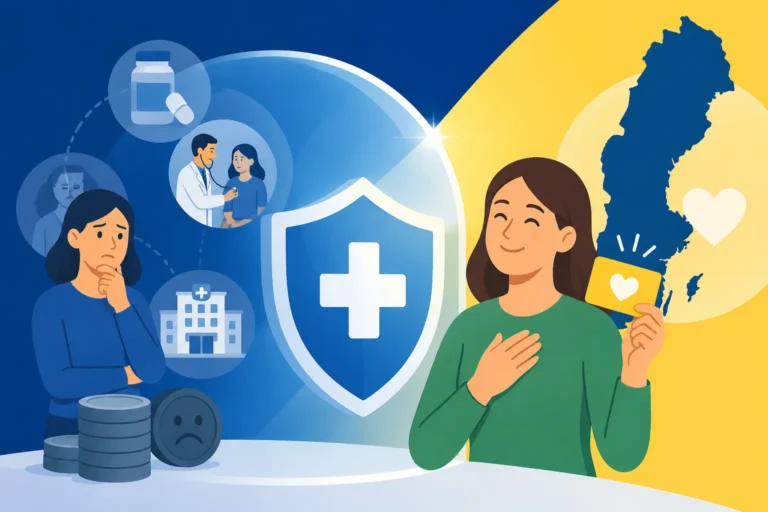
The Swedish healthcare system is built on the principle of equal access for all, but for a newcomer, it can feel like a fortress with very specific keys. It is primarily tax-funded, meaning that while it isn't "free," it is heavily subsidized. You won't see the astronomical medical bills common in North America, but you will encounter a system that prioritizes medical necessity over "on-demand" service. This can be a cultural shock if you are used to being able to book a specialist directly or getting an antibiotic prescription for a minor cold.
Regional Autonomy vs National Standards
Sweden is divided into 21 regions, and each one is responsible for its own healthcare delivery. This means that while there are national guidelines, the way you book an appointment in Skåne might differ slightly from how it’s done in Norrbotten. The regions own and operate the hospitals and the majority of the primary care clinics. For an expat, this means you need to understand How Do I Find Out Which Region I Belong to in Sweden as your patient fees and even the specific digital apps you use will depend on your local regional authority.
In practice, this decentralization means that wait times and the availability of certain specialized treatments can vary. For example, Stockholm often has more private alternatives that are still integrated into the public system, whereas in more rural areas, you might rely entirely on a single regional hospital. Understanding this regionality is crucial because your medical records are often stored within regional databases, though the national 1177 system is increasingly bridging these gaps to provide a more unified experience.
The Role of the Personnummer in Medical Access
The personnummer is the golden ticket to the Swedish state. Without it, you are often treated as a "tourist" or a "non-resident," which can lead to higher fees and manual paperwork. For those just arriving, Getting Your Personnummer: The Gateway to Swedish Healthcare is the single most important administrative task you will undertake. Once you have these ten digits, you are automatically integrated into the healthcare registry of your region, and your medical history, prescriptions, and high-cost protection are all tracked digitally.
However, many expats face a "limbo" period. If you are waiting for your number or are in Sweden on a shorter permit, you might wonder, Can I See a Doctor in Sweden Before I Get My Personnummer? The answer is yes, but it requires more effort. You will likely be assigned a "reserve number" (reservnummer) by the clinic, and you may have to pay the full, non-subsidized cost of the visit upfront. This is where having a private solution like SafetyWing can be a lifesaver, as it covers you during that vulnerable period before the Swedish state officially recognizes your presence in the system.
Public vs Private Healthcare Paths
It is a common misconception that Sweden only has public healthcare. In reality, there is a thriving private sector. Some private clinics are "regionally affiliated," meaning they accept the same subsidized patient fees as the public clinics. Others are "fully private," catering to those with private insurance or those willing to pay out-of-pocket to skip the public queues. If your employer provides a benefit called Sjukvårdsförsäkring, you are essentially getting a fast-pass to specialist care that bypasses the standard public wait times.
For most residents, the public system is the default and provides world-class care for serious illnesses and emergencies. However, for elective surgeries or seeing a dermatologist for a non-urgent issue, the wait in the public system can be months. This is why many expats choose to supplement their coverage with Cigna Global to ensure they have the option of international-standard private care without the wait, particularly if they are used to a higher level of "customer service" in healthcare than the Swedish public system typically offers.
Primary Care: Your Vårdcentral
The Vårdcentral (Health Center) is the heart of the Swedish medical system and your first point of contact for almost everything. Whether you have a persistent cough, a weird mole, or need a mental health check-up, you start here. Swedes are very protective of their "gatekeeper" system; you generally cannot just walk into a hospital for a non-emergency. If you do, you will likely be redirected back to your Vårdcentral.
How to Choose and Register with a Clinic
One of the best things about the system is "Vårdval" (Care Choice). You are not strictly assigned to a clinic based on your doorstep; you have the right to choose which Vårdcentral you want to be registered with. Many expats simply pick the one closest to their home, but it is worth researching. Some clinics have better reputations for English-speaking staff or shorter wait times. You can find out more about this process in our guide on Registering with a Vårdcentral: Your Guide to Primary Care in Sweden.
To register, you can usually do it online if you have BankID, or by visiting the clinic in person and filling out a simple form. If you move across town, you aren't stuck with your old clinic; you can switch at any time. It is a good idea to register as soon as you get your personnummer, rather than waiting until you are actually sick. Having your name in their system makes the booking process much smoother when an actual health issue arises.
Booking Appointments and Digital Portals
The way you interact with your doctor in Sweden is increasingly digital. The 1177.se portal is the national hub for all things health. Once you have a BankID, you can log in to see your medical records, check your lab results, and even message your doctor. This digital-first approach is incredibly efficient once you get the hang of it, but it can be frustrating for those used to just calling a receptionist. For a deep dive into the portal's capabilities, check 1177 Vårdguiden: Navigating Sweden's National Health Advice Line and Portal.
When you call a Vårdcentral, you will often encounter a "callback" system. Instead of waiting on hold, you enter your phone number, and an automated voice tells you when a nurse will call you back. When they do call, they will perform "triage"—asking you questions to determine if you really need to see a doctor or if you can manage your symptoms at home with rest and over-the-counter medication. Don't be offended if they suggest paracetamol first; it’s a standard part of the Swedish medical philosophy of avoiding unnecessary interventions.
Patient Fees and the Cost Ceiling
While the system is subsidized, it is not free at the point of use. You will pay a "Patientavgift" for every visit. These fees vary by region but generally range from 200 to 300 SEK for a GP visit and slightly more for a specialist. If you are worried about costs accumulating, you should understand The Högkostnadsskydd Explained: Sweden's Healthcare Cost Ceiling and Frikort. This is a "high-cost protection" scheme that caps your total spending on healthcare visits within a 12-month period.
Once you reach the cap—which is currently around 1,400 SEK (though it adjusts slightly every year)—you receive a "Frikort" (Free Card). This means all subsequent visits for the remainder of that 12-month period are free. The system tracks this automatically if you have a personnummer, so you don't need to keep a folder full of paper receipts. This safety net is a major relief for those managing chronic conditions or going through a year of multiple health hurdles.
Specialized Care and the Referral System
If your health issue is beyond the scope of a general practitioner, you will need to enter the world of specialized care. In Sweden, specialists like cardiologists, neurologists, or even some gynecologists are usually accessed through a "Remiss" (referral). This is where the Swedish system differs significantly from many others; you cannot simply call a specialist and book an appointment because you feel like it.
Getting a Referral (Remiss)
The process starts at your Vårdcentral. Your GP will evaluate your condition, and if they agree that a specialist is needed, they will send an electronic referral to the relevant department. This can feel like a slow process, as you are at the mercy of the GP’s assessment. For more details on navigating this, see How Do I Get a Referral to a Specialist in Sweden?. The specialist clinic then reviews the referral and decides how urgent your case is before offering you an appointment.
In some cases, you can write a "self-referral" (egenremiss). This involves filling out a form on the 1177 portal or a paper form for a specific specialist clinic. While this allows you to bypass the GP, the specialist clinic will still "triage" your self-referral. If they don't think your case warrants their specialized attention, they can reject the referral and tell you to go back to your Vårdcentral. It is generally more effective to have a GP's backing, as it carries more weight in the system.
The Swedish Care Guarantee (Vårdgaranti)
Sweden has a legal "Care Guarantee" (Vårdgaranti) designed to ensure that no one has to wait too long for care. The "0-7-90-90" rule is the gold standard:
- 0: Instant contact with the healthcare system (e.g., 1177 or a clinic).
- 7: An appointment with a GP within seven days.
- 90: A visit to a specialist within 90 days of the referral.
- 90: Treatment or surgery started within 90 days of the decision to treat.
While this sounds great on paper, the reality can be different. In many regions, the 90-day wait for a specialist is more of a goal than a guarantee. If your region cannot meet the 90-day window, they are technically obligated to offer you care in another region at no extra cost, including travel. However, many residents are unaware of this right or find the process of transferring care too cumbersome to pursue.
Specialized Clinics and University Hospitals
For complex or rare conditions, you might be referred to a University Hospital, such as Karolinska in Stockholm or Sahlgrenska in Gothenburg. These institutions are at the forefront of medical research and provide incredible care, but they are also very busy. When you are under the care of a specialist hospital, your treatment is usually highly coordinated. You might have a "patient coordinator" who helps manage your appointments across different departments.
One thing to note is that Swedish specialized care is very team-based. You might not always see the same doctor at every visit; instead, you might see different members of a clinical team. This can be jarring if you are used to a one-on-one relationship with a specific specialist. However, the Swedish philosophy is that the team as a whole is responsible for your care, and your digital records ensure that every member of that team is up to speed on your progress.
Emergency Services and Urgent Care
Knowing where to go when things go wrong at 2:00 AM is vital. In Sweden, there is a clear distinction between a life-threatening emergency and an "urgent" issue that can't wait until the Vårdcentral opens on Monday morning.
When to Call 112 vs 1177
For life-threatening emergencies—think chest pain, severe difficulty breathing, or major trauma—the number is 112. The operators speak English and are highly trained. If you call an ambulance, be aware that you will be taken to the "Akutmottagning" (Emergency Room) of the nearest hospital. For non-life-threatening advice, the number is 1177. This is a 24/7 nurse-led advice line. You can read more about it in our guide: What Number Do I Call for Non-Emergency Medical Advice in Sweden?.
The nurses at 1177 can tell you if you should wait for your GP, go to a "Närakut" (urgent care center), or head straight to the ER. In fact, many emergency rooms will ask if you have called 1177 before coming in. Using 1177 correctly can save you hours of waiting in a hospital corridor, as they can often book a priority appointment for you at an urgent care clinic.
Navigating the Akutmottagning (ER)
The Swedish ER operates on a strict triage system. If you arrive with a broken finger, you will be placed at the bottom of the list, behind the heart attacks and car accidents. This means wait times can be extreme—sometimes 8 to 12 hours during peak times in major cities. You will pay a higher patient fee for an ER visit than for a GP visit, usually around 400 SEK.
One thing to be prepared for is the "waiting culture." Swedish ERs are not the place for comfort. They are functional, clean, and clinical. You will likely be given a sandwich and some juice if you are there for a long time, but don't expect the level of amenities you might find in private hospitals elsewhere. The doctors are excellent, but they are focused entirely on stabilizing you and deciding if you need to be admitted or if you can be sent home with a follow-up at your Vårdcentral.
Urgent Care Outside Business Hours (Närakut)
The "Närakut" is a brilliant middle ground between the Vårdcentral and the ER. These clinics are for things like deep cuts that need stitches, suspected minor fractures, or sudden high fevers in children. They are open late and on weekends. They have X-ray facilities and can do basic blood tests on-site.
| Facility Type | Best For | Typical Wait Time |
|---|---|---|
| Vårdcentral | Routine checks, chronic illness, referrals | 1–7 days |
| Närakut | Minor injuries, stitches, urgent illness | 1–4 hours |
| Akutmottagning | Life-threatening emergencies, trauma | Variable (Priority-based) |
| 1177 (Phone) | Medical advice, "where should I go?" | 5–20 minutes |
If you are in a major city, there are often several Närakut clinics. Using your region's healthcare app (like "Alltid Öppet" in Stockholm) can show you the current wait times at different locations, allowing you to choose the one that is least crowded.
Pharmacies and Prescriptions
The Swedish pharmacy system, known as "Apotek," is highly regulated and incredibly efficient. Almost everything beyond basic pain relief and hay fever meds requires a prescription, and the process is almost entirely paperless.
How the Electronic Prescription System Works
In Sweden, you don't walk out of the doctor's office with a slip of paper. Instead, the doctor sends an "E-recept" (electronic prescription) directly to a national database. You can then go to any Apotek in the country, show your ID (or provide your personnummer), and they will pull up your prescription. It is a seamless process that makes How Do I Refill a Prescription at a Swedish Apotek? much easier than in many other countries.
You can also manage your prescriptions online. By logging into 1177 or an app like Apoteket or Apotea, you can see how many refills you have left and even order your medication for home delivery. This is particularly useful for those on long-term medication. Note that if you are bringing medication from abroad, you should check Can I Bring My Regular Medication into Sweden from Abroad? to ensure you are compliant with Swedish customs and medical regulations.
The High-Cost Protection for Medicines
Just as there is a cap on visit fees, there is also a "Högkostnadstrappa" (high-cost stairway) for prescription medications. This ensures that no one is priced out of their necessary medicine. The more you spend on prescriptions in a 12-month period, the higher the discount you receive on subsequent purchases.
Once you have spent a certain amount (currently around 2,800 SEK), all further prescriptions within that 12-month period are free. This is a life-saving feature for residents with chronic illnesses who require expensive specialized drugs. Like the visit cap, this is tracked automatically through your personnummer at the pharmacy counter, so the discount is applied the moment you qualify.
Over-the-Counter Medicine Availability
For minor ailments, you can buy "Receptfria läkemedel" (over-the-counter medicines) at the Apotek, and even in many grocery stores like ICA or Coop. However, the selection in grocery stores is limited to basics like paracetamol, ibuprofen, and nasal sprays. If you need something slightly more specialized, like a specific cream or a stronger antihistamine, you must go to an actual Apotek.
Swedish pharmacists are highly trained and can offer excellent medical advice. If you have a minor skin rash or an eye irritation, it is often worth speaking to a pharmacist first. They might be able to recommend an OTC treatment that saves you a trip to the doctor. Just keep in mind that Do Swedish Pharmacies Open on Sundays and Public Holidays? is a common question, and while many in city centers do, those in residential areas may have limited hours.
Maternal, Child, and Specialized Support
Sweden is famous for being a great place to raise a family, and the healthcare support for parents and children is a large reason why. The system is designed to be proactive rather than reactive, with a heavy focus on preventative care.
Maternity Care (Mödravårdscentralen)
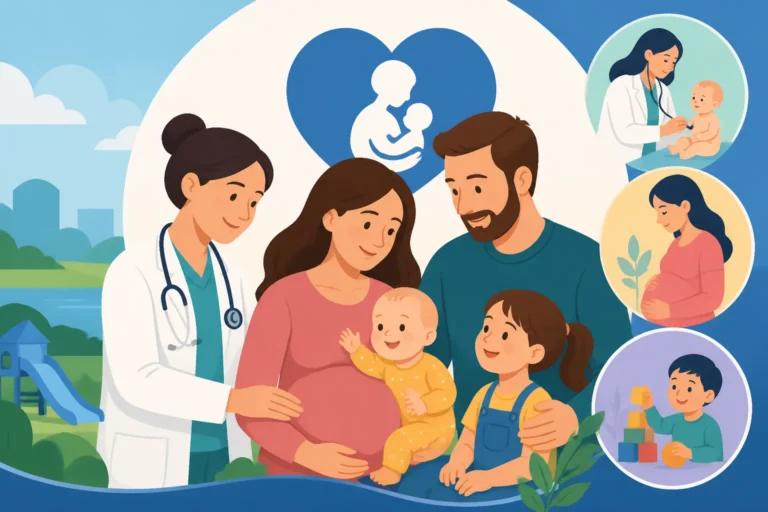
When you discover you are pregnant, your first call isn't to a doctor, but to a "Barnmorska" (midwife) at a "Mödravårdscentral" (MVC). In Sweden, midwives lead the way in pregnancy care. Unless there is a complication that requires an obstetrician, your entire pregnancy journey will be managed by a midwife. This is a very supportive, low-intervention model that many expats grow to love.
The care is completely free, including all check-ups, ultrasounds, and the birth itself. For more details on what to expect, read Maternity Care in Sweden: Mödravård, Midwives, and Giving Birth. The system also places a heavy emphasis on prenatal education and "parent groups," where you can meet other expectant parents in your neighborhood—a great way for expats to build a local support network.
Pediatric Care (Barnavårdscentralen)
Once the baby is born, your care shifts from the MVC to the "Barnavårdscentral" (BVC). Again, this is a nurse-led system that monitors your child's development, manages the Vaccinations in Sweden: The National Childhood Immunisation Schedule, and offers parental support. BVC is free until the child starts school, at which point the school health system takes over.
If your child is sick, however, you don't go to the BVC. You contact your Vårdcentral or a pediatric clinic (Barnläkarmottagning). Many regions have specialized pediatric urgent care centers, which is a relief when your toddler spikes a fever at midnight. To understand how to navigate this for your little ones, see our guide on Child Health in Sweden: How Barnavårdscentralen (BVC) Supports Families.
Mental Health Services and Psychologists
Mental health is taken seriously in Sweden, though the path to getting help can sometimes feel slow in the public system. Your first point of contact is, again, the Vårdcentral. Many clinics have "First Line" mental health teams, including psychologists and counselors who can offer short-term therapy.
For more complex or long-term needs, you will be referred to "Psykiatri" (Specialized Psychiatry). Because the wait times for public therapy can be long, many expats look for private alternatives. If you are seeking an English-speaking therapist, you might find it easier to look outside the public system. For a full breakdown of your options, check Mental Health Support in Sweden: Psychologists, Therapy, and Referrals.
Dental Care: A Separate System
If there is one part of the Swedish system that catches expats off guard, it’s dental care. Unlike general healthcare, dental care is only free for children and young adults (usually up to age 23, though this varies by region). For adults, it is a largely private, fee-for-service market.
Public vs Private Dentists
You have two main choices: "Folktandvården" (the state-run dental service) or a private dentist. Folktandvården is generally reliable and has standardized pricing, but they often have long waiting lists for new patients. Private dentists are more numerous and can often see you much faster. Interestingly, there isn't always a huge price difference between the two, so many residents opt for private care for the convenience.
When choosing, it is worth looking for a clinic that is connected to the national dental insurance system, as this allows you to use your state subsidies. You can find more advice on this in our article Dental Care in Sweden: Folktandvården, Costs, and the Tandvårdsbidrag.
Subsidies and the Tandvårdsbidrag
Every adult in Sweden who is part of the social insurance system receives an annual dental care subsidy called "Tandvårdsbidrag." The amount depends on your age:
- Ages 24–29: 600 SEK per year.
- Ages 30–64: 300 SEK per year.
- Ages 65+: 600 SEK per year.
You can "roll over" this subsidy for one year, meaning you can use two years' worth of credit for a single check-up. Beyond this, there is also a high-cost protection for dental work, though the threshold is much higher than for medical care. You generally have to pay the first 3,000 SEK of dental costs yourself before the state starts picking up a percentage of the bill.
Emergency Dental Care
If you have a sudden toothache or a broken tooth on a weekend, you need "Tandläkarvård" (emergency dental care). Major cities have clinics specifically for this, often located within hospitals or central transit hubs. Be prepared for a premium price; emergency weekend visits are significantly more expensive than a scheduled check-up. If you're in a bind, check Where Can I Get an Emergency Dentist Appointment in Sweden? to find the nearest open clinic.
Financial Considerations for Expats
While the Swedish system is egalitarian, your financial experience within it will depend heavily on your residency status and the insurance you hold.
Healthcare Costs for Non-EU Residents
If you are a non-EU citizen moving to Sweden on a residence permit, you are generally entitled to the same subsidized healthcare as Swedes if your permit is for longer than one year. This allows you to get a personnummer and enter the system. However, if your permit is for less than a year, you may be required to show proof of comprehensive health insurance to get your permit in the first place.
This is a critical distinction. Without a personnummer or an EHIC card, a single hospital stay can cost tens of thousands of kronor. If you are in this category, having a policy from Cigna Global is not just a luxury; it is a vital safety net that ensures you aren't bankrupted by a sudden illness. Even if you are entitled to Swedish healthcare, the private insurance allows you to seek care globally, which is a major advantage for "global citizens" who travel frequently.
Private Health Insurance Options
Even for those fully integrated into the Swedish system, "Sjukvårdsförsäkring" (private health insurance) is becoming more popular. The main reason is speed. With a private policy, you can often see a specialist within 3-5 days, compared to the 90-day wait in the public system. Many Swedish employers offer this as a tax-advantaged benefit.
If your employer doesn't provide it, you can purchase it individually. For expats, companies like SafetyWing offer "Nomad Health" products that are specifically designed to bridge the gap between being a traveler and a settled resident. This is particularly useful for freelancers or those on "Digital Nomad" style arrangements who may not have a Swedish employer to provide local benefits.
Transferring EU Rights (EHIC/S1)
If you are an EU/EEA citizen, you have it slightly easier. You can use your European Health Insurance Card (EHIC) for "medically necessary" care while you are settling in. This allows you to pay the same patient fees as a Swedish resident. However, the EHIC is not a replacement for long-term residency registration.
If you are a retiree or a posted worker from another EU country, you should look into the "S1 form." This allows you to "export" your healthcare rights from your home country to Sweden, ensuring you are fully covered without having to pay twice into different social security systems. For a step-by-step guide on this, see Transferring EU Health Rights to Sweden with an S1 or EHIC.
Disclaimer
This guide is intended for informational purposes only and does not constitute medical or legal advice. Healthcare regulations, fees, and processing times in Sweden are subject to change and can vary significantly by region. Always consult the official 1177.se portal or the Swedish Migration Agency (Migrationsverket) for the most current information regarding your specific situation.