How Do I Find Out Which Region I Belong to in Sweden?
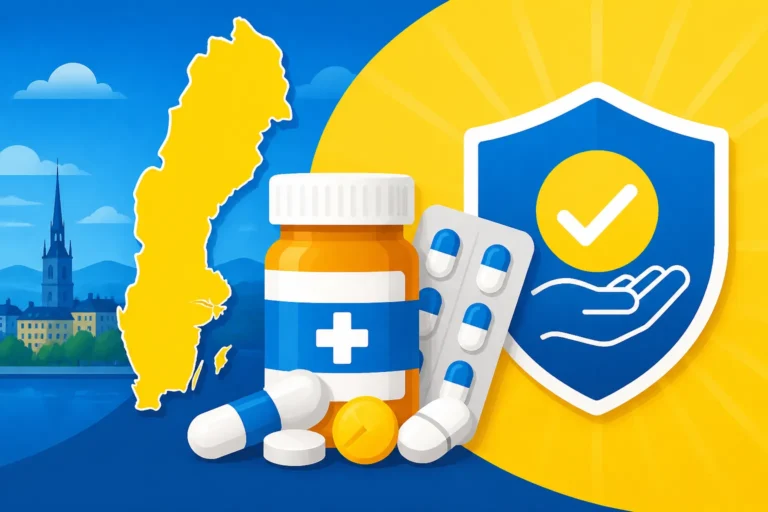
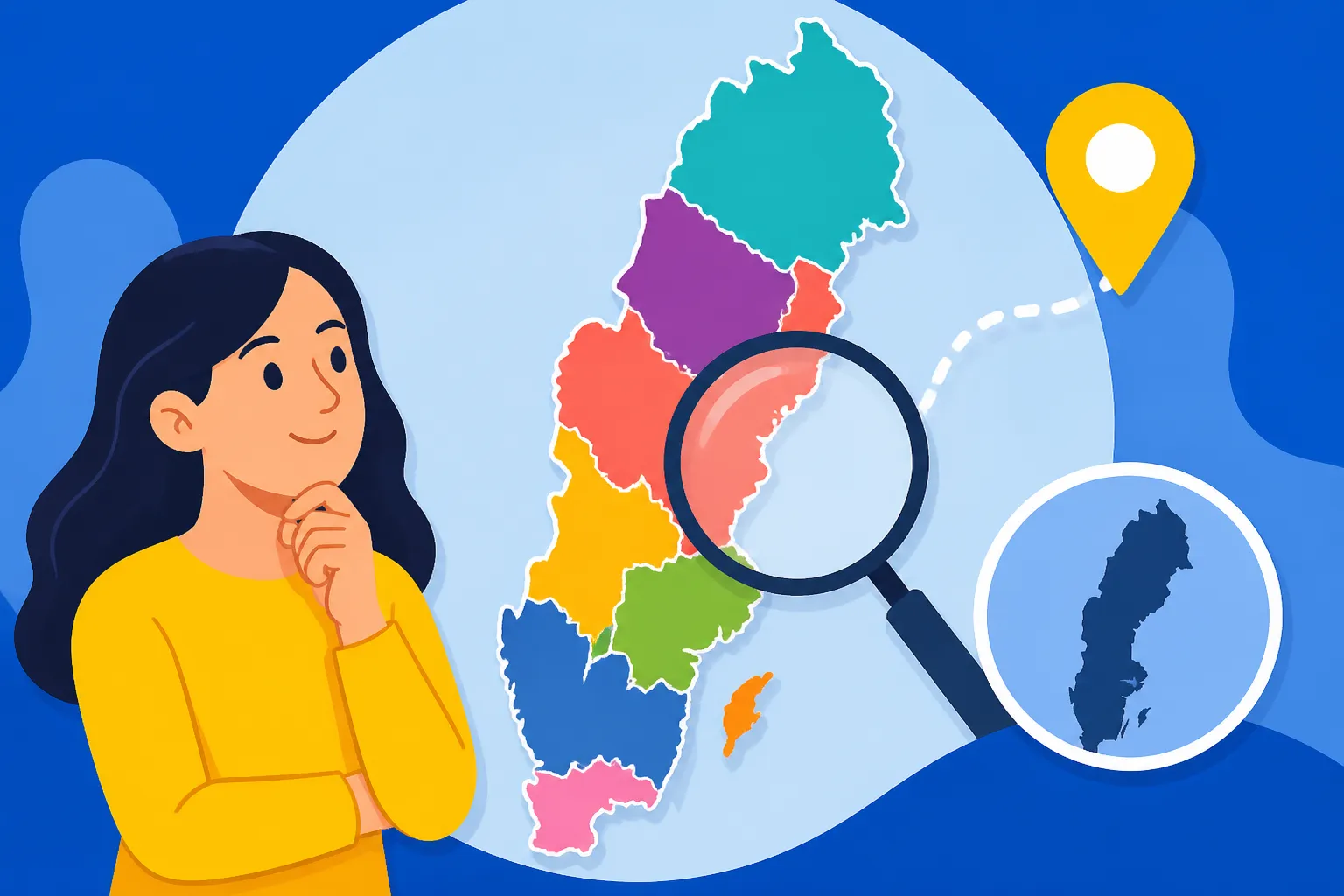
Moving to Sweden often feels like a masterclass in administrative puzzles, especially when you realize that "Sweden" doesn't provide your healthcare—a specific region does. I remember staring at my first medical bill in Malmö, wondering why the fee was different from my friend’s in Gothenburg, only to realize I was part of a completely different administrative universe. This guide solves the mystery of Swedish regionality, helping you identify exactly which of the 21 regions governs your life and your health.
Understanding the Administrative Map Why You Need to Know Your Region
When you first arrive, you might hear the words län (county) and region (region) used interchangeably. While they cover the same geographic areas, the region is the political body responsible for the most critical aspects of your daily life: healthcare and public transport. Unlike many countries where healthcare is managed centrally by a national ministry, Sweden operates on a decentralized model. This means that Healthcare in Sweden for Foreign Residents: The Complete System Guide (2027) is actually a collection of 21 different systems working under a national framework.
The region you belong to is determined strictly by where you are folkbokförd (registered in the population register). This is why Getting Your Personnummer: The Gateway to Swedish Healthcare is such a monumental milestone for expats. Your personal identity number is linked to your home address, which in turn "pins" you to a specific region. If you live in Stockholm, you are under Region Stockholm. If you move just a few kilometers north into Knivsta, you suddenly belong to Region Uppsala. This transition can affect everything from which Pharmacies and Prescriptions in Sweden: The Apotek System for Newcomers you use for regional discounts to how much you pay for a standard doctor's visit.
Knowing your region is essential because the rules are not uniform. Each region has the power to set its own patient fees, decide on the length of its waiting lists, and manage its own digital portals. For example, if you are looking for Mental Health Support in Sweden: Psychologists, Therapy, and Referrals, the process for booking and the subsidies available might look slightly different in Region Skåne compared to Region Västra Götaland. Validation of your frustration is necessary here: it is objectively confusing that a country so organized has 21 different sets of rules for a broken arm, but once you identify your region, the path forward becomes much clearer.
Why Your Region Dictates Your Primary Care Options
Your region is the gatekeeper to your local clinic, known as a vårdcentral. In Sweden, you are generally encouraged to seek care within your own regional boundaries to keep administrative costs low. When you are Registering with a Vårdcentral: Your Guide to Primary Care in Sweden, the system will check your registered address to ensure you are choosing a clinic within your jurisdiction. While the law allows for vårdval (choice of care), meaning you can technically pick a clinic in another region, the "money follows the patient" system works most smoothly when you stay local.
If you happen to live near a regional border—a common occurrence in the suburbs of Stockholm or the commuter towns between Malmö and Lund—you might find that the closest hospital is actually in a neighboring region. In these cases, you need to understand your region's specific "referral" rules. Usually, your "home" region must approve specialized care if you want it to be covered under the national cost ceiling. This is why Finding a Doctor in Sweden: GPs, Specialists, and the Referral System requires knowing exactly who is paying the bill: your region of residence.
The Impact on Public Transport and Mobility
Beyond health, your region manages your "commuter life." In Stockholm, the region operates SL (Storstockholms Lokaltrafik), while in Skåne, it is Skånetrafiken. If you are Getting Around Sweden: Public Transport, Trains, and Driving, your regional identity determines which app you download and which monthly pass you buy. It is not uncommon for expats to buy the wrong ticket because they crossed an invisible regional line on a bus, leading to hefty fines. Understanding your regional "borders" is as much about avoiding fines as it is about getting a flu shot.
Practical Steps to Locate Your Region Based on Your Address
The most foolproof way to find your region is to look at your official registration with Skatteverket (the Swedish Tax Agency). When you move, you are required to perform a Registering Your Move (Flyttanmälan) with Skatteverket. Once this is processed, your region is automatically assigned based on your municipality (kommun). Sweden is divided into 290 municipalities, and each one belongs to exactly one of the 21 regions.
If you aren't sure which region your municipality falls under, the easiest digital tool is the 1177 Vårdguiden website. By entering your postal code or selecting your city on the 1177 portal, the site will automatically toggle to your specific regional version. This is vital because 1177 Vårdguiden: Navigating Sweden's National Health Advice Line and Portal offers different contact numbers and e-services depending on your location. For instance, the way you Book Doctor Appointments Online Through 1177.se with BankID in Dalarna may involve a different interface than the one used in Östergötland.
Using Your Postal Code to Identify Your Region
Postal codes in Sweden are five digits long, and while they don't explicitly "code" the region in the digits themselves, every map service in the country uses them to categorize you. You can check your region by visiting the official website of the Swedish Association of Local Authorities and Regions (SKR). They maintain a definitive list that links every municipality to its respective region. If you are living in a temporary "second-hand" rental, make sure you are using the address where you are officially registered, as Renting a Home in Sweden: How the First- and Second-Hand System Works can sometimes lead to confusion if your physical home and registered address don't match.
| Region Name | Major City Hub | Primary Healthcare Portal |
|---|---|---|
| Region Stockholm | Stockholm | 1177.se/Stockholm |
| Region Västra Götaland | Gothenburg | 1177.se/Vastra-Gotaland |
| Region Skåne | Malmö / Lund | 1177.se/Skane |
| Region Uppsala | Uppsala | 1177.se/Uppsala |
| Region Östergötaland | Linköping | 1177.se/Ostergotland |
| Region Västerbotten | Umeå | 1177.se/Vasterbotten |
| Region Norrbotten | Luleå | 1177.se/Norrbotten |
The Role of the Personnummer in Regional Identification
Once you have your identity number, your region is "hard-coded" into the national health database. When you visit any hospital in Sweden, the first thing the receptionist does is ask for your personnummer. The system immediately pulls up your folkbokföring address and identifies your "home" region. This ensures that the billing is sent to the correct regional authority. If you are still in the waiting period, you might wonder How Long Does It Take to Get a Personnummer After Moving to Sweden? and how that affects your regional status. Without the number, you are essentially "region-less" in the eyes of the digital system, which often requires manual paperwork to prove your residency in a specific area.
Special Situations Tourists Students and the Unregistered
What happens if you don't have a personnummer yet? This is the "limbo" phase that almost every expat faces. If you are a tourist, a short-term worker, or a student on a stay of less than a year, you don't technically "belong" to a region in the same way a permanent resident does. You will likely be issued a What Is a Samordningsnummer and Can I Get Care With One? (coordination number), but this does not automatically grant you the same subsidized regional healthcare rates as residents.
In these scenarios, you are still physically located within a region's borders, and you will use their hospitals, but your "belonging" is financial rather than administrative. If you are a tourist or a digital nomad, you are responsible for the full cost of care unless you have coverage. This is where brands like SafetyWing or Cigna Global become indispensable. If you are an expat waiting for residency, having a policy from Cigna Global ensures that you can access private clinics regardless of which regional "border" you are currently crossing. Similarly, for those on shorter trips or waiting for their Swedish insurance to kick in, SafetyWing provides a safety net that bypasses the need to be registered in a specific Swedish region.
Navigating Care as an EU Citizen
If you are moving from another EU country, your regional "belonging" is bridged by the EHIC (European Health Insurance Card). You can use your EHIC to access care in any region, and you will pay the same patient fees as a local resident of that region. However, Can EU Citizens Use Swedish Healthcare with an EHIC Card? is a question with a time limit; once you are registered as a resident, you must transition into the Swedish regional system and stop relying on the EHIC. The region you reside in will then become your primary payer.
Why Digital Nomads and Tourists Need Private Coverage
For those who are not yet part of the folkbokföring, the cost of a single emergency room visit in Region Stockholm can exceed 4,000 SEK for a non-resident. Without a regional "home," you are billed as an international patient. This is why newcomers should maintain their private coverage from providers like SafetyWing or Cigna Global until they have that physical ID card in their hand. People can be hit with massive bills if they think being "in" a region was the same as being "registered" in one. Even after you find your region, the waiting lists for specialists can be long, and Cigna Global can often provide faster access to private specialists that the public regional system might take months to authorize.
The Impact of Regionality on Your Healthcare Costs and Access
One of the most surprising things for foreigners is that Understanding Patient Fees (Patientavgift) Across Sweden's 21 Regions reveals a lack of national price-fixing. A visit to a GP might cost 200 SEK in one region and 300 SEK in another. While these amounts are small, they add up, especially if you haven't yet reached The Högkostnadsskydd Explained: Sweden's Healthcare Cost Ceiling and Frikort. Your region tracks your spending toward this "high-cost protection" limit. If you move between regions during the year, you must often provide receipts to your new region to prove how much you've already paid, as their digital systems don't always talk to each other perfectly.
The "Care Guarantee" or vårdgaranti is also managed regionally. This is your right to receive care within a certain timeframe. If your region cannot provide a specialist appointment within 90 days, they are technically obligated to pay for your care in another region. However, Is the Care Guarantee (Vårdgaranti) Actually Enforced in Sweden? is a hot topic among expats because some regions are much better at enforcing this than others. Knowing your region allows you to check their specific performance stats on websites like Väntetider i vården (Waiting times in care).
Dental Care A Regional Outlier
Dental care is the area where regionality matters most for your wallet. While basic healthcare is heavily subsidized for all adults, Dental Care in Sweden: Folktandvården, Costs, and the Tandvårdsbidrag works on a different subsidy model. However, for children and young adults, dental care is completely free up to a certain age—but that age limit varies by region. Some regions offer free dental until 23, while others have debated lowering it to 19. If you have teenagers, knowing your region’s specific cutoff for free dental care can save you thousands of kronor in unexpected bills.
Regional Health Screenings and Invitations
Your region is also responsible for preventative health. They are the ones who send out invitations for Preventive Health and Screening Programmes for Adults in Sweden, such as mammograms or cervical screenings. These invitations are sent to the address you have on file with Skatteverket. If you live in Region Skåne, your invitation will come from them; if you move to Jämtland, you fall under their screening schedule. If you are a newcomer and haven't received an invitation yet, it is often because your regional registration hasn't caught up with your move, and you may need to manually contact the local screening center in your new region.
Regional Healthcare and the Landscape
As we navigate the administrative landscape of 2026, the Swedish government has discussed more centralization, but for now, the 21-region model remains the bedrock of the system. Whether you are Managing a Chronic Condition in Sweden: Diabetes, Asthma, and More or just need a one-off prescription, your first step is always to confirm your regional "home." It dictates your costs, your digital login for 1177, and your legal rights to timely care.
If you find yourself overwhelmed by the regional differences, remember that the quality of care remains high across the board. The frustration usually lies in the paperwork and the "wrong door" syndrome—showing up at a clinic that doesn't serve your area. Take ten minutes today to look up your municipality on the SKR website, bookmark your regional 1177 page, and ensure your Skatteverket registration is up to date. And if you are still in the transition phase, keep that Cigna Global or SafetyWing policy active; it’s the only way to ensure your regional "belonging" doesn't become a financial burden while you wait for the Swedish bureaucracy to process your move.
Disclaimer
The information provided in this article is for general informational purposes only and does not constitute legal, financial, or medical advice. Swedish regulations regarding regional boundaries, healthcare fees, and immigration requirements are subject to change. Readers should always verify information with official sources such as Skatteverket, Migrationsverket, or 1177 Vårdguiden before making decisions.