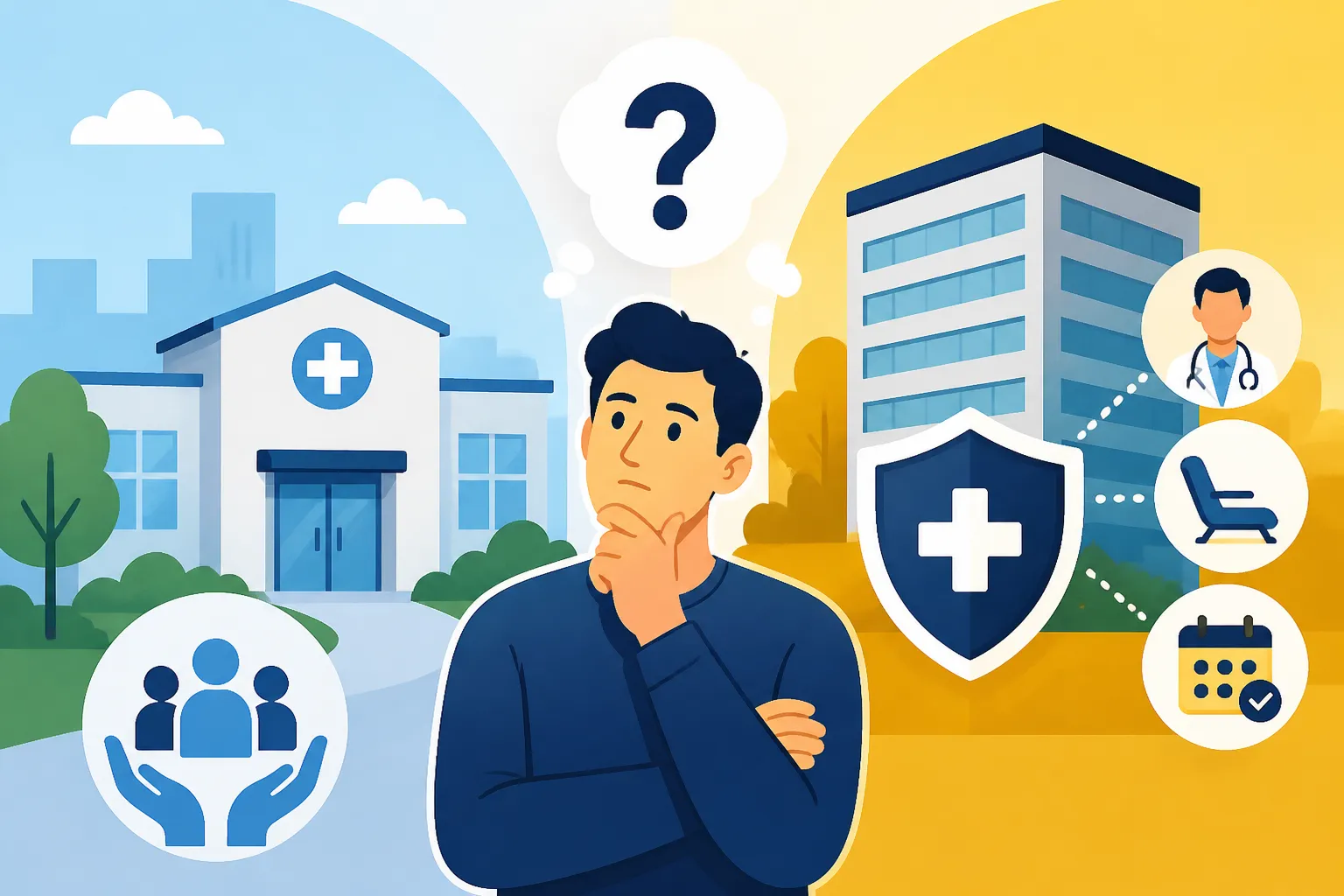
Can My Employer’s Private Insurance Replace Public Healthcare in Sweden?
One of the most common frustrations for new arrivals is realizing that having a gold-standard job offer doesn't mean you can bypass the legendary Swedish waiting lists. I remember sitting in my first apartment in Stockholm, clutching a private insurance card from my employer, thinking I was "opted out" of the public chaos, only to find the local clinic didn't care. This guide clarifies exactly how private insurance interacts with the public system and whether it can truly serve as a replacement.
Understanding the Fundamental Structure of Swedish Healthcare
To answer whether private insurance can replace public care, we first have to dismantle the idea that these are two separate, competing systems. In many countries, you choose either public or private. In Sweden, the public system is the foundation upon which everything else is built. It is tax-funded and universal, meaning that as long as you are a resident, you are part of it. You cannot "opt-out" of paying the taxes that fund it, nor can you "opt-out" of the coverage it provides.
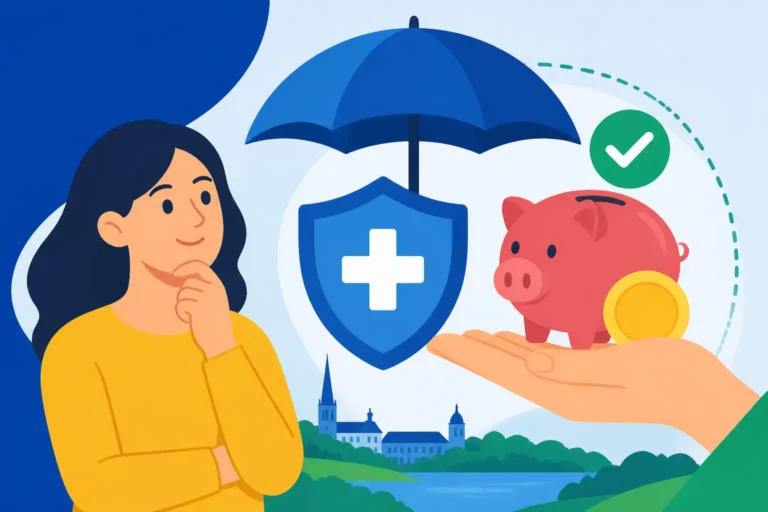
When an employer offers you private health insurance, known locally as sjukvårdsförsäkring, they are not giving you an alternative to the state system. Instead, they are providing a "fast-track" ticket for specific types of care. It is an additional layer of convenience, not a substitute for the underlying structure. If you are looking for a deep dive into the basics, you should start by reading Healthcare in Sweden for Foreign Residents: The Complete System Guide (2027).
For the veteran expat, the reality is that the public system handles the "heavy lifting"—emergency rooms, cancer treatments, and chronic disease management—while the private insurance handles the "quality of life" issues, such as getting a specialist to look at your persistent back pain within three days instead of three months. This distinction is vital because if you arrive in Sweden thinking your private policy makes the public system irrelevant, you will be caught off guard the moment you need a prescription or an ambulance.
The Myth of Private Insurance and the Personnummer
A massive hurdle for foreigners is the link between healthcare and the personnummer. Many newcomers believe that if they have a private policy from a global provider, they don't need to worry about the long wait for their Swedish personal identity number. This is a dangerous misconception. In the eyes of the Swedish Tax Agency (Skatteverket), your right to live in Sweden is often tied to having "comprehensive health insurance," but the requirements for this are incredibly specific.
Most employer-provided Swedish private policies actually require you to have a personnummer to even be fully activated. This creates a "catch-22" scenario where you need the number for the insurance, and you need insurance to get the number. If you are moving from outside the EU and haven't yet secured your Swedish ID, you might find yourself in a coverage gap. This is where international options like SafetyWing can be a lifesaver. They provide the bridge for digital nomads and those in the "limbo" phase of residency.
Without a personnummer, you are often treated as a "non-resident," which means even with private insurance, you might have to pay full freight for public services and then seek reimbursement later. Understanding Getting Your Personnummer: The Gateway to Swedish Healthcare is the first real step in securing your medical rights, regardless of what your employer provides.
What Employer-Provided Sjukvårdsförsäkring Actually Covers
If it doesn't replace the public system, why do Swedish employers pay for it? The answer lies in The Vårdgaranti: Your Right to Timely Care in Sweden. The national "Care Guarantee" promises that you should see a doctor within 3 days and a specialist within 90 days. In reality, many regions struggle to meet these targets.
Private insurance allows your employer to ensure you aren't sitting at home on sick leave for three months waiting for a simple diagnostic scan. Here is what you can typically expect from a private policy:
- Direct Access to Specialists: You can often bypass the primary care physician (GP) at a Registering with a Vårdcentral: Your Guide to Primary Care in Sweden and go straight to a specialist.
- Reduced Wait Times: Instead of the 90-day guarantee, private insurers often promise a specialist appointment within 3 to 7 working days.
- Private Physical Therapy: Many policies include a set number of sessions for rehabilitation without needing a formal referral from the state system.
- Mental Health Support: Faster access to psychologists or CBT (Cognitive Behavioral Therapy) is a common perk.
However, it is crucial to check the fine print of What Does Employer-Provided Sjukvårdsförsäkring Actually Cover? because many of these policies exclude "pre-existing conditions." If you have a chronic illness you’ve been managing for years, the private insurance will likely point you right back to the public queue.
Comparing Public and Private Healthcare Paths in Sweden
To help you visualize how these two paths diverge, consider the following comparison based on the typical expat experience.
| Feature | Public System (Vårdcentral/Hospital) | Private Insurance (Sjukvårdsförsäkring) |
|---|---|---|
| Cost | Fixed patient fees (approx. 200–400 SEK) | Often 0 SEK (covered by employer) |
| Wait Time (GP) | 1–7 days depending on urgency | 1–2 days (often digital first) |
| Wait Time (Specialist) | Up to 90 days (or more in some regions) | 3–7 working days |
| Emergency Care | Full coverage at Akutmottagning | Not covered; redirected to public ER |
| Chronic Conditions | Long-term management and support | Usually excluded or limited |
| Surgery | Based on medical priority | Faster for non-life-threatening issues |
| Prescriptions | Part of the national cost ceiling | Not covered (you pay the public price) |
For those who want the absolute highest level of international portability and coverage, especially if you travel frequently for work, a policy from Cigna Global can offer a more comprehensive "top-up" than the standard Swedish employer plan. These international plans are often more flexible regarding which private clinics you can visit across borders.
Why Private Insurance Cannot Handle Emergencies
This is the most critical point of realism I can offer: if you are in a car accident or having a heart attack, your private insurance is effectively useless in the moment. In Sweden, all emergency medical services are centralized through the public system. You will be taken to a public hospital, treated by public doctors, and recovery will begin in a public ward.
You cannot call your private insurance provider to send a "private ambulance." They simply do not exist in the way they do in the US or some parts of Asia. You must understand Emergency Medical Care in Sweden: 112, Akutmottagning, and Urgent Help because your private policy will only kick in after the emergency phase is over—perhaps to provide a private room for recovery or faster follow-up physical therapy.
Some expats get quite angry at the hospital because they have "premium insurance" but are still waiting in the same ER hallway as everyone else. Validation is necessary here: yes, the wait times in Swedish emergency rooms can be grueling. But the quality of the acute care is world-class. The private insurance is there to fix your "broken knee" in a month so you can go skiing, not to save your life in the middle of the night.
The Role of Private Clinics and Specialist Referrals
One of the biggest advantages of employer-funded care is the ability to use Private Clinics in Sweden: Faster Specialist Access Outside the Public System. In the public system, you are often restricted to the providers within your specific region. If you live in Stockholm, you see a doctor in Stockholm.
Private insurance often has a network that spans the country. If the wait for a dermatologist is too long in Gothenburg, your insurance might offer you an appointment in Malmö the following Tuesday. This mobility is a huge asset for professionals.
However, remember that even private clinics are heavily regulated. They aren't "luxury hotels." They are medical facilities that focus on efficiency. The "private" aspect mostly refers to the speed of the How the Referral (Remiss) System Works for Seeing a Specialist in Sweden. In the public system, your GP acts as a gatekeeper. They will only give you a referral if they deem it strictly necessary. A private insurance doctor is generally more "permissive" with referrals because the insurance company is footing the bill, not the local taxpayers.
Navigating the "Hidden" Costs of Private Insurance
While your employer pays the premium, there is a "benefit-in-kind" tax implication in Sweden. Since 2018, the Swedish government has taxed the value of the private healthcare insurance provided by employers. This means you will see a small deduction on your payslip because this insurance is considered a taxable benefit. It isn't a massive amount, but it’s another reminder that you aren't "escaping" the Swedish tax-funded reality.
Furthermore, almost no private policy covers the cost of medicine. You will still be using the public pharmacy system and benefiting from The Högkostnadsskydd Explained: Sweden's Healthcare Cost Ceiling and Frikort. Even if a private doctor writes the prescription, the price you pay at the Apotek is governed by the state’s high-cost protection scheme.
Strategic Advice: How to Use Both Systems Effectively
The most successful expats don't try to replace the public system; they learn to play both sides. Here is my recommended strategy for navigating health in Sweden:
- Register Publicly Immediately: As soon as you have your personnummer, register with a highly-rated local Choosing and Switching Your Vårdcentral Through Vårdval. Do not rely solely on your insurance app. You need a "home base" for things like vaccinations, routine blood work, and sick notes.
- Use Private for Diagnostics: If you have a mystery pain or a non-urgent specialist need, call your insurance provider first. Get the MRI or the specialist consultation done quickly.
- Keep Records: Ensure that any diagnosis from a private clinic is shared with your public GP. This ensures your national health record is complete, which is vital if you ever end up in a public hospital for an emergency.
- Understand the Gap: If you are between jobs or your employer doesn't offer insurance, consider Private Health Insurance in Sweden: When Sjukvårdsförsäkring Is Worth It as a personal investment. It’s significantly cheaper than in many other countries because it only has to cover the "speed" aspect, not the entire cost of your existence.
In conclusion, your employer's private insurance is a fantastic tool for avoiding the frustrations of long queues and bureaucratic gatekeeping for routine specialist care. It makes life in Sweden much smoother. However, it is not a replacement for the public system. You are still a member of the Swedish social contract, and for the big, life-altering medical events, you will be relying on the same state-funded doctors as everyone else. Embrace the private perks, but don't neglect your public registration.
Disclaimer
This article provides general information for educational purposes and is based on the Swedish healthcare system as of 2026. It does not constitute legal or professional medical advice. Always consult with a qualified healthcare provider or insurance specialist regarding your specific circumstances and coverage needs.