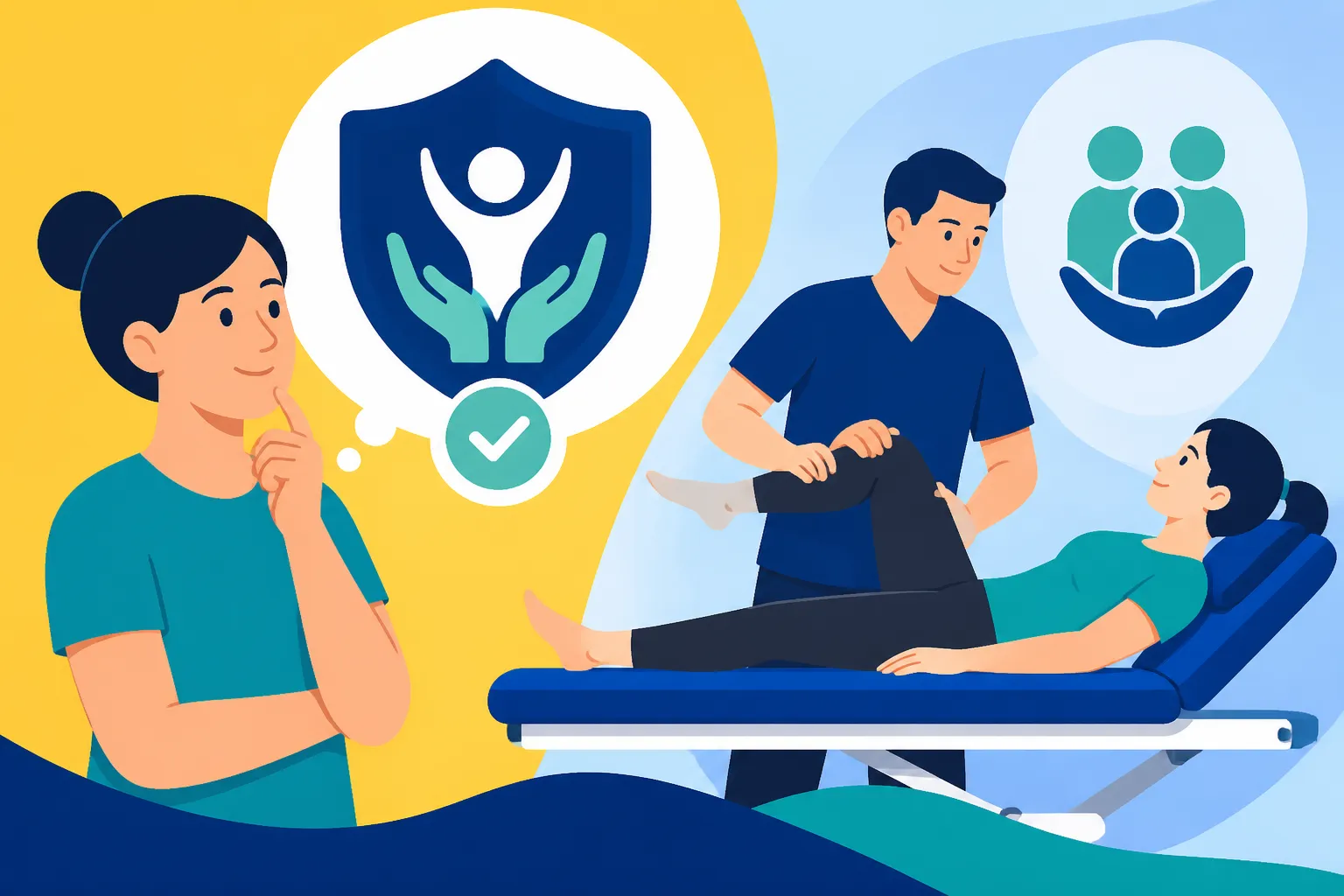
How Do I Get Physiotherapy Covered by the Region in Sweden?
Navigating the Swedish healthcare system while dealing with a nagging sports injury or chronic back pain is a recipe for frustration. I remember hunched over my laptop, desperately trying to translate medical terms while my lower back throbbed, wondering if I needed a doctor’s permission just to see a specialist. This guide simplifies the entire process of getting physiotherapy covered by the region so you can stop worrying and start healing.
Understanding the Regional Healthcare System for Physical Therapy
The first thing you need to wrap your head around is that healthcare in Sweden is decentralized. It is managed by 21 different regions (formerly called counties), such as Region Stockholm or Region Västra Götaland. While the national government sets general guidelines, each region has its own specific patient fees and administrative quirks. However, the overarching goal remains the same: ensuring that essential medical services, including physiotherapy, are affordable and accessible to everyone legally residing in the country.
One of the biggest misconceptions I encountered when I first arrived was the belief that physical therapy was an "extra" service that required a massive out-of-pocket expense. In reality, it is a core component of the public health offering. Whether you are recovering from surgery, managing a workplace repetitive strain injury, or dealing with age-related mobility issues, the system is designed to catch you. The key is knowing which providers are part of the regional network and which are purely private.
The regional system relies heavily on a concept called Understanding Patient Fees (Patientavgift) Across Sweden's 21 Regions. This means that as long as the physiotherapist you visit has a contract with the region (Regionavtal), your visit will be subsidized. You don't pay the true market cost of the session; instead, you pay a standardized patient fee that contributes toward a national high-cost protection limit.
The Myth of the Mandatory Referral
In many countries, you cannot see a specialist without a "golden ticket" from a General Practitioner. For years, I assumed Sweden followed this same rigid hierarchy. I spent hours waiting at my local health center just to ask for a referral, only to be told I could have gone directly to the physiotherapist. In the vast majority of Swedish regions today, you do not need a referral (remiss) to see a physical therapist.
You have the right to "self-refer." This means you can call a physiotherapy clinic that is region-affiliated and book an assessment directly. This saves you both time and the cost of an initial GP visit. If you are already Registering with a Vårdcentral: Your Guide to Primary Care in Sweden, you can certainly ask them for recommendations, but don't feel obligated to wait for a doctor's note if your pain is urgent.
Sjukgymnast vs Fysioterapeut
As you search for help, you will notice two terms used interchangeably: Sjukgymnast and Fysioterapeut. Don't let this confuse you. Historically, "Sjukgymnast" was the standard Swedish term. However, in 2014, the official title was changed to "Fysioterapeut" to align with international standards. While many older professionals still use the old title, the education and licensing requirements are the same. Both are protected professional titles, meaning anyone using them must be licensed by Socialstyrelsen (the National Board of Health and Welfare).
How to Find a Region Affiliated Physiotherapist
Finding a provider who is covered by the regional system is the most critical step in keeping your costs low. If you accidentally walk into a fully private clinic without a regional contract, you could be looking at 800 SEK to 1,200 SEK per session. If you go to a region-affiliated one, you’ll likely pay around 200 SEK to 275 SEK.
The most reliable tool at your disposal is 1177 Vårdguiden: Navigating Sweden's National Health Advice Line and Portal. You can log in with your BankID and search for "Fysioterapi" or "Sjukgymnastik" in your specific municipality. The portal will list clinics and indicate whether they operate under a regional agreement. I highly recommend using the filters to find clinics that have shorter waiting times, as some popular central locations in cities like Stockholm or Gothenburg can have backlogs of several weeks.
Vårdcentral vs Specialist Clinics
You generally have two choices when looking for a subsidized physiotherapist. The first is the physical therapy wing of your local Vårdcentral (health center). These are often very convenient and well-integrated with your primary doctor's records. However, they are sometimes limited in terms of specialized equipment or niche expertise (like advanced pelvic floor therapy or high-performance sports rehab).
The second option is an independent specialist clinic that has a "Regionavtal." These clinics are privately owned but have a contract to provide care on behalf of the region. From a patient perspective, the cost is exactly the same as going to the Vårdcentral. I personally prefer these specialist clinics for complex issues because they often have staff who specialize in specific body parts, such as hand therapists or knee specialists.
The Importance of the Personnummer
To truly benefit from the regional coverage and the automated tracking of your payments, having a Swedish personal identity number is vital. It is the "key" that unlocks the digital tracking of your medical expenses. If you are still in the process of Getting Your Personnummer: The Gateway to Swedish Healthcare, you can still access care, but the administrative burden is higher. You may have to pay upfront and keep manual receipts to claim back funds later, or prove your right to care via an EHIC card if you are an EU citizen.
For those who are in the "waiting period"—that limbo where you live in Sweden but don't yet have your Personnummer or full social security rights—it might be worth looking at international coverage options like SafetyWing to cover unexpected physical therapy needs during your first few months.
What You Will Pay and the High Cost Ceiling
Sweden’s healthcare system is famous for its "safety net," and nowhere is this more apparent than in The Högkostnadsskydd Explained: Sweden's Healthcare Cost Ceiling and Frikort. This is the mechanism that ensures no one is bankrupted by chronic illness or a long recovery process requiring dozens of physical therapy sessions.
Every time you visit a region-affiliated physiotherapist, the fee you pay is registered in a central database linked to your Personnummer. In 2026, the ceiling for outpatient care is typically around 1,400 SEK (though this can fluctuate slightly by region). Once you have spent this amount on doctor visits, physical therapy, or other outpatient services within a 12-month period, you hit the ceiling.
The Magic of the Frikort
Once you hit that 1,400 SEK limit, you are issued a Frikort (Free Card). For the remainder of that 12-month period (calculated from the date of your first appointment), all subsequent visits to region-affiliated physiotherapists are free. I remember the relief I felt during a year of intense shoulder rehab; after my fifth or sixth visit, the receptionist just smiled and said, "No charge today, you've reached your limit."
This system is incredibly beneficial for foreigners who might be used to the "pay-per-visit" model common in North America or other parts of Europe. It allows you to commit to a long-term recovery plan without checking your bank balance every week. To see how close you are to your limit, you can always check the "High-cost protection" section on the 1177.se website.
| Service Type | Typical Cost (Region Stockholm 2026) | Counts Toward High-Cost Ceiling? |
|---|---|---|
| Initial Assessment | 275 SEK | Yes |
| Follow-up Treatment | 275 SEK | Yes |
| Group Rehab Session | 100 SEK | Yes |
| Fully Private Session | 900+ SEK | No |
| Missed Appointment Fee | 400+ SEK | No |
A Warning on Missed Appointments
One quirk of the Swedish system that catches many newcomers off guard is the "No-Show" fee. If you miss a physiotherapy appointment or cancel less than 24 hours in advance, you will be sent a bill. This bill is usually higher than the standard patient fee (often double), and crucially, it does not count toward your high-cost ceiling. Even if you have a Frikort and your visits are normally free, you will still be charged the full penalty for a missed appointment. Swedes take punctuality and resource management very seriously; if you take up a slot and don't show, the region expects you to pay for the wasted time.
Your First Appointment and the Treatment Plan
When you finally secure that first appointment, don't expect a passive experience. In many cultures, "physiotherapy" implies a lot of massage and heat packs. In Sweden, the philosophy is heavily skewed toward "Active Rehabilitation." Your therapist will likely spend the first 30 minutes asking detailed questions about your lifestyle, ergonomics, and specific pain triggers.
The goal of Physiotherapy and Rehabilitation in Sweden: Referrals and Reimbursement is to make the patient independent. You will likely be given a "Träningsprogram" (exercise program) via an app or a printed sheet. You are expected to do these exercises at home or at the gym. The in-person sessions are primarily for checking progress, adjusting the exercises, and perhaps some manual therapy if the clinician deems it necessary.
The Digital Integration
Sweden is a highly digital society, and your physical therapy is no different. Most therapists use platforms like 1177 or private apps like ExorLive to send you videos of your movements. If you have questions between appointments, you can often use the messaging function on the 1177 portal to contact your clinic. This level of transparency is great, but it does mean you need to be proactive. If you don't do the homework, the therapist will likely tell you that further sessions aren't a good use of the region's resources.
When to Consider Private Physical Therapy
While the regional system is fantastic for cost, it isn't always the fastest. If you live in a major city, you might find that the best region-affiliated clinics have a three-week wait for an initial assessment. If you are in acute pain and cannot wait, this is where private options or supplemental insurance come into play.
Some expats choose to use Private Health Insurance in Sweden: When Sjukvårdsförsäkring Is Worth It. If your employer provides a policy through a provider like Cigna Global, you can often bypass the regional queues and see a private physiotherapist within 24 to 48 hours. These private sessions won't count toward your Frikort limit, but the insurance usually covers the full cost anyway.
If you are a freelancer or don't have employer-provided insurance, you can still choose to pay the full private rate at a clinic just to get started. Many people do one or two private sessions to get an immediate diagnosis and then "switch" to the regional system for their long-term rehab once a slot opens up.
Specific Needs: Pregnancy and Chronic Conditions
If you are seeking help for pregnancy-related issues, such as pelvic girdle pain, the process is even more streamlined. You can often get recommendations directly from your midwife. In these cases, the care is highly specialized. Check out our guide on Maternity Care in Sweden: Mödravård, Midwives, and Giving Birth to see how these services overlap.
For those with chronic conditions, you should also ensure you are Registering with Försäkringskassan: When and Why You Need To. While they don't manage the medical visits themselves, they handle the "Sjukpenning" (sick pay) if your injury or condition prevents you from working while you undergo therapy.
Moving Between Regions
If you move from Malmö to Stockholm in the middle of a treatment plan, the administrative transition can be a bit bumpy. Because each region is its own "health authority," your Frikort status is usually shared through a national database, but your actual medical records and exercise plans might not be automatically transferred.
It is advisable for expats to ask their current physiotherapist for a "Journalutdrag" (journal excerpt) or a summary of their treatment in English or Swedish before moving. This allows your new therapist in the new region to pick up exactly where the last one left off, ensuring you don't have to pay for a "new" assessment fee if the new clinic accepts the previous findings.
Final Advice for Newcomers
The Swedish system reward those who are organized and proactive. Don't sit at home waiting for the pain to go away because you’re scared of the bureaucracy. Log into 1177, find a clinic with a regional contract, and book that first assessment. Even if you are still asking yourself Can I See a Doctor in Sweden Before I Get My Personnummer?, there are always pathways to care if you are willing to navigate a little extra paperwork.
Remember that physiotherapy is considered an essential service. If your region cannot provide you with an appointment within a reasonable timeframe (usually 90 days under the national "Vårdgaranti"), you may have the right to seek care in another region at your home region's expense. It’s a bit of an advanced move, but it’s a powerful tool if you’re stuck in a long queue.
Disclaimer
This article is intended for informational purposes only and does not constitute medical or legal advice. Healthcare regulations, patient fees, and high-cost protection limits in Sweden are subject to change by regional authorities. Always consult the official 1177.se website or your local healthcare provider for the most current information regarding your specific situation and rights within the Swedish healthcare system.