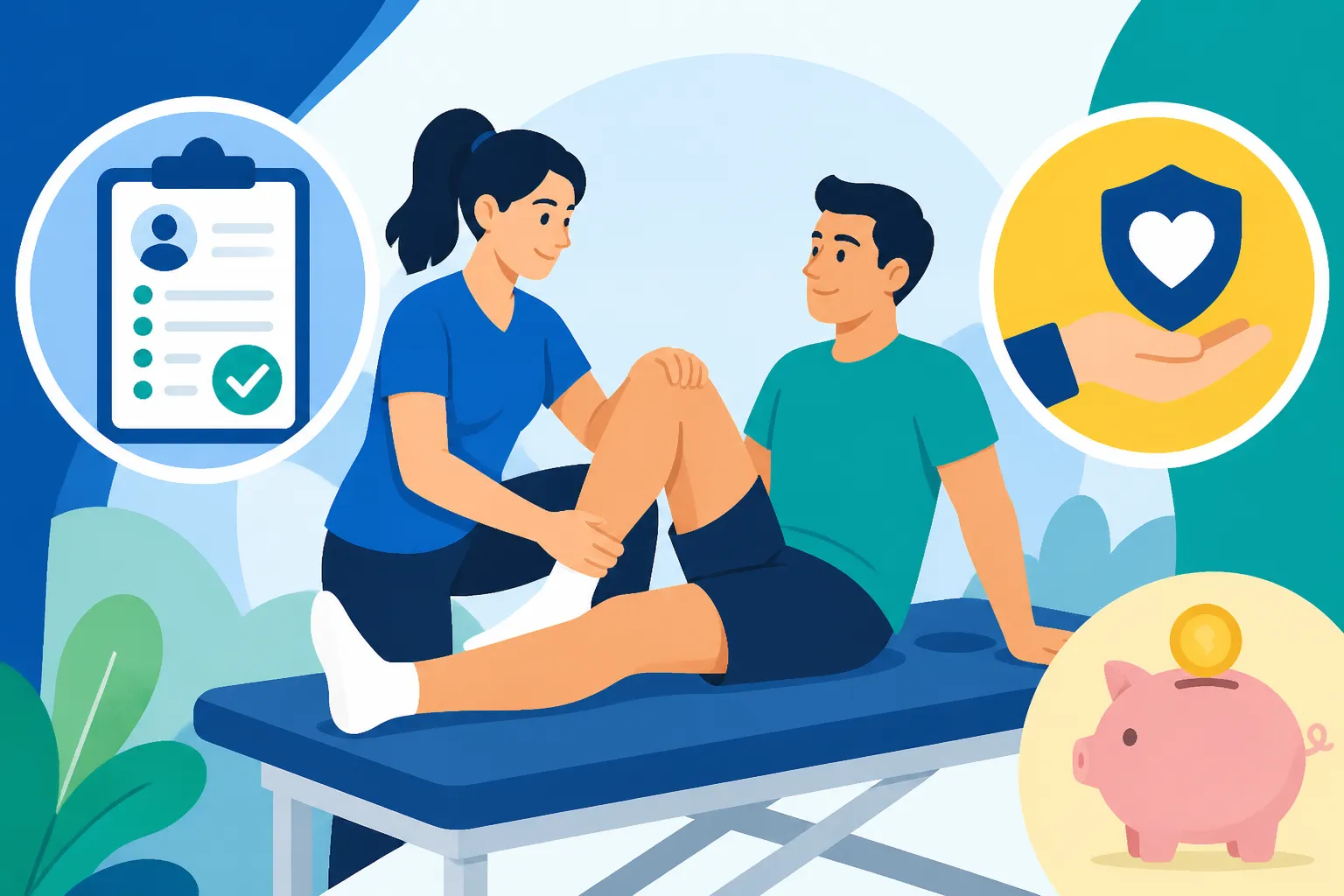
Physiotherapy and Rehabilitation in Sweden: Referrals and Reimbursement
Struggling with a nagging sports injury or chronic back pain after moving to Sweden can feel incredibly isolating when you do not know how the local system operates. I spent my first three months in Stockholm limping around with a repetitive strain injury because I was terrified of the potential costs and the confusing administrative maze. This guide solves that frustration by demystifying the Swedish physiotherapy and rehabilitation process, from securing referrals to understanding how the high-cost ceiling protects your wallet.
Understanding the Swedish Rehabilitation Landscape
When you first arrive in Sweden, the healthcare system can seem like an impenetrable fortress of acronyms and digital portals. However, once you peel back the layers, the rehabilitation sector is actually one of the most accessible parts of the Swedish medical machine. Unlike some countries where you must see a General Practitioner for every minor ache, Sweden allows for a significant amount of direct access to specialized movement experts.
The Role of the Vårdcentral in Your Recovery
The vårdcentral, or primary health center, is the cornerstone of your life in Sweden. It is where you go for everything from a flu shot to mental health support. Most people do not realize that many vårdcentraler have their own in-house physiotherapists (sjukgymnast) or are closely affiliated with local rehab clinics. When I first injured my shoulder, I assumed I had to wait weeks for a doctor’s appointment just to get "permission" to see a physical therapist.
In reality, you can often call your local clinic and ask specifically for a physiotherapy assessment. For more comprehensive information on how these centers function, you should read about Registering with a Vårdcentral: Your Guide to Primary Care in Sweden. The staff there are trained to triage your condition. If your injury is purely musculoskeletal, they might bypass the GP entirely and put you straight on the path to rehabilitation. This is a massive time-saver, but it requires you to be proactive and ask for the specific service you need.
Regional Differences in Access and Fees
Sweden’s healthcare is decentralized, meaning it is managed by 21 different regions. While the broad strokes of care are the same, the way you access physiotherapy in Skåne might differ slightly from the process in Västerbotten. For instance, the patient fee for a physiotherapy session can vary. In some regions, it is the same price as seeing a doctor; in others, it might be slightly cheaper.
Understanding these regional nuances is vital for budgeting. If you are living in a major hub, you might find that Healthcare in Sweden for Foreign Residents: The Complete System Guide (2027) provides a broader context for how these regions interact. Regardless of where you live, the system is designed to be equitable, but the "entry point"—whether it is a digital booking or a phone triage—will depend on your local regional council's digital infrastructure.
The Referral System: Do You Actually Need One
One of the most common questions I get from fellow expats is: "Do I need a remiss (referral) for physiotherapy?" The answer is a very Swedish "it depends," but for the majority of standard injuries, the answer is no. This is a huge relief for anyone used to the bureaucratic hurdles of other healthcare systems.
Direct Access to Physiotherapy
In most Swedish regions, you have what is called "direct access." This means you can contact a physiotherapy clinic that is contracted with the regional health authority and book an initial assessment yourself. You do not need to see a primary care doctor first. This is particularly useful for acute injuries like a sprained ankle or a sudden bout of sciatica.
When you call, you will usually speak with a nurse or a receptionist who will ask about the nature of your pain. They use this information to determine the urgency of your case. I found that being very specific about how the pain affects my "daily life and ability to work" usually helped in getting a swifter appointment. If you are unsure which clinic to call, using 1177 Vårdguiden: Navigating Sweden's National Health Advice Line and Portal is the best way to find authorized providers in your neighborhood.
When a Specialist Referral is Required
While you can see a general physiotherapist directly, certain types of specialized rehabilitation do require a formal remiss from a doctor. This typically applies to:
- Post-operative rehabilitation (after a major surgery like a hip replacement).
- Neurological rehabilitation (for conditions like Parkinson’s or post-stroke care).
- Highly specialized sports medicine that requires advanced imaging like an MRI before treatment begins.
In these cases, a GP at your vårdcentral will evaluate you and send a digital referral to the appropriate specialist. You can learn more about this process in our guide on How the Referral (Remiss) System Works for Seeing a Specialist in Sweden. Once the referral is in the system, the specialist clinic will contact you, often via a letter in the mail or a notification in the 1177 portal. If you are worried about wait times during this process, some expats choose to use private options like Cigna Global to bypass the public queue for specialized consultations.
Costs Reimbursement and the High-Cost Ceiling
The most intimidating part of long-term rehabilitation is the fear of mounting costs. If you need two sessions a week for three months, that adds up. Thankfully, Sweden has one of the most generous safety nets in the world for medical expenses.
Patient Fees for Rehab Services
Every time you visit a physiotherapist within the public system (or a private provider contracted by the region), you pay a patientavgift (patient fee). This fee usually ranges between 100 SEK and 300 SEK per visit. It is important to note that you should always check if the clinic is "ansluten till regionen" (connected to the region). If they are not, you will be paying full market rates, which can be upwards of 800-1,200 SEK per session.
For those who are not yet fully registered in the system or are waiting for their personal identity number, costs can be higher. However, for most residents, these fees are capped. If you are a frequent traveler or a digital nomad just passing through, services like SafetyWing can be a lifesaver for covering these initial out-of-pocket costs before you hit the local caps.
How the Frikort Simplifies Your Finances
The högkostnadsskydd (high-cost protection) is the "magic wand" of Swedish healthcare. Essentially, there is a limit to how much you have to pay for healthcare in a 12-month period. As of 2024/2025, this limit is usually around 1,300 to 1,400 SEK (the exact amount can vary slightly by region and year).
Once your total spend on doctor visits, physiotherapy, and other outpatient care reaches this limit, you receive a frikort (free card). This means all subsequent visits for the remainder of that 12-month period are free of charge. For someone undergoing intense rehabilitation, you will likely hit this cap within a month or two, making the rest of your recovery significantly cheaper. For a deep dive into the mechanics of this, see The Högkostnadsskydd Explained: Sweden's Healthcare Cost Ceiling and Frikort.
| Service Type | Typical Fee (Public/Contracted) | Referral Needed? | Covered by High-Cost Cap? |
|---|---|---|---|
| Initial Physio Assessment | 200 – 250 SEK | No | Yes |
| Follow-up Rehab Session | 150 – 200 SEK | No | Yes |
| Specialist Rehab (e.g. Neuro) | 300 – 400 SEK | Yes (Remiss) | Yes |
| Private (Non-Contracted) | 800 – 1,500 SEK | No | No |
| Occupational Therapy | 150 – 250 SEK | Usually No | Yes |
Private vs Public Navigating Your Options
While the public system is excellent, it is not always the fastest. If you have an injury that is preventing you from working or enjoying your hobbies, the "wait and see" approach of the public sector can be frustrating.
Speed of Access in the Private Sector
The main advantage of going private—meaning a clinic that does not take regional subsidies—is speed. You can often get an appointment within 24 to 48 hours. In the public system, unless your case is deemed urgent, you might wait two to four weeks for an initial assessment.
For many professionals moving to Sweden, their employment contract includes private health insurance (sjukvårdsförsäkring). If you have this, you should always check your policy first. Providers like Cigna Global often have partnerships with premium private clinics in Stockholm, Gothenburg, and Malmö, allowing you to skip the vårdcentral queue entirely. This is discussed further in Private Health Insurance in Sweden: When Sjukvårdsförsäkring Is Worth It.
Insurance Coverage and Safety Nets
If you are a freelancer or a student, you might not have employer-provided insurance. In this case, you are relying on the public system or paying out-of-pocket for private care. Some international insurance plans like SafetyWing are specifically designed for the "gap" period when you are settling in and haven't yet secured your personnummer.
It is also worth noting that if you use a private clinic that is not contracted with the region, those costs do not count towards your high-cost ceiling. I made the mistake once of seeing a high-end private sports therapist for six sessions, only to realize none of that spend helped me get my frikort. Always ask: "Är ni anslutna till högkostnadsskyddet?" (Are you connected to the high-cost protection?).
Specialized Rehabilitation Services
Rehabilitation in Sweden goes far beyond just "doing some stretches." The system is holistic and includes various disciplines designed to get you back to your normal life.
Occupational Therapy and Arbetsterapi
If your injury or condition affects your ability to perform daily tasks—like typing, cooking, or getting dressed—you will likely be referred to an arbetsterapeut (occupational therapist). In Sweden, occupational therapy is highly integrated into the rehab process. They do not just look at your physical body; they look at your environment.
I was impressed to learn that occupational therapists can even help you coordinate with your employer to modify your workspace. If you are dealing with long-term issues, you might also be looking into Managing a Chronic Condition in Sweden: Diabetes, Asthma, and More, where the coordination between different types of therapists is crucial for long-term health.
Post-Surgery and Chronic Condition Management
For those recovering from major surgery, the rehabilitation plan is usually set in motion before you even leave the hospital. The surgeon will issue a remiss to a rehab center close to your home. Swedish rehabilitation is very "active"—don't expect to just lie on a table and get a massage. You will be given a "training program" and expected to do the work at home or in the clinic’s gym.
The focus is always on "help to self-help." This can be a bit of a culture shock if you come from a country where passive treatments (like ultrasound or heat packs) are more common. In Sweden, movement is medicine. If you are struggling with the transition, Finding a Doctor in Sweden: GPs, Specialists, and the Referral System can help you find a doctor who can better explain the "active recovery" philosophy common in the Nordics.
Practical Steps From Booking to Your First Session
Ready to take the plunge and fix that nagging pain? Here is how you actually do it, step-by-step, in the real world.
Using 1177.se for Appointments
The 1177.se website and app are your best friends. Once you have your BankID, you can log in and see a list of all clinics in your region. Most clinics now allow for online booking, which is a godsend if your Swedish isn't yet strong enough for a phone conversation.
If you are struggling with the digital aspect, check out Booking Doctor Appointments Online Through 1177.se with BankID. You can search specifically for "Fysioterapi" or "Sjukgymnastik." The portal also allows you to send secure messages to your therapist, ask for prescription renewals, or view your exercise plans. If you are still waiting for your personal number, you will have to call the clinic directly, as the online portal requires a Swedish electronic ID.
What to Expect During Your First Visit
Your first appointment will be an assessment. The therapist will ask about your medical history, your lifestyle, and the specific goals you want to achieve. They will perform a physical exam—so wear comfortable clothes!
One thing that surprised me was how much the first session felt like a "partnership" rather than a "service." You will leave with a plan, often a digital one sent to your phone, and a follow-up schedule. The therapist will also check your status in the high-cost protection system. If you have already paid for other medical visits that year, make sure to mention it so they can update your digital frikort log.
If you find that the communication is difficult, remember that you are entitled to an interpreter in the Swedish healthcare system. However, for physiotherapy, most practitioners speak excellent English, especially in the larger cities. If you have any specialized needs or are trying to understand the broader medical context, Finding a Doctor in Sweden: GPs, Specialists, and the Referral System is a great resource for navigating those initial conversations.
Important Disclaimer
The information provided in this guide is for educational and informational purposes only and does not constitute professional medical or legal advice. While every effort has been made to ensure the accuracy of the details regarding the Swedish healthcare system, regulations and fees may change. Always consult with a qualified healthcare provider or the official 1177 Vårdguiden service for advice tailored to your specific medical situation. The mention of private insurance providers does not constitute a formal endorsement.