Finding a Doctor in Sweden: GPs, Specialists, and the Referral System
Moving to Sweden often feels like you have traded your health for a spreadsheet of wait times and cryptic administrative acronyms. I spent my first six months here terrified of getting a cold because I had no idea who to call or how the system actually worked. This guide demystifies the process of finding a doctor in Sweden, explaining exactly how to navigate GPs, the referral system, and specialist care.
Understanding the Swedish Primary Care Model
The Swedish healthcare system is decentralized and tax-funded, but for a newcomer, it can feel incredibly opaque. Unlike some countries where you might have a "family doctor" who knows your entire medical history from birth, Sweden operates on a system of primary care centers known as a Vårdcentral. This is your gateway to everything else. You don't just "find a doctor"; you find a clinic where you are "listed."
The Vårdcentral as Your Healthcare Anchor
The Vårdcentral is the bedrock of the Swedish medical experience. It is a multi-disciplinary clinic that houses general practitioners (GPs), nurses, physiotherapists, and sometimes even psychologists or midwives. When you feel unwell, this is almost always your first port of call. I remember the first time I tried to book an appointment; I expected to just walk in, but the system is much more structured. You usually call in the morning, leave your number for a callback, and a nurse triages your symptoms over the phone.
Because these centers are regional, the quality and "vibe" can vary significantly between neighborhoods. Some are modern, digital-heavy hubs in central Stockholm, while others are smaller, more traditional clinics in rural Skåne. It is important to understand that you are not tethered to a specific doctor in the beginning. While you can request to see the same GP each time, the high use of "stafettläkare" (locum doctors) in some regions means you might see a different face at each visit. This can be frustrating if you are managing a chronic condition, which is why Managing a Chronic Condition in Sweden: Diabetes, Asthma, and More is a vital topic to explore if you need continuity of care.
The Vårdcentral also handles minor procedures, vaccinations, and basic blood tests. If you need a sick note for work after being ill for more than a week, this is also where you go. The doctors here act as the "gatekeepers" to the rest of the system. Without their approval, getting to see a specialist can be an uphill battle.
Public vs Private Providers within the System
One of the most confusing aspects for expats is the blend of public and private providers. In Sweden, many Vårdcentraler are privately run but publicly funded. This means they operate under the same fee structure and rules as the state-run clinics. You will pay the same patient fee (patientavgift) regardless of whether the clinic is run by the Region or a private company like Capio or Praktikertjänst.
When you are looking for a doctor, don't be deterred if a clinic looks "private." As long as they are contracted by the region (which most are), your costs will count toward the national high-cost ceiling. However, there is a separate tier of purely private clinics that do not take public funding. These are often used by people with a private Sjukvårdsförsäkring or those willing to pay the full cost out of pocket to skip waiting times.
For many expats, especially those waiting for their Personnummer, specialized international insurance like Cigna Global can be a lifesaver. These plans often allow you to access private doctors who operate outside the standard regional queue system. Similarly, if you are a digital nomad or a frequent traveler, a plan from SafetyWing can provide the bridge you need before you are fully integrated into the Swedish social security web.
The Step by Step Guide to Finding a Doctor
The process of finding a doctor officially begins the moment you receive your Swedish ID card. While you can technically get care before this, having your Personnummer makes every digital door swing open. If you are still in the waiting phase, you should read up on Getting Your Personnummer: The Gateway to Swedish Healthcare to understand the timeline you are facing.
Registering with a Vårdcentral
In Sweden, you have the right to choose any Vårdcentral in your region, and in some cases, even outside of it. This is known as "Vårdval" (Choice of Care). You are not automatically assigned to the clinic closest to your house, though that is usually the default if you don't make a choice. To register, or "list" yourself, you can usually do so via the 1177.se portal using your BankID.
I personally recommend visiting a few clinics' websites before deciding. Look for things like "English-speaking staff" or "Online booking capabilities." Some clinics are much more tech-savvy than others. Once you choose a clinic, you fill out a simple form. You can change your mind and switch clinics up to three times a year if you aren't happy with the service. This flexibility is great, but keep in mind that your medical records don't always transfer instantly between different private providers, even if they are in the same region.
If you have just arrived in a major city, you might find that the most popular clinics are "full" and not accepting new patients for listing. In this case, you can still book an appointment there as a "non-listed" patient, but you won't have the same priority for routine check-ups. For those in the capital, Which Vårdcentral Should I Choose If I Just Moved to Stockholm? provides some localized recommendations based on expat feedback.
Choosing a Doctor via Vårdval
While you list at a clinic, you can also request a specific doctor. This is a relatively new emphasis in Swedish law aimed at improving "fast läkarkontakt" (permanent doctor contact). In practice, this is easier said than done. Many GPs in Sweden have very high patient loads. If you find a doctor you like—one who listens, speaks great English, and understands your history—tell the reception you want to be listed specifically with them.
Having a dedicated GP is particularly helpful when navigating the Swedish bureaucracy. For instance, if you need Sick Pay in Sweden: Sjukpenning, Sick Notes, and Your Rights, having a doctor who knows your case makes the process of getting a "läkarintyg" (medical certificate) much smoother. Without a consistent doctor, you may find yourself explaining your symptoms from scratch every time you visit the clinic.
If you find that your chosen Vårdcentral isn't meeting your needs, don't feel guilty about switching. The system is designed for competition. Use the 1177 portal to see ratings or ask in local expat Facebook groups for recommendations. Sometimes the best doctors are tucked away in smaller, less flashy neighborhood clinics rather than the giant medical centers.
Navigating the Referral System
This is where many foreigners hit a wall. In many countries, if you have a skin issue, you call a dermatologist. In Sweden, if you call a dermatologist directly, they will likely ask for your "remiss" (referral). Without a remiss, you might be denied an appointment entirely or charged a significantly higher "specialist" fee.
Why You Can't Just Call a Specialist
The Swedish system is designed to prevent specialists from being overwhelmed with cases that could be handled by a generalist. It is a cost-saving and efficiency measure, but it can feel like a barrier when you are convinced you need a specialist's eye. I remember having a persistent foot injury and being told by my Vårdcentral doctor to "just take Alvedon (paracetamol) and wait." It took three visits and some firm self-advocacy before I got a referral to an orthopedic specialist.
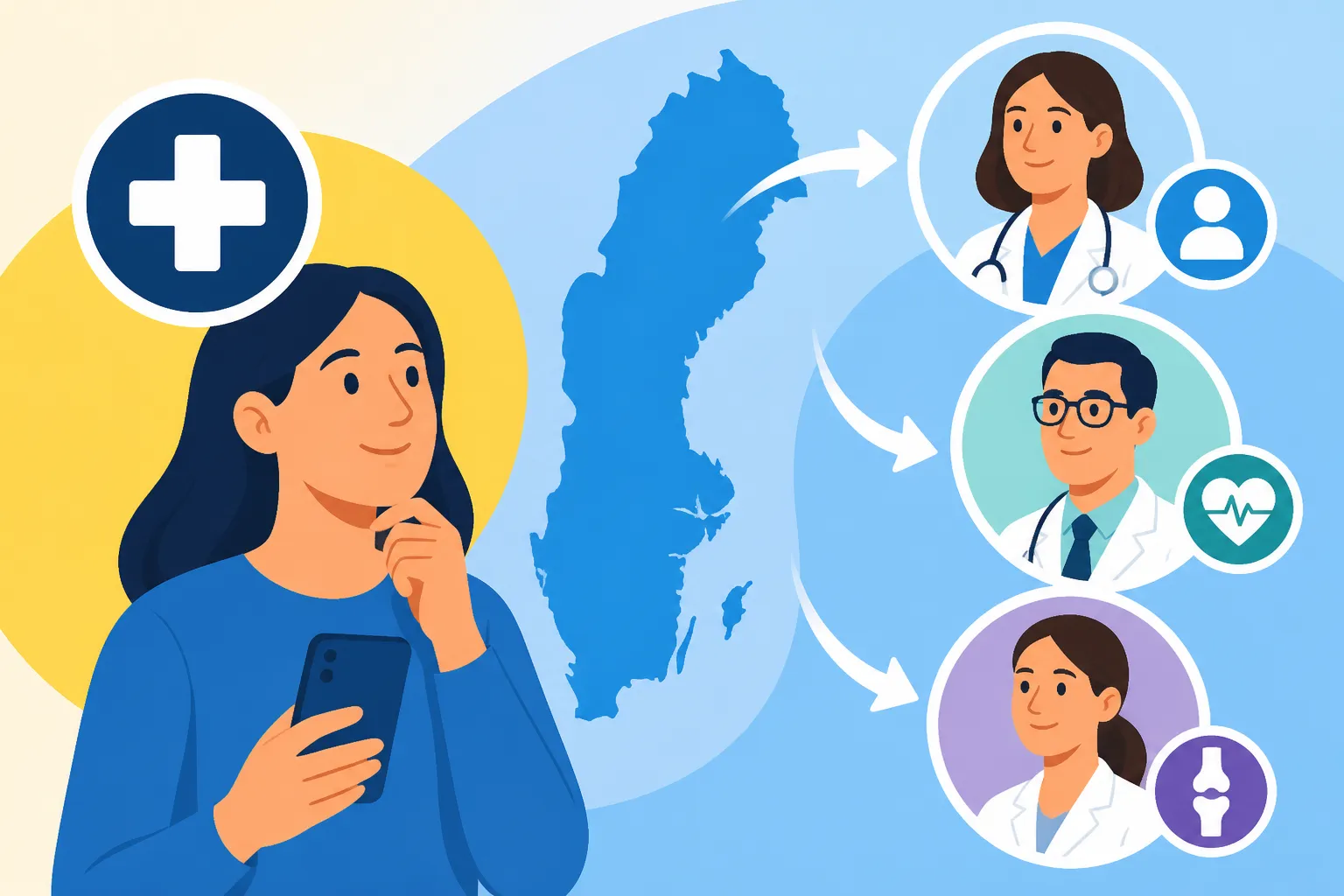
A referral is essentially a digital or paper "ticket" sent from your GP to a specialist clinic. The specialist then reviews the referral and decides how urgent your case is. They can either accept you into their queue, ask the GP for more tests first, or reject the referral if they believe the GP can handle the treatment. This is why it is so important to understand How the Referral (Remiss) System Works for Seeing a Specialist in Sweden.
If you are frustrated by the wait times for a referral, this is another area where private insurance like Cigna Global or SafetyWing comes into play. Private policies often allow "direct access" to specialists, bypassing the GP gateway entirely. This can cut your wait time from months to days.
The Role of the General Practitioner
Your GP's job is to be the "filter." During a 15 to 20-minute appointment, they will assess whether your condition requires secondary care. To get a referral, you need to be very clear about your symptoms and how they are affecting your daily life. Swedes tend to be quite stoic, so "understating" your pain might lead the doctor to believe a referral isn't necessary.
Be prepared for the GP to run initial tests themselves. If you have heart palpitations, they will do the EKG at the Vårdcentral first. If you have a rash, they will try a standard cream before sending you to dermatology. It is a process of elimination. If you are seeking specialized care for your children, the process is slightly different; you would typically start with the Child Health in Sweden: How Barnavårdscentralen (BVC) Supports Families system.
If a GP refuses to give you a referral and you still feel it is necessary, you have the right to a second opinion, although this usually means booking a new appointment with a different doctor or at a different Vårdcentral. You can also write what is called an "egenremiss" (self-referral) to many specialist clinics. This is a form where you describe your symptoms yourself. However, clinics prioritize referrals from doctors over self-referrals, so it is always better to have a GP on your side.
Digital Health and Non-Emergency Support
Sweden is one of the most digitally advanced nations in the world, and this extends to healthcare. If you aren't using the digital tools available, you are essentially doing healthcare on "hard mode."
Using 1177 Vårdguiden
1177 is the phone number and the website that every resident must know. It is the national hub for healthcare advice. If you are unsure if you need a doctor, you call 1177 to speak with a registered nurse. They are available 24/7 and provide excellent advice in both Swedish and English. I’ve called them at 3:00 AM when my toddler had a fever, and their calm guidance saved me a trip to the emergency room.
The website, 1177.se, is even more powerful. Once you log in with your BankID, you can see your medical records, check your prescriptions, and see the status of your referrals. You can also message your doctor directly. For a full breakdown of the portal's capabilities, check out What Can I Actually Do on the 1177 Health Portal?. It is truly the "operating system" of Swedish life.
| Feature | 1177 Phone Line | 1177.se Portal | Digital Apps (KRY/Doktor.se) |
|---|---|---|---|
| Availability | 24/7 | 24/7 | 24/7 (often) |
| Best For | Urgent advice, triage | Records, booking, prescriptions | Quick GP consults, refills |
| Cost | Free (call costs apply) | Free | Standard patient fee |
| Language | Swedish/English | Mostly Swedish (logged in) | Multi-lingual options |
Digital Doctor Apps (KRY, Doktor.se)
In recent years, apps like KRY and Doktor.se have revolutionized finding a doctor for minor issues. These are private companies that have contracts with the regions. You can have a video consultation with a GP within minutes. For things like urinary tract infections, simple skin rashes, or prescription renewals, these apps are fantastic.
The doctors on these apps can also issue a "remiss" to physical clinics if they determine you need an in-person exam. However, be aware that there has been political tension regarding the funding of these apps, and some regions have different rules about how much they will cover. Generally, for a newcomer, they are the fastest way to talk to a doctor in English. You can learn more about this by reading Can I Book a Doctor's Appointment in English in Sweden?.
Specialist Care and Hospital Access
Once you have your referral, you move into the world of "specialistvård" (specialist care). This is handled by regional hospitals or specialized private clinics contracted by the state.
Secondary Care and Regional Hospitals
Depending on where you live, you might be sent to a massive university hospital like Karolinska in Stockholm or Sahlgrenska in Gothenburg. These facilities are world-class but can be intimidating. Specialist care is usually by appointment only, and the wait times can be significant. If your condition is not life-threatening, you might wait several months for your first specialist visit.
While waiting, you are protected by the "Vårdgaranti" (Care Guarantee). This law states that you should not have to wait more than 90 days to see a specialist once a referral is accepted. If the wait is longer, the region is technically obligated to offer you care in another region or at a private clinic at no extra cost. To see how this works in practice, read Is the Care Guarantee (Vårdgaranti) Actually Enforced in Sweden?.
Emergency vs Urgent Care
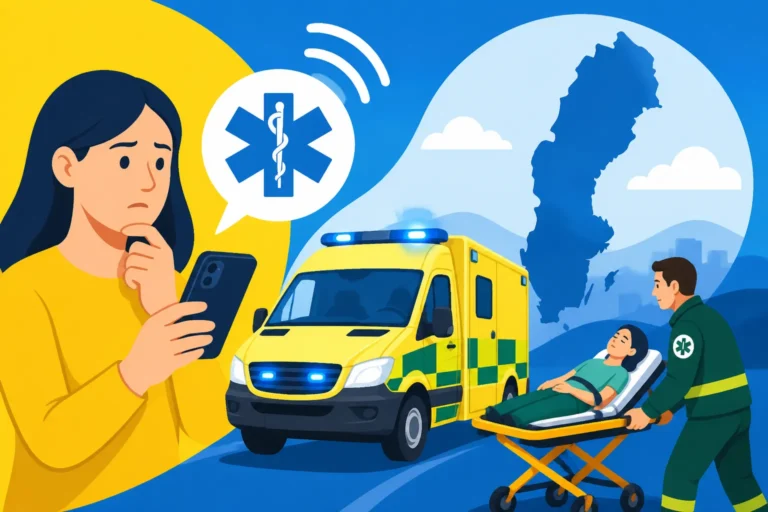
It is vital to know where to go when things go wrong quickly. If it is a life-threatening emergency, call 112. For everything else, there is a hierarchy. If the Vårdcentral is closed, you go to a "Närakut" (Urgent Care Center). These handle things like broken bones, deep cuts, or sudden high fevers that can't wait until Monday morning.
The "Akutmottagning" (Emergency Room) at the hospital should be reserved for true emergencies. If you show up there with a minor issue, you will likely wait for 8 to 12 hours, as they prioritize by severity. For a deeper dive into these distinctions, Emergency Medical Care in Sweden: 112, Akutmottagning, and Urgent Help is an essential read.
Private Healthcare Options for Expats
While the public system is high-quality, the wait times are the primary complaint of almost every expat I know. This is why many foreigners choose to supplement the public system with private options.
When to Use Private Insurance
If you are moving to Sweden for a high-level corporate job, your employer might provide "Sjukvårdsförsäkring" (private health insurance). This is not a replacement for the public system but a "fast track" through it. With private insurance, you can often see a specialist within 3 to 7 days, bypassing the Vårdcentral referral process entirely.
For those who are self-employed or moving without a corporate package, getting your own policy from Cigna Global is a popular choice. It provides a level of comfort and speed that the public system simply cannot match for elective or non-urgent procedures. SafetyWing is also excellent for those who are in Sweden on shorter permits or who spend a lot of time traveling back and forth to their home country.
Bypassing the Public Queue
You can also pay for private care out of pocket. Many specialist clinics have "private hours" where you can pay roughly 1,500 to 3,000 SEK for a consultation. While this seems expensive, if you are in pain or significant discomfort, it can be worth it. However, remember that if you go the 100% private route, the costs do not count toward your Högkostnadsskydd (high-cost ceiling), and any surgery or expensive follow-up care will also have to be paid privately.
Practical Tips for Your First Appointment
Walking into a Swedish doctor's office for the first time can be a bit of a culture shock. It is very efficient, very clean, and often very "DIY."
Language and Translation Services
Most doctors in Sweden speak excellent English. Medical school in Sweden uses a significant amount of English-language literature, so the terminology is rarely an issue. However, if you feel more comfortable in your native language, you have a legal right to an interpreter. You must request this when you book the appointment. The service is free of charge to the patient.
Even if you speak some Swedish, for complex medical discussions, we recommend sticking to the language you are most fluent in. Miscommunications in a medical context can have real consequences. If you are worried about the language barrier, How Do I Get Care If I Don't Speak Swedish Yet? offers more tips on navigating this.
Costs and the High-Cost Ceiling
One of the best things about the Swedish system is the "Högkostnadsskydd." You will pay a small fee for every visit (usually 200–400 SEK for a GP). Once you have paid a total of 1,400 SEK within a 12-month period (the amount can vary slightly by year and region), you get a "Frikort" (Free Card). This means all subsequent visits for the remainder of that 12-month period are free.
The same applies to prescription medications, though the ceiling for those is higher (around 2,850 SEK). This ensures that no one is bankrupted by chronic illness. For more details on how to track this, see The Högkostnadsskydd Explained: Sweden's Healthcare Cost Ceiling and Frikort.
Summary of Finding a Doctor in Sweden
The Swedish healthcare system requires a bit of "proactive patience." You have to be willing to navigate the digital portals, advocate for yourself during GP visits, and understand the hierarchy of care. It isn't a system that will chase you down to offer check-ups; you have to initiate the contact.
By registering early, using the 1177 portal effectively, and perhaps maintaining a private insurance policy like Cigna Global or SafetyWing for faster access, you can ensure that your health is well-managed while you enjoy your life in Sweden. It takes a moment to learn the "Swedish way," but once you are in the system, the quality of care is among the best in the world.
Medical Disclaimer
The information provided in this article is for general informational purposes only and does not constitute professional medical advice, diagnosis, or treatment. Always seek the advice of a qualified healthcare provider in Sweden regarding any medical condition. Never disregard professional medical advice or delay seeking it because of something you have read in this guide. If you think you may have a medical emergency, call 112 immediately.