Are Eye Exams Free for Children in Sweden?
When you realize your child is squinting at the whiteboard or holding books uncomfortably close, the immediate panic isn't just about their vision—it’s about navigating a foreign healthcare system you might not fully understand yet. I remember the sinking feeling when my son’s teacher mentioned he seemed to be struggling to read the clock, and I had no idea if I needed to find a private clinic or wait months for a state appointment. This guide clarifies exactly how vision care works for minors, ensuring you don't overpay for services that the Swedish state actually covers.
Understanding the Pediatric Vision Care System in Sweden
The Swedish approach to children’s health is proactive, meaning your child will likely have their first "eye exam" before they can even speak. This is handled through a tiered system that begins at the local level and scales up to specialist care if a problem is detected. Unlike some countries where you might take a toddler directly to an optometrist, Sweden integrates vision checks into the standard developmental milestones tracked by public health nurses.
The Role of the Barnavårdcentralen BVC
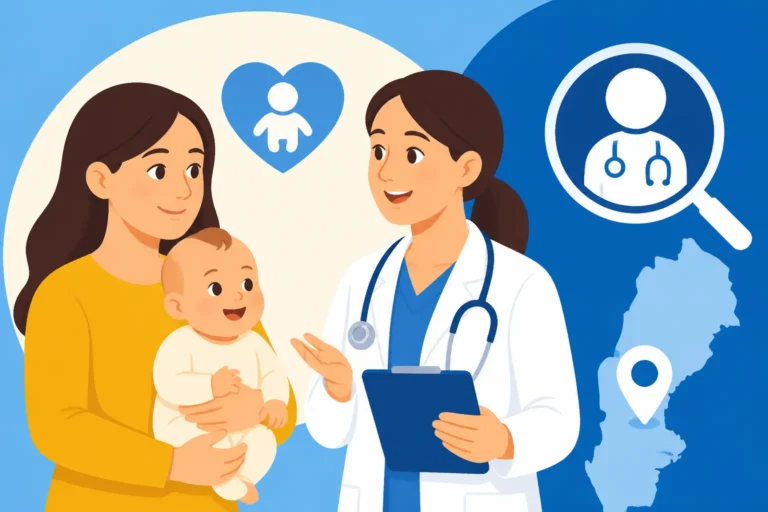
From birth until the age of six, your primary point of contact is the Barnavårdcentralen. In my first year here, I was surprised by how much responsibility these clinics carry. They don't just do vaccinations; they are the gatekeepers for all early childhood health. Routine vision screenings are conducted at specific ages—usually at the four-year check-up—to look for signs of strabismus (crossed eyes) or amblyopia (lazy eye). These screenings are entirely free for everyone registered in the Swedish population register.
If the nurse at the BVC suspects any irregularity, they will not prescribe glasses themselves. Instead, they will issue a referral to an ophthalmologist (ögonläkare) or an orthoptist. This referral is the golden ticket in the Swedish system. It ensures that the subsequent specialist visit is treated as part of the public healthcare remit, meaning it remains free or highly subsidized depending on your specific region. You can learn more about this foundational care in our guide on Child Health in Sweden: How Barnavårdcentralen (BVC) Supports Families.
School Health Services and Vision Screening
Once your child starts "förskoleklass" (the year they turn six), the responsibility for routine vision checks shifts from the BVC to the "Elevhälsan" (School Health). The school nurse performs regular screenings to ensure that vision issues aren't hindering a child’s ability to learn. This is a brilliant safety net for expat parents who might be overwhelmed by administrative tasks and forget to book a check-up.
If a school nurse finds that a child’s vision has deteriorated, they will advise the parents to seek a full eye examination. It is important to note the distinction here: a school screening is a basic check, not a comprehensive clinical eye exam. If your child fails a school screening, you will usually be directed to a local eye clinic or a "vårdcentral." If you are still in the process of settling in, you might find our article on Registering with a Vårdcentral: Your Guide to Primary Care in Sweden helpful for understanding how to set up these initial appointments.
Vision Care for Older Children and Teenagers
As children move into their teenage years, the frequency of "automatic" screenings decreases. However, the right to free or subsidized care remains in place until the day they turn 20 (though some regions have slightly different age thresholds for specific subsidies). If your teenager complains of headaches or blurred vision, you don't need to wait for a school check. You can contact your local clinic directly.
For many expats, the transition from school-based care to general healthcare can be confusing. You are often expected to use digital portals to manage these appointments. If you’ve managed to get your digital ID sorted, you should check out how to use the national portal in our guide on 1177 Vårdguiden: Navigating Sweden's National Health Advice Line and Portal. This platform is essential for booking appointments and seeing your child's medical history.
Costs and Coverage for Childrens Eye Exams
The short answer to whether eye exams are free for children in Sweden is "mostly yes," but the "mostly" depends on where you go and whether you have a referral. In the public system, medical eye exams performed by an ophthalmologist or a specialist at a hospital are free for children and young adults under 20. This is part of the broader commitment to universal healthcare for minors.
Public Specialist Visits vs Private Opticians
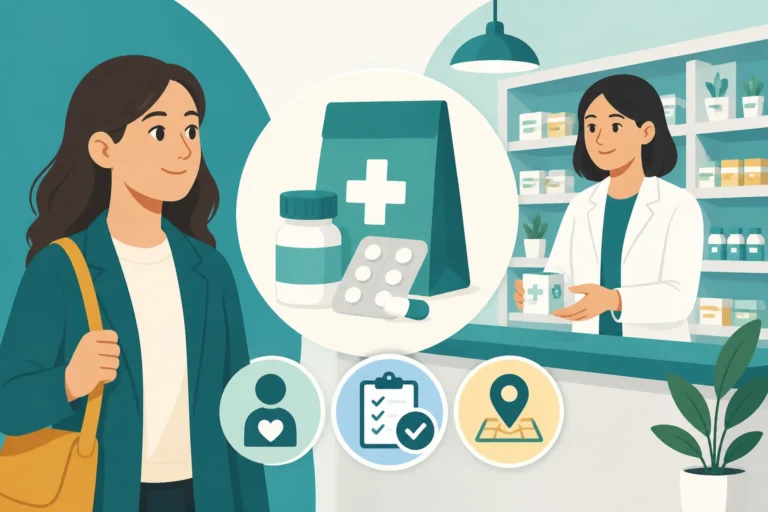
There is a significant difference between a medical eye exam and a routine refraction test (the kind used to determine a glasses prescription). If you take your child to a high-street optician (like Synsam or Specsavers) for a standard vision test without a referral, you might be asked to pay a fee, typically ranging from 300 to 600 SEK. While this isn't a massive amount, it's a cost that catches many new arrivals off guard.
However, if you go through the public system—starting with a referral from a school nurse or a GP—the exam is covered by the regional health authority. It is vital to understand Understanding Patient Fees (Patientavgift) Across Sweden's 21 Regions because while children’s care is generally free, the administrative path you take determines who picks up the bill. If you are in a rush and choose a private optician, you are essentially paying for the convenience of skipping the public waiting list.
Navigating the System Without a Personnummer
One of the biggest hurdles for new expats is the "waiting period" for a personnummer. If you haven't received your 12-digit identity number yet, you might feel like you're stuck in a healthcare limbo. I spent four months waiting for mine, and during that time, I was terrified of my kids getting sick or needing specialists. In this situation, you are often expected to pay the full "unsubsidized" cost upfront unless you have valid insurance.
For families in this transitional phase, having a private policy like Cigna Global or SafetyWing can be a lifesaver. These providers can bridge the gap while you wait for your Swedish rights to be formalized. Once you are officially in the system, you'll find that Healthcare in Sweden for Foreign Residents: The Complete System Guide (2027) covers most of your needs, but until then, these international brands provide the necessary safety net. SafetyWing, for instance, is often used by digital nomads and new arrivals who need immediate coverage without the Swedish administrative delays.
The Regional Variation in Vision Care
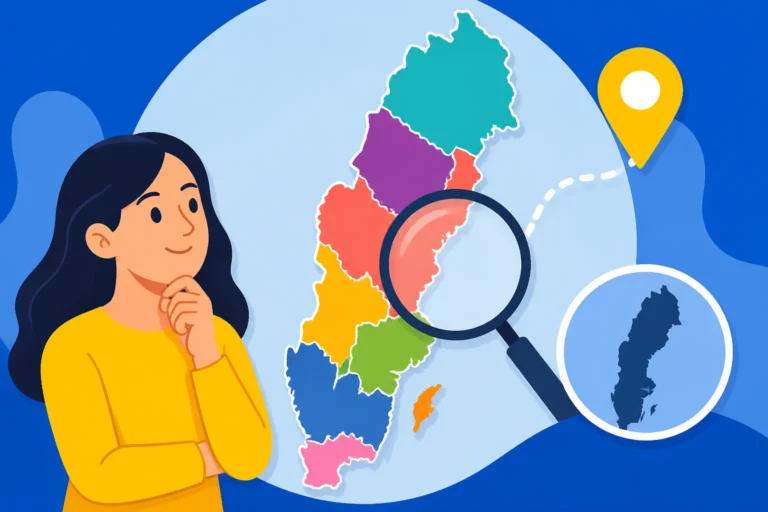
Sweden is divided into 21 regions, each responsible for its own healthcare budget. While there is a national mandate to provide care, the "how" and "when" can vary. For example, the waiting times for an eye specialist in Stockholm might be significantly longer than in a smaller region like Dalarna.
Some regions also have different rules about which private opticians are "authorized" to perform subsidized exams for children. Always ask the optician, "Are you affiliated with the region (landstinget) for children’s vision vouchers?" before you sit in the chair. This simple question can save you a surprising amount of money. For more on the specifics of family costs, see Family and Children's Healthcare in Sweden: BVC, Mödravård, and Beyond.
Financial Support for Glasses: The Glasögonbidrag
Finding out the exam is free is a relief, but the real cost often lies in the frames and lenses. Fortunately, Sweden provides a national subsidy known as "glasögonbidrag" (glasses contribution) for children and young people. This was a game-changer for my family when we realized two of our children needed corrective lenses within the same month.
Eligibility and Amount of the Subsidy
The subsidy is generally available for children from the age of 0 up to the year they turn 19. As of current regulations, the standard subsidy is 800 SEK. This amount is meant to cover a basic pair of glasses or contact lenses. If you choose designer frames or high-index lenses that exceed this amount, you simply pay the difference.
It is important to remember that this isn't a "once per lifetime" benefit. In most regions, children are eligible for a new subsidy every year if their prescription changes or if they grow out of their frames. This recognizes that children’s eyes change rapidly. You can find more details on how these types of benefits are processed by Registering with Försäkringskassan: When and Why You Need To.
How to Claim the Glasses Voucher
The process for using the 800 SEK subsidy is surprisingly streamlined, provided you use an optician that has a contract with the region. Here is the typical workflow:
- Receive a prescription from an ophthalmologist (for younger children) or an authorized optometrist (for older children).
- Take the prescription to an affiliated optician.
- The optician deducts the 800 SEK directly from your bill at the point of sale.
You rarely have to "claim" the money back from the government; the optician handles the paperwork with the region. However, you must bring proof of your child’s identity (or their personnummer) to the appointment. If you are still waiting for your papers, see Can I See a Doctor in Sweden Before I Get My Personnummer? to understand your interim rights.
| Feature | Coverage for Children (Under 19/20) | Typical Cost (If not covered) |
|---|---|---|
| Routine BVC Screening | 100% Free | N/A |
| School Nurse Check | 100% Free | N/A |
| Specialist Eye Exam (Referral) | 100% Free | 500 – 1,200 SEK |
| Private Optician Exam | Varies by Region (often subsidized) | 300 – 600 SEK |
| Basic Glasses/Lenses | Subsidized up to 800 SEK | Depends on Brand |
| Emergency Eye Care | Free (at public hospitals) | Emergency Medical Care in Sweden: 112, Akutmottagning, and Urgent Help |
Practical Advice for Parents Navigating Vision Care
When you suspect your child needs an eye exam, the best first step is to call 1177 or check their website. They can tell you the current wait times in your specific municipality. If you are told the wait for a public specialist is several months, don't forget the "Vårdgaranti" (Care Guarantee), which entitles you to care within a certain timeframe. You can read more about your rights in this regard here: Private Health Insurance in Sweden: When Sjukvårdsförsäkring Is Worth It.
Booking an Appointment for the First Time
If your child is under the age of eight, many regions require that the first "proper" eye exam be done by an ophthalmologist rather than a high-street optician. This is because younger children often need special eye drops to dilate their pupils for an accurate reading, a procedure that optometrists in some shops are not licensed to do on very young children.
To book this, call your local "Vårdcentral." Tell them you are concerned about your child’s vision and ask for a referral. In Sweden, being "the squeaky wheel" politely but firmly often helps. If you find the language barrier difficult, remember that most Swedish medical staff speak excellent English, but you can always request an interpreter in advance if you feel more comfortable.
What to Expect During the Exam
Swedish eye exams for children are very play-oriented. Instead of just reading letters off a chart, younger children are often asked to identify symbols (like a house, an apple, or an umbrella) known as the Lea symbols. The clinicians are generally very patient and used to dealing with nervous kids.
If your child is prescribed glasses, I highly recommend visiting a few different opticians. Prices for frames vary wildly, and while the 800 SEK subsidy covers the basics, some shops have "junior packages" that include extra durable frames or anti-scratch coatings for a very low additional cost. During your move, if you are using a service like Cigna Global or SafetyWing, check if they cover additional "extra" costs that the Swedish state might not, such as high-impact sports goggles for school sports.
Emergency Situations and Sudden Changes
If your child experiences a sudden loss of vision, severe eye pain, or a physical injury to the eye, do not wait for a referral or a BVC appointment. You should head straight to the nearest "Ögonakuten" (Eye Emergency Clinic). In major cities like Stockholm, there are dedicated eye emergency departments at hospitals like St. Erik’s Eye Hospital.
These emergency visits are also covered for children. However, the triage system is strict. If you show up with a minor issue that could have been handled by a GP, you may face a very long wait. For a list of where to go in a crisis, bookmark our guide on Emergency Medical Care in Sweden: 112, Akutmottagning, and Urgent Help.
Important Medical Disclaimer
The information provided in this guide is for educational and informational purposes only and is based on the Swedish healthcare system. While every effort has been made to ensure accuracy, healthcare policies, regional subsidies, and patient fees can change. This content is not a substitute for professional medical advice, diagnosis, or treatment. Always seek the advice of your physician, a qualified eye specialist, or other health providers with any questions you may have regarding a medical condition or your child’s vision. Never disregard professional medical advice or delay in seeking it because of something you have read on this website. If you believe your child has a medical emergency, call 112 or visit the nearest emergency room immediately.