Managing a Chronic Condition in Sweden: Diabetes, Asthma, and More
Moving to a new country with a chronic condition like diabetes or asthma is a massive logistical headache that kept me awake for weeks before I arrived. I remember clutching my three-month supply of medication like a lifeline while praying the Swedish system wouldn't let me fall through the cracks. This guide solves the mystery of managing long-term health in Sweden, from costs to specialist referrals.
Navigating the Swedish Primary Care System for Chronic Illness
When you first arrive in Sweden, your entire medical world revolves around the "Vårdcentral." This is your local primary care clinic, and for someone with a chronic condition, it is the most important building in your neighbourhood. Unlike some countries where you might hop between specialists on your own whim, Sweden operates on a "gatekeeper" model. Your GP (General Practitioner) at the Vårdcentral is the one who manages your long-term plan, writes your prescriptions, and decides when your condition requires the intervention of a hospital-based specialist.
The Role of the Vårdcentral as Your Health Hub
Your Vårdcentral is not just for the flu or a quick check-up; it is where your chronic disease management plan is lived out. For conditions like Type 2 diabetes or mild asthma, you may rarely see a doctor at all. Instead, you will be assigned to a specialized nurse—such as a "diabetessköterska" (diabetes nurse) or an "astmasköterska" (asthma nurse). These professionals have extensive training and often have more time to sit down with you, review your blood glucose logs, or check your peak flow numbers than a busy GP would.
In my experience, the relationship with these nurses is the backbone of Swedish healthcare. They are the ones who will help you fine-tune your lifestyle and ensure you are meeting the goals set out in your national care guidelines. To get started, you’ll need to follow the steps in Registering with a Vårdcentral: Your Guide to Primary Care in Sweden to ensure you are officially in the local system.
Registering and Finding the Right Clinic
Sweden uses a system called "Vårdval," which means "Choice of Care." You are not strictly forced to go to the clinic closest to your apartment, though most people do for convenience. If you have a specific chronic condition, it pays to do a little bit of "window shopping." Some clinics in larger cities like Stockholm or Gothenburg have a stronger reputation for certain types of chronic care.
You can browse clinics on the 1177.se website. Once you find one that suits you, the process of Choosing and Switching Your Vårdcentral Through Vårdval is relatively straightforward. Just be aware that if you choose a clinic far from home, you may not be eligible for subsidized patient transport if your condition eventually limits your mobility.
Continuity of Care and the Fast Läkarkontakt
One of the biggest frustrations expats face in Sweden is the "doctor lottery." Because of staffing shortages in certain regions, you might see a different locum doctor every time you visit. For someone managing a complex condition, this lack of continuity is exhausting. You end up repeating your entire medical history every three months.
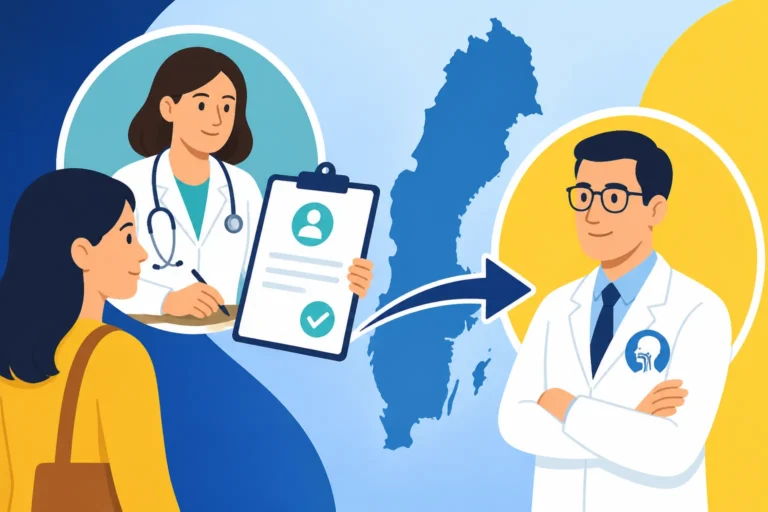
To combat this, you have a right to a "fast läkarkontakt" (fixed medical contact). You should explicitly ask your Vårdcentral for a designated doctor who will be responsible for your longitudinal care. Having a name and a face attached to your file makes it much easier to get How the Referral (Remiss) System Works for Seeing a Specialist in Sweden handled efficiently, as your fixed doctor will understand the nuances of your progression over several years.
Managing Costs and the High-Cost Protection Scheme
The financial side of chronic illness in Sweden is, frankly, one of the best perks of living here, but the "pay-as-you-go" start can be a shock. You will pay a fee for every visit and every box of medicine until you hit a specific ceiling. After that, the state takes over the bill. This system ensures that even if you require expensive biological drugs or weekly therapy, your annual costs are capped at a very manageable level.
Understanding Högkostnadsskydd for Doctor Visits
Every time you visit a doctor at your Vårdcentral or a specialist at the hospital, you will pay a "patientavgift" (patient fee). These fees vary slightly depending on which of the 21 regions you live in, but they generally hover around 200 to 300 SEK for a GP visit and slightly more for a specialist. If you are worried about these initial out-of-pocket costs, especially before your Swedish social security is fully active, products like SafetyWing can provide a safety net for unexpected medical needs during your transition period.
The magic number to remember is the high-cost ceiling for outpatient care. Once you have paid a total of 1,400 SEK (the rate for 2024/2025, which may adjust slightly by 2026) within a 12-month period, you receive a "frikort" (free card). For the remainder of that 12-month period, all subsequent qualifying visits are free. You can find more details on how this is calculated in The Högkostnadsskydd Explained: Sweden's Healthcare Cost Ceiling and Frikort.
Prescription Subsidies and the Annual Cap
For many with chronic conditions, the cost of medication is the real concern. Sweden uses a "staircase" model for prescription subsidies. You pay the full price for your medications until you have spent 1,400 SEK. After that, the discount kicks in—first at 50%, then 75%, then 90%, until you hit the maximum out-of-pocket limit of 2,850 SEK.
Once you hit that 2,850 SEK mark, every single prescription covered under the national pharmaceutical benefit scheme is free for the rest of your 12-month cycle. This is a lifesaver for people on modern insulin pumps or expensive asthma inhalers. To understand the nuances of the "staircase," check out Prescription Medicines in Sweden: Recept, Refills, and the Cost Cap.
Managing Specialized Equipment Costs
If your chronic condition requires physical aids—like a CPAP machine for sleep apnea, a wheelchair, or specific orthopedic shoes—the costs and rules for these are handled differently than medications. These are called "hjälpmedel." In most regions, you will pay a small one-time fee or a low monthly rental, and the region covers the rest.
However, the "range" of equipment provided can be quite basic. If you want the latest, top-of-the-line tech that isn't on the region's approved list, you might have to pay for it yourself. This is where Private Health Insurance in Sweden: When Sjukvårdsförsäkring Is Worth It comes into play, as some private policies offer allowances for advanced equipment or faster access to specialized fitting clinics.
| Expense Type | Annual Cap (Approx.) | What Happens After? |
|---|---|---|
| Doctor Visits | 1,400 SEK | All visits are free (Frikort) |
| Prescriptions | 2,850 SEK | All covered meds are free |
| Hospital Stay | ~130 SEK / day | No cap, but generally low cost |
| Dental Care | ~3,000 SEK (start) | Subsidy tiers begin (up to 85% off) |
Condition-Specific Management: Diabetes, Asthma, and Hypertension
While the general system is robust, the "day-to-day" experience of managing a specific illness in Sweden has its own cultural and administrative quirks. Sweden is very focused on "self-care" (egenvård), meaning they give you the tools and expect you to manage the routine aspects of your health yourself.
Diabetes Care: Sensors, Insulin, and the Nurse
Sweden is a world leader in diabetes tech. If you have Type 1 diabetes, it is very common to be offered a Continuous Glucose Monitor (CGM) like a Dexcom or Freestyle Libre as part of your standard care, usually at no cost once you are in the system. The transition usually begins with a referral from your GP to a hospital-based "Diabetesmottagning" (Diabetes Clinic).
For Type 2 diabetes, your care will mostly stay at the Vårdcentral. You will be invited for regular blood work (HbA1c tests) and foot exams. The Swedish approach is heavily data-driven. They will encourage you to use the 1177 app to track your results. If you are moving from a country with a very "interventionist" medical culture, you might find the Swedish approach a bit hands-off at first, but the results in Managing a Chronic Condition in Sweden: Diabetes, Asthma, and More show that the long-term outcomes here are among the best in the world.
Respiratory Health: Managing Asthma and COPD in a Cold Climate
The Swedish winter is the biggest enemy of the chronic respiratory patient. The air is extremely dry and cold, which can trigger severe asthma attacks or COPD flare-ups. Swedish doctors are very proactive about "winter dosing." They may suggest increasing your preventer inhaler dose in October and keeping it elevated until April.
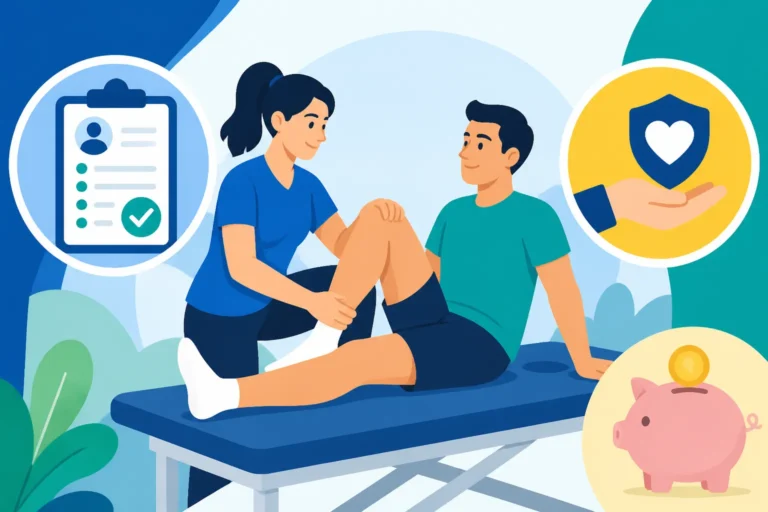
You will also find that "rehab" is a big part of respiratory care here. Many regions offer subsidized "Asthma/COPD schools" where you meet in groups to learn breathing techniques and exercise strategies. If your condition is severe, you might even be eligible for Physiotherapy and Rehabilitation in Sweden: Referrals and Reimbursement to help maintain your lung function during the sedentary winter months.
Cardiovascular Health: Monitoring and Regular Check-ups
Hypertension (high blood pressure) is often managed via the "distriktssköterska" (district nurse). Rather than seeing a doctor for every blood pressure check, you can often book a 10-minute slot with a nurse or even use a self-service blood pressure machine located in the waiting room of many clinics.
If you have a more serious condition, like heart failure or post-stroke recovery, your care will be coordinated between the Vårdcentral and the cardiology department at the regional hospital. Sweden uses a "vårdplan" (care plan) system where all your providers can see the same notes. You can keep an eye on these yourself by Booking Doctor Appointments Online Through 1177.se with BankID and checking your "Journalen" (health records) digitally.
Digital Tools and the 1177 Ecosystem
Sweden is a nearly cashless society, and it is also a nearly "paperless" healthcare society. If you don't have a BankID, managing a chronic condition will involve a lot of frustrating phone calls and waiting on hold. Once you have your digital ID, however, the system becomes incredibly efficient.
Booking and Renewing Prescriptions via 1177.se
In many countries, you have to call your doctor’s office every time you need a refill. In Sweden, you simply log into the 1177.se portal (or the app) and click "Förnya recept" (Renew prescription). The request goes directly to your doctor, who usually signs it off within 24–48 hours. The "paper" prescription doesn't exist; it is sent to a national database.
You can then walk into any "Apotek" (pharmacy) in the country, show your ID, and they will see your available refills on their screen. This is particularly helpful if you are travelling within the country. To see how this works in practice, read How Do I Refill a Prescription at a Swedish Apotek?.
Communicating with Your Care Team Online
The "Message" function on 1177 is a game-changer for chronic patients. If you have a quick question about a side effect or need to report a slight change in your readings, you can send a secure message to your clinic. This avoids the need to book a physical appointment for every minor query.
It is important to manage your expectations, though. This is not "instant messaging." It usually takes a few days to get a reply. If you find the public system's digital response time too slow, some expats opt for a supplemental policy from Cigna Global, which can sometimes offer faster access to private consultations or second opinions through their own digital platforms.
Accessing Your Medical Records (Journalen)
One of the most empowering things about the Swedish system is "Journalen." This is your digital medical record. You can see every note your doctor has written, every lab result, and every referral status. For someone with a chronic illness, this transparency is vital. You can check your own blood work results before the doctor even calls you.
However, be warned: the notes are in Swedish. While you can use browser translation tools, medical terminology can get "lost in translation." If you're struggling with the language barrier, it's worth checking How Do I Get Care If I Don't Speak Swedish Yet? for tips on requesting interpreters or finding English-speaking staff.
Workplace Rights and Support for Chronic Conditions
Managing an illness is a full-time job in itself, and Sweden’s labor laws reflect an understanding of this. If your condition flares up or requires frequent appointments, you have specific protections that are far more robust than in many other countries.
Sick Leave and Försäkringskassan Integration
If your chronic condition prevents you from working for a period, you are entitled to "sjukpenning" (sick pay). For the first 14 days, your employer pays your sick leave (minus a "karensdag," or a deduction for the first day). After day 14, the state agency Försäkringskassan takes over the payments.
For those with chronic illnesses that cause frequent short-term absences, there is a special protection called "högriskskydd." If you apply for and receive this, your employer can be reimbursed for your sick pay from day one, which makes them much more supportive of your situation. You’ll want to look into Registering with Försäkringskassan: When and Why You Need To as soon as you have your Personnummer.
Workplace Accommodations and Ergonomics
Swedish employers have a legal "rehabilitation responsibility." If your asthma is triggered by the office environment, or if your diabetes requires a private space for insulin injections, your employer is required to work with you to find a solution.
This often involves a "Företagshälsovård" (occupational health) provider. These are private clinics contracted by your company to ensure the workplace isn't making you sick. They can provide ergonomic chairs, standing desks, or even help adjust your work hours. Knowing Your Rights Under Sweden's Employment Protection Act (LAS) can give you the confidence to ask for these necessary adjustments.
Supplemental Coverage and Insurance Considerations
While the public system is comprehensive, it is not always fast. For a chronic patient, waiting three months for a "non-urgent" specialist review can feel like an eternity. This is why many expats and high-earning Swedes look at supplemental options.
When to Consider Private Health Insurance
Private health insurance in Sweden ("sjukvårdsförsäkring") doesn't replace the public system; it sits on top of it. Its primary benefit is speed. Under the national "Vårdgaranti" (Care Guarantee), you are supposed to see a specialist within 90 days. With private insurance, that wait is often reduced to 7 days or less.
For someone managing a condition that is currently stable, private insurance might feel like an unnecessary expense. But if you are in a phase where you need frequent specialist tweaks—such as adjusting a complex medication regime—the speed of a private clinic can be invaluable. Companies like Cigna Global are popular with the expat community because they offer international portability, which is great if you plan on moving again in a few years.
Navigating Gaps for New Arrivals
The most dangerous time for a chronic patient is the "Personnummer gap." This is the period after you arrive but before you are fully registered in the Swedish population register. Without that 12-digit number, you don't exist in the digital health system, and you may be charged "non-resident" fees, which are significantly higher.
During this window, having a solid travel or transition insurance like SafetyWing is non-negotiable. They can help cover costs if you have an acute flare-up before your Swedish coverage kicks in. For more on surviving this administrative limbo, see Can I See a Doctor in Sweden Before I Get My Personnummer?.
Important Considerations for Chronic Care in Sweden
- Bring Records: Always bring a translated summary of your medical history and current prescriptions from your home country. It makes the "intake" at the Vårdcentral much smoother.
- The Personnummer is Key: Your access to the subsidized high-cost ceiling and the 1177 portal depends entirely on being "folkbokförd" (registered in the population register).
- Don't Stockpile Abroad: Once you are in the Swedish system, it is often cheaper to get your meds here than to "import" them from back home, thanks to the 2,850 SEK cap.
- Check the "Förmån" status: Not every single drug is subsidized. Most are, but some "lifestyle" versions or very new brands might be outside the subsidy system. Your pharmacist can tell you if a "generic" equivalent is covered.
Managing a chronic condition in Sweden requires a bit of initial "system-hacking," but once you are through the door, the level of support and the cap on costs provide a peace of mind that is hard to find elsewhere. Take it one "remiss" at a time, and don't be afraid to be your own advocate.
Disclaimer
This article provides general information for educational purposes only and does not constitute medical or legal advice. Healthcare regulations and costs in Sweden are subject to change. Always consult with a qualified medical professional in Sweden and check the latest updates on 1177.se or with the Swedish Migration Agency (Migrationsverket) regarding your specific situation and residency status.