The Difference Between a Visa and a Residence Permit in Sweden
Oh, the classic conundrum! When you're first dipping your toes into the sometimes perplexing waters of Swedish immigration, you'll quickly encounter terms like "visa" and "residence permit," often thrown around as if they're interchangeable. Let me tell you, as someone who’s navigated this myself, they are absolutely not the same thing, and understanding the crucial differences is key to a smooth entry and a successful life here in Sweden. This guide will meticulously break down these distinctions, helping you figure out exactly what you need for your Swedish adventure.
Navigating the Swedish Immigration Maze: Why Clarity Matters
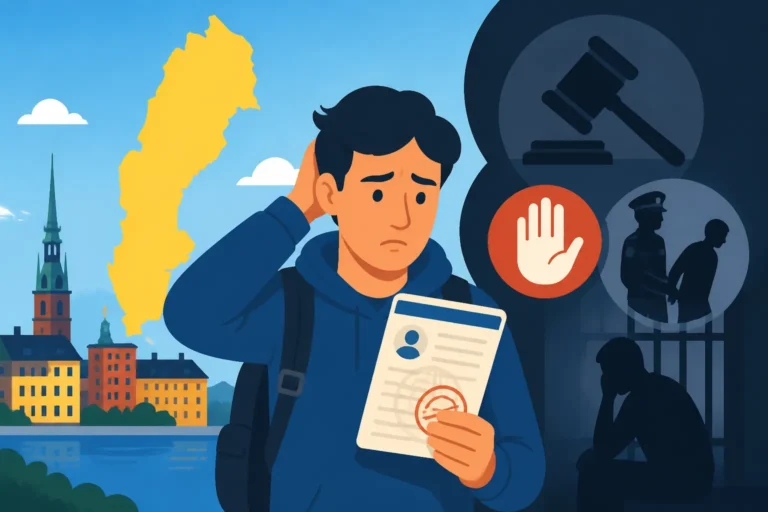
It's completely normal to feel a bit overwhelmed when you start looking into moving to Sweden. The bureaucratic language, the various government agencies, and the seemingly similar terminology can quickly lead to confusion. Many people, especially those from outside the EU/EEA, mistakenly think that getting a visa means they can simply pack their bags and start a new life here. Sadly, that's often not the case at all, and a misunderstanding can lead to frustrating delays, rejected applications, or even being denied entry. Trust me, you don't want to find yourself in that situation, especially after all the effort of planning a move to a new country.
The Initial Confusion: Visa, Permit, What's the Difference?
The root of the confusion often lies in the fact that both a visa and a residence permit are essentially permissions to be in a foreign country. However, their scope, duration, and the rights they grant you differ dramatically. Think of it like this: a visa is typically an allowance to visit, while a residence permit is an allowance to live. This fundamental difference shapes everything from how long you can stay, what you can do while you're here, and what future opportunities, like permanent residency or citizenship, might be open to you. It's not just semantics; it's the very foundation of your legal status in Sweden. Misinterpreting this can set you back significantly, so getting it right from day one is paramount.
Who Needs What? A Quick Overview
Generally speaking, the requirement for a visa or a residence permit largely depends on your nationality and the purpose and duration of your stay. If you're planning a short visit for tourism, business, or to see family, and you're from a country that isn't visa-exempt for the Schengen Area, you'll need a Schengen visa. This is for relatively brief periods – a maximum of 90 days within any 180-day period. On the other hand, if you intend to move to Sweden to work, study for more than three months, or join family members who already live here, you'll almost certainly need a residence permit. This permit grants you the legal right to establish a life in Sweden. Now, for my fellow EU/EEA citizens, the rules are a bit different, and we'll delve into that later, but for the majority of non-EU/EEA folks, this distinction is your starting point.
Decoding the Schengen Visa: Short Stays and Limitations
Let's start with the more temporary option: the Schengen visa. This is probably what most people think of when they hear the word "visa" in an international travel context. It's often the first step for many people visiting Europe, and Sweden is no exception, as it's part of the Schengen Area.
What Exactly is a Schengen Visa?
A Schengen visa is a short-stay visa that allows a person to travel to any member country of the Schengen Area, which includes most of the European Union plus a few non-EU countries like Norway, Iceland, Switzerland, and Liechtenstein. Its primary purpose is to facilitate tourism, short business trips, family visits, or transit through these countries. It's essentially a stamp or sticker in your passport, valid for a maximum of 90 days within any 180-day period. This means you can spend up to three months exploring Sweden and its neighbours, but then you generally must leave the Schengen Area for three months before returning. It's designed for visitors, not residents. For a deeper dive into the specifics of this, you might find our guide on Visiting Sweden: Schengen Visas and the 90-Day Rule incredibly useful.
Who Needs a Schengen Visa for Sweden?
Whether you need a Schengen visa depends entirely on your nationality. Citizens of many countries, such as the United States, Canada, Australia, and the United Kingdom, are typically visa-exempt for short stays within the Schengen Area. This means they can enter Sweden as tourists for up to 90 days without needing to apply for a visa in advance. However, citizens from a vast number of other countries, including India, China, South Africa, and Russia, among many others, do need to apply for a Schengen visa before they travel to Sweden. It's always crucial to check the specific requirements for your nationality on the Swedish Migration Agency's (Migrationsverket) website well in advance of your travel dates, as regulations can sometimes change. Don't assume anything; verify everything.
Key Limitations of a Schengen Visa in Sweden
This is where the rubber meets the road, and the difference between a visa and a permit becomes stark. While a Schengen visa grants you entry, it comes with significant limitations that prevent you from truly establishing a life in Sweden. First and foremost, you cannot legally work or undertake long-term studies while on a Schengen visa. Any form of employment or enrolment in a university programme exceeding 90 days is strictly prohibited. You also won't have access to Sweden's public healthcare system beyond emergency care, and you certainly cannot apply for a Personnummer, which is the Swedish personal identity number – the key to almost everything here.
Without a Personnummer, you'll find it nearly impossible to open a regular bank account, get a phone subscription, sign up for utilities, or access any public services. It’s also important to understand that time spent in Sweden on a Schengen visa does not count towards the period required for permanent residence or citizenship. It is purely for short-term visitation. Attempting to circumvent these rules can lead to serious consequences, including fines, future travel bans, and complications with any potential future residence permit applications. So, respect the limitations; they are there for a reason.
Understanding Residence Permits: Your Ticket to Swedish Life
Now, let's talk about the real deal for those looking to call Sweden home – the residence permit. This is what unlocks the Swedish lifestyle that so many of us expats cherish. It's a much more robust legal status that signifies Sweden's acknowledgement of your intention to live here long-term.
What Defines a Swedish Residence Permit?
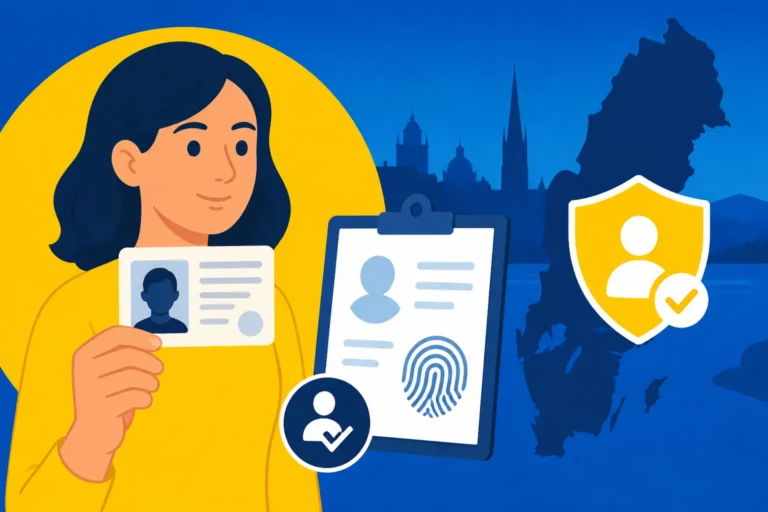
A Swedish residence permit (uppehållstillstånd) is a legal document, often issued as a card (the UT-kort), that grants a non-EU/EEA citizen the right to live in Sweden for an extended period, typically longer than 90 days. Unlike a visa, which primarily allows entry and short-term stay, a residence permit is about establishing residency. It’s issued by Migrationsverket, the Swedish Migration Agency, and is specifically tied to a purpose: to work, to study, or to join a family member already residing in Sweden. The type of permit you apply for dictates the rights and responsibilities you have while living here. It's the official recognition of your long-term connection to Sweden, and it's absolutely essential if your plan is to integrate and build a life in this country.
Common Types of Residence Permits for Sweden
There are several avenues to obtain a residence permit, each tailored to a different life situation. The most common types include:
- Work Permits: These are issued if you have a job offer from a Swedish employer. The requirements are strict, involving specific salary thresholds, collective agreements, and often a labour market test to ensure no suitable EU/EEA candidates were available. Securing a work permit is a cornerstone for many who move here for professional reasons. Without a confirmed job offer that meets the requirements, obtaining a work permit is impossible.
- Student Permits: If you've been accepted into a university or higher education programme in Sweden for more than three months, you'll apply for a student residence permit. This permit allows you to study and often includes the right to work part-time during your studies to support yourself.
- Family Reunification Permits: This permit type allows close family members (spouses, registered partners, cohabitants, and often children) of someone already living in Sweden with a residence permit or Swedish citizenship to join them. There are often stringent maintenance requirements, meaning the person in Sweden must prove they can support the incoming family members and provide adequate housing.
- Self-Employment Permits: For entrepreneurs looking to start their own business in Sweden, there's a permit for self-employed individuals. This requires a robust business plan and proof of financial capability to sustain yourself and your venture.
Each of these categories has its own detailed set of criteria and documentation. For a comprehensive overview, I highly recommend our guide Residence Permits in Sweden: Types, Requirements, and How to Apply, and if you’re coming from outside the EU/EEA, then Moving to Sweden from Outside the EU/EEA: What You Need to Know is a must-read.
The Pathway to Integration: Rights and Responsibilities
Holding a valid residence permit opens up a world of possibilities in Sweden. Critically, it allows you to apply for a Personnummer from Skatteverket (the Swedish Tax Agency), which is the single most important administrative step for any long-term resident. With a Personnummer, you gain access to the public healthcare system; you can choose and register with a local vårdcentral (health centre) – a process detailed in Registering with a Vårdcentral: Your Guide to Primary Care in Sweden. You become eligible for various social benefits through Försäkringskassan, the Swedish Social Insurance Agency, such as child allowance or parental leave benefits, which you can learn more about in Registering with Försäkringskassan: When and Why You Need To.
Furthermore, a residence permit gives you the legal right to work and study according to its specific conditions. It allows you to participate fully in Swedish society, from opening a proper bank account to enrolling your children in school. Crucially, continuously holding a residence permit for a specified period (typically five years) is a prerequisite for applying for The Path to Permanent Residence in Sweden: Rules and Timeline, and eventually, for Becoming a Swedish Citizen: Requirements and the Application Process. This journey from permit holder to permanent resident to citizen is the ultimate goal for many, and it all starts with securing the correct residence permit.
The Crucial Differences: Visa vs. Permit at a Glance
To truly grasp the distinction, let's lay it out clearly. This is where we cut through the noise and get to the core of why these two documents are fundamentally different.
| Feature | Schengen Visa | Swedish Residence Permit |
|---|---|---|
| Purpose | Short-term travel (tourism, business, visit) | Long-term residency (work, study, family, self-employ) |
| Duration | Max 90 days within 180-day period | Typically 1-2 years initially, extendable, can lead to PR |
| Application Body | Embassy/Consulate in your home country | Migrationsverket (often online, or via Embassy) |
| Primary Right | Entry and short-term stay in Schengen Area | Right to live, work/study, and establish residency in Sweden |
| Access to PN | No | Yes, if planning to reside for at least 1 year |
| Public Healthcare | No (only emergency, often paid out of pocket) | Yes (with PN and folkbokföring) |
| Work Rights | No | Yes (according to permit type) |
| Study Rights | No (for long-term courses) | Yes (according to permit type) |
| Path to PR/Citizenship | No | Yes |
| Bank Account | Difficult, limited | Standard access with PN |
The Long-Term vs. Short-Term Divide
The table above really hammers home the core difference: one is for visiting, the other is for living. A Schengen visa is, by design, a temporary arrangement. It's built on the assumption that you will return to your home country after a short period. It does not imply any intent to reside, nor does it grant any rights associated with residency. If you overstay your visa, you become an undocumented person, which can lead to severe penalties, including deportation and being barred from re-entering the Schengen Area for years.
A residence permit, conversely, is explicitly about your long-term presence. Migrationsverket issues it based on your stated intention and proven eligibility to live in Sweden, whether for employment, education, or family. The conditions of a residence permit are also generally more complex, often requiring proof of sufficient funds, comprehensive health insurance (especially for students or those on certain permits), and a clear purpose for your stay. If you violate the conditions of your permit, for instance, by stopping your studies or changing employers without proper notification, you risk having your permit revoked.
Impact on Daily Life: From Bank Accounts to Healthcare
The impact of this distinction on your daily life in Sweden cannot be overstated. With just a visa, you are essentially a tourist. You'll rely on international credit cards, struggle with cash-only businesses (Sweden is very cashless!), and have virtually no access to public services. For instance, without a Personnummer, getting a functional Swedish bank account can be a nightmare; most major banks will refuse you, making it incredibly difficult to manage your finances or even get paid. Our guide on Opening a Bank Account in Sweden: A Step-by-Step Guide highlights how critical the Personnummer is for this.
A residence permit, however, is your gateway. Once you have your Personnummer and are registered in the population register (folkbokförd), you can open a proper bank account, get BankID and Digital Payments: How Money Moves in Cashless Sweden (which is essential for almost any online transaction or government interaction here), and access the highly subsidised Swedish healthcare system. Without a Personnummer, seeing a doctor in Sweden can be a very expensive affair, even for basic things, as explained in Can I See a Doctor in Sweden Before I Get My Personnummer?. The permit transforms you from a temporary visitor to a recognised resident, granting you the stability and rights to truly integrate into Swedish society.
Special Considerations for EU/EEA Citizens and Nordic Nationals
For those of us coming from within the EU/EEA, or even other Nordic countries, the landscape looks a bit different. We don't deal with the traditional visa-versus-residence-permit dichotomy in the same way.
The Right of Residence: A Different Ballgame
If you're an EU/EEA citizen, you generally don't need a visa or a residence permit to enter or reside in Sweden. This is thanks to the fundamental principle of free movement within the European Union. Your right to reside in Sweden stems directly from your status as an EU/EEA citizen, often referred to as your "right of residence" (uppehållsrätt). This right means you can live, work, study, or be self-employed in Sweden without needing permission from Migrationsverket. It’s a huge advantage, and it streamlines the initial administrative hurdles significantly. However, it's not a free-for-all; there are still steps you need to take to formalise your stay, particularly if you plan to be here for more than three months. You can find more details in Moving to Sweden as an EU/EEA Citizen: Your Rights and Steps.
Registration, Not Application: What EU/EEA Citizens Must Do
While you don't apply for a permit, if you plan to stay in Sweden for more than three months, you must register your right of residence with Skatteverket. This is done by applying for a Personnummer and Getting Registered in the Population Register (Folkbokföring). To do this, you need to prove that you meet one of the conditions for right of residence, such as being employed, self-employed, studying, or having sufficient means to support yourself without relying on social benefits. You'll need to show your passport or national ID, proof of your employment contract, university acceptance, or financial resources. Once folkbokförd, you gain the same access to public services, healthcare, and other benefits as any other legal resident in Sweden. This registration is a formal acknowledgement of your long-term stay, replacing the need for a residence permit.
Nordic Exception: The Easiest Path
For citizens of other Nordic countries (Denmark, Finland, Iceland, and Norway), moving to Sweden is even simpler. They have almost complete freedom of movement and residence, essentially treated like Swedish citizens for most purposes. They can move to Sweden and register directly with Skatteverket for a Personnummer without needing to prove a specific "right of residence" condition like employment or study initially. This makes it the least complicated path to establish residency in Sweden.
Practical Advice for Navigating Migrationsverket
No matter your path, dealing with Migrationsverket can feel like navigating a labyrinth. It’s infamous among expats for its slow processing times and sometimes opaque requirements. But with the right approach and accurate information, you can significantly reduce stress and improve your chances of a smooth application.
Applying Correctly: First Steps and Documentation
The single most important piece of advice I can give you is to identify the correct type of permit or registration you need from day one. Don't guess, and don't assume. Migrationsverket's website is the primary source of truth. Read through the requirements for your specific permit type meticulously. Gather every single document they ask for, and then double-check. Missing even one seemingly minor document can send your application back to square one, costing you months of waiting.
A frequent hurdle for many applicants is the need for certified translations of documents not in Swedish or English. This is where professional services become invaluable. If your birth certificate, marriage certificate, or academic transcripts are in Arabic, Spanish, or any other language, you’ll need them translated by a certified translator. Services like RushTranslate or Translayte specialise in these kinds of official translations, ensuring that your documents meet Migrationsverket's stringent requirements. Imagine getting everything else right, only for your application to be stalled because your critical documents weren’t translated and certified properly. It's a common, infuriating pitfall, and getting it right the first time with a reputable service like Translayte can save you immense headaches and processing delays.
For a deeper understanding of what to expect, our article on Dealing with Migrationsverket: Applications, Waiting, and Decisions offers invaluable insights.
Common Pitfalls and How to Avoid Them
Here are a few common mistakes that trip up newcomers:
- Applying for a Residence Permit while on a Tourist Visa: In most cases, you cannot apply for a residence permit from within Sweden if you entered on a tourist visa. You typically need to apply from your home country or country of legal residence. Attempting to switch status while on a tourist visa is usually not permitted and will likely result in a rejection and potentially an instruction to leave the country.
- Underestimating Maintenance Requirements: For family permits, student permits, and even some work permits, Migrationsverket requires proof of sufficient funds to support yourself and any dependents. This is known as the Comprehensive Sickness Insurance and the Maintenance Requirement in Sweden. If you can't demonstrate this, your application will be refused.
- Ignoring Processing Times: Migrationsverket is known for its lengthy processing times, which can sometimes extend to many months, or even over a year for complex cases. Always check the estimated Understanding Migrationsverket Processing Times and Delays on their website and plan accordingly. Never book flights or make irreversible plans until you have a decision.
- Incomplete or Incorrect Documentation: As mentioned, this is a killer. Missing a signature, an expired passport copy, or a non-certified translation can lead to significant delays or outright refusal. And yes, getting your documents translated correctly and certified is non-negotiable. Services like RushTranslate can provide the certified translations often needed, ensuring your birth certificates, educational degrees, or marriage licenses are accepted without a hitch. It's a small investment that prevents big problems.
Understanding these distinctions and preparing thoroughly will make your journey to Sweden much smoother. While the process can be daunting, the rewards of living in this beautiful country are truly worth it.
Disclaimer
Please note that the information provided in this guide is for general informational purposes only and does not constitute legal advice. Immigration laws and regulations in Sweden are subject to change. It is crucial to always consult the official website of the Swedish Migration Agency (Migrationsverket) or seek advice from a qualified immigration lawyer or advisor for the most current and accurate information pertaining to your individual circumstances.