What Happens If I Overstay My Permit in Sweden?
It’s a terrifying thought, isn’t it? That feeling in the pit of your stomach as your residence permit’s expiry date looms closer, or worse, has already passed. The fear of overstaying your welcome in Sweden, whether by accident or due to unforeseen circumstances, is a very real and deeply stressful concern for many expats. This guide aims to cut through the panic and provide a realistic, comprehensive overview of exactly what happens if you find yourself in the unenviable position of having overstayed your permit in Sweden, outlining the legal, practical, and personal consequences.
The Immediate Realities of Overstaying Your Welcome in Sweden
Let's not sugarcoat it: overstaying your permit in Sweden, even by a day, is a serious matter with immediate and far-reaching consequences. It’s not just an administrative hiccup; it shifts your legal status entirely and fundamentally alters your relationship with Swedish society and its institutions. The fear and uncertainty that come with this can be overwhelming, and it’s crucial to understand the ground you’re standing on.
Loss of Legal Status and Rights
The moment your residence permit expires and you remain in Sweden, you instantly become an undocumented or "illegal" resident. This isn't a moral judgment, but a legal classification that strips you of most rights you previously held. Your Personnummer, Folkbokföring, and Your Legal Status in Sweden becomes effectively useless for official purposes, and you lose your legal right to reside, work, and access public services.
Imagine waking up one day and realizing your entire support system has vanished. You can no longer legally work, which means your income stops, and any formal employment relationship becomes impossible. Access to healthcare, which is often a significant concern for expats, becomes severely restricted. While emergency care will always be provided regardless of your status, routine check-ups, specialist visits, and prescription refills become incredibly difficult, if not impossible, without a valid permit and Personnummer. You lose your right to benefits, housing allowances, and even the ability to engage in simple banking activities or renew contracts. Many find themselves in a limbo where basic daily tasks become monumental challenges, creating immense stress and isolation.
The Risk of Being Discovered and Consequences
Living undocumented means living in constant fear of discovery. While Sweden doesn't have routine street checks for immigration status in the same way some other countries might, interactions with authorities can happen in various ways. It could be a random traffic stop if you're driving, an interaction with the police for a minor incident, or even an employer or landlord reporting you if they discover your expired status. Sometimes, reports can even come from disgruntled acquaintances or neighbours.
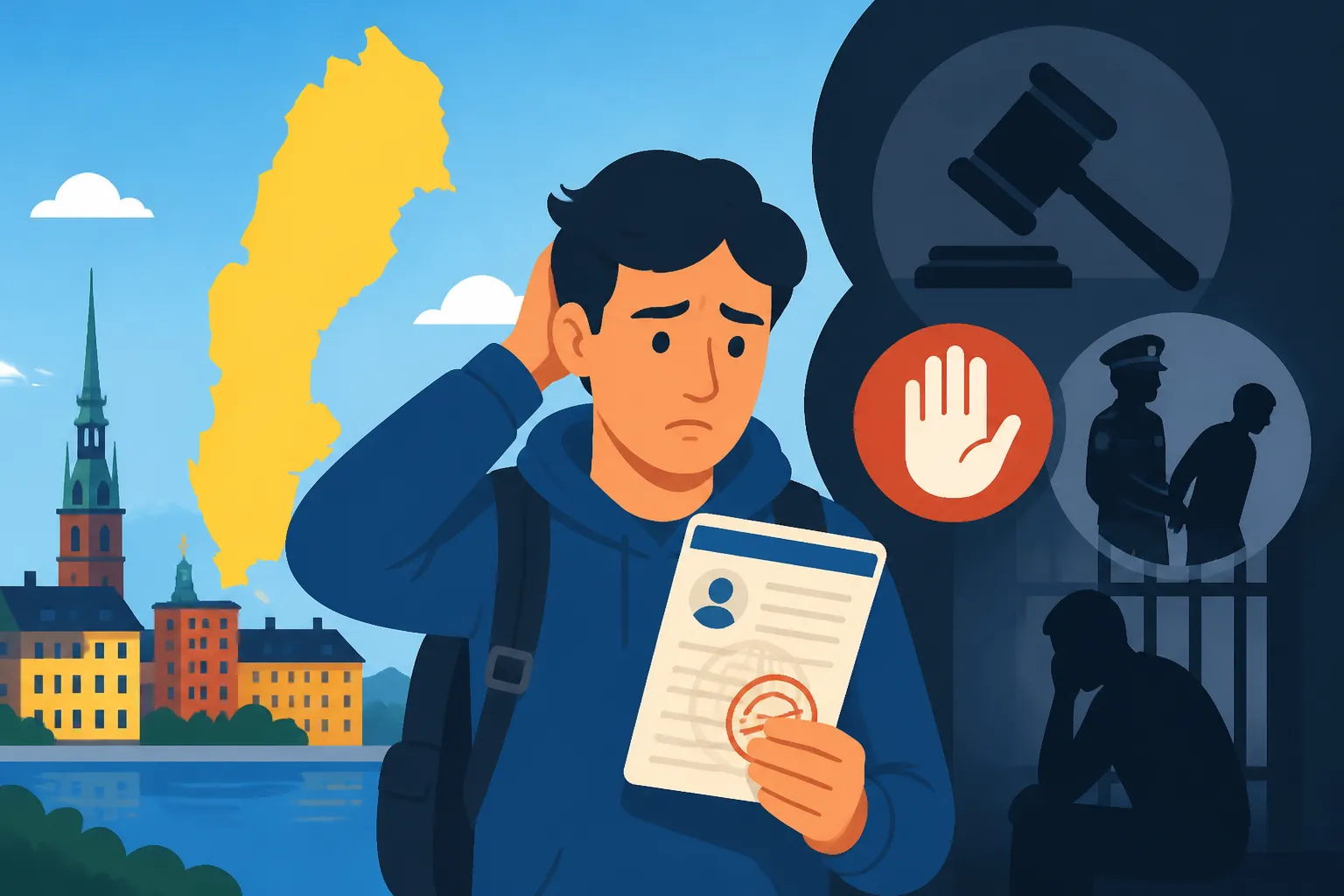
Once your undocumented status comes to light, the process initiated by Migrationsverket (the Swedish Migration Agency) and Polisen (the Swedish Police Authority) is typically swift. You will likely be asked to leave the country. This formal request is known as an utvisningsbeslut, or deportation order. Depending on the circumstances, you might be detained while your case is processed, particularly if there's a risk of you absconding. This is a terrifying prospect, as it means losing your freedom and being held in a detention centre, often far from any support network you might have. The initial phase is all about confirming your identity, your expired status, and then issuing the formal instruction to depart.
Formal Consequences: Deportation, Bans, and Future Implications
The repercussions of overstaying extend far beyond the immediate loss of status. They create a legal precedent that will affect your ability to return to Sweden, or even other European countries, for years to come. This is where the long-term impact truly sets in.
The Deportation Process Utvisningsbeslut
An utvisningsbeslut is more than just a polite request to leave; it's a legally binding order issued by Migrationsverket. This decision typically outlines the reasons for your deportation and gives you a specific timeframe – often a few weeks or months – within which you are expected to leave Sweden voluntarily. The order will also state whether a re-entry ban (återreseförbud) has been imposed, and for how long.
If you do not comply and leave within the specified period, the police become involved. They are tasked with enforcing the deportation order, which means they will actively search for you, detain you, and arrange for your forced removal from the country. This can involve being escorted to the airport and put on a flight, often at your own expense. The experience of forced deportation is, understandably, incredibly traumatic and something everyone wants to avoid. It’s a stark reminder of the authority of the state and the finality of the decision. For complex cases, or if you had tried to appeal a previous decision, you can find more information on Appealing an Immigration Decision in Sweden: The Migration Courts.
Re-entry Bans Återreseförbud and Their Duration
Perhaps one of the most significant and distressing consequences of overstaying is the imposition of a re-entry ban, or återreseförbud. This ban means you are prohibited from entering Sweden, and in most cases, the entire Schengen Area, for a specified period. The duration of this ban can vary depending on the severity of the overstay, whether you left voluntarily or were forcibly deported, and any previous immigration violations.
Typically, re-entry bans last for:
- One year: If you left voluntarily within the timeframe given in your deportation order.
- Two years: If you failed to leave voluntarily and were forcibly deported, or if you were denied entry to Sweden but did not immediately leave.
- More than two years (up to five or sometimes even more): For more serious cases, such as repeated overstays, false information, or criminal activity.
This table provides a simplified overview, but individual circumstances can lead to different outcomes.
| Circumstance of Departure | Typical Re-entry Ban Duration (Schengen Area) |
|---|---|
| Voluntary departure within specified timeframe | 1 year |
| Failure to depart voluntarily / Forced deportation | 2 years |
| Serious violations (e.g., repeated overstay, fraud) | 5 years or more |
It's vital to understand that this isn't just a Swedish ban; it applies across all 27 Schengen countries. This means that if you're banned from Sweden, you're also banned from countries like Germany, France, Italy, and Spain. Trying to enter any of these countries during your ban period will likely result in immediate refusal of entry and potentially further penalties.
Impact on Future Visa and Permit Applications
Having an overstay or a deportation on your record creates an incredibly steep uphill battle for any future visa or residence permit applications, not just for Sweden but for virtually any developed country. When you apply for a new visa or permit, immigration authorities will always check your past immigration history. A previous deportation or re-entry ban is a significant red flag that will heavily influence their decision.
You will need to explicitly declare any previous overstays or deportations on future applications. Failing to do so can lead to an automatic refusal for providing false information, which is a far worse scenario. Even after your re-entry ban has expired, proving that you are a reliable and compliant applicant who will adhere to immigration rules becomes exceptionally difficult. Each application will require extensive documentation and a compelling argument as to why your previous actions should not preclude you from new opportunities. Sometimes, if a previous application was refused, understanding What Happens If Your Swedish Permit Is Refused can provide insight into avoiding similar pitfalls, though overstaying is a more severe breach.
Navigating the Situation: What (If Anything) Can Be Done?
Finding yourself in an overstay situation is terrifying, but depending on the exact circumstances, there might be avenues to explore. It’s crucial to act swiftly and strategically. This is not a situation to try and navigate alone.
Seeking Legal Advice Immediately
The absolute first step you should take, if at all possible, is to seek immediate legal counsel from a Swedish migration lawyer. This is not the time to rely on anecdotal advice from online forums or friends. An experienced lawyer can:
- Assess your specific case: Every situation is unique, and a lawyer can evaluate the exact reasons for your overstay, the duration, and any mitigating factors. They can confirm the legal status of your permit and whether it has truly expired.
- Explain your rights: Even as an undocumented person, you still have some fundamental rights, which a lawyer can clarify.
- Explore potential remedies: In rare cases, there might be grounds for an appeal against a deportation order, or for a new application under exceptional circumstances. This is a very high bar, but a lawyer can advise if it's even feasible.
- Guide you through the process: They can help you understand the utvisningsbeslut, the timeframe, and the implications of a re-entry ban.
- Help with documentation: If you need to prepare any documents for an appeal or an eventual new application, a lawyer can guide you. Often, official documents from your home country or even Sweden might need to be translated for authorities. Services like RushTranslate or Translayte can provide certified translations quickly, which is often a requirement for any formal submission to Migrationsverket.
Remember, the legal system in Sweden is complex, and navigating it without expert help, especially in a vulnerable position, is incredibly risky.
Voluntary Departure vs. Forced Deportation
If you receive an utvisningsbeslut, you are almost always given a period to leave Sweden voluntarily. Choosing to leave voluntarily, while undoubtedly painful, generally leads to a less severe re-entry ban (typically one year) compared to being forcibly deported (which usually results in a two-year ban). It also spares you the trauma and indignity of being detained and removed by force.
Migrationsverket sometimes offers support for voluntary return, which can include practical assistance for travel back to your home country. This might seem counter-intuitive, but it is often more cost-effective for the state to facilitate voluntary returns than to manage complex forced deportations. Discussing this option with your lawyer or directly with Migrationsverket (if you feel safe doing so) could be beneficial. It also demonstrates cooperation, which can be viewed more favourably if you ever try to apply for a permit in the future, even if it's years down the line.
Exceptional Circumstances and Humanitarian Grounds
While incredibly rare, there are very specific and narrow circumstances under which an overstay might be tolerated or a new permit granted even after your previous one expired. These usually fall under humanitarian grounds or cases where an individual simply cannot return to their home country due to immediate danger, serious illness that cannot be treated elsewhere, or other compelling compassionate reasons.
For example, if you face genuine threats to your life or safety in your home country, or if you have a severe, life-threatening medical condition that developed while in Sweden and for which adequate care is unavailable in your home country, Migrationsverket might consider an application based on these grounds. The "best interests of the child" principle can also be a strong factor if children are involved, particularly if they have established deep roots in Sweden. However, the burden of proof for such claims is extremely high. You would need robust, verifiable evidence – medical certificates, police reports, expert assessments – and these would likely need to be professionally translated using services like RushTranslate for official submission. This is another area where expert legal advice is not just recommended, but absolutely essential. Understanding the strict Health Insurance Requirements for Non-EU Residence Permit Holders in Sweden is important, as lack of insurance can complicate medical arguments.
Practical Steps Before Leaving (if voluntary)
If you decide or are compelled to leave Sweden, there are several practical steps you should try to take, particularly if you're departing voluntarily. Tying up loose ends can prevent future complications and provide a cleaner slate.
- Close bank accounts: Ensure all your bank accounts are closed and transfer any remaining funds appropriately. This avoids dormant account issues later.
- Cancel contracts: Terminate any rental agreements, mobile phone contracts, internet subscriptions, and other services. Failing to do so can lead to accumulating debts that could complicate future re-entry or financial matters.
- Collect important documents: Gather all personal documents, medical records, educational certificates, and anything else that might be important for your future, ensuring they are in order and accessible. If you have any pending applications, checking How Long Does a Swedish Residence Permit Application Take? might help you understand your timeline better.
- Seek advice on belongings: If you have belongings you cannot take with you, explore options for storage or shipping.
- Inform relevant authorities: While it might feel counter-intuitive, if you are leaving voluntarily after an utvisningsbeslut, informing Migrationsverket of your departure can sometimes help ensure your re-entry ban is the shorter one.
Remember, living in Sweden comes with the responsibility of adhering to its laws and regulations, and while circumstances can be incredibly challenging, understanding the system is the first step towards navigating it, even in the most difficult situations.
Disclaimer
The information provided in this guide is intended for general informational purposes only and does not constitute legal advice. Immigration laws and regulations in Sweden are complex and subject to change. It is crucial to consult with a qualified immigration lawyer or Migrationsverket directly for advice tailored to your specific situation. Reliance on any information provided in this guide is solely at your own risk.