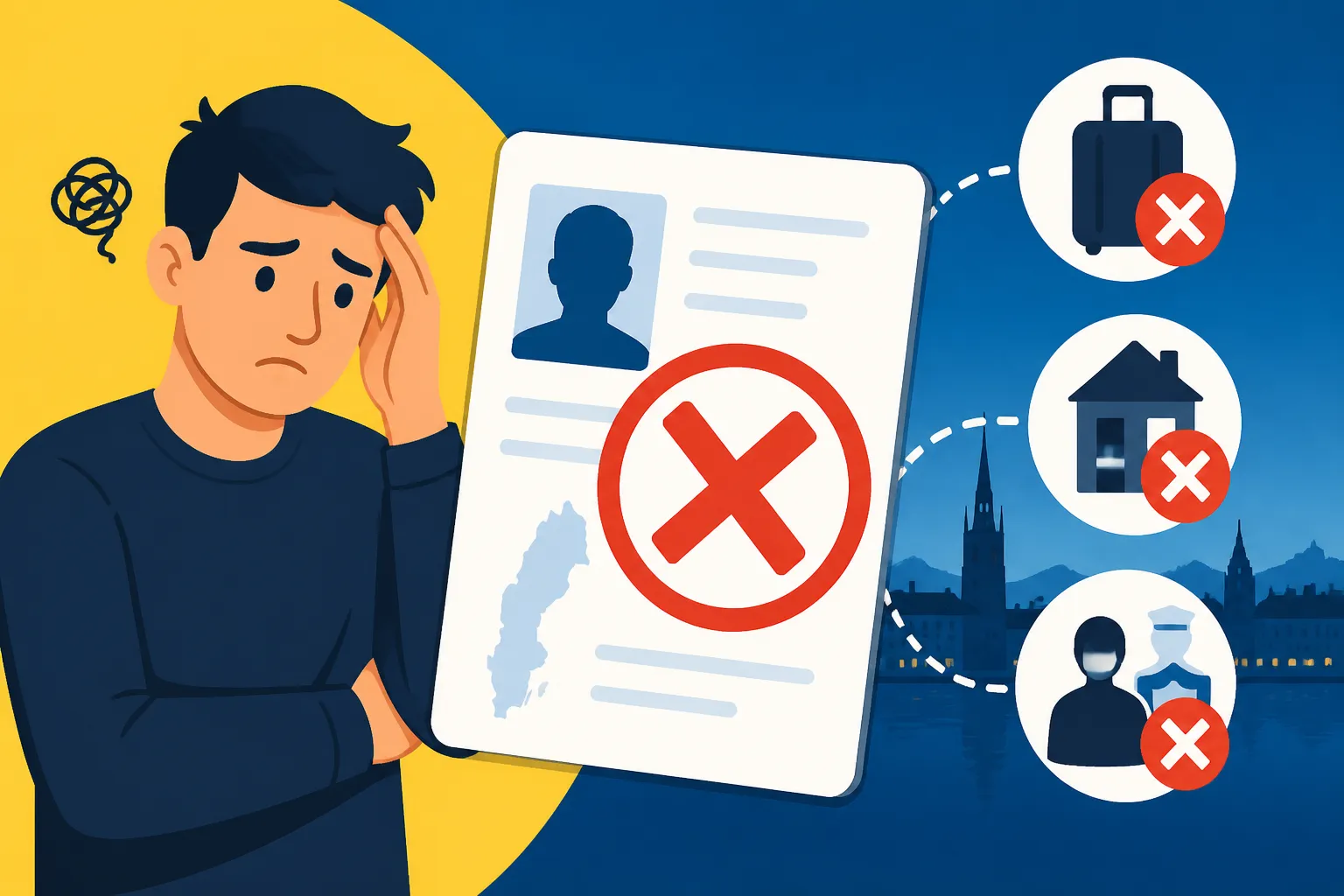
What Happens If Your Swedish Permit Is Refused
Oh, the sinking feeling you get when that envelope from Migrationsverket lands on your doormat, or when you log into your 'My Page' and see a decision that isn't the one you hoped for. A permit refusal in Sweden isn't just a bureaucratic hurdle; it's a punch to the gut, a disruption to your dreams, and for many of us expats, it can feel like your entire world here is suddenly teetering on the edge. You’ve put in the effort, waited patiently (or impatiently, let’s be real), and now this. But don't despair just yet. This guide is here to walk you through exactly what happens when your Swedish permit application is refused, what your immediate next steps should be, and the various paths you can take to try and turn things around.
The Initial Shock and What It Means
That moment you receive the refusal notice is truly awful. It’s natural to feel a mix of anger, confusion, and deep disappointment. Many of us have been there, in some form or another, whether it was for a family permit, a work permit extension, or even a visitor's visa. The key is to take a deep breath and remember that a refusal, while serious, isn't always the absolute end of the road. There are processes in place to address such decisions, but understanding what you're up against is the first critical step.
Understanding the Migrationsverket Decision Letter
Once you've absorbed the initial shock, your most important task is to meticulously read the decision letter itself. This isn't just a piece of paper; it's your blueprint for what comes next. Migrationsverket is legally obligated to provide a clear explanation for their decision. They won't just say "no"; they'll tell you why they said no.
Look for specific points where your application was deemed insufficient. Was it a lack of documentation? Did they question your maintenance funds or your relationship's authenticity? Perhaps the salary requirement wasn't met, or the collective agreement wasn't adhered to for a work permit. The letter will detail the legal grounds for their refusal, referencing specific paragraphs in the Aliens Act (Utlänningslagen) or other relevant legislation. Crucially, the letter will also contain information on how to appeal the decision, including the deadline – usually three weeks from the date you received the decision. This deadline is absolutely sacred; miss it, and your options shrink considerably.
Immediate Implications for Your Stay in Sweden
The immediate consequences of a refusal depend heavily on your current status. If you applied from outside Sweden, the refusal simply means you cannot enter or reside in Sweden on that basis. Your plans are on hold, and you cannot come to Sweden until a new decision or successful appeal.
However, if you are already in Sweden and your permit renewal or initial application was refused, the situation is more complex and potentially more urgent. Generally, if you applied for an extension or a new permit before your current permit expired, you usually have the right to remain in Sweden while your appeal is being processed. This is known as uppehållsrätt (right of stay) during the appeal period. However, this right of stay often does not include the right to work or study if your original permit has expired. This can put you in a very difficult position, as you might need to support yourself without legal employment. For those on an expiring work permit, this can be particularly stressful, as employers may be hesitant to keep you on without a valid right to work.
Your Options After a Refusal
Now that you've processed the "why," it's time to consider the "what now." You generally have two main avenues: appealing the decision or reapplying. Each has its own set of considerations, timelines, and potential outcomes. It’s a strategic choice, and one that should be made carefully.
Appealing the Decision: The Formal Process
If you believe Migrationsverket made a mistake, misinterpreted your information, or if you have new relevant information that wasn't included in your initial application, appealing might be your best bet. The formal process of appealing a decision in Sweden is called an "överklaga." You send your appeal to Migrationsverket first, within the three-week deadline mentioned in your decision letter. They will then review it. If they don't change their decision, they will forward your case to the Migration Court (Migrationsdomstolen) for an independent review. This is where the real legal battle takes place.
Your appeal must clearly state why you believe the decision is incorrect. You need to refer to specific points in Migrationsverket's decision and present your counter-arguments or new evidence. It's not enough to just say "I disagree." You need to build a compelling case based on facts and legal arguments. It's a formal legal process, and it can be quite daunting. For a more detailed walkthrough, you might want to read our guide on Appealing to the Migration Court (Migrationsdomstolen). Remember, the Migration Court judges the case based on the information available at the time of their review, including any new information you submit with your appeal.
Reapplying vs. Appealing: Which Path to Choose?
This is often the trickiest decision. Should you fight the current decision, or start afresh with a new application? The answer depends heavily on the reasons for your refusal and whether your circumstances have changed significantly. If the refusal was due to a simple oversight – for example, you forgot to include a crucial document, or there was a minor administrative error – an appeal with the missing piece of information could be a straightforward solution.
However, if the refusal was based on a fundamental issue, such as not meeting the maintenance requirement, a substantial change in your employment, or questions about the genuineness of a relationship, a reapplication might be more effective. A reapplication allows you to submit a completely new set of documents, correcting past mistakes and demonstrating how your situation now meets the requirements. The downside is that you typically have to pay the application fee again, and the processing time starts from scratch. Additionally, if you reapply while in Sweden and your previous permit has expired, you generally don't have the automatic right to stay or work during the new application's processing, which could force you to leave the country. Our article Can I Reapply After a Refusal in Sweden? goes into more detail on navigating this complex choice.
Seeking Legal Counsel and Expert Help
While you can technically navigate the appeal process yourself, it’s often incredibly complex, especially if your case involves nuanced legal interpretations or substantial evidence. This is where an immigration lawyer or legal representative can become your best friend. They understand the intricacies of Swedish immigration law, know exactly what Migrationsverket and the Migration Courts look for, and can help you build the strongest possible case.
A good lawyer will review your refusal decision, advise you on the likelihood of success for an appeal versus a reapplication, and help you gather and present your evidence effectively. They can draft your appeal letter, represent you in court if necessary, and communicate with the authorities on your behalf, significantly reducing your stress and increasing your chances. Yes, it costs money, but for many, it's an investment in their future in Sweden. Seeking legal help is often the difference between a successful outcome and a final refusal. If you’re considering this, explore how to Get Legal Help to Appeal an Immigration Decision in Sweden?.
Preparing Your Appeal: Building a Stronger Case
Once you've decided to appeal, the real work begins. This is your chance to present your case in a clearer, more robust way than before. It’s about being thorough, precise, and addressing every single point of contention raised in the refusal decision.
Gathering New Evidence and Documentation
The core of a successful appeal lies in presenting new information or clarifying existing information in a way that directly counters Migrationsverket’s reasons for refusal. Simply resubmitting the same documents you sent before, without additional context or explanation, is unlikely to change the outcome. Think critically about why your application was refused and what evidence could directly address that specific concern.
For example, if your work permit was refused due to an unclear job description, get a new, more detailed employment contract or a letter from your employer explicitly stating your duties and the industry’s collective agreement terms. If maintenance funds were an issue for a family permit, provide updated bank statements, proof of new employment for the reference person, or a revised housing contract showing lower rent. If it was a relationship permit refusal, maybe new photos, communication logs, or joint financial documents could help prove the authenticity of your relationship. Every piece of evidence should have a clear purpose: to negate a specific reason for the refusal.
Crafting Your Appeal Letter
Your appeal letter is your formal statement to the Migration Court. It needs to be clear, concise, and legally sound. Start by explicitly stating that you are appealing the decision, referencing the case number and the date of the decision. Then, methodically go through each reason for refusal outlined by Migrationsverket. For each point, state why you believe their assessment was incorrect and provide the supporting evidence.
Use numbered points or clear headings to make it easy for the court to follow your arguments. If you are attaching new documents, refer to them explicitly in your letter (e.g., "See Appendix A: New employment contract"). It’s crucial to maintain a respectful and formal tone, even if you feel frustrated. Focus on facts and legal arguments, not emotional appeals. Remember, this isn't a plea; it's a legal challenge.
The Role of Translation Services
Unless your supporting documents are already in Swedish or English, they must be translated by a certified translator. Migrationsverket and the Migration Courts will not accept documents in other languages without a proper translation. This is not an area to cut corners. A poor translation can lead to misinterpretations that could jeopardize your appeal, reinforcing the initial refusal.
Services like RushTranslate or Translayte specialize in certified translations accepted by official bodies. They ensure that the terminology is accurate and legally correct, removing any ambiguity that could arise from a non-professional translation. While it's an additional cost, it's a necessary one to ensure your evidence is fully understood and given due consideration. Always confirm with the translation service that their translations meet the Swedish authorities' requirements for certification.
What to Expect During the Appeal Process
Once your appeal is submitted, a new phase of waiting begins. This can be just as, if not more, stressful than the initial application waiting period. Knowing what to expect can help you manage your anxiety and stay prepared.
Processing Times and Waiting Game
Let's be brutally honest: the Swedish appeal system is not fast. Once Migrationsverket has received your appeal and decided not to change its initial decision, they forward it to the Migration Court. The court then has its own backlog and processing times, which can vary widely depending on the type of case and the court's current workload. It's not uncommon for appeals to take many months, sometimes even over a year, to be resolved. This extended waiting period can be incredibly difficult, especially if your right to work or study is in limbo.
There's no magic trick to speed it up, though having a lawyer who can follow up on your behalf might give you a slight edge in getting status updates. You can track your case on Migrationsverket's 'My Page' if it's still with them, but once it moves to the court, the tracking mechanism changes. It’s vital to manage your expectations and prepare for a potentially long wait. For more on what to expect, refer to our guide on Understanding Migrationsverket Processing Times and Delays.
Your Rights and Obligations During an Appeal
As mentioned earlier, if you applied for an extension or a new permit before your existing permit expired, you generally have a right to stay in Sweden while your appeal is being processed. However, this right of stay (uppehållsrätt) typically means you can remain in the country, but it doesn't automatically reinstate your right to work or study if your original permit has lapsed. This is a critical distinction many expats misunderstand, leading to serious issues.
If your right to work has expired, continuing to work can be illegal and could negatively impact future applications or even lead to deportation. Always clarify your specific rights with Migrationsverket or a legal expert. If you leave Sweden during this period, there's a risk you might not be allowed back in, especially if your original permit is no longer valid. So, think twice before planning any international travel. The nuances of staying in Sweden while waiting for a decision are covered in more detail in our article Can I Stay in Sweden While Waiting for a Renewal Decision?.
Potential for Oral Hearings or Further Requests
Most appeals are decided based on the written documentation submitted. However, in some cases, the Migration Court may decide that an oral hearing (muntlig förhandling) is necessary to clarify facts or hear testimony directly. This is more common in complex cases, particularly those involving family reunification, asylum, or significant factual disputes.
If an oral hearing is scheduled, you and your legal representative (if you have one) will be called to appear before the court. This is your opportunity to present your case in person and answer questions from the judge. It’s also possible that either Migrationsverket or the Migration Court might send you a request for further information (begäran om komplettering) during the process. You must respond to these requests promptly and thoroughly, providing all the requested documents or explanations. Failing to do so can weaken your case significantly. This is also where an experienced lawyer can be invaluable, preparing you for potential questions or assisting with additional document requests.
If All Appeals Are Exhausted: Moving Forward
Despite your best efforts, sometimes the appeal process concludes with the original refusal being upheld. It's a devastating outcome, but it's important to know what steps to take next to avoid further complications.
Planning Your Departure from Sweden
If your permit refusal is upheld through all levels of appeal (Migrationsverket, Migration Court, and potentially the Migration Court of Appeal), you will be given a specific timeframe to leave Sweden voluntarily. This is usually a few weeks or a month. It’s crucial to respect this deadline. Overstaying your welcome can lead to an expulsion order, a re-entry ban (återreseförbud) to the Schengen area, and significant difficulties for any future attempts to enter or reside in Sweden or other EU countries.
While it's heartbreaking to pack up and leave, doing so gracefully and within the legal framework is essential for keeping your options open down the line. Focus on wrapping up your affairs, notifying relevant authorities (Skatteverket for de-registration, your landlord, bank), and ensuring you have all your important documents. It’s a sad end to a chapter, but it's not necessarily the end of your story with Sweden forever.
Possibilities for Future Applications
Even after a final refusal, a future application to Sweden is not always impossible. The key is to address why your previous application was refused. If your circumstances have changed significantly – you've secured a new job offer that meets all criteria, your financial situation has vastly improved, or your relationship has strengthened with new evidence – you may be able to submit a new application from outside Sweden.
However, if you received a re-entry ban, you will not be able to apply or enter Sweden until that ban has expired. The duration of re-entry bans varies, typically from one to five years, depending on the reasons for expulsion. It’s vital to understand the exact conditions of any ban imposed. Always consult with Migrationsverket or legal counsel regarding the specifics of your situation and whether a new application would even be considered. Sometimes, distance and time, combined with concrete improvements in your situation, can make a difference.
Appeal vs. Reapply: Decision Factors
Here's a quick overview to help you weigh your options:
| Factor | Appeal | Reapply |
|---|---|---|
| Grounds | Migrationsverket error, misinterpretation, or new clarifying evidence. | Significant change in circumstances, new job, new relationship status. |
| Cost | No new application fee, but legal costs if hiring a lawyer. | New application fee required. |
| Timeline | Often longer, as it goes through court system after Migrationsverket. | Starts from scratch; generally same processing time as initial application. |
| Right to Stay | Often maintains right to stay during processing (if applied before expiry). | Typically does not grant right to stay/work during processing if previous permit expired. |
| Evidence | Must directly address refusal reasons; new, relevant info is key. | Can submit entirely new, comprehensive documentation. |
| Risk | If unsuccessful, leads to final refusal and potential departure. | If unsuccessful, leads to new refusal; might expose new issues. |
| Complexity | Legal arguments required; often benefits from legal expertise. | Administrative process, but requires careful preparation. |
Disclaimer
Please remember that this guide provides general information based on current Swedish immigration laws and common experiences of expats. Immigration laws are complex, subject to change, and decisions are made on a case-by-case basis. While I strive to provide accurate and helpful advice, I am not a legal professional. Always consult with Migrationsverket directly or seek advice from a qualified immigration lawyer for your specific situation. This information should not be taken as legal advice.