Appealing an Immigration Decision in Sweden: The Migration Courts
Receiving a negative decision from Migrationsverket can feel like a punch to the gut. All the hopes, plans, and hard work you poured into your life in Sweden suddenly feel threatened by a cold, bureaucratic letter. It's confusing, it's disheartening, and often, it's filled with legal jargon that leaves you feeling even more lost. But an initial refusal isn't always the end of the road. This comprehensive guide is here to walk you through the often-complex process of appealing an immigration decision in Sweden, explaining the Migration Courts, your rights, and how to navigate this challenging system.
The Initial Shock: Understanding Your Migrationsverket Decision
That envelope. You know the one. The moment it lands in your mailbox, your heart sinks. Then you open it, and there it is: a decision (ett beslut) stating that your application has been rejected. It’s a moment of profound disappointment, often accompanied by confusion, anger, and fear about what comes next. Many expats go through this, and the emotional toll is immense. But before you let despair take over, it's crucial to understand what that decision letter actually says.
Reading the Decision Letter (Beslut): What to Look For
Migrationsverket's decision letters are, by necessity, formal legal documents, and they are almost always in Swedish. This alone can be a massive hurdle if you're still navigating the language. Many decisions will start with an "avslag" – a rejection – of your application. But don't just stop there. The real substance, the meat of the matter, lies in the pages that follow.
You need to meticulously go through every section. Look for the reference number (ärendenummer), the date of the decision, and most importantly, the reasons (skäl) for the refusal. This is where Migrationsverket explains why they denied your permit. Did they find your salary insufficient for a work permit extension? Did they doubt the authenticity of your relationship for a family reunification permit? Were your study funds deemed inadequate? Every single reason listed is a point you will need to address if you choose to appeal.
Equally critical is the section detailing your right to appeal (överklagandehänvisning). This will explicitly state that you have the right to appeal the decision, typically within three weeks from the date you received the decision. Not the date it was written, but the date it arrived in your hands. This deadline is non-negotiable and absolute, so mark it down immediately. This section will also tell you where to send your appeal – always back to Migrationsverket first, even though you're appealing against their decision. They need to process it.
Think of it like this: the decision isn't just a "no"; it's a detailed report on why they said no, based on the information they had at the time. The decision letter clearly laid out their calculation, which he could then challenge with his correct payslips. Without reading the "skäl" closely, he would have just seen "avslag" and perhaps given up, not realising it was a simple, correctable error.
The Immediate Aftermath: Don't Panic, Act Strategically
It's natural to feel overwhelmed, even angry, when you get a refusal. You've poured your life into building something here, and now it feels like it's being ripped away. I've witnessed this crushing disappointment time and again. However, in this critical window, emotion needs to take a backseat to strategy.
The absolute first step, after you've absorbed the initial shock, is to fully understand the three-week deadline. Seriously, write it on your calendar, set phone reminders, tell a trusted friend. Missing this deadline means you forfeit your right to appeal, and then things become much, much harder, often leading to a requirement to leave Sweden.
Next, resist the urge to immediately call Migrationsverket in a fit of frustration. While you can sometimes get clarifications, the person on the phone usually cannot change the decision. Your energy is best spent dissecting the letter. Get a pen and paper. Translate every word if you need to. Identify every single reason for rejection. This is your battle map.
For many, the first instinct is to panic and assume the worst. But by understanding the specific grounds for refusal, you can begin to formulate a targeted response. Perhaps Migrationsverket overlooked a crucial document, or perhaps you can now provide further evidence to clarify a point they found ambiguous. For example, if a student permit was denied due to insufficient funds, the immediate, strategic action is to gather updated bank statements or a letter from a sponsor, explicitly showing the required amount. This is a critical period for gathering your thoughts and preparing to act decisively.
Who Can Appeal and on What Grounds?
Not every decision can be appealed, and not just anyone can initiate an appeal. There are specific rules about who has the legal standing to challenge a Migrationsverket decision and, more importantly, why they can challenge it. This isn't about simply expressing dissatisfaction; it's about identifying tangible legal or factual errors.
Eligibility to Appeal: Who Has Standing?
Generally, only the person whose application has been refused has the legal right to appeal that decision. This is referred to as having "standing" (talerätt). For instance, if you applied for a work permit and it was denied, you are the one who can appeal.
Things can get a little nuanced in family reunification cases. If you're in Sweden and your partner abroad applied to join you, and their application was rejected, it's typically your partner (the applicant) who appeals, not you (the reference person). However, you, as the reference person, are often considered a party in the case, and your input and assistance in preparing the appeal are crucial, especially as you may have the necessary information or access to legal counsel in Sweden. There are also specific rules for minors, where a legal guardian or appointed representative would handle the appeal on their behalf.
It's important to know that while major decisions like a refusal of a residence permit are almost always appealable, some minor administrative decisions or preliminary assessments by Migrationsverket might not carry the same right. Always check the "överklagandehänvisning" in the decision letter itself to confirm your right to appeal. If it’s there, you have standing.
Grounds for Appeal: Challenging the Migrationsverket's Reasoning
This is where the rubber meets the road. You can't just tell the Migration Court that you "disagree" with Migrationsverket. You need to present legal grounds for why their decision should be overturned. This means pinpointing exactly where you believe Migrationsverket went wrong.
Common grounds for appeal include:
- Misinterpretation of Facts: Migrationsverket misunderstood or misapplied the facts of your case. For example, they might have overlooked a document, miscalculated figures (like salary or duration of stay), or failed to properly assess the evidence you provided.
- Failure to Consider Crucial Evidence: Perhaps you submitted evidence that, for whatever reason, was not given due weight or was outright ignored by Migrationsverket in their assessment. Your appeal can highlight this.
- Incorrect Application of Law: This is a more complex argument, but it means you believe Migrationsverket applied the wrong legal provision, misinterpreted a law, or failed to consider relevant legal precedents. For instance, if new interpretations of a specific visa category have emerged, and Migrationsverket applied an older, stricter view.
- Procedural Error: Migrationsverket might have made a mistake in their process, such as failing to properly inform you of something, not giving you a chance to respond to new information, or taking an unreasonably long time without valid reason.
Let's look at some concrete scenarios. If your work permit extension was rejected because Migrationsverket deemed your employment terms not to be "market rate," but you have a collective agreement (kollektivavtal) or a statement from your union confirming your salary is standard for your position and industry, that's powerful new evidence directly challenging their finding. This could be where mentioning a service like RushTranslate or Translayte comes in handy if those union agreements or supporting letters are not in Swedish or English. You would need a certified translation to ensure they are accepted as valid evidence by the court.
Or perhaps your family reunification permit was denied because Migrationsverket doubted the authenticity of your relationship. In your appeal, you could provide more detailed correspondence, flight tickets showing visits, joint photos over time, or even statements from friends and family testifying to your relationship's genuine nature, all of which directly address their specific concerns. The key is to directly counter each reason they gave for rejection, with specific facts and, if possible, new evidence that strengthens your case. Remember, this isn't just a re-submission; it's an opportunity to provide a more robust and legally informed argument.
Navigating the Migration Courts: The System Explained
Once your appeal leaves Migrationsverket, it enters the judicial system, specifically the administrative courts. This is where cases are reviewed independently, away from the initial decision-maker. Understanding this structure is key to appreciating how your appeal will be handled and where it can go.
The Three-Tiered System: Migration Court, Migration Court of Appeal
Sweden's immigration judicial system is designed with a clear hierarchy, ensuring that decisions can be thoroughly reviewed.
-
Migrationsverket: This is where your application starts, and where the initial decision, whether positive or negative, is made. They are the administrative authority, not a court.
-
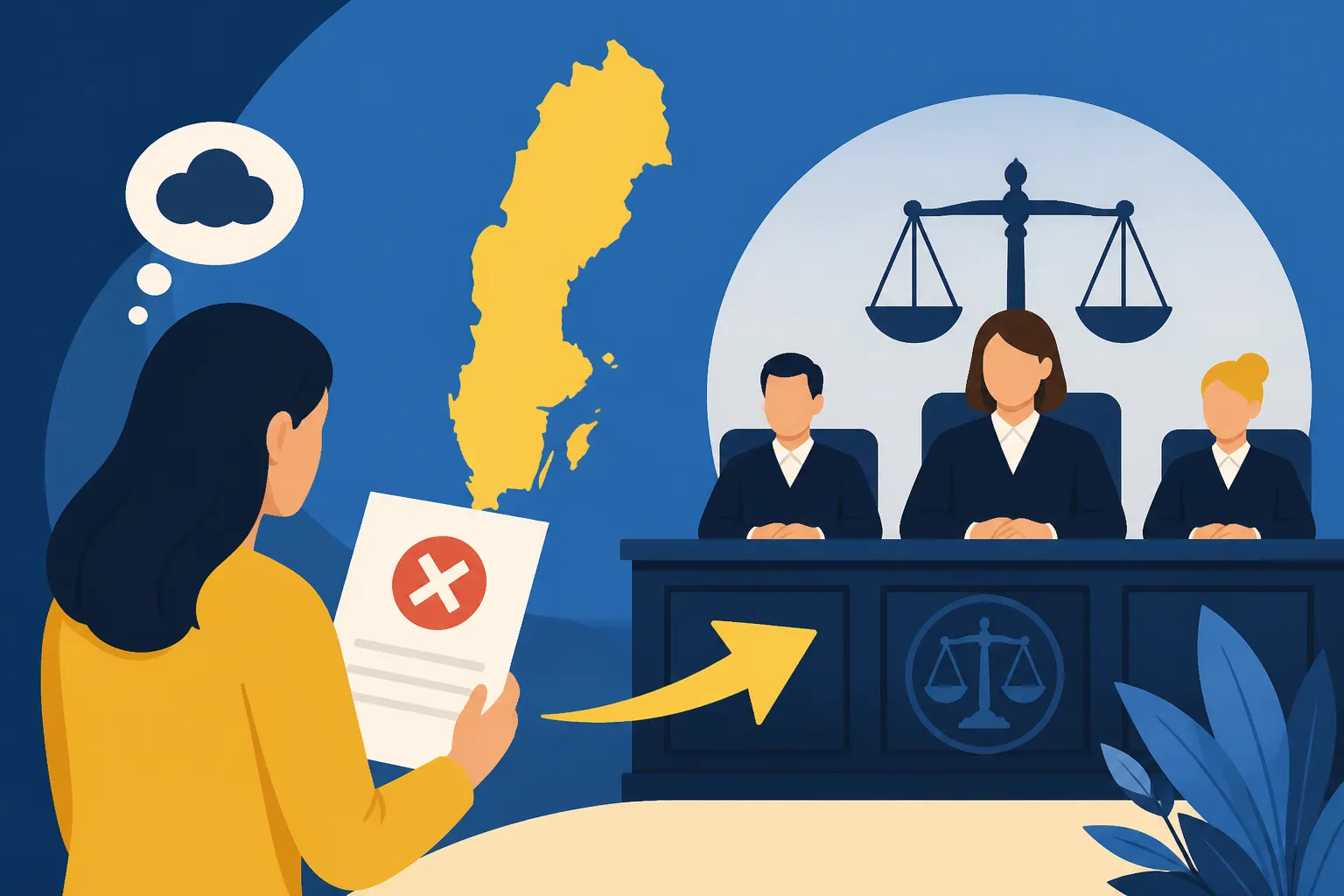
Migration Court (Migrationsdomstolen): If Migrationsverket rejects your application and you appeal, your case will first go to a Migration Court. These courts are not standalone entities; they are administrative courts (Förvaltningsrätt) that also handle migration cases. There are four such courts in Sweden, located in Stockholm, Gothenburg, Malmö, and Luleå. The specific court your case goes to depends on where your Migrationsverket case was handled or, in some situations, where you are registered as residing. This court acts as the first instance of appeal, where your case gets a fresh look.
-
Migration Court of Appeal (Migrationsöverdomstolen): If the Migration Court also rejects your appeal, you have one final avenue: the Migration Court of Appeal. This is the highest instance for migration cases in Sweden. It's integrated into the Administrative Court of Appeal in Stockholm (Kammarrätten i Stockholm). Critically, you do not have an automatic right to have your case heard here. You must first be granted "leave to appeal" (prövningstillstånd), which is a high bar, meaning only cases with significant legal implications or clear errors from lower courts are typically heard.
It's vital to remember that you don't send your appeal directly to the Migration Court. You submit your appeal letter, with all supporting documents, back to Migrationsverket first. They will then review it (and potentially reconsider their own decision, as we'll discuss) before forwarding it to the appropriate Migration Court if they stick to their initial refusal. This process can be quite slow, adding to the already stressful waiting period for many. For more on the general pace of these things, you might find our guide on Understanding Migrationsverket Processing Times and Delays helpful.
The Role of the Migration Court: A De Novo Review?
When your case lands at the Migration Court, they don't just check if Migrationsverket made a mistake. This is an important distinction. The Migration Court conducts what's essentially a new review of the entire case. This means they will examine all the evidence that was submitted to Migrationsverket, as well as any new evidence you included in your appeal. They're not just correcting errors; they're re-evaluating the merits of your application from the ground up, based on current laws and precedents.
This means the court will look at all aspects of your application, not exclusively the specific points you highlighted in your appeal. However, your appeal letter is crucial because it directs the court's attention to what you believe are the key issues and errors in Migrationsverket's decision.
The Migration Court aims for fairness and objectivity. Cases are heard by a panel that typically includes one or more legally qualified judges and several lay judges (nämndemän). The lay judges are ordinary citizens appointed for a period, bringing a public perspective to legal proceedings, similar to a jury in some other countries, but they vote on the outcome alongside the professional judges.
For example, imagine a scenario where a work permit applicant's permit was denied because Migrationsverket questioned the terms of their health insurance. In the appeal, the applicant provides a detailed insurance certificate and policy summary, clearly demonstrating comprehensive coverage. The Migration Court wouldn't just verify the insurance; they would look at the entire application again, from the employment contract to the maintenance requirement, to ensure all aspects align with the legal requirements. This fresh perspective can be a significant advantage, as it allows for a more comprehensive reassessment of your situation.
Crafting Your Appeal (Överklagande): A Step-by-Step Guide
Writing an appeal can feel like an intimidating legal battle, but it’s essentially about presenting your case clearly, logically, and with evidence. Think of it as your opportunity to tell your side of the story, backed by facts, directly to a neutral party – the Migration Court.
Essential Components of a Strong Appeal Letter
Your appeal (överklagande) needs to be well-structured and comprehensive. Here’s what you absolutely must include to make it effective:
- Identification of the Decision: Start by clearly stating which decision you are appealing. Include Migrationsverket's reference number (ärendenummer), the date of the decision, and your full name and personal identification number (personnummer) if you have one. This ensures clarity right from the start.
- Statement of Appeal: Explicitly state that you are appealing the decision. A phrase like "Jag överklagar Migrationsverkets beslut av den [datum] i ärende [ärendenummer]" (I appeal Migrationsverket's decision of [date] in case [reference number]) is standard.
- Grounds for Appeal: This is the core of your letter. Systematically address each reason for refusal given by Migrationsverket. For each point, explain why you believe their assessment was incorrect, incomplete, or based on faulty information.
- Be Specific: Don't just say, "My salary is sufficient." Say, "Migrationsverket states my salary is insufficient, but based on collective agreement X and my payslips from Y, my salary of Z SEK per month meets and exceeds the market wage for my position."
- Reference Evidence: When making a claim, always refer to the specific evidence you are enclosing. "As shown in Enclosure 1 (my employment contract)…"
- New Evidence: If you have new documents or information that directly addresses Migrationsverket's reasons for refusal, explain what they are and why they are relevant. This is your chance to fill any gaps or correct any misunderstandings.
- What You Want the Court to Do (Yrkar): Clearly state your request to the court. For example, "Jag yrkar att Migrationsdomstolen upphäver Migrationsverkets beslut och bifaller min ansökan om [typ av uppehållstillstånd]" (I request that the Migration Court overturns Migrationsverket's decision and grants my application for [type of residence permit]).
- Contact Information: Include your full name, mailing address, email, and phone number so the court can communicate with you.
- Signature and Date: Sign and date your letter.
The tone of your letter should be factual, objective, and respectful. Avoid emotional language, accusations, or complaints about the general system. Stick to the facts, legal arguments, and clear references to evidence. For example, if your application for Residence Permits in Sweden: Types, Requirements, and How to Apply was denied because of a missing document, your appeal should clearly state that the document is now attached and explain its relevance, rather than expressing frustration about the initial oversight.
Gathering Supporting Documentation and Translations
The strength of your appeal lies in your evidence. Gather every document that supports your claims and directly counters Migrationsverket's reasons for denial.
- Financial Documents: Bank statements, payslips, employment contracts, tax declarations. These are crucial, especially for Work Permits in Sweden: Categories, Salary Rules, and How to Apply or Studying in Sweden: A Complete Guide for International Students (2027).
- Relationship Documents: For Family Reunification in Sweden: Bringing Your Loved Ones, this could include flight tickets, photos, communication records, joint leases, birth certificates, marriage certificates, or even statements from mutual friends.
- Academic Documents: For students, this means transcripts, enrollment certificates, and proof of funds.
- Medical Certificates: If a health condition is relevant to your case.
- Any Document Referenced in Your Appeal: Make sure every piece of evidence you mention in your letter is actually attached.
Translations: This is a crucial point. If any of your supporting documents are not in Swedish or English, you will almost certainly need certified translations. Simply providing a Google Translate version won't cut it. A certified translator is a professional whose translations are legally recognised. This is where services like RushTranslate or Translayte become invaluable. They offer certified translation services that ensure your documents meet legal requirements for authorities like Migrationsverket and the Migration Courts. I recall a friend whose marriage certificate, vital for her Family Reunification in Sweden: Bringing Your Loved Ones application, was rejected because her own translation wasn't certified. Don't make that mistake. Obtain official, certified translations for all non-Swedish/English documents.
Make sure all your documents are legible. While you will submit copies with your appeal, keep the originals safe and readily available, as the court may request to see them at a later stage. Only include documents that are truly relevant to your case; don't overwhelm the court with unnecessary papers.
The Appeal Process: What Happens After You Submit?
You’ve carefully crafted your appeal, gathered your evidence, and sent it off. Now what? The process doesn’t stop there. Your appeal will go through several stages before a decision is made, and it’s important to understand each step.
Migrationsverket's Initial Review and Forwarding
Even though you are appealing against Migrationsverket's decision, you still send your appeal letter directly back to them. This might seem counterintuitive, but it’s standard procedure.
When Migrationsverket receives your appeal, they have two main options:
- Reconsideration (Omprövning): This is the best-case scenario. Migrationsverket will first review your appeal and any new evidence you've submitted. If they find that your arguments or new information warrant a different outcome, they have the power to change their own decision. They might decide that, actually, they made a mistake, or that the new evidence clearly addresses their initial concerns. This is relatively rare, especially for complex cases, but it does happen. If they choose to reconsider and grant your application, your appeal process ends there, successfully.
- Forwarding (Överlämning): If Migrationsverket stands by their original decision, they will then forward your entire case file, including your original application, their decision, and your appeal letter with all its attachments, to the relevant Migration Court. They will also typically write a formal statement (yttrande), reiterating their reasons for the initial refusal and commenting on your appeal. This statement is effectively their defence of their initial decision.
You will be notified by Migrationsverket if they decide to forward your case to the Migration Court. From this point onwards, the court takes over the handling of your appeal.
Court Proceedings: Written Process and Potential Hearings
Once your case reaches the Migration Court, the process primarily takes place in writing. The court will assign a case number and a judge or legal officer to review it.
The typical flow is as follows:
- Initial Review: The court will review your appeal and the case file received from Migrationsverket.
- Request for Comments: The court will usually send Migrationsverket's statement (yttrande) to you, giving you an opportunity to comment on what Migrationsverket has said in response to your appeal. This is your chance to directly counter any points Migrationsverket raises in their defence.
- Further Exchange: There might be several rounds of written exchange between you, Migrationsverket, and potentially your legal counsel, as the court seeks to gather all necessary information and clarify any ambiguities.
- Decision: The court will eventually make a decision based on all the written submissions.
Oral Hearings (Muntlig förhandling): While the vast majority of appeals are decided solely on written documentation, the Migration Court can decide to hold an oral hearing. This is more common in complex asylum cases or situations where the court feels it needs to hear testimony directly from you or witnesses to clarify facts that are central to the case. For most residence permit appeals (like work, student, or family permits), oral hearings are quite rare.
If the court decides to hold a hearing, you will be notified well in advance, and it will take place at one of the four Migration Courts (Stockholm, Gothenburg, Malmö, or Luleå). You (and your legal representative, if you have one) would be expected to attend. This would be your opportunity to explain your case verbally and answer questions from the judges.
Once the court has gathered all necessary information, whether through written submissions or a hearing, they will make their decision. This decision will then be sent to you (and your legal representative). This waiting period can be incredibly stressful, and patience is a virtue, albeit a difficult one to maintain. For context on timelines, you might find our article on What If My Swedish Permit Application Is Delayed in Sweden? to be relevant.
The Migration Court of Appeal and Beyond
What happens if the Migration Court, after reviewing your case, still upholds Migrationsverket's initial decision? It's another blow, no doubt. But there might be one final step, though it comes with a significantly higher hurdle.
Seeking Leave to Appeal (Prövningstillstånd) to the Higher Court
If the Migration Court rejects your appeal, you have the right to appeal this decision to the Migration Court of Appeal (Migrationsöverdomstolen). However, this is not an automatic right to have your case heard. You need "prövningstillstånd" – leave to appeal. This is a critical distinction that many newcomers find frustrating. The Migration Court of Appeal isn't there to simply re-evaluate every case; it serves a higher purpose.
The Migration Court of Appeal will only grant leave to appeal in very specific circumstances. The most common grounds are:
- Precedent (Prejudikatskäl): The case raises a legal question that needs clarification or interpretation, and a decision from the Migration Court of Appeal would provide important guidance for how similar cases should be handled in the future. Essentially, your case could help set a precedent for others.
- Serious Procedural Error (Grova rättegångsfel): The Migration Court (the lower court) made a significant error in its handling of your case that could have affected the outcome. This is about how the case was conducted, not just the outcome itself.
- Obvious Error (Uppenbara fel): The Migration Court's decision is clearly wrong, based on the facts or the law, and needs to be corrected. This is a very high bar; it's not enough that you disagree with the decision.
Most applications for leave to appeal are rejected because they don't meet these stringent criteria. The Migration Court of Appeal is focused on legal principles and establishing precedents, not on individual case merits unless there's a clear, substantial error.
Your appeal to the Migration Court of Appeal must therefore focus on demonstrating why your case meets one of these grounds for leave to appeal, rather than simply reiterating your arguments from the lower court. This requires a deep understanding of migration law and legal reasoning, making legal counsel almost essential at this stage.
What Happens After the Final Decision?
Once the Migration Court of Appeal has made a decision – whether to grant or deny leave to appeal, or to hear and decide the case – that decision is final and legally binding. There are no further appeals within the Swedish legal system.
If your appeal is ultimately rejected, and all legal avenues have been exhausted, you will be required to leave Sweden. Migrationsverket will issue a decision for refusal of entry (avvisning) or expulsion (utvisning), setting a timeframe for your departure. Failing to leave within this timeframe can have serious consequences, including re-entry bans to the Schengen area.
It's important to understand that a negative final decision can also impact any future applications you might consider. While it doesn't necessarily bar you from applying again, the reasons for the previous refusal will likely be scrutinised even more closely. A new application would typically require significantly changed circumstances or new, compelling grounds that address the previous refusal. Simply reapplying with the same information is unlikely to yield a different result.
This is why understanding the specific reasons for denial throughout the process is paramount. It informs not only your appeal strategy but also any future plans. Should you choose to try again, engaging with our guide on Where Do I Get Reliable Help with Swedish Immigration Questions? would be a wise step to ensure you navigate the complexities with expert support.
Here’s a simplified look at how the different instances interact:
| Aspect | Migrationsverket (Administrative Authority) | Migration Court (Migrationsdomstolen) | Migration Court of Appeal (Migrationsöverdomstolen) |
|---|---|---|---|
| Role | First decision-maker on applications | First instance of judicial appeal | Highest instance of judicial appeal |
| Decision Type | Grants or rejects permit applications | Reviews Migrationsverket's decision | Reviews Migration Court's decision |
| Appeal Mechanism | Application submitted to Migrationsverket | Appeal submitted to Migrationsverket, forwarded to Court | Application for "leave to appeal" to this Court |
| Automatic Right to Be Heard | N/A | Yes | No, requires "prövningstillstånd" |
| Focus | Applying current laws to individual cases | Full review of the case (facts & law) | Establishing legal precedents; correcting serious errors |
| Typical Outcome | Permit granted/rejected | Upholds/overturns Migrationsverket's decision | Grants/denies leave; Upholds/overturns lower court's decision |
The Waiting Game and Legal Assistance
After the intensity of preparing and submitting your appeal, you enter a period that is often the most challenging for applicants: the waiting game. And given the legal complexities, understanding when and why to seek professional help is vital.
Processing Times and Managing Expectations
One of the most common frustrations for anyone dealing with the Swedish immigration system, whether it’s an initial application or an appeal, is the unpredictable and often lengthy processing times. After your appeal has been forwarded to the Migration Court, it's not uncommon for it to take several months, or even over a year, before a decision is rendered.
These times can vary significantly depending on:
- The specific Migration Court: Some courts might have a higher caseload than others.
- The complexity of your case: More straightforward cases might be resolved quicker.
- The volume of appeals: Peak periods can lead to longer waits.
- The need for further documentation or comments: If the court needs more information from you or Migrationsverket, this will add to the timeline.
During this period, communication from the court might be sporadic. You might receive letters asking for further comments or acknowledging receipt of documents, but often there are long stretches of silence. This lack of active updates can be incredibly stressful, leading to anxiety and uncertainty about your future in Sweden.
It's crucial to manage your expectations and cultivate patience, difficult as that may be. While you cannot significantly speed up the process, you can ensure that you respond promptly to any requests from the court for information or comments. Our guide titled Understanding Migrationsverket Processing Times and Delays goes into more detail about how these delays can impact your life and what limited actions you can take.
The Value of Legal Counsel
While you absolutely have the right to handle your appeal yourself, engaging legal counsel can significantly improve your chances of a successful outcome. Navigating the nuances of Swedish migration law, understanding precedents, and effectively challenging Migrationsverket's reasoning requires specialized knowledge that most individuals don't possess.
A lawyer specializing in migration law (often called a migrationsrättsjurist or advokat) can:
- Interpret Legal Documents: Help you fully understand Migrationsverket's decision and the court's communications, especially if they are in Swedish and use legal terminology.
- Identify Strong Legal Grounds: They can pinpoint the most effective legal arguments to challenge the decision, drawing on relevant laws, regulations, and case precedents that you might not be aware of.
- Craft Compelling Arguments: Lawyers are skilled at writing clear, concise, and persuasive legal submissions, ensuring all necessary points are covered and presented in a way that resonates with the court.
- Gather and Present Evidence: They can advise you on what specific documentation is needed and how to present it most effectively. This is where the need for certified translations, possibly through RushTranslate or Translayte, becomes clear, and a lawyer can guide you on which documents need this.
- Represent You: A lawyer can represent you in all communications with the court and, if an oral hearing is called, represent you in person.
- Manage Expectations and Stress: Having a professional handle the legal heavy lifting can alleviate immense stress and provide realistic expectations about the possible outcomes and timelines.
Cost Considerations: Legal assistance can be expensive. However, in certain cases, especially if you have a low income, you might be eligible for legal aid (rättshjälp) from the state. This typically involves a partial contribution from you, with the state covering the rest. Your lawyer can advise you on whether you qualify. Otherwise, you will need to cover the legal fees privately.
Finding a reputable lawyer is key. You can search through the Swedish Bar Association (Advokatsamfundet) or seek recommendations from expat communities or other support networks. Choosing someone with specific experience in migration law is crucial. Our guide on Where Do I Get Reliable Help with Swedish Immigration Questions? provides further avenues for finding appropriate assistance. The investment in legal expertise often pays off, providing peace of mind and significantly increasing your chances of successfully challenging a negative decision.
Disclaimer
The information provided in this guide is for general informational purposes only and does not constitute legal advice. While we strive to provide accurate and up-to-date information, immigration laws and procedures in Sweden can change rapidly and are subject to individual circumstances. Always consult with a qualified legal professional or Migrationsverket for advice tailored to your specific situation.