Residence Permits in Sweden: Types, Requirements, and How to Apply
Oh, trying to wrap your head around Swedish residence permits? Believe me, I've been there, staring at the Migrationsverket website with my eyes glazing over. It feels like you need a permit just to understand the permit system! The good news is, while the process can feel like navigating a labyrinth designed by a particularly detail-oriented Viking, it’s entirely doable. This guide will cut through the jargon and give you a realistic, empathetic rundown of the various types of residence permits, their requirements, and how to actually apply for them so you can secure your place in this beautiful, bureaucratic land.
Understanding the Foundation: What is a Residence Permit in Sweden?
When you dream of living in Sweden, whether it's for work, study, or family, the residence permit is your golden ticket. It's the official permission from the Swedish government, managed by the Swedish Migration Agency (Migrationsverket), that allows you to live here for longer than a short tourist visit. Without it, your Swedish dream remains just that – a dream. It's the first major hurdle for many, and understanding its nuances is absolutely key to a smooth transition.
Permit vs. Visa: Clearing Up the Confusion
Let's clear up a common misunderstanding right off the bat: the difference between a visa and a residence permit. Many newcomers use these terms interchangeably, but they are distinct, and getting them confused can lead to significant headaches. A visa, specifically a Schengen visa, is typically for short-term stays, usually up to 90 days within any 180-day period, for tourism, business trips, or visiting family. It doesn't grant you the right to live, work, or study long-term in Sweden. You generally apply for a Schengen visa at a Swedish embassy or consulate in your home country if you're from a visa-required nation.
A residence permit, on the other hand, is for stays longer than 90 days and explicitly grants you the right to live in Sweden for a specific purpose – be it work, study, or family. It's the document that signifies your intent to make Sweden your temporary or, eventually, permanent home. When you apply for a residence permit, you're usually applying from outside Sweden, and once granted, you'll receive a physical card (the UT-kort) upon arrival or after a biometrics appointment. This distinction is critical because arriving on a tourist visa with the intent to stay and convert it to a residence permit is generally not allowed and can put you in a very tricky situation with Migrationsverket.
The Importance of the Personnummer and Folkbokföring
Once you secure your residence permit and move to Sweden, your next big quest will be the mythical Personnummer. This is your personal identity number, similar to a social security number, and it is absolutely central to almost every aspect of life in Sweden. Without it, you’ll find it incredibly difficult, if not impossible, to open a bank account, get a phone subscription, register with a vårdcentral (health centre), access benefits, or even subscribe to a library. It’s the key to unlocking Swedish society.
Your residence permit is the prerequisite for applying for a Personnummer at Skatteverket (the Swedish Tax Agency). They need to see that you have a legal right to reside in Sweden for at least one year. This is tied to your "folkbokföring," or population registration. Being folkbokförd means you are officially registered as living in Sweden and your address is on record. It’s a vital step for accessing public services and officially becoming a resident. Many expats experience a frustrating catch-22: you often need a Personnummer to get things done, but you need to be settled for a while (and have your residence permit sorted) to get a Personnummer. It’s a classic Swedish bureaucratic dance, but the residence permit is always the first step on that dance floor. For more details, you can explore guides like how to get a Personnummer after moving to Sweden or the comprehensive guide to Getting Your Personnummer: The Gateway to Swedish Healthcare.
Types of Residence Permits: Finding Your Path to Sweden
Sweden offers various types of residence permits, each tailored to a specific purpose. Understanding which one applies to your situation is the first crucial step in navigating the application process. It’s not a one-size-fits-all approach, and the requirements can differ significantly depending on your reason for moving.
Work Permits: Your Professional Journey
If you're eyeing Sweden for its thriving job market or specific industry opportunities, a work permit is likely your route. The primary requirement here is a valid job offer from a Swedish employer. This isn't just any job offer; it must meet several criteria set by Migrationsverket. First, the job must have been advertised within the EU/EEA for at least ten days, demonstrating that a suitable candidate couldn't be found locally. Your employer also needs to offer you terms of employment that are at least equivalent to those set by Swedish collective agreements (kollektivavtal) in that industry, or what is customary for the profession or industry. This includes salary, working conditions, and insurance.
Crucially, the salary threshold is a big one. For 2026, the specific amount will be updated, but generally, it needs to be high enough to allow you to support yourself, and it's a significant figure – often around 80% of the median salary for Sweden, but can be higher depending on the specific job. Your employer must initiate the application, and they often consult with relevant trade unions (fackförbund) to ensure the terms are fair. There are also specific permits for certain professions or circumstances, such as ICT (Intra-Company Transfer) permits for those transferring within a multinational company, or for researchers. It’s a complex area, and employers need to be very diligent. For a deeper dive into this, check out our guide on Working in Sweden as a Foreigner: The Complete Guide (2027).
Study Permits: Education in the Land of Innovation
Sweden's universities are globally renowned, attracting students from all corners of the world. If you've been accepted into a higher education program lasting longer than three months, you'll need a study permit. The eligibility criteria revolve around proving your admission to an accredited Swedish university or university college. You'll also need to demonstrate that you can financially support yourself throughout your studies, without relying on work in Sweden. The specific amount required changes annually, but it's a substantial sum per month (e.g., around 9,450 SEK per month for 10 months of study, for a total of 94,500 SEK for one academic year). This usually means providing bank statements or scholarship confirmations.
Another vital component is comprehensive sickness insurance. Unless you're an EU/EEA citizen, you must have full coverage for healthcare in Sweden, at least until you get your Personnummer and become part of the public health system (which happens if your study period is one year or longer). Students are generally allowed to work during their studies, but this income cannot be part of the proof of funds for your initial permit application. The application process usually involves applying online through Migrationsverket's portal, after you've been admitted to your program via Universityadmissions.se. More details on this can be found in Studying in Sweden: A Complete Guide for International Students (2027).
Family Reunification Permits: Bringing Loved Ones Together
One of the most emotionally charged categories, family reunification permits are for individuals who want to join a family member already living in Sweden. This typically applies to spouses, registered partners (sambo), and children under 18. The person you are joining in Sweden (the "reference person") must either be a Swedish citizen, have a permanent residence permit, or have a time-limited residence permit for work, study, or family. The requirements here are particularly stringent because they involve proving the genuine nature of your relationship and, crucially, that the reference person in Sweden can support you financially and provide adequate housing.
This is known as the "maintenance requirement" (försörjningskravet). The reference person must show they have a large enough income after tax to support themselves and the family members coming to Sweden, as well as decent housing of a certain size. These requirements aim to ensure that newcomers don't become a burden on the Swedish welfare system and have a stable home environment. It's often where many families encounter significant challenges, with long processing times and strict documentation demands. Migrationsverket scrutinizes these applications closely to prevent forced marriages and ensure the relationship is genuine. For a detailed exploration, refer to our guide on Family Reunification in Sweden: Bringing Your Loved Ones.
EU/EEA Citizens: The Right of Residence
If you're a citizen of an EU/EEA country or Switzerland, the rules are thankfully much simpler. You don't actually need a residence permit to live and work in Sweden. Instead, you have a "right of residence" (uppehållsrätt) based on EU law. This right is established if you are working, self-employed, studying, have sufficient funds to support yourself, or are a family member of someone who meets these conditions. While you don't apply for a permit, you do need to register your right of residence with Skatteverket once you're in Sweden and plan to stay for more than a year. This registration is essential for getting your Personnummer and accessing public services.
Even though it’s less bureaucratic, you still need to prove your basis for residence to Skatteverket – for example, with an employment contract, university acceptance letter, or bank statements. It’s not a rubber stamp, and Skatteverket will assess if you meet the conditions. For our British friends, post-Brexit, the rules changed significantly. While those who lived in Sweden before December 31, 2020, could apply for a special residence status, new arrivals from the UK now typically need to apply for a standard work or study permit, just like any other non-EU citizen. To understand the specifics for EU/EEA citizens, read our article on How EU/EEA Citizens Register Their Right of Residence in Sweden.
General Requirements for All Residence Permit Applicants
While the specific documentation and criteria vary by permit type, there are several foundational requirements that almost all applicants for a residence permit in Sweden must meet. Think of these as the universal truths in the Migrationsverket universe – neglect them at your peril!
Valid Passport and Identity Documentation
This might sound obvious, but it's astonishing how many applications hit a snag due to passport issues. Your passport is your primary form of identification and must be valid for the entire period you intend to stay in Sweden, and often beyond. Many countries require a passport to be valid for at least six months after your intended departure date, even if Sweden's explicit rule isn't always that long for residence permits. If your passport is nearing its expiry date, renew it before you apply. A new passport during the application process can cause delays and complications, potentially requiring you to resubmit parts of your application or even start anew.
Migrationsverket needs to be absolutely certain of your identity. Beyond your passport, they might request other identity documents, especially if there are discrepancies or if your passport isn't issued by your country of origin. Be prepared to provide birth certificates, national ID cards, or marriage certificates if they are relevant to your application type (e.g., for family reunification). If any of these documents are not in Swedish or English, you must provide certified translations. This is where services like RushTranslate or Translayte come in handy, as they specialize in providing accurate, officially recognized translations that Migrationsverket accepts. Don't try to translate them yourself or rely on non-certified translations; it's a surefire way to get your application delayed or rejected.
Comprehensive Sickness Insurance
This is a critical, and often misunderstood, requirement, particularly for non-EU/EEA citizens. If you are applying for a study permit, or if your work permit is for less than one year, you will almost certainly need to prove you have comprehensive sickness insurance coverage for your entire intended stay. This insurance needs to cover medical care, hospitalisation, and sometimes even repatriation, to the same extent as public healthcare in Sweden. The key here is "comprehensive" – basic travel insurance often won't cut it. Migrationsverket is very clear about the level of coverage required.
The need for this insurance bridges the gap until you get your Personnummer and become integrated into the Swedish public healthcare system. Once you're officially registered (folkbokförd) and have your Personnummer, you gain access to the highly subsidized public healthcare that Swedish residents enjoy. However, for that initial period, or if your permit doesn't grant immediate access to the public system, private comprehensive sickness insurance is non-negotiable. Make sure you read the policy details carefully and ensure it explicitly states it meets the requirements for a residence permit in Sweden. For a deeper dive into this often-complex topic, you can consult our article on Comprehensive Sickness Insurance and the Maintenance Requirement in Sweden.
Fees and Biometrics: The Practical Steps
No, bureaucracy isn't usually free! Almost all residence permit applications come with a non-refundable application fee. The cost varies depending on the type of permit and whether it's for an adult or a child, so always check the latest fees on Migrationsverket's official website before you apply. These fees are usually paid online as part of the application process. Remember, even if your application is rejected, the fee is not returned, which adds to the pressure of getting things right the first time.
After you've submitted your application and paid the fee, the next step is usually a biometrics appointment. This is where your fingerprints and a photo are taken for your residence permit card, also known as the UT-kort (uppehållstillståndskort). If you are applying from outside Sweden, you'll typically need to visit a Swedish embassy or consulate in your home country or a neighbouring country that processes applications for Sweden. You'll usually receive an email from Migrationsverket instructing you to book this appointment. If you are already in Sweden (which is rare for initial applications, but sometimes possible for extensions or certain permit changes), you will book an appointment at one of Migrationsverket's service centres. It's vital to bring your passport to this appointment, as it's used to verify your identity. Without these biometrics, your UT-kort cannot be produced, even if your permit has been approved.
The Application Process: Navigating Migrationsverket
Applying for a Swedish residence permit can feel like a daunting task. Migrationsverket, the Swedish Migration Agency, is the authority responsible for processing these applications. Their systems are largely digital, which means most people will interact with them through an online portal. While this offers convenience, it also means precision and attention to detail are paramount.
Online Applications: The Preferred Method
For the vast majority of residence permit applications, Migrationsverket strongly encourages and, in some cases, requires online submission. This is done through their "My Page" portal on their website. The process generally involves creating an account, selecting the type of permit you're applying for, and then systematically filling out forms and uploading all required documents. The online system guides you through the necessary steps, often providing checklists based on your chosen permit type.
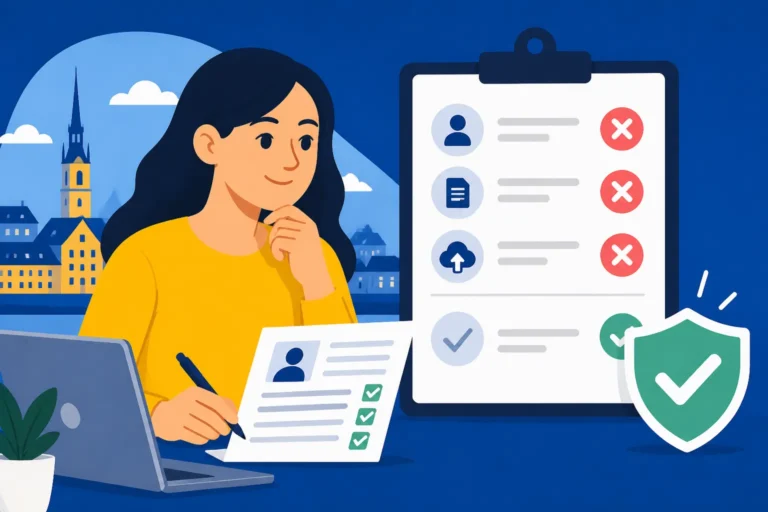
It's absolutely critical to be thorough and accurate at this stage. Any missing information, inconsistent dates, or unreadable documents can lead to significant delays, or even a rejection of your application. Think of the online portal as your only chance to make a good first impression. Take your time, double-check every field, and ensure all uploaded documents are clear, complete, and correctly labeled. It's not uncommon for applicants to keep a detailed checklist of what they've uploaded to ensure everything is covered. This is the foundation upon which your entire application rests, so treat it with the seriousness it deserves.
Required Documents: Preparing Your Application
The documents you need will vary significantly based on your specific permit type, but there are common themes. Generally, you'll need:
- Passport: A copy of your valid passport, including personal data, validity period, and any previous stamps or visas.
- Job Offer/Admission Letter: For work permits, an employment contract signed by both you and your Swedish employer. For study permits, the official letter of admission from your university.
- Proof of Funds: Bank statements, scholarship letters, or other financial declarations demonstrating your ability to support yourself.
- Comprehensive Sickness Insurance: As discussed, for non-EU/EEA citizens or those with permits under one year.
- Family Documents: For family reunification, marriage certificates, birth certificates, and proof of cohabitation (e.g., rental contracts, joint bills).
- Translations: Any documents not in Swedish or English must be translated by a certified translator. This is a non-negotiable requirement. For example, if your marriage certificate is in Arabic or Spanish, you’ll need a certified translation into English or Swedish. Reputable services like RushTranslate and Translayte are often used by expats for this purpose, as their translations are recognized by Swedish authorities.
It’s often helpful to gather all your documents well in advance, scan them at a good resolution (usually 300 DPI), and organize them into clearly named files before you even start the online application. This makes the uploading process much smoother and reduces the chance of errors.
Processing Times and What to Expect
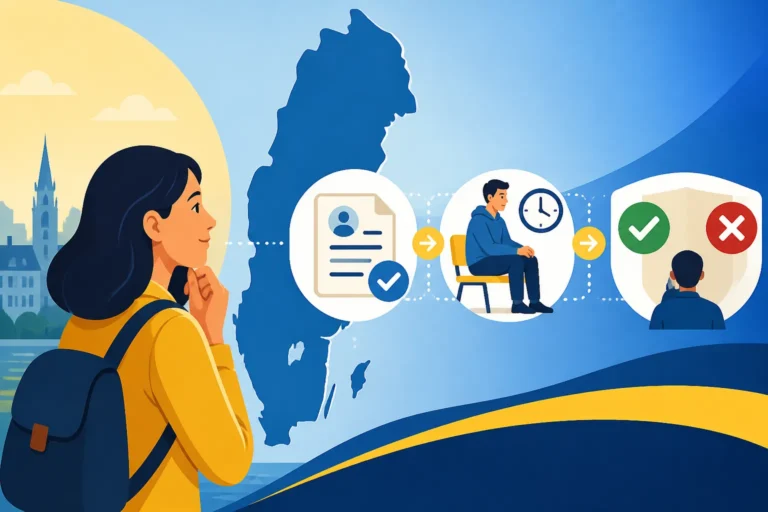
Ah, the infamous Migrationsverket waiting times! This is perhaps the biggest source of frustration for many applicants. Processing times vary wildly depending on the type of permit, the complexity of your case, the current workload at Migrationsverket, and even which country you're applying from. Some work permits for certified employers can be processed relatively quickly, while family reunification cases, especially those with complex elements, can take well over a year, sometimes much longer.
Migrationsverket provides estimated processing times on its website, but these are often just a guide and can fluctuate. It's crucial to understand that these times are estimates, not guarantees. Once you've submitted your application, you can usually track its status on your "My Page" account. However, updates can be infrequent, and direct communication with individual caseworkers is rare. Many expats learn the art of patience during this period. For a more detailed look at what to expect during this period, our guide on Dealing with Migrationsverket: Applications, Waiting, and Decisions is a must-read.
After Submission: The Waiting Game and Potential Decisions
Once your application is submitted, a caseworker at Migrationsverket will begin to review it. During this process, they may reach out to you or your reference person/employer with requests for additional information or documents. Responding promptly and thoroughly to these requests is vital. Delays in providing requested information can further prolong the processing time. Sometimes, you might be invited for an interview, especially for family reunification cases, to verify the details provided in your application and the genuine nature of your relationship.
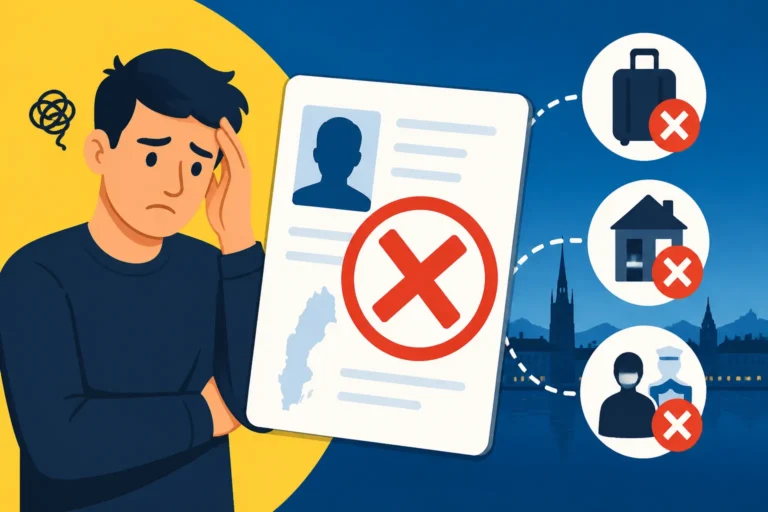
Eventually, you will receive a decision. If it's a positive decision, congratulations! You'll receive an approval letter, and instructions on how to book your biometrics appointment if you haven't already. The actual residence permit card (UT-kort) will then be produced and sent to you (if abroad) or made available for collection (if in Sweden). If the decision is negative, it means your application has been rejected. This can be devastating, but it's important to know your rights. You usually have the right to appeal the decision to a migration court (migrationsdomstolen) within three weeks of receiving the decision. The appeal process involves presenting arguments and evidence as to why you believe the decision was incorrect.
Life with a Swedish Residence Permit: Beyond the Initial Grant
Getting your residence permit approved is a huge milestone, but it's not the end of your journey. There are practicalities to consider once you have your permit, from understanding your new identification to ensuring you remain compliant with Swedish regulations.
The Residence Permit Card (UT-kort): Your Swedish ID Away From Home
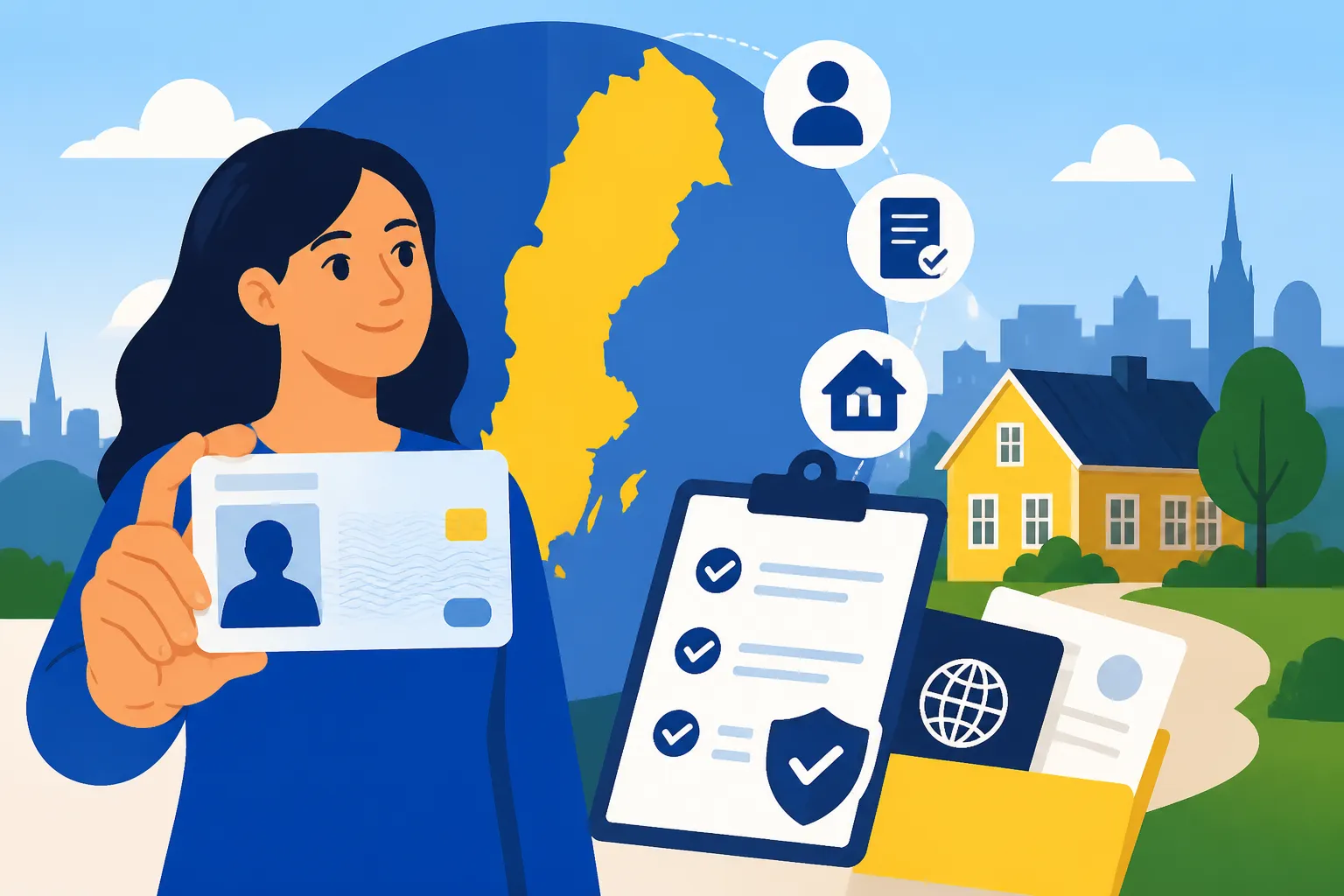
Upon approval of your residence permit, you'll be issued a physical card, known as the UT-kort (uppehållstillståndskort). This little plastic card is your official proof that you have a legal right to reside in Sweden. It contains your photo, personal details, fingerprints, and the type and validity period of your permit. While it functions as proof of your legal status, it’s important to understand that the UT-kort is not a national Swedish ID card. You won't be able to use it everywhere a Swedish ID card is required, like for BankID or some age verification situations. For that, you'll eventually need to apply for a proper Swedish ID card through Skatteverket once you have your Personnummer.
However, the UT-kort is crucial for several reasons. It's what you'll show to border control when entering and exiting the Schengen area, especially if you need a visa to enter the region. It's also vital for proving your residence status to various authorities or organizations in Sweden before you get your Personnummer and Swedish ID card. Always carry it with you when travelling and keep it safe, as replacing a lost or stolen UT-kort can be another bureaucratic headache. You can learn more about this essential document in our guide to The Residence Permit Card (UT-kort) in Sweden.
Renewing Your Permit: Staying Legally in Sweden
Residence permits are usually granted for a limited period, typically one or two years initially. As your permit approaches its expiry date, you'll need to apply for a renewal if you intend to stay in Sweden. It's crucial not to let your permit expire! Migrationsverket generally advises applying for an extension well in advance – often several months before your current permit runs out. The requirements for renewal are usually similar to those for your initial application, meaning you'll need to demonstrate you still meet the conditions (e.g., continued employment, ongoing studies, or a maintained family relationship).
A common scenario many expats face is the "bridge period." If you submit your renewal application before your current permit expires, you generally have the right to stay in Sweden while Migrationsverket processes your application, even if your old permit expires during this waiting period. However, travelling outside Sweden during this bridge period can be risky, as you might not be allowed back into the country without a valid permit card. Always consult Migrationsverket's guidelines on travel during processing times. For a full breakdown of this process, be sure to check out our detailed guide on Renewing Your Swedish Residence Permit Before It Expires.
Changing Circumstances: Job Changes, Relationships, and More
Life happens, and your circumstances in Sweden might change after you've received your permit. It's vital to understand how these changes can impact your residence status and what your obligations are towards Migrationsverket.
If you are on a work permit, and you change employers or even significantly change your job role or salary with the same employer, you generally need to apply for a new work permit. This is because your permit is specifically tied to the terms and employer stated in your initial application. Failing to do so can lead to your permit being revoked or your application for permanent residence being rejected later on. This is a common pitfall and can be quite restrictive for new arrivals.
For those on family reunification permits, if your relationship with your reference person ends (e.g., through divorce or separation from a sambo), your right to reside in Sweden may be affected. Migrationsverket will assess your individual circumstances. If you've been in Sweden for a significant period (often two years or more) and the relationship was genuine, you might be granted an independent residence permit, but this is decided on a case-by-case basis. It's a complex and sensitive situation, and seeking legal advice is often recommended.
In all cases, it's generally good practice to inform Migrationsverket of any significant changes to your situation that might affect your permit, even if a new application isn't immediately required. Transparency is key to maintaining a good standing with the authorities.
Common Pitfalls and How to Avoid Them
The Swedish residence permit system, for all its structure, has its share of traps for the unwary. Many expats, myself included, have stumbled over these at one point or another. Knowing what to watch out for can save you a world of stress, time, and even money.
Incomplete Applications and Missing Documents
This is, hands down, the number one reason for delays and rejections. Migrationsverket is incredibly meticulous. If you miss a single required document, even something seemingly minor, your application will be put on hold, and you'll be asked to submit it. This adds weeks, if not months, to your waiting time. Imagine waiting for six months, only to find out you forgot to upload a copy of your passport's blank pages!
To avoid this, treat the application as if you're building a legal case. Use Migrationsverket's online checklists as your bible, but also create your own. Double-check every single item before you hit 'submit'. When it comes to translations, always ensure they are certified. For example, a marriage certificate from your home country might be perfectly valid there, but if it's not in Swedish or English, you must get a certified translation. Services like RushTranslate or Translayte are specifically geared towards this, providing translations that meet official requirements. Don't be tempted to use free online translators or uncertified local services – it will only cause problems.
Misunderstanding Requirements or Eligibility
Another frequent issue arises from misinterpreting the often-dense legal language of Migrationsverket's rules. For instance, the "maintenance requirement" for family reunification isn't just about showing you have some money; it's about a specific income level after tax and a minimum housing standard. Many assume a shared bedroom for a couple is fine, but Swedish regulations often require larger living spaces for family reunification applications to be approved.
Similarly, for work permits, the salary threshold isn't a suggestion – it's a hard rule. Some employers, perhaps unknowingly, might offer a salary slightly below the required amount, only for the permit application to be rejected. Always do your homework, and if anything is unclear, seek clarification. Don't assume that what worked in another country will work in Sweden; the rules here are often very specific. If your employer is unsure, it's worth them consulting with a Swedish immigration lawyer or even one of the trade unions to ensure compliance.
Dealing with Delays and Communication Gaps
The waiting game is part and parcel of the Migrationsverket experience. It's frustrating, I know. You might submit your application and then hear nothing for months on end. During this period, it’s natural to want to call or email for updates constantly. However, Migrationsverket caseworkers are generally swamped, and frequent calls often won't speed up your individual case. They operate on a queue system, and your case will be processed when its turn comes.
While you can check your application status on your "My Page," updates are not always real-time or particularly detailed. Persistent calls to the general helpline usually only provide generic information. If you're genuinely concerned about an unusual delay beyond the stated processing times, or if you believe there's been an error, you can submit a "request to conclude the case" (begäran om att avgöra ärendet), which legally compels Migrationsverket to make a decision within a certain timeframe. However, this is usually a last resort and should be used judiciously. The best strategy is often to submit a complete, accurate application and then settle in for the wait.
Moving Towards Permanent Residence and Citizenship
Your initial residence permit is often just the first step on a longer journey in Sweden. For many, the ultimate goal is to establish a more permanent presence in the country, which involves navigating the paths to permanent residence and, eventually, Swedish citizenship.
The Path to Permanent Residence: Building Your Future
After a certain period of continuous residence on a time-limited permit, you may become eligible to apply for a permanent residence permit (permanent uppehållstillstånd, or PUT). This is a significant step, as it grants you a much stronger right to live in Sweden indefinitely, without the need for periodic renewals. The general requirements typically include:
- Time: You must have lived in Sweden for a continuous period, usually four years, on a time-limited permit that forms a basis for permanent residence (e.g., work or family permits). Time spent on student permits generally does not count towards this requirement.
- Sustained Income: You must be able to support yourself. This usually means having a stable job with an income that meets a specific threshold, and not having received certain social benefits.
- Good Conduct: You must not have committed any serious crimes or be considered a threat to public order or security.
- Intent to Remain: Migrationsverket will assess your ties to Sweden and your intent to continue living here.
It's important to note that the rules for permanent residence have been subject to changes and discussions in recent years, with a trend towards stricter requirements, potentially including language and civics tests by 2026. Always check the latest requirements on Migrationsverket's website when you are close to applying. Gaining permanent residence provides a sense of security and simplifies many aspects of life in Sweden, such as access to benefits and certain housing opportunities. You can delve into this topic further by reading The Path to Permanent Residence in Sweden: Rules and Timeline.
Swedish Citizenship: The Final Step
For those who truly wish to make Sweden their forever home and participate fully in its democratic processes, Swedish citizenship is the final destination. Becoming a Swedish citizen, or "naturalized," means you gain all the rights and responsibilities of a native Swede, including the right to vote in national elections and hold a Swedish passport.
The general criteria for applying for Swedish citizenship by naturalization are:
- Period of Residence: You must have lived in Sweden for a continuous period of at least five years with a permanent residence permit. For certain groups, such as citizens of other Nordic countries or those married to Swedish citizens, this period can be shorter.
- Identity: You must be able to prove your identity, usually with a valid passport. In some exceptional cases, if identity cannot be fully proven, Migrationsverket may still grant citizenship if there are very strong ties to Sweden.
- Good Conduct: You must have led an orderly life, meaning you have no serious criminal record or history of unpaid debts to Swedish authorities like Kronofogden.
- Intent: You must intend to abide by Swedish laws and customs.
Crucially, Sweden generally allows dual citizenship, meaning you typically do not have to renounce your original citizenship when becoming a Swede. This is a significant advantage for many expats. Like permanent residence, new requirements regarding language proficiency and knowledge of Swedish society (civics) are expected to be fully implemented by 2026, so be prepared for these potential additions. Taking this final step solidifies your commitment to Sweden and allows you to truly embed yourself within its society. For those considering this ultimate step, our guide on Becoming a Swedish Citizen: Requirements and the Application Process provides a wealth of information.
Disclaimer
The information provided in this guide is intended for general informational purposes only and does not constitute legal advice. While we strive to keep the content up-to-date and accurate, immigration laws and regulations in Sweden are subject to change. It is always recommended to consult the official website of the Swedish Migration Agency (Migrationsverket) or seek advice from a qualified immigration lawyer for your specific situation.