Family Reunification in Sweden: Bringing Your Loved Ones
Leaving your loved ones behind when you move to a new country like Sweden is incredibly tough, and the thought of bringing them over can feel like an insurmountable administrative mountain. Many expats have spent countless hours poring over Migrationsverket's websites, feeling confused and frustrated by the complex rules and the sheer volume of paperwork. This guide is here to demystify the process of family reunification in Sweden, offering a realistic, empathetic, and detailed roadmap to help you bring your nearest and dearest to your new Nordic home.
Understanding the Swedish Migration Agency (Migrationsverket)
Migrationsverket, or the Swedish Migration Agency, is the central government agency responsible for all matters related to immigration, asylum, and citizenship in Sweden. For anyone looking to reunite with their family, this agency will be your primary point of contact, and understanding how it operates is crucial, albeit often challenging.
Their Role and Your First Point of Contact
Migrationsverket's role is to process all applications for residence permits, including those for family reunification. They are the gatekeepers, so to speak, to living legally in Sweden with your loved ones. When you embark on this journey, their website is where you'll spend a lot of time, and their online application portal will be your main interface. While they do have regional offices, most initial contact and application submissions are handled digitally. These offices are primarily for submitting biometrics (fingerprints and photos) or attending interviews, rather than walk-in advice sessions.
It’s easy to feel overwhelmed by the official language, even in English, on their site. My advice is always to read everything multiple times, and if possible, have a Swedish-speaking friend or colleague go through it with you. The nuances of legal language, especially when translated, can sometimes create misunderstandings that can delay your application. Remember, they are dealing with a vast number of applications, and sometimes the individual service can feel impersonal, but it’s their job to uphold Swedish law, which often comes with strict criteria.
Common Challenges with Migrationsverket
Let’s be honest, dealing with Migrationsverket can be a test of patience, and anyone who tells you otherwise probably hasn't been through the full process! The most common challenge is undoubtedly the processing times. They can be incredibly long and vary wildly depending on the type of permit, the complexity of your case, and even the time of year. What starts as a hopeful journey can quickly become a stressful waiting game, sometimes stretching into many months, even over a year for some family reunification cases. It's a cruel irony that while you're trying to build a new life, the very institution meant to facilitate it often demands the most patience.
Another frequent frustration is the demand for more documents. You might think you've submitted everything perfectly, only to receive a request for additional information a few months down the line. This often happens because the case officer needs more evidence to clarify a specific point, or perhaps a document you submitted wasn't clear enough. This is where meticulousness pays off. Always double-check lists, ensure documents are clear scans, and respond promptly and thoroughly to any requests. Don't take it personally; it's part of their process, but it certainly doesn't make the waiting any easier. Communication can also be a hurdle. While they do offer information in English, detailed discussions about specific cases are often easier if you or someone assisting you can communicate in Swedish. For more on navigating this complex agency, you might find our guide on Dealing with Migrationsverket: Applications, Waiting, and Decisions particularly helpful.
Who Can Apply for Family Reunification in Sweden?
Swedish immigration law defines "family" in specific ways for reunification purposes, and it might not always align with your cultural understanding of family. Generally, the focus is on close family ties, primarily spouses, registered partners, cohabitants, and children. Other relatives may, in exceptional circumstances, be granted permits, but the bar is set much higher.
Spouses, Registered Partners, and Cohabitants (Sambor)
This is the most common category for family reunification. If you are already living in Sweden with a residence permit (and meet other requirements like the maintenance requirement, which we'll get into), you can apply for your spouse, registered partner, or cohabitant (sambo) to join you.
- Spouses: If you are legally married, you’ll need to provide your marriage certificate. The marriage must be valid in both your home country and Sweden.
- Registered Partners: This applies to same-sex couples who have registered their partnership in a country where this is legally recognised.
- Cohabitants (Sambor): This is where it gets a bit more Swedish. A 'sambo' relationship means two people of opposite or same sex live together in a relationship akin to marriage, and they are not married to anyone else. It's not enough to simply say you are in a relationship; you need to demonstrate that you have lived together, or at least have had a joint household, before the application. This often requires providing evidence like joint rental contracts, shared bills, or proof of shared expenses. Migrationsverket will want to see that the relationship is genuine and established, not just for immigration purposes. They are looking for a real relationship where you intend to live together permanently.
For all these categories, both parties must be at least 18 years old, though there can be exceptions for minors who have married. Importantly, for applications from outside the EU/EEA, the person joining you typically needs to apply from their home country or country of habitual residence. They usually cannot apply from within Sweden as a tourist. This is a critical point that often catches people off guard. Our guide on Residence Permits in Sweden: Types, Requirements, and How to Apply provides a broader overview of permits if you're curious about other categories.
Children
Bringing your children to Sweden is another priority for family reunification. This category generally covers:
- Biological Children: If you are the legal parent of a child under 18, they can usually apply to join you. You'll need birth certificates and often proof of custody if only one parent is applying.
- Adopted Children: Legally adopted children under 18 are also typically eligible. The adoption must be recognised under Swedish law, which sometimes requires a separate process for foreign adoptions.
- Stepchildren: In some cases, stepchildren may also be granted a residence permit, especially if they are dependent on you and live in your household.
For children, the underlying principle is usually the child's best interests. Children over 18 are generally considered adults and must apply under their own merit, unless there are exceptional dependency reasons (e.g., severe disability). For children, the requirements are usually about establishing the parent-child relationship and ensuring the child's well-being. If the child is under 18 and applying to join only one parent, the consent of the other parent (if applicable and still involved in the child's life) is usually required. This can sometimes involve specific declarations or notarized letters.
Other Close Relatives and Special Circumstances
While the primary focus is on spouses/partners and minor children, there are very limited circumstances under which other relatives might be granted a residence permit for family reunification. This typically applies to:
- Parents of a Minor Child in Sweden: If you are a parent of a minor child living in Sweden, and the child is a Swedish citizen or has a permanent residence permit, you might be able to apply. However, this is usually only granted if you, as the parent, have sole custody and are fully responsible for the child, and it would be unreasonable for the child to move to your home country. This is a tough category with high hurdles.
- Adult Children, Siblings, or Other Relatives: It is extremely rare for adult children, siblings, or other extended family members to be granted a residence permit based solely on family ties. Migrationsverket generally requires a very high degree of dependency – for example, if the relative in Sweden is the only person who can provide care for a severely ill or disabled family member, and the family member cannot receive adequate care in their home country. This is not about general family connection but about severe, demonstrable dependency.
It’s important to understand that these "special circumstances" are applied very strictly. You would need to provide extensive documentation and compelling evidence of the dependency and the impossibility of care in the home country. These cases often benefit from legal advice due to their complexity.
The Maintenance Requirement (Försörjningskravet)
This is often the biggest hurdle for people wanting to bring family to Sweden. The maintenance requirement (försörjningskravet) means that the person living in Sweden – the "reference person" – must be able to support their family financially and provide suitable housing. This requirement is in place to ensure that new arrivals don't immediately become a burden on the Swedish welfare system. It's a tough pill to swallow for many, especially given Sweden's high cost of living, but it’s a cornerstone of the policy.
What it Means for the 'Reference Person'
As the "reference person" in Sweden, you are responsible for proving that you meet both income and housing requirements.
Income Requirement:
Migrationsverket has specific guidelines for what counts as sufficient income. This isn't just about having a job; it's about having a stable, documented income that is sufficient after tax to cover your living expenses and those of your family members joining you, in addition to your housing costs. The specific amount needed changes periodically and depends on the number of family members you're bringing.
For example, for a single adult reference person bringing a spouse, the income must be enough for two adults and the housing cost. For two adults and one child, it's enough for three people plus housing. Migrationsverket publishes these exact figures on their website, so always check the most current amounts. They look at your net income (after tax). Acceptable sources of income typically include:
- Employment income (salary)
- Unemployment benefits (A-kassa) if certain conditions are met
- Sick pay (sjukpenning)
- Pension payments
Crucially, some forms of income are not counted, such as housing allowance (bostadsbidrag) or financial assistance from the municipality (försörjningsstöd). The income must also be regular and expected to continue for at least a year after the decision on the permit. This often means providing employment contracts, payslips, and bank statements. If you're struggling to meet the income threshold, it can be incredibly disheartening. Many people find themselves in a precarious position, needing to earn more just to bring their family, yet already working full-time.
Housing Requirement:
You also need to demonstrate that you have suitable housing for your family. This means an apartment of a certain size, with a sufficient number of rooms, depending on the size of the family. The general rule is that you must have a home of reasonable size and standard for your family. For two adults without children, a one-room apartment with a separate kitchen or kitchenette is usually sufficient. For a family of two adults and one child, it would typically need to be a two-room apartment. Again, Migrationsverket provides detailed guidelines.
The housing must be available for you and your family to use when they arrive. This means you need to provide a rental contract (first-hand or second-hand with permission from the landlord) or proof of ownership if you own a bostadsrätt (housing cooperative apartment) or house. Subletting an apartment without the property owner's or housing association's explicit consent is usually not considered sufficient and can invalidate your application, or worse, lead to issues with your housing situation. Finding suitable housing in Sweden's notoriously tight rental market, especially in major cities, can be a monumental task even without the added pressure of an immigration application. This is where the challenge really hits home for many. For more on navigating Sweden's housing landscape, our guide to Renting a Home in Sweden: How the First- and Second-Hand System Works could be very useful.
Exemptions and Exceptions
While the maintenance requirement is strict, there are some limited exemptions and exceptions. However, these are not guaranteed and are applied on a case-by-case basis.
Exemptions:
- EU/EEA citizens exercising their right of residence: If you are an EU/EEA citizen living in Sweden and your family member is also an EU/EEA citizen, the maintenance requirement generally does not apply. They will register their right of residence rather than apply for a permit. However, if your family member is a non-EU citizen, different rules might apply, but often still with lighter requirements than for non-EU reference persons.
- Swedish citizens with children in Sweden: If you are a Swedish citizen and your family member is also a Swedish citizen, the maintenance requirement doesn't apply. If your Swedish citizen child is living in Sweden and you are seeking to bring the other parent (who is a non-EU citizen), the requirements might be slightly more lenient compared to other cases, especially if it relates to the child’s right to family life.
- Certain types of protection status: Individuals who have been granted a residence permit as a refugee or a person in need of subsidiary protection might be exempt from the maintenance requirement for their core family (spouse/cohabitant and minor children) if the application is submitted within a specific timeframe (usually three months) from when they were granted protection. This is a very specific exemption related to international protection.
Exceptions:
- Special reasons: In some rare cases, Migrationsverket can make an exception if there are "special reasons." This is a high bar and usually relates to particularly vulnerable situations or if it’s deemed unreasonable to deny the permit based on human rights considerations. This is not a loophole for those who simply can't meet the requirement but rather for truly exceptional circumstances. For instance, if the reference person has a severe, long-term illness that prevents them from working, but they have other stable means of support not typically counted, they might appeal for an exception.
It's critical not to assume you fall under an exemption or exception. Always check the current rules on Migrationsverket's website or seek legal advice if you believe your situation is unique. Ignoring the maintenance requirement or hoping for an exception without clear grounds is a common reason for applications to be refused.
Step-by-Step Application Process for Family Reunification
Embarking on the application process can feel like a marathon, not a sprint. Knowing the steps, however, can help you prepare and alleviate some stress. It's almost always done online, with very specific requirements.
Gathering Required Documents
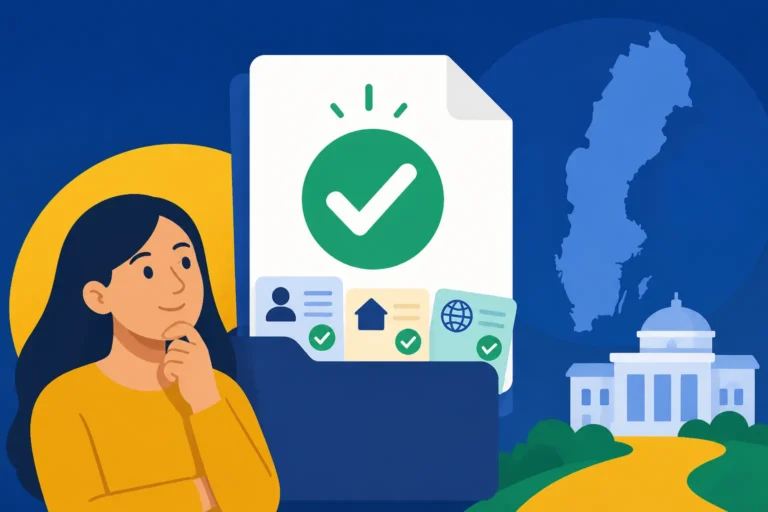
This is where the meticulous work truly begins. The specific documents will depend on your relationship type (spouse, child, etc.) and your country of origin, but generally, you'll need a range of identity, relationship, and financial proofs. Always refer to Migrationsverket's official checklists for your specific application type.
Common documents include:
- Passport copies: Of both the reference person in Sweden and the family member applying. Ensure all pages with personal data, validity dates, and any stamps/visas are included.
- Marriage certificate/birth certificate: Or proof of registered partnership/sambo relationship, if applicable. These documents need to clearly establish the relationship you are claiming.
- Proof of cohabitation: For sambo relationships, this could be joint rental contracts, utility bills addressed to both, or official registry extracts showing you lived at the same address.
- Consent forms: For children, if only one parent is applying, the consent of the other parent (if they have custody) is essential.
- Proof of sufficient income: Payslips (usually for the last 3-6 months), employment contracts, bank statements, and a certificate from your employer confirming your employment status and salary.
- Proof of suitable housing: Rental contract, deed of ownership, or a certificate from your housing cooperative (BRF). The contract should clearly state the number of rooms and the size in square meters.
- Power of attorney: If someone else is helping you with the application (e.g., a lawyer or a friend, though most people do it themselves).
- Application fee payment receipt: There is a fee for most applications, which must be paid before or during submission.
Translations and Legalisation:
Here's a crucial point: any documents not in Swedish or English must be translated by an authorised translator. This is non-negotiable. Don't try to translate them yourself or rely on a non-certified translator; Migrationsverket will reject them. This is where services like RushTranslate or Translayte come in handy. They specialise in certified translations that are accepted by official authorities. Applications are often delayed because of incorrect or uncertified translations, so please, invest in this step. Depending on the country, some documents might also need to be legalised or apostilled, so check these specific requirements carefully based on where your documents originate. This legalisation process can add significant time and cost.
Submitting Your Application Online
Once you have all your documents ready and translated, the next step is the online application. Migrationsverket has a dedicated e-service for residence permit applications.
- Create an account: The family member applying (not the reference person in Sweden) creates an account on Migrationsverket's website.
- Fill out the application form: This is a detailed form with many sections. Take your time, answer truthfully, and ensure consistency with your documents. Any discrepancies can raise red flags.
- Upload documents: Carefully upload each required document as a clear scan. Organise them logically and name them clearly (e.g., "Passport Applicant," "Marriage Certificate").
- Pay the application fee: This is typically done online during the application process. Keep the receipt.
- Submit the application: Once everything is complete, you submit it. You will receive a confirmation email with a case number (kontrollnummer). Keep this number safe; it’s how you'll track your application and communicate with Migrationsverket.
It’s important that the person outside Sweden applies. The reference person in Sweden acts as the "inviting person" and will provide their details, proof of income, and housing as part of that application. Many people find the interface a bit clunky, but it is generally robust. If you're a non-EU citizen yourself, you can read more about the general permit application process in Applying for a Swedish Residence Permit Online with Migrationsverket.
The Interview and Biometrics
After your application is submitted, there are typically two important steps that follow:
- Biometrics: The family member applying (usually outside Sweden) will need to visit a Swedish embassy or consulate in their home country (or a nearby country if there isn't one) to provide their biometrics – fingerprints and a photo. This is essential for the residence permit card (UT-kort). You usually need to book an appointment for this, and waiting times can vary. It’s important not to delay this step once you receive the request. More details on this process can be found in Biometrics and the Residence Permit Card UT-kort in Sweden.
- The Interview: Many family reunification cases involve an interview, often for both the applicant abroad and the reference person in Sweden. The purpose of these interviews is to confirm the authenticity of the relationship. They will ask questions about how you met, your relationship history, daily life, future plans, and details about your family members. These questions can sometimes feel very personal and intrusive, but it's part of Migrationsverket's process to prevent fraudulent applications. Be honest, consistent, and try not to memorise answers, as this can make you sound unnatural. Sometimes, these interviews are conducted by video call, particularly for the person applying from abroad, or in person at a Migrationsverket office for the reference person in Sweden.
The waiting period between submitting the application, being called for an interview, and finally getting a decision can be the most nerve-wracking part.
Navigating the Waiting Times and Decision
This is often the part of the journey that truly tests your resilience. The waiting can be excruciating, and the lack of updates can lead to immense anxiety.
Realistic Expectations for Processing Times
As mentioned, processing times for family reunification can be lengthy. While Migrationsverket provides estimated processing times on their website, these are averages and can change. For family reunification permits, it's not uncommon for processing to take anywhere from 9 to 20 months, sometimes even longer for complex cases or specific nationalities. It’s crucial to set realistic expectations and prepare for a long wait. Do not make irreversible plans based on the lower end of the estimated time.
You can check your application status on Migrationsverket's "My Page" using your case number, but updates are often sparse. You might not see any changes for months, then suddenly receive a request for more information or an invitation for an interview. It's a system that demands patience and a high tolerance for uncertainty. Trying to call them every week often yields little new information and can be frustrating for everyone involved. For specific details on how to understand and respond to the agency, refer to Dealing with Migrationsverket: Applications, Waiting, and Decisions.
What Happens After a Decision
Finally, after what feels like an eternity, Migrationsverket will make a decision.
If Approved:
- Residence Permit Granted: If your application is approved, the family member abroad will receive a decision. This means a residence permit has been granted, usually for a temporary period (e.g., two years initially).
- Travel to Sweden: The family member can then travel to Sweden. Upon arrival, they might need to visit a Migrationsverket office to collect their residence permit card if it wasn't issued by the embassy or consulate.
- Getting a Personnummer: This is the immediate next crucial step. Once in Sweden, and with a valid residence permit, your family member must apply for a Getting Your Personnummer: The Gateway to Swedish Healthcare at Skatteverket (the Swedish Tax Agency). This unique personal identity number is the key to virtually all aspects of life in Sweden, from healthcare to banking and everything in between.
- Registering with Försäkringskassan: After obtaining a personnummer, it’s vital to Registering with Försäkringskassan: When and Why You Need To – the Swedish Social Insurance Agency. This agency is responsible for social benefits and insurance, including parental benefits, child allowance, and sick pay. Your family won't be fully integrated into the welfare system until this step is completed.
If Refused:
- Understanding the Decision: If the application is refused, Migrationsverket will send a formal decision explaining the reasons for the refusal. This document is incredibly important.
- Right to Appeal: You generally have the right to appeal the decision to the Migration Court (Migrationsdomstolen). The appeal process also has strict deadlines, usually within three weeks of receiving the decision.
- Seeking Legal Advice: If your application is refused, I strongly recommend seeking legal advice from an immigration lawyer specialising in Swedish law. They can help you understand the grounds for refusal and advise on the best course of action for an appeal. The appeals process is complex, and professional help can significantly increase your chances. Our guide on Appealing an Immigration Decision in Sweden: The Migration Courts can give you more insights into this difficult process.
Receiving a refusal is devastating, but it's not always the end of the road. Carefully consider the reasons and explore your options.
Life in Sweden After Family Reunification
Once your loved ones have arrived and their permits are in hand, a new chapter begins – integrating into Swedish society. This transition involves more than just having the right documents; it's about building a life together in a new cultural context.
Getting the Personnummer and Accessing Services
The very first and most critical step for your family member upon arrival is to obtain a personnummer. This ten-digit personal identity number is Sweden’s equivalent of a social security number and acts as the gateway to almost all public services and administrative tasks. Without it, life can be incredibly challenging.
Applying for the Personnummer:
Your family member will need to visit Skatteverket (the Swedish Tax Agency) with their passport, residence permit decision, and proof of your relationship (e.g., marriage or birth certificate). They will also need to show that they intend to live in Sweden for at least one year. Once the application is submitted, it usually takes a few weeks to a few months to receive the personnummer. This can be a tense waiting period, as so much depends on it.
Accessing Services:
- Healthcare: With a personnummer, your family member gains access to the Swedish public healthcare system. They will be able to Registering with a Vårdcentral: Your Guide to Primary Care in Sweden, choose a local health centre (vårdcentral), and benefit from subsidised medical care. Before the personnummer, emergency care is still available, but routine appointments are difficult to access, and costs can be much higher.
- Banking: Opening a Swedish bank account is nearly impossible without a personnummer and a Swedish ID card. Once they have both, they can set up accounts, get BankID (the essential digital identification for Sweden), and use services like Swish. Until then, they might rely on your account or international banking solutions. Our guide on Opening a Bank Account in Sweden: A Step-by-Step Guide can help you through this.
- Other Benefits: The personnummer also unlocks access to benefits from Försäkringskassan, such as child allowance (barnbidrag) or parental leave benefits (föräldrapenning) if applicable.
This period can be frustrating. Even with the permit, the initial weeks or months without a personnummer can feel like living in limbo. It’s important to manage expectations and understand that official integration is a phased process.
Integrating into Swedish Society
Beyond the administrative hurdles, true integration involves embracing the culture, learning the language, and finding one's place in the community.
Learning Swedish:
While many Swedes speak excellent English, learning Swedish is invaluable for true integration. It helps with job opportunities, understanding local culture, and everyday interactions. Your family member will likely be eligible for SFI (Swedish for Immigrants), which offers free Swedish language courses. Encouraging them to attend these classes as soon as possible is a huge step towards independence and belonging. You can learn more about this in Learning Swedish: SFI, Courses, and Language Paths for Newcomers.
Finding Work and Education:
If your family member is of working age, finding employment is often a priority. Their residence permit will usually grant them the right to work in Sweden. However, the job market can be competitive, and Swedish language skills are often a significant advantage. They might need to get their foreign qualifications recognised by UHR (Universitets- och högskolerådet). For a deeper dive into the job market, check out Working in Sweden as a Foreigner: The Complete Guide 2026. If they have children, understanding the Swedish school system, from förskola (preschool) to grundskola (compulsory school), will be vital.
Cultural Adaptation:
Swedish culture has its nuances – from the importance of 'fika' to the value of punctuality and consensus. It takes time to adjust. Encourage your family members to join local clubs, sports groups, or community events. Building a social network outside of just you can greatly ease the transition. The long, dark winters can also be a challenge for newcomers, so prepare for that and encourage outdoor activities whenever possible.
Integration is a two-way street; while your family adjusts to Sweden, you'll also be adjusting to having them fully present in your Swedish life. It's an exciting, but often demanding, period for everyone involved. For a broader perspective on settling in, our Housing and Living in Sweden: The Complete Newcomer's Guide 2026 is a great resource.
Common Pitfalls and How to Avoid Them
The family reunification process in Sweden is complex, and it’s easy to make mistakes that can lead to significant delays or even refusals. Learning from common pitfalls can save you a lot of heartache.
Incomplete Applications and Communication
One of the most frequent reasons for delays or rejections is an incomplete application or a lack of clarity in the documents provided.
- Missing Documents: Migrationsverket provides detailed checklists for a reason. Do not skip any document you think might be unimportant. If it's on the list, it's required. If you cannot provide a document, provide a clear, written explanation as to why, and ideally, supplementary evidence to cover that point. A single missing document can stall your application for months.
- Poor Quality Scans: Ensure all uploaded documents are clear, legible, and correctly oriented. Blurred images, cut-off pages, or documents that are upside down are simply unhelpful and can lead to requests for re-submission.
- Inconsistent Information: Double-check that all information provided across different documents (passports, marriage certificates, application forms) is consistent. Minor discrepancies can lead to questions and delays.
- Not Responding Promptly: If Migrationsverket requests additional information, respond as quickly and completely as possible. Delays on your part directly translate to delays in your decision.
- Uncertified Translations: As discussed, ensure all non-Swedish/English documents are translated by an authorized translator. Services like Translayte and RushTranslate provide certified translations that Migrationsverket accepts, removing this potential pitfall. Do not cut corners here; it’s a critical investment in your application's success.
- Misunderstanding Instructions: The instructions can be convoluted. If you're unsure about a particular requirement, try to find official clarifications or consult a professional. Guessing can lead to incorrect submissions.
Proving the Relationship and Intention
Migrationsverket takes the authenticity of relationships very seriously, particularly for spouse/sambo applications, to prevent sham marriages or relationships entered into solely for immigration purposes.
- Insufficient Proof of Cohabitation (for Sambor): It's not enough to just state you are cohabitants; you need to prove you have genuinely lived together in a relationship akin to marriage. This often means providing joint address registrations, shared utility bills, joint bank accounts, photos from different periods, and correspondence showing a shared life. A common mistake is to only provide recent evidence; showing a history of shared life is more compelling.
- Inconsistent Interview Answers: During interviews, both you and your family member will be asked questions about your relationship. It’s natural to be nervous, but inconsistencies in your stories can raise doubts. Be honest and factual. The interviewers are trained to spot discrepancies. They are not looking for a "perfect" story, but a believable one that reflects a genuine relationship.
- Lack of Genuine Intention: You need to demonstrate a genuine intention to live together permanently in Sweden. This means your family member should articulate their plans for life in Sweden – learning Swedish, seeking employment, integrating into society. If it appears the intention is merely to gain access to Sweden and then move on or not live with the reference person, the application could be denied.
- Documentation for Children: For children, ensuring clear documentation of parentage (birth certificates) and, importantly, consent from any other parent who has custody is vital. Issues with custody arrangements or lack of consent are common reasons for delays in children's applications.
By being thorough, transparent, and proactive, you can significantly increase your chances of a smoother and successful family reunification process in Sweden.
| Document Type | Required for (Example) | Notes |
|---|---|---|
| Passport | All applicants & reference person | Valid passport, copies of all relevant pages (personal data, validity, stamps). |
| Marriage Certificate | Spouses | Legalised/apostilled if required by country of origin. Must be officially translated if not in Swedish/English. |
| Birth Certificate | Children, sometimes spouses | Legalised/apostilled if required by country of origin. Must be officially translated if not in Swedish/English. |
| Proof of Cohabitation | Sambor (Cohabitants) | Joint rental contracts, utility bills, official address registrations, photos over time. |
| Consent Form | Children (if applicable) | From the other parent (if not applying) with legal custody. Often needs to be notarised. |
| Income Documents | Reference Person (in Sweden) | Latest payslips (3-6 months), employment contract, certificate from employer, bank statements. Shows net income. |
| Housing Documents | Reference Person (in Sweden) | Rental contract (first-hand or approved second-hand), deed of ownership, BRF certificate. Clearly states size and rooms. |
| Application Fee | All applicants (most types) | Proof of payment of the fee to Migrationsverket. |
| Previous Decisions | If applicable | Copies of previous residence permit decisions for the reference person in Sweden. |
| Photos | All applicants | Passport-style photos, specified size and background. |
Disclaimer
Please remember that I am an expat lifestyle blogger and not a legal professional. The information provided in this article is based on personal experiences, general knowledge, and publicly available information from official sources like Migrationsverket. Immigration laws and regulations in Sweden can change frequently and vary based on individual circumstances. This guide is intended for informational purposes only and should not be considered legal advice. For specific legal advice regarding your situation, please consult with a qualified immigration lawyer or seek guidance directly from Migrationsverket.