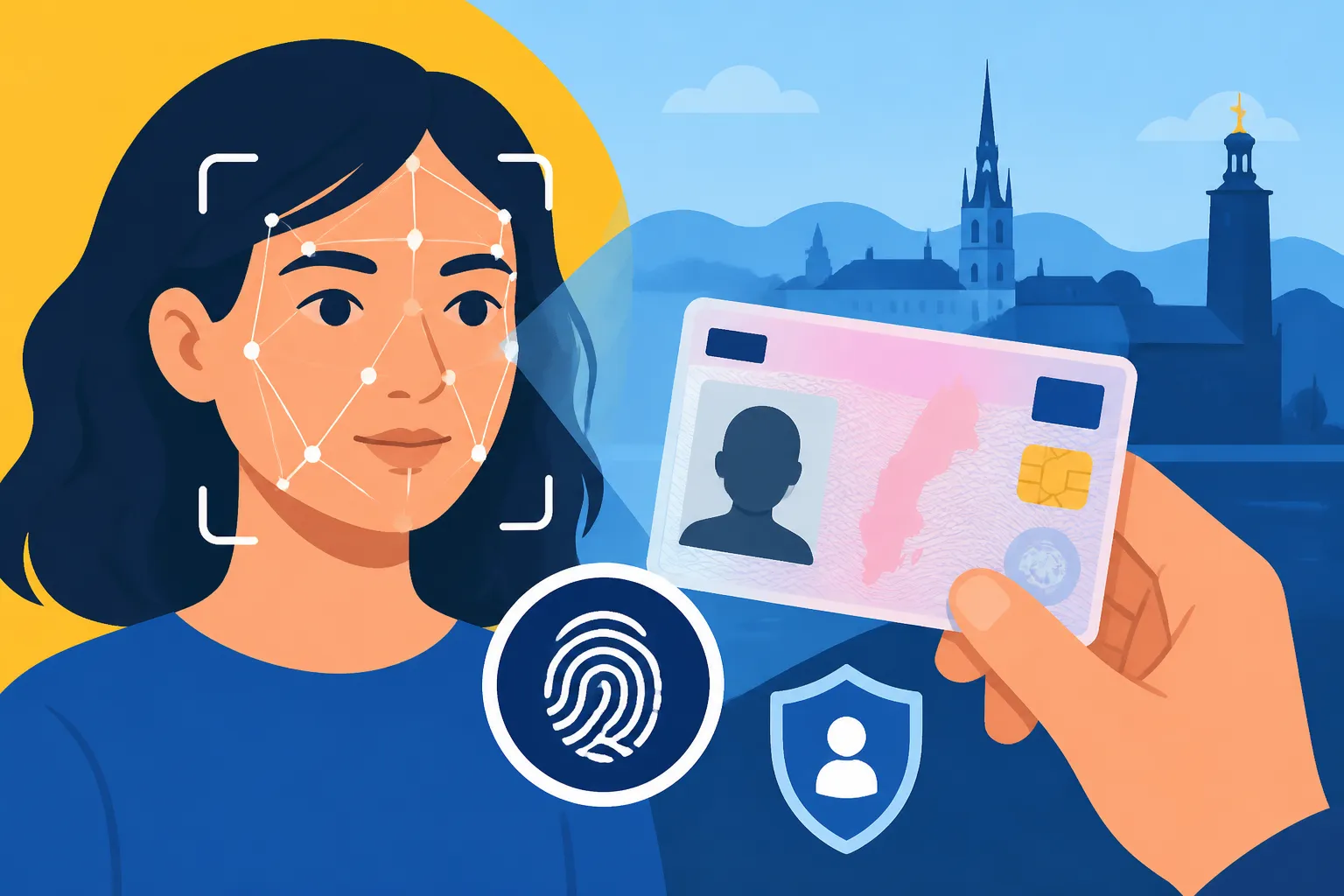
Biometrics and the Residence Permit Card (UT-kort) in Sweden
One of the most nerve-wracking parts of moving to Sweden, after the initial relief of getting your residence permit approved, is the practical step of securing your physical proof of status. Many expats find themselves in a limbo, thrilled about their permit but anxious about the biometrics appointment and the mysterious "UT-kort" – the residence permit card. This guide will walk you through everything you need to know, from fingerprints to finally holding that crucial little card in your hand.
Understanding Biometrics in the Swedish Residence Permit Process
Navigating the immigration landscape in Sweden can feel like a labyrinth, and the term "biometrics" often adds another layer of confusion for newcomers. It sounds highly technical, but in reality, it's a straightforward, albeit essential, step in verifying your identity for your Swedish residence permit. It's a fundamental part of the journey after your initial application for a Residence Permits in Sweden: Types, Requirements, and How to Apply.
What Exactly Are Biometrics for a Swedish Permit?
When we talk about biometrics in the context of your Swedish residence permit, we're primarily referring to two things: your fingerprints and your facial image. Think of it as the digital snapshot of your unique physical identifiers that Migrationsverket (the Swedish Migration Agency) uses to confirm who you are and to produce your residence permit card. These aren't just arbitrary data points; they're critical security features designed to prevent identity fraud and ensure that the person using the permit is indeed the legitimate holder.
For your fingerprints, you'll be asked to provide scans of all ten fingers. This process is usually done on a digital scanner, much like those you might encounter at an airport or when applying for visas to other countries. It’s quick, clean, and entirely painless. The facial image is essentially a passport-style photograph taken on the spot. They’re looking for a clear, neutral expression, without glasses or headwear that obstructs your face, unless worn for religious reasons. These biometric details are then securely stored and linked to your permit application, ensuring that your future UT-kort is uniquely tied to you. This is standard practice globally for immigration purposes, so while it might feel a bit invasive, it’s a necessary step to maintain the integrity of the immigration system.
When and Where to Provide Your Biometrics
The timing for providing your biometrics can sometimes catch people off guard, especially depending on whether you're applying from abroad or already in Sweden. For most non-EU/EEA citizens applying for a residence permit, the general rule is that biometrics are submitted after you have received a positive decision on your application. You'll typically get an email or a letter from Migrationsverket informing you that your application has been approved and instructing you to book an appointment to provide your biometrics.
If you applied from outside Sweden, you will usually need to visit a Swedish embassy or consulate in your home country or the country where you applied. It’s crucial to check Migrationsverket’s website or your decision letter for specific instructions, as not all embassies offer biometric services, and you might need to travel to a designated location. For those fortunate enough to already be in Sweden when their permit is approved (perhaps after extending a previous permit or changing permit categories), you'll provide your biometrics at one of Migrationsverket's service centers. These centers are located in various cities across Sweden, with major ones in Stockholm, Gothenburg, Malmö, and other regional hubs. You almost always need to book an appointment online beforehand – walking in without one is generally not an option and will likely result in a wasted trip.
The Biometrics Appointment: What to Expect
Let's demystify that appointment, because a lot of the anxiety stems from the unknown. First things first: don't forget your vital documents. You'll definitely need your passport, as this is your primary form of identification. If you've already received a positive decision, bring that letter or email with you, as it often contains a case number (ärendenummer) or control number that helps staff quickly locate your file. If you’ve arrived in Sweden and are providing biometrics after your approval, sometimes they just need your passport, but it's always better to be over-prepared.
Once you arrive at the Migrationsverket service center or embassy, you'll check in, often using a ticket system. When your number is called, you'll be directed to a counter or a private room. The staff member will verify your identity with your passport. Then comes the actual biometric collection: you'll place your fingers, one by one, and then your thumbs, onto a small digital scanner. The staff will guide you clearly through this. After that, they'll take your digital photograph. It's usually a quick snap, no retakes unless something went obviously wrong. The whole process typically takes no more than 10-15 minutes, assuming there isn't a long queue before your appointment slot. Don't worry too much about language barriers; while staff might primarily speak Swedish, they are very accustomed to assisting international applicants and can usually communicate the necessary instructions in English. They want this process to be efficient for everyone.
The Residence Permit Card (UT-kort): Your Swedish ID Away from Home
Once you've navigated the biometric process, your mind will undoubtedly turn to the actual Residence Permit Card itself – the UT-kort. This little plastic card is more than just a piece of plastic; it's your official proof of your right to reside in Sweden and a key document for life here. It marks a significant milestone in your journey, confirming your legal status after all the hard work involved in Dealing with Migrationsverket: Applications, Waiting, and Decisions.
What is the UT-kort and Why is it Essential?
The UT-kort, which stands for Uppehållstillståndskort (Residence Permit Card), is a physical document that serves as concrete proof that you have a valid residence permit in Sweden. For non-EU/EEA citizens, it's absolutely essential. Imagine trying to prove you live here, or that you have the right to return after a trip abroad, without it. It's akin to a "green card" or residency visa in other countries. The card itself contains a microchip, which holds your biometric data (your photo and fingerprints), making it a secure and tamper-proof document.
While it is a powerful document, it's important to understand its primary role: it proves your residence permit. It allows you to travel in and out of Sweden, and often within the Schengen area, without needing an additional visa (as long as your permit is valid). For daily life, it serves as a form of identification that some authorities or service providers might accept, especially in the initial stages before you secure a Swedish national ID card. However, it's not a universal identification document in Sweden in the same way a Swedish national ID card is, and it certainly won't unlock all the digital services you'll eventually need, like BankID or Swish. It’s an enabling document, a bridge to more integrated existence, not the destination itself.
Information Contained on Your UT-kort
When you finally receive your UT-kort, take a moment to examine it carefully. It's packed with important information, all printed in both Swedish and English to help you understand it. On the front, you’ll find your personal details: your full name, date of birth, nationality, and often your signature. Critically, it will also display your photograph (the one taken during your biometrics appointment) and the permit’s validity dates – the date your permit was issued and, most importantly, the date it expires. This expiry date is paramount; you must plan for Renewing Your Swedish Residence Permit Before It Expires well in advance of it.
The back of the card typically contains additional information, such as your permit type (e.g., "arbetstillstånd" for work permit, "studerande" for student permit), and sometimes notes regarding specific conditions of your permit. For example, a work permit might specify your employer or industry. It’s vital to check all these details as soon as you receive the card. Typos or errors, though rare, can happen, and it's much easier to get them corrected early on. Understanding the information on your card helps you know your rights and responsibilities and confirms that Migrationsverket has correctly processed your permit.
Distinguishing the UT-kort from a Swedish ID Card and Personnummer
Here’s where a lot of newcomers get confused, and it’s a critical distinction to grasp: your UT-kort is not a Swedish national ID card, nor does it immediately grant you a Personnummer. These are three separate, albeit interconnected, pieces of the administrative puzzle in Sweden. Your UT-kort is purely proof of your residence permit. It enables you to live and often work or study here. But it won't let you, for example, sign up for a mobile phone contract without further identification, access public healthcare services seamlessly, or open a bank account easily.
For those essential next steps, you need a Personnummer – your unique Swedish personal identity number. This is what officially registers you in the Swedish population register (folkbokföringen) and truly unlocks access to society's systems, from healthcare to banking. The UT-kort usually precedes the Personnummer, as you often need a valid residence permit to even apply for the latter. Once you have your Personnummer and a Swedish bank account, you can then apply for a Swedish national ID card. This is the gold standard for identification in Sweden, enabling everything from BankID (Sweden's crucial electronic identification system) to picking up packages. So, while your UT-kort is a huge step, remember it's just one part of the identity journey. For more on getting your personal number, check out our guide on Getting Your Personnummer: The Gateway to Swedish Healthcare. And once you have that, you can move on to Getting a Swedish ID Card After Your Personnummer.
The Journey from Application to Receiving Your UT-kort
You’ve applied, you’ve waited, you’ve received that glorious email saying your permit is approved, and you’ve even done your biometrics. Now what? The final hurdle is getting the physical UT-kort into your hands. This stage, while less administratively complex, can be just as frustrating due to the waiting times and the critical importance of having the card for travel and proof of status. It's the practical culmination of your efforts to secure a Residence Permits in Sweden: Types, Requirements, and How to Apply.
After a Positive Decision: The Waiting Game
Receiving a positive decision from Migrationsverket is a huge relief, but it’s not the end of the waiting. The agency still needs to physically produce and dispatch your UT-kort. This isn't an instant process. The card production happens centrally, and then it needs to be sent out. The processing times for card production and delivery can vary, just like the initial permit application. Migrationsverket usually states an estimated timeframe, but these are often just guidelines. Many expats report waiting anywhere from a few days to several weeks, or even longer in some cases, after their biometrics appointment for the card to arrive.
It’s easy to feel anxious during this period, especially if you have travel plans or need the card for other administrative tasks. My advice? Manage your expectations. It’s rarely as quick as you hope. Try to plan your life around the potential for delays. Avoid booking non-refundable travel outside Sweden until you have the physical card in your hand, especially if you need a Schengen visa to re-enter. If you find yourself in a situation where the wait is excessively long, you can try contacting Migrationsverket, but be prepared for general answers as they usually don't have real-time tracking for individual card production. For general insights into the speed of bureaucratic processes, our guide on Understanding Migrationsverket Processing Times and Delays might offer some context.
Delivery and Collection of Your UT-kort
The delivery method of your UT-kort depends largely on where you provided your biometrics and where you applied from. If you applied from outside Sweden and gave your biometrics at a Swedish embassy or consulate, your card will typically be sent to that same embassy for collection. They will usually contact you when it's ready. You'll then need to return to collect it, bringing your passport for identification. Make sure to confirm their specific collection procedures and opening hours.
If you provided your biometrics at a Migrationsverket service center within Sweden, your UT-kort will generally be sent to your registered address (the one you provided in your application or that you’ve updated with Skatteverket via your flyttanmälan). It’s crucial that this address is correct and secure. The card is sent via registered mail, which means someone needs to be home to sign for it, or you’ll receive a notification slip instructing you to pick it up from your nearest post office or postal agent (often a local grocery store or service point). When collecting from a post office, you'll need a valid ID – and this is where the UT-kort's purpose can feel a bit circular! If you don't yet have a Swedish ID card, your foreign passport is usually accepted. Ensure your name is clearly marked on your mailbox to avoid delivery issues.
What to Do If Your UT-kort is Lost, Stolen, or Expires
Life happens, and sometimes things go wrong. Losing your UT-kort or having it stolen can be a major headache, but it’s manageable. If this unfortunate event occurs, your first step should always be to report it to the Swedish police. Get a police report, as this will be vital for your next steps. Then, contact Migrationsverket immediately to report the loss or theft and to apply for a new card. You'll likely need to pay a fee for a replacement card and potentially go through the biometrics process again. This means more waiting, so try your absolute best to keep that card safe!
Even if you don't lose it, your UT-kort will eventually expire. The validity period is linked to your residence permit. It's imperative that you apply for an extension of your residence permit – and by extension, a new UT-kort – well before the current one expires. Migrationsverket advises applying at least a few months in advance due to their processing times. Allowing your permit to expire can lead to serious complications, including issues with employment, access to services, and even your right to be in Sweden. If you need to travel while your permit application is pending, be incredibly cautious, as our guide on Travelling While Your Swedish Permit Application Is Pending strongly advises against it unless absolutely necessary. Proactive planning is key to avoiding unnecessary stress and maintaining your legal status in Sweden.
Common Challenges and Troubleshooting for Biometrics & UT-kort
Even with a clear process, unique challenges often pop up for expats navigating the Swedish immigration system. From language hurdles to navigating bureaucratic delays, obtaining your UT-kort isn't always a smooth ride. It requires a degree of patience and preparedness, especially when dealing with the realities of the Migrationsverket system and its procedures, as detailed in our broader overview of Dealing with Migrationsverket: Applications, Waiting, and Decisions.
Language Barriers and Documentation
Let’s be honest, not everyone arrives in Sweden fluent in Swedish, and that’s perfectly normal. While Migrationsverket does its best to offer information in English, most official communications and in-person interactions will default to Swedish. This can be a source of anxiety, especially during an important biometrics appointment. For simple instructions like "place your finger here," hand gestures and basic English usually suffice. However, when it comes to submitting documents that aren't in English or Swedish, you absolutely need certified translations. This is where services like RushTranslate or Translayte become lifesavers. They can provide official, certified translations of birth certificates, marriage licenses, academic degrees, or any other supporting documents your application might require, ensuring they meet Migrationsverket's strict standards. Always check their specific requirements for translations, as non-certified documents are almost always rejected. Having professional, accurate translations can save you immense time and stress, preventing your application from being delayed or even rejected due to improper documentation.
Handling Delays and Inquiries with Migrationsverket
Ah, the Swedish waiting game! If there’s one thing expats learn quickly, it’s patience when dealing with official agencies. Migrationsverket is renowned for its processing times, and unfortunately, this can extend to the production and delivery of your UT-kort. It's incredibly frustrating to have your permit approved but not have the physical card in hand, especially if it impacts your ability to travel or start a new job. If you experience significant delays beyond the estimated timeframes, you can make an inquiry. Migrationsverket offers phone lines and sometimes a "My Page" portal where you can check your application status or send messages. However, be realistic about the responses you'll get. They often provide generic updates and rarely specific timelines for individual cards due to the sheer volume of applications.
While calling or messaging is an option, a more strategic approach is to remember the komplettering process – if they need more documents, they will ask. Otherwise, it’s often just a matter of waiting your turn in the queue. Don't constantly call unless there's a genuine change in your situation, as it can bog down the system for everyone. Instead, focus on having alternative proof of your permit status (like your decision letter) for internal Swedish purposes, and strictly avoid international travel without your physical UT-kort. For a deeper dive into managing expectations and strategies during these periods, you might find our article on Understanding Migrationsverket Processing Times and Delays quite helpful.
Travel Considerations Without Your Physical UT-kort
This is perhaps one of the most critical pieces of advice for anyone awaiting their UT-kort: Do not travel outside of Sweden, or the Schengen area, without your physical residence permit card. I cannot stress this enough. Even if your permit has been approved and you have the decision letter, the physical UT-kort is your official proof of residence, especially when crossing international borders. Customs and border control officers in other countries, or even on your return to Sweden, may not recognize or accept a digital copy or a letter as valid proof of your right to re-enter Schengen.
If your UT-kort is expired, or if you are waiting for a new one (e.g., after renewal), you run a very real risk of being denied re-entry to Sweden or the Schengen area. Imagine landing at Arlanda or Kastrup (if you travel via Copenhagen) only to be told you can't come in. It happens. If you absolutely, critically, must travel for an emergency, contact Migrationsverket for specific advice and potential temporary travel documents. However, these are typically only issued in dire circumstances. The safest approach is to ensure your UT-kort is valid and in your possession before you even think about leaving Swedish soil. We have a dedicated post addressing these concerns: Travelling While Your Swedish Permit Application Is Pending. Plan ahead, be patient, and protect your right to return.
Your Rights and Responsibilities as a Permit Holder
Holding a Swedish residence permit, and consequently your UT-kort, comes with a set of rights and, just as importantly, responsibilities. Understanding these isn't just about avoiding trouble; it's about being an informed resident and ensuring a smooth, stress-free life in Sweden. It's a foundational step towards something greater, like applying for The Path to Permanent Residence in Sweden: Rules and Timeline down the line.
Keeping Your Information Up-to-Date
Life in Sweden changes, and so might your personal circumstances. It is your responsibility to keep Migrationsverket informed of significant changes that could affect your permit status. The most common and crucial update is your address. If you move, you must update your address with Skatteverket (the Tax Agency) through a flyttanmälan. While Skatteverket usually informs other agencies, it's good practice to ensure Migrationsverket also has your current contact details, especially if you're waiting for a new UT-kort or other official correspondence. If you change employers, especially on a work permit, or if your relationship status changes on a family permit, these are also critical updates you need to communicate.
Failing to update your information can lead to severe consequences. You might miss important letters from Migrationsverket regarding your permit extension, or they might send your new UT-kort to an old address, leading to it being lost or returned. Furthermore, changes in your circumstances could potentially impact the validity or conditions of your permit, and not reporting them could be seen as misrepresentation. It's always better to be transparent and proactive. Our guide on Keeping Your Residence Status Valid: Common Mistakes to Avoid goes into more detail about how important it is to stay on top of these administrative tasks.
Understanding the Validity and Conditions of Your Permit
Your UT-kort is more than just a piece of plastic; it's a legal document that explicitly states the type and validity of your residence permit. The expiry date on your card is not just a suggestion – it’s a hard deadline. Missing this deadline for renewal can jeopardise your legal status in Sweden, leading to significant stress and potential issues with employment, housing, and access to social services. Therefore, make a note of this date and start the renewal process well in advance – typically 2-4 months before expiry, sometimes even earlier depending on current processing times.
Beyond the dates, your permit also comes with specific conditions. For example, a work permit might be tied to a specific employer or industry. A student permit will have conditions related to your studies. A permit based on family ties will, naturally, be linked to that relationship. Understanding and adhering to these conditions is paramount. Violating them, knowingly or unknowingly, can lead to your permit being revoked or future applications for extensions or permanent residence being denied. If you're unsure about any condition, seek clarification from Migrationsverket or legal counsel. Your UT-kort is your key to remaining in Sweden, so treat its details with the utmost respect.
Preparing for Future Permit Extensions and Permanent Residence
Think of your first UT-kort as the initial stepping stone on a longer path in Sweden. Most initial permits are temporary, typically valid for one or two years. This means that, at some point, you'll need to apply for an extension, and eventually, many aspire to Applying for Permanent Residence in Sweden: Step by Step. Every interaction with Migrationsverket, every document you submit, and every condition you meet (or don't meet) builds a record that will be reviewed in future applications.
Keep meticulous records of all your previous applications, decisions, employment contracts, payslips, and any correspondence with official agencies. This paper trail will be invaluable when you apply for an extension or, particularly, for permanent residence. Permanent residence requires a consistent period of legal residency, demonstrating that you meet specific criteria, often including income, accommodation, and good conduct. The UT-kort is your primary evidence for establishing this continuous period. So, cherish your UT-kort, keep it safe, and understand that it’s a vital document on your journey towards making Sweden your long-term home, all the way to potentially achieving The Path to Permanent Residence in Sweden: Rules and Timeline.
| Feature | UT-kort (Residence Permit Card) | Swedish ID Card (Nationellt ID-kort) | Personnummer (Personal Identity Number) |
|---|---|---|---|
| Purpose | Proof of legal residence permit, travel within/to Schengen. | Primary national identification for daily life, BankID, etc. | Unique identifier for all official interactions (healthcare, tax, bank). |
| Issuer | Swedish Migration Agency (Migrationsverket) | Swedish Tax Agency (Skatteverket) or banks. | Swedish Tax Agency (Skatteverket) |
| Eligibility | Non-EU/EEA citizens with approved residence permit. | Requires Personnummer, Folkbokföring, and usually a Swedish bank account. | Requires intent to reside for 1+ year and often a valid residence permit. |
| Contains | Photo, fingerprints (chip), name, birthdate, nationality, permit type, validity. | Photo, signature, name, birthdate, Personnummer, validity. | A 10-digit number. |
| Travel Document? | Yes, for re-entry to Sweden/Schengen. | Yes, for travel within Schengen (if issued by Skatteverket). | No, not a travel document itself. |
| BankID/Swish? | No | Yes (if issued by Skatteverket or a major bank) | Essential prerequisite for BankID/Swish. |
| Cost | Included in residence permit application fee or separate replacement fee. | Separate application fee. | Free of charge (it's a registration, not a physical item). |
| Prerequisite for | Not a prerequisite for much, but a consequence of a permit. | Requires Personnummer and often a bank. | Often requires valid residence permit and intent to stay. |
Disclaimer
The information provided in this guide is intended for general informational purposes only and does not constitute legal advice. While we strive to ensure the information is accurate and up-to-date, immigration laws and procedures in Sweden can change rapidly. Always consult the official websites of the Swedish Migration Agency (Migrationsverket), the Swedish Tax Agency (Skatteverket), or a qualified legal professional for the most current and specific advice regarding your individual situation. Reliance on any information provided in this guide is solely at your own risk.