Dual Citizenship in Sweden: What’s Allowed
One of the biggest anxieties many of us expats face when considering putting down roots in Sweden, especially when thinking about becoming a citizen, revolves around that knotty question: what about my original passport? It's a massive relief for many to learn that Sweden, unlike some countries, is quite welcoming to the idea of you holding onto your heritage alongside your new Swedish identity. This guide will walk you through everything you need to know about dual citizenship in Sweden, dispelling myths and providing practical insights.
The Swedish Stance on Dual Citizenship: A Breath of Fresh Air
When you're navigating the labyrinth of Swedish bureaucracy, finding a straightforward answer can sometimes feel like discovering a hidden treasure. Luckily, when it comes to dual citizenship, Sweden's position is wonderfully clear and, for most of us, very accommodating. This wasn't always the case, mind you, and understanding the journey to this more open stance can truly put your mind at ease.
What Dual Citizenship Actually Means
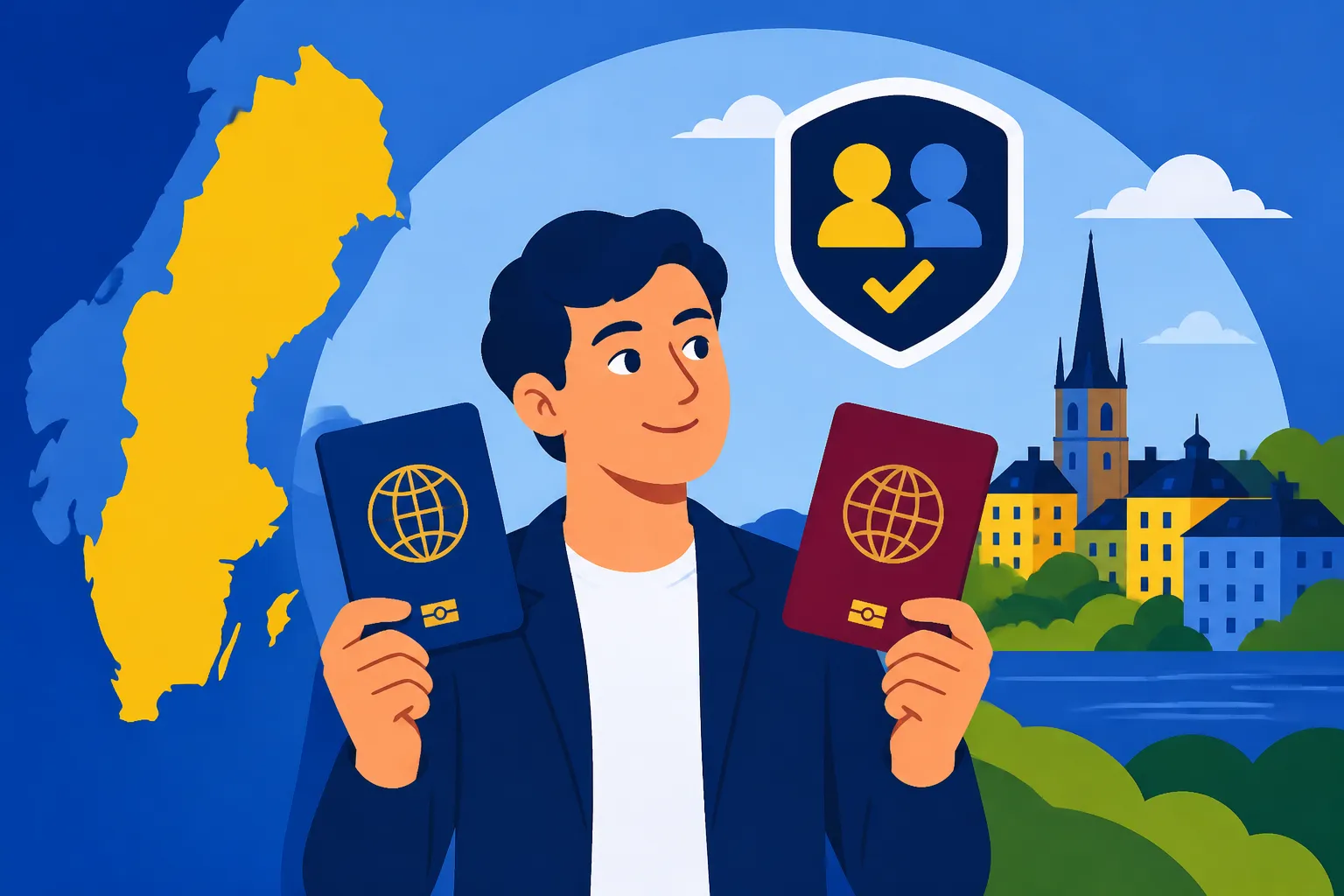
At its core, dual citizenship (or multiple citizenship) simply means that a person is legally recognized as a citizen of two or more countries simultaneously. It sounds straightforward, but the implications are far-reaching. Imagine carrying two passports, enjoying the full rights and responsibilities in two different nations. For us expats, this often means maintaining our deep connection to our homeland while fully embracing our new life in Sweden.
It's not about choosing sides; it's about belonging to both. This might mean you can vote in both countries' elections (if allowed by both), claim social benefits from either, or even be subject to military service in both, depending on the specific laws. It's a complex tapestry of rights and duties, but for many, it's a desirable outcome, allowing them to bridge cultural divides and simplify international travel and residency. The beauty of it is that Sweden, on its part, doesn't force you to sever ties with your roots.
A Look Back: How Sweden Changed Its Mind
Historically, Sweden operated under the principle of single nationality. This meant that if you chose to become a Swedish citizen, you generally had to renounce your previous citizenship. It was a clear-cut, if somewhat heart-wrenching, choice for many. For those of us who have built lives abroad, the thought of giving up our original nationality can be a significant hurdle, loaded with emotional and practical weight.
However, things changed dramatically on July 1, 2001. That's when Sweden introduced new legislation that broadly permits dual citizenship. This was a monumental shift, recognizing the realities of a globalized world and the increasing number of people living international lives. The change was a direct response to a growing understanding that forcing individuals to choose could be counterproductive and disconnect them from their origins, especially in a country that prides itself on openness and diversity. This legal amendment essentially said: "If your original country allows you to keep their citizenship when you become Swedish, then we have no problem with it." It removed a major barrier for countless individuals, making the path to becoming a Swedish citizen much more appealing and less agonizing.
Why This Matters for Expats
For us foreign residents in Sweden, this legislative change is incredibly significant. It means that becoming a Swedish citizen doesn't have to be a painful farewell to your first identity. Instead, it can be an expansion of your identity. You can apply for Becoming a Swedish Citizen: Requirements and the Application Process without the dread of losing your connection to your home country.
Think about the practical benefits: easier travel to your home country, the right to hold property or conduct business without extra hurdles in both nations, and perhaps most importantly, a profound sense of belonging. It can also simplify things for your children, who might naturally inherit dual citizenship, giving them the best of both worlds from birth. For those looking to secure their long-term future in Sweden, knowing that they can become a full citizen and still retain the passport they grew up with is a huge psychological and practical advantage. It removes a significant emotional barrier to full integration, allowing expats to truly embrace Sweden as their new home without having to completely abandon their past.
Maintaining Your Original Nationality: The Home Country's Rules
While Sweden is quite liberal about dual citizenship, it's absolutely crucial to remember that Sweden's policy is only half the equation. The other, equally important half, rests entirely with your country of origin. This is where many people get tripped up, assuming that because Sweden allows it, their home country automatically will too. That's simply not how it works, and a bit of research on your part is essential to avoid any nasty surprises.
Investigating Your Country's Laws
Before you even think about applying for Swedish citizenship, your first and most critical step is to thoroughly investigate the citizenship laws of your home country. This is not a step to be skipped or taken lightly, as the consequences of misunderstanding can be severe, potentially leading to the involuntary loss of your original nationality.
Some countries, like the UK, Ireland, the US, Canada, and Australia, generally have very permissive dual citizenship laws, meaning they don't care if you acquire another citizenship. Others, however, are quite strict. For instance, countries like Japan, India, and China typically require you to renounce your original citizenship upon acquiring a new one. There's also a spectrum in between, with some countries allowing dual citizenship only under specific conditions (e.g., if you're born with it, or if it's with certain other nations).
You'll need to dig into the official government websites of your country of origin. Look for sections on "nationality law," "citizenship," or "loss of nationality." If the information isn't crystal clear, or if you find yourself wading through dense legal jargon, it's often wise to consult with an immigration lawyer or a consular official from your home country. They can provide definitive answers based on your specific situation. Don't rely on anecdotes from other expats, as laws can change, and individual circumstances vary wildly.
The "Loss of Nationality" Clause
This is the real kicker for many. Even if your home country's laws don't explicitly forbid dual citizenship, they often contain clauses detailing actions that could lead to the automatic or voluntary loss of your nationality. One of the most common "loss of nationality" triggers is the voluntary acquisition of foreign citizenship.
For example, some countries state that if you voluntarily apply for and are granted citizenship of another country, you automatically lose your original citizenship. This can happen without any formal renunciation process on your part – it's just a consequence of your actions. It's a bit like driving over a speed limit without realizing the camera is there; the penalty still applies. Other countries might require you to formally renounce your citizenship at an embassy or consulate, but if you fail to do so, they might still consider you to have lost it by taking up a new nationality.
This is why that deep dive into your home country's specific laws is paramount. You need to understand if simply taking an oath of allegiance to Sweden, or receiving a Swedish citizenship certificate, will trigger a loss of your current nationality. The text might be subtle, so read carefully and, again, seek expert advice if there's any ambiguity.
Practical Steps to Confirm Your Status
Once you've done your initial research, it's time to confirm your understanding. Here are some practical steps you can take:
- Contact Your Embassy or Consulate: This is often the most direct route. Schedule an appointment or send a detailed email to your country's embassy or consulate in Sweden (or in a nearby country if yours doesn't have one here). Clearly state your intention to apply for Swedish citizenship and ask directly about the implications for your current nationality. Be specific in your questions: "If I become a Swedish citizen, will I lose my [Your Country] citizenship automatically? Is there any action I need to take?"
- Consult an Immigration Lawyer (Specialized): If your home country's laws are complex, or if your situation is unusual (e.g., you were born with dual nationality but never formally registered it), investing in a consultation with an immigration lawyer who specializes in your country's nationality law can save you a lot of heartache. This might be a cost, but it's peace of mind for a very important decision.
- Review Official Government Guidelines: Always prioritize information directly from your government's official sources. Avoid relying solely on online forums or unofficial advice, as laws can change and interpretations can vary.
Once you have clarity from your home country, you'll be well-prepared to move forward with your Swedish citizenship application. Remember, the Swedish Migration Agency (Migrationsverket) will not check your home country's laws for you; that responsibility lies squarely with you. They will process your application based on Swedish law, assuming you've done your due diligence regarding your original nationality.
The Process of Becoming a Swedish Citizen and Retaining Dual Nationality
So, you've checked with your home country, and they're cool with you holding onto their passport. Fantastic! Now comes the exciting part: navigating the path to becoming a Swedish citizen. It’s a journey that involves meeting specific criteria, gathering documents, and dealing with Migrationsverket – often a test of patience, as many of us expats know all too well when dealing with any government agency.
Meeting Sweden's Citizenship Requirements
Before you even think about dual nationality, you first need to meet Sweden's basic requirements for citizenship by application. This is generally referred to as "naturalisation." The main criteria revolve around your period of residence in Sweden, your conduct, and your intent to live here permanently.
Typically, you need to have resided in Sweden for a continuous period of five years with a valid residence permit. For certain groups, like refugees or those married to Swedish citizens, this period might be shorter (often three years). It's crucial that your time in Sweden has been based on an appropriate residence permit that allows for permanent settlement, not just a temporary visa. For instance, time spent on a student permit that doesn't lead to permanent residence might not fully count towards the required period. You also need to have maintained a Personnummer, Folkbokföring, and Your Legal Status in Sweden throughout this period, indicating your official residency here.
Beyond the time element, Migrationsverket will also look at your record. This means no serious criminal offenses, no history of breaking immigration laws, and generally being considered a "good citizen." They want to see that you've integrated into society and are not a burden. There isn't a specific language test or civics exam yet (though new proposals are often discussed, always check the most current information), but demonstrating an understanding of Swedish society and culture is implicitly valued. You can learn more about this in our detailed guide on Swedish Citizenship by Application: The Five-Year Path.
The Application Journey and Dual Status
Once you meet the basic requirements, you can submit your application for Swedish citizenship to Migrationsverket. The application is typically done online via their website, where you fill out forms and upload supporting documents. You'll need proof of identity, your residence permit details, and information about your time in Sweden.
Crucially, nowhere in the Swedish citizenship application process will Migrationsverket ask you to renounce your previous citizenship, nor will they notify your home country that you are applying for Swedish citizenship. This is entirely in line with Sweden's acceptance of dual nationality. They only care about your eligibility under Swedish law.
However, if your home country does require renunciation, the process becomes a bit more complex. Migrationsverket may grant you conditional Swedish citizenship, giving you a period (often two years) to formally renounce your previous nationality and provide proof to Migrationsverket. Only then will your Swedish citizenship become final. If you can't or won't renounce your previous citizenship within that timeframe (and your home country requires it), your Swedish citizenship application might be refused. This is why understanding your home country's laws before you apply is so vital.
When gathering documents for your application, ensure all foreign documents are properly translated. This is where services like RushTranslate or Translayte can be incredibly helpful. If your birth certificate, marriage certificate, or other official documents are not in Swedish or English, you'll need certified translations to accompany your application to Migrationsverket. A professional translation service ensures accuracy and meets the official requirements.
The waiting times for decisions from Migrationsverket can vary significantly. You can often track your application status on their "My Page" portal, but prepare for it to be a lengthy process. It can take several months, or even over a year, depending on the current workload and the complexity of your case. Patience is definitely a virtue here! For more details on this, you might find How Long Does a Swedish Citizenship Application Take? and Dealing with Migrationsverket: Applications, Waiting, and Decisions useful.
What to Do If Your Home Country Requires Renunciation
If your research revealed that your home country does require you to renounce your original citizenship to become Swedish, don't despair, but do be prepared for an extra layer of bureaucracy.
Your path to Swedish citizenship will typically involve these steps:
- Apply for Swedish Citizenship: You apply to Migrationsverket as usual, but you indicate that your home country requires renunciation.
- Conditional Approval: If your application is approved based on Swedish requirements, Migrationsverket will issue a decision stating that you will be granted Swedish citizenship once you have renounced your previous nationality.
- Renunciation Process: You then contact your home country's embassy or consulate to begin the formal renunciation process. This often involves fees, interviews, and submitting specific forms and documents. Make sure to get official proof of renunciation (a certificate or letter). This can sometimes be a bureaucratic process in itself, so start early.
- Proof to Migrationsverket: You submit the official proof of renunciation to Migrationsverket.
- Final Swedish Citizenship: Once Migrationsverket confirms your renunciation, your Swedish citizenship becomes final, and you are officially a Swedish citizen.
This multi-step process can add considerable time and complexity, but for those determined to become Swedish citizens, it's a necessary hurdle. It's a journey that really highlights the importance of thorough preparation and understanding both Sweden's rules and those of your home country.
Practical Implications and Benefits of Holding Two Passports in Sweden
Holding dual citizenship can unlock a host of benefits and, let's be honest, simplify a number of aspects of expat life in Sweden and beyond. But it also comes with a unique set of responsibilities. It’s not just about bragging rights; it's about practical advantages that can make a real difference.
Travel and Bureaucracy Made Easier
One of the most immediate and tangible benefits of dual citizenship is the ease of international travel. Imagine having two valid passports in your pocket.
- Entering and Exiting: When you travel from Sweden to your country of origin, you can typically use your Swedish passport to exit Sweden and your original country's passport to enter it. The same applies in reverse. This can often streamline border control processes, especially if one of your passports offers visa-free access to more countries. For example, a Swedish passport currently allows visa-free access to a significant number of countries worldwide, often more than passports from many other nations.
- Avoiding Visa Hassles: If your original passport requires a visa to enter Sweden or the Schengen Area, having a Swedish passport eliminates that entirely. Similarly, if your home country requires a visa for certain destinations, but your Swedish passport doesn't, you can use the Swedish one for that trip.
- Simpler Paperwork: For certain administrative tasks, such as opening a bank account in your home country or proving residency, having a passport from that country can simplify matters immensely, removing the need for apostilles or other complicated attestations. This means less running around, fewer translated documents (though remember RushTranslate or Translayte are there if you need them for other non-Swedish/English documents), and generally less hassle.
Rights, Responsibilities, and Consular Support
Holding citizenship in two countries means you are a full legal member of both societies, with all the rights and responsibilities that entail.
- Voting and Political Rights: You gain the right to vote in Swedish national and regional elections (you can already vote in municipal elections as a resident, but citizenship unlocks the full spectrum). Depending on your original country's laws, you might also retain your voting rights there. This gives you a stronger voice in the political landscape of both nations.
- Consular Protection: This is a big one. As a dual citizen, you are entitled to consular assistance from both countries if you are abroad. However, there's a crucial caveat: when you are in one of your countries of citizenship, that country's government typically views you solely as its citizen. For instance, if you're in Sweden, the Swedish government will treat you as a Swedish citizen, and your other embassy might have limited ability to intervene on your behalf. Likewise, if you're in your original country, they'll see you as their citizen. This is important to remember, especially in times of crisis.
- Employment and Residence: You have an undeniable right to live and work in both countries indefinitely. This provides immense security and flexibility, especially if you ever consider moving back to your country of origin or if future circumstances in Sweden change. It also opens up certain jobs in Sweden that might be reserved for citizens, such as positions in the armed forces or certain government roles.
Navigating Dual Obligations: Taxes, Military Service, and More
While the benefits are many, dual citizenship also comes with dual obligations. It’s important to be aware of these.
- Taxation: Generally, becoming a Swedish citizen doesn't automatically mean you pay taxes in two countries. Sweden's tax system is primarily based on residency. If you live and work in Sweden, you pay taxes here, regardless of how many passports you hold. However, some countries, most notably the United States, tax their citizens worldwide, regardless of where they live. If you are a U.S. citizen, you will still have reporting obligations to the IRS, even if you live in Sweden and pay Swedish taxes. It's vital to understand the tax laws of both countries and any Double Taxation: How Sweden's Tax Treaties Protect You that might be in place. Consulting a tax advisor specializing in international taxation is highly recommended for complex situations.
- Military Service: This can be a significant concern, especially for younger dual citizens. Some countries have mandatory military service for their citizens. If you hold citizenship in such a country, you might technically be liable for military service there, even if you live in Sweden. Sweden currently has a hybrid system of conscription, but the obligation primarily falls on Swedish residents. You should check the military service laws of your home country carefully, as some allow for exemptions for dual citizens residing abroad, while others do not.
- Public Service/Jury Duty: You might be eligible or even obliged to serve on a jury or hold public office in both countries, if applicable under their respective laws.
Essentially, dual citizenship makes you a full player in two games. It's a position of privilege and flexibility, but it demands an understanding of the rules of both pitches.
Common Myths and Misconceptions About Dual Citizenship
When something seems as complex as nationality and immigration, myths and misconceptions tend to spread like wildfire. It's easy to get lost in anecdotal advice or outdated information, especially when discussing something as personally significant as dual citizenship. Let's clear up some of the most common misunderstandings that circulate among expats in Sweden.
Myth: You Must Choose One Identity
This is perhaps the most persistent myth, often stemming from older laws or the policies of other countries. Many people assume that to embrace Sweden fully, you must completely shed your previous identity.
Reality check: As we've extensively discussed, Sweden explicitly permits dual citizenship since 2001. This means the Swedish state acknowledges and accepts that you can be both Swedish and a citizen of another country simultaneously. You don't have to choose. This policy is a huge relief for many expats who want to feel fully integrated into Swedish society without abandoning their cultural heritage or family ties abroad. It's about adding a layer to your identity, not replacing one. You get to keep your original passport alongside your new Swedish one, representing your connection to both worlds.
Myth: It Complicates Taxes (Mostly Not in Sweden)
Another common worry is that holding two passports will automatically lead to a convoluted tax nightmare, forcing you to pay taxes twice.
Reality check: For most dual citizens in Sweden, this is generally not the case. Sweden's tax system, like many others, is primarily based on tax residency. If you live and work in Sweden, you are generally considered a tax resident here and pay your income tax to Sweden, regardless of your multiple citizenships. Sweden has tax treaties with many countries precisely to prevent Double Taxation: How Sweden's Tax Treaties Protect You.
The significant exception, as mentioned earlier, is the United States, which taxes its citizens worldwide, regardless of residency. If you are a U.S. citizen and become a Swedish citizen, you will still have U.S. tax reporting obligations. However, this is due to U.S. law, not Sweden's. For citizens of most other countries, dual citizenship itself doesn't mean paying double tax; residency and income source are the key factors. Always consult a tax professional if you have income or assets in multiple countries.
Myth: Your Kids Get It Automatically (Nuances)
People often assume that if parents hold dual citizenship, their children automatically inherit both nationalities without any further action. While often true, there are nuances.
Reality check: Children born in Sweden to a Swedish citizen parent (or to parents who become Swedish citizens) will be Swedish citizens. If the other parent is a citizen of a country that also allows citizenship by descent, the child can often automatically acquire that citizenship as well. Sweden does not have 'jus soli' (birthright citizenship) where simply being born on Swedish soil grants citizenship; at least one parent must be a citizen or permanent resident meeting certain criteria.
However, the laws of the other country are crucial here. Some countries require parents to actively register the child's birth with their embassy or consulate within a certain timeframe to confer citizenship. Others might require one of the parents to have resided in the home country for a certain period, or might not allow citizenship to be passed down if it's not the primary parent's nationality.
So, while often straightforward, it's not always completely automatic. If you want your children to fully benefit from your dual nationality, you must check the specific citizenship laws of your non-Swedish country and take any necessary registration steps after their birth. This proactive step ensures your children can access all the rights and privileges associated with both nationalities as they grow up. For more about family-related immigration matters, our Family Reunification in Sweden: Bringing Your Loved Ones guide can be helpful, though it focuses more on permits than citizenship by birth.
Disclaimer
The information provided in this guide is for general informational purposes only and does not constitute legal or professional advice. While we strive to provide accurate and up-to-date content, immigration laws and procedures in Sweden and other countries are subject to change. Always consult with the relevant authorities (e.g., Migrationsverket, your home country's embassy, or an immigration lawyer) for advice tailored to your specific situation before making any decisions related to your immigration status or citizenship. We cannot be held responsible for any actions taken based on the information presented here.