How Do I Pay Bills Through My Swedish Bank?
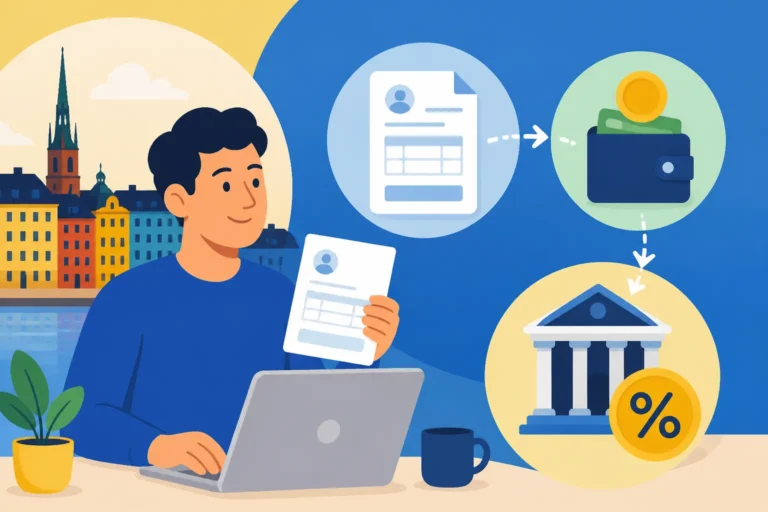
Ah, the wonderful world of Swedish bureaucracy and finances! If you've just moved here, you've probably already discovered that paying bills in Sweden isn't quite like it is in many other parts of the world. Forget checks, often forget cash, and sometimes even forget mailing paper invoices. It's a highly digitised system, and if you're not clued in, it can feel like trying to solve a Rubik's Cube blindfolded. This guide is going to walk you through exactly how to pay your bills using your Swedish bank, demystifying the process so you can keep your lights on and your landlord happy.
The Digital Reality of Bill Paying in Sweden
Sweden is, without a doubt, a trailblazer in the cashless society movement. This isn't just a trend; it's deeply ingrained in daily life, and nowhere is this more apparent than when it comes to managing your personal finances and paying bills. For newcomers, this can be a real culture shock, especially if you're used to a system with more physical interaction or paper trails.
Understanding Sweden's Cashless Society and Digital Infrastructure
The expectation here is that almost everything is handled digitally. From splitting a fika bill with a friend to paying your monthly rent, digital solutions are the norm. This means that having a proper Swedish bank account and, crucially, a functioning BankID, isn't just a convenience – it's practically a necessity for living a normal life here. I remember when I first arrived, trying to pay a utility bill, clutching a paper invoice in my hand, and being met with polite bewilderment. They just don't do it that way anymore!
The first hurdle for many expats is often Opening a Bank Account in Sweden: A Step-by-Step Guide. Without one, you're pretty much stuck. Once you have an account, the next, and arguably most important, step is to get your Getting BankID: Sweden's Essential Digital Identity. This is your digital key to everything from online banking and government services to signing contracts and, yes, approving your bills. Without it, you’ll be doing things the hard way, if you can do them at all. This digital infrastructure is designed for efficiency, but it requires you to be fully integrated into the Swedish system.
Common Types of Bills You'll Encounter
Once you're set up with your bank and BankID, you'll start receiving various bills. These are some of the most common ones you’ll need to manage:
- Rent (Hyra): Often the biggest recurring bill. This might come as an e-faktura (e-invoice), a paper invoice, or sometimes your landlord might give you bank details for a manual transfer.
- Electricity (El): Usually from a separate provider than your housing. Expect e-faktura or paper invoices. Remember, you might get two separate electricity bills – one for transmission (nätavgift) and one for consumption (elhandel).
- Internet and Mobile Phone: Providers like Telia, Tele2, Telenor, and others almost exclusively use e-faktura or direct debit (autogiro).
- Home Insurance (Hemförsäkring): Essential in Sweden, this is usually paid monthly or annually via e-faktura or autogiro.
- Childcare (Förskola) or School Fees: If you have children, these will typically be managed by your municipality and almost always come as e-faktura.
- Union Fees (Fackavgift) and Unemployment Fund (A-kassa): If you've joined a union or A-kassa, these are usually deducted automatically or paid via e-faktura.
- Student Loans (CSN): If you're a student with a Swedish loan, CSN bills are highly digitised.
- Tax Bills: While less frequent, you'll receive communications from Skatteverket (the Swedish Tax Agency) digitally through your online bank or by post. Understanding Your Swedish Payslip and Preliminärskatt can help you foresee potential tax adjustments.
Most bills will come with a "Bankgiro" or "Plusgiro" number (these are just different types of payment systems that funnel into a bank account) and a crucial "OCR number." The OCR number is a unique reference code that tells the recipient exactly what bill you're paying. It's vital not to miss this!
Your Toolkit for Paying Bills: BankID, Online Banking, and Swish
To navigate the Swedish bill-paying landscape, you need to understand the main tools at your disposal. These are not just options; they are the standard operating procedures.
Online Banking: The Command Centre for Your Finances
Once you've got your BankID set up, your online bank portal becomes your financial command centre. This is where the vast majority of your bill payments will happen. Every major bank – Swedbank, SEB, Handelsbanken, Nordea, Länsförsäkringar – has a robust online banking system, and most offer interfaces in English. It's a truly powerful system, making BankID and Digital Payments: How Money Moves in Cashless Sweden incredibly seamless.
Here’s a general overview of how you'll use it:
- Log In: You’ll typically log in to your bank’s website or app using your BankID. This usually involves opening the BankID app on your phone/tablet and entering your personal security code.
- Navigate to Payments: Look for sections like "Betala och överföra" (Pay and transfer), "Inbetalningar" (Payments), or "E-faktura."
- Choose Your Payment Method:
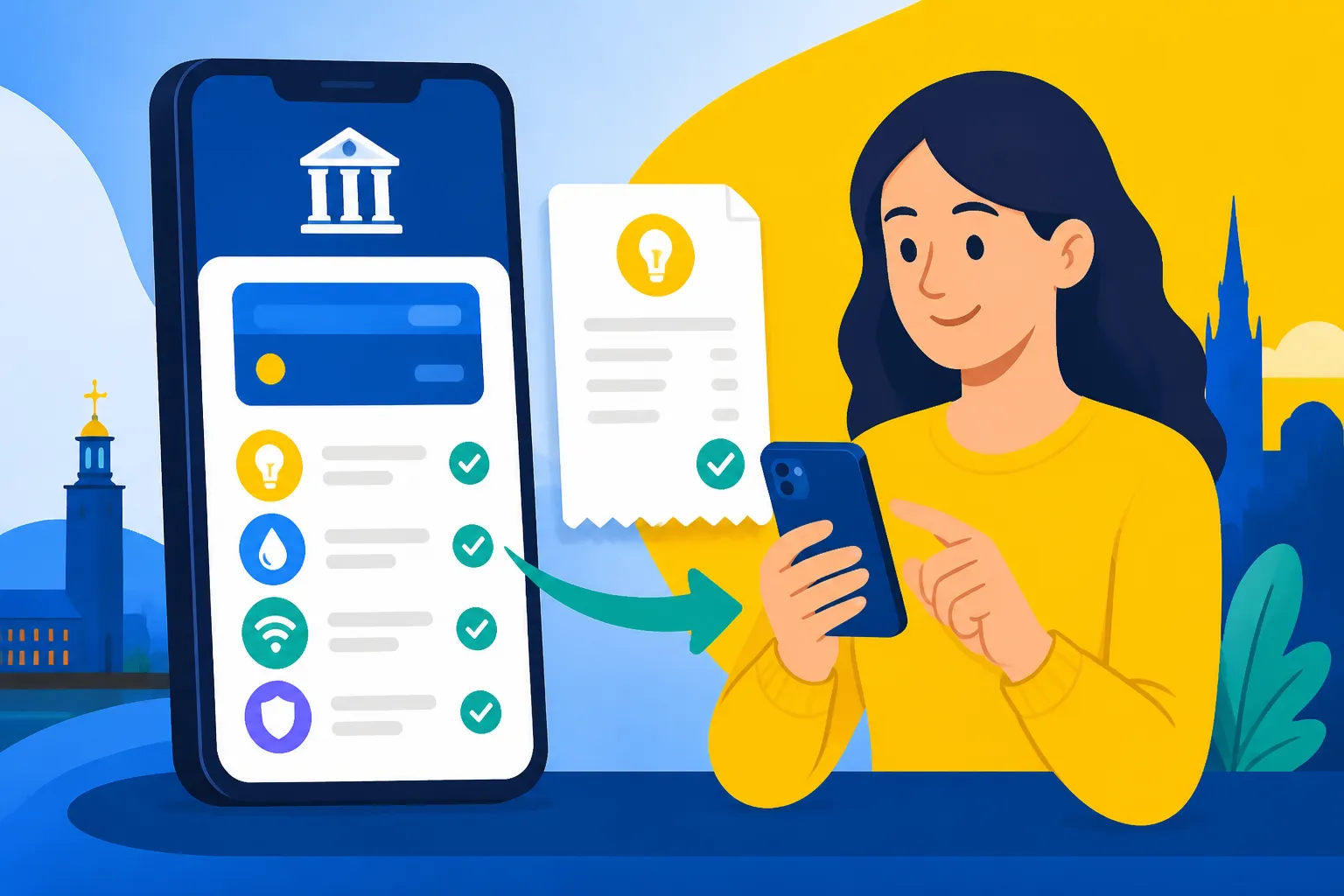
- E-faktura: This is the most common and convenient. Bills are sent directly to your online bank, pre-filled with all details. You just review and approve.
- Autogiro: For recurring bills, this sets up an automatic direct debit.
- Manual Bank Transfer: If you have a paper invoice or a PDF with a Bankgiro/Plusgiro and OCR number, you'll manually enter these details.
- Swish: While not for major recurring bills, some smaller businesses or individuals might use Swish for invoices.
The beauty of online banking with BankID is the security and efficiency. Every payment you make or approve requires a quick verification with your BankID, so you always know what’s going out.
E-Faktura (E-Invoice): The Swedish Gold Standard
If there's one golden rule of bill paying in Sweden, it's this: sign up for e-faktura wherever possible. An e-faktura is an electronic invoice sent directly to your online bank account. Instead of getting a paper bill in the mail or a PDF in your email, the bill simply appears in your bank's payment queue.
How to get started with e-faktura:
- Log in to your online bank.
- Look for the "E-faktura" section. It might be under "Betala och överföra" or a dedicated menu item.
- "Anslut" (Connect) or "Anmäl dig" (Sign up): You'll see a list of companies (sometimes a search function) that offer e-faktura. Find your billers (e.g., your electricity company, internet provider, municipality for childcare).
- Sign up: You’ll typically need to enter your personnummer and possibly a customer number (kundnummer) from a previous paper bill.
- Confirm with BankID: The registration usually needs to be approved with your BankID.
Benefits of e-faktura:
- No manual entry: All the payment details, including the notoriously critical OCR number, are pre-filled. This eliminates errors.
- Timely reminders: Your bank often notifies you when a new e-faktura arrives.
- Environmentally friendly: Less paper waste.
- Easy approval: Just a click and a BankID verification to pay.
Seriously, I can't stress this enough: What Is an E-Invoice E-faktura and How Do I Use It? is the single best way to manage your bills in Sweden. Make it your mission to convert all your regular bills to e-faktura.
Autogiro (Direct Debit): Set It and Forget It
For truly recurring and predictable payments, Autogiro is your best friend. This is essentially a direct debit where the biller automatically withdraws the money from your account on the due date. It's incredibly convenient for things like rent, insurance premiums, or gym memberships.
How to set up Autogiro:
- Through the biller's website: Many companies will offer an option to sign up for Autogiro directly on their customer portal. You'll need to provide your bank account details and approve the mandate with BankID.
- Through your online bank: Some banks allow you to initiate an Autogiro request directly from your online banking interface, but this is less common than e-faktura sign-ups. More often, your bank will simply list your active Autogiro mandates.
Pros of Autogiro:
- Ultimate convenience: No need to remember due dates or manually approve payments.
- Never miss a payment: As long as you have sufficient funds, payments are made automatically.
Cons of Autogiro:
- Less immediate control: You don't review each payment before it goes out, so it's wise to check your bank statements regularly.
- Requires monitoring: Ensure you always have enough money in your account to avoid bounced payments and fees.
- Internal Link opportunity: How Do I Set Up Autogiro for My Bills in Sweden? covers this in much more detail.
Swish: Quick Payments for Smaller Sums
While not typically used for your main household bills, Swish is ubiquitous for person-to-person payments and increasingly for smaller business transactions. It's an instant payment app linked directly to your bank account and phone number. If you're paying a private landlord who requests it, or a local artisan, you might encounter a request to pay via Swish.
How it works:
- You need BankID to activate Swish.
- Open the Swish app, enter the recipient's Swish number (usually their phone number).
- Enter the amount and a message (e.g., "Rent for April").
- Approve with BankID. The money arrives instantly.
While convenient for informal payments, you won't typically use Swish for large, recurring bills from utility companies or major service providers. It's more for quick, ad-hoc transactions. But learning Using Swish: How Sweden Pays Instantly is definitely worth it for everyday life here.
Step-by-Step: Paying a Bill in Sweden
Let's get down to the practical steps for paying a bill, focusing on the most common scenarios.
Manual Bank Transfer (When E-Faktura Isn't an Option)
This scenario usually applies when you receive a physical paper bill, a PDF invoice via email, or if a new service provider hasn't yet enabled e-faktura for you. This requires careful attention to detail.
-
Gather Your Invoice Details:
- Payment Amount (Summa att betala): This is obvious, but double-check.
- Due Date (Förfallodatum): Crucial to avoid late fees.
- Bankgiro or Plusgiro Number (Mottagarens konto/mottagarens bankgiro/plusgiro): This is the recipient's "account" number within the Bankgiro/Plusgiro system. It's usually 7-10 digits long.
- OCR Number (OCR-nummer/Referensnummer): This is the most critical piece of information. It's a long string of numbers (often 10-25 digits) that uniquely identifies your payment to the biller. Without the correct OCR number, your payment might not be registered against your account, leading to reminders, late fees, and a headache. If you don't see an OCR number, look for "referensnummer." If neither is present, sometimes a shorter "meddelande" (message) or customer number is provided, but always prioritise OCR.
-
Log In to Your Online Bank: Use your BankID to securely access your account.
-
Navigate to the Payment Section: Look for "Betala och överföra," "Nya betalningar" (New payments), or similar.
-
Select "Make a Payment" or "Bank Transfer": You'll typically choose an option that lets you enter details manually.
-
Enter Recipient Information:
- Input the Bankgiro or Plusgiro number. Your bank system will usually auto-detect if it's a Bankgiro or Plusgiro.
- The recipient's name (e.g., "Vattenfall," "Telia") might automatically appear once you enter the Bankgiro/Plusgiro, which is a good sign you have the correct number.
-
Enter Payment Details:
- Amount: The exact sum from your bill.
- OCR number: Carefully enter the OCR number. Seriously, proofread this. It's the most common point of error for manual payments.
- Due date: Enter the specified due date. You can often schedule payments in advance, which is super handy.
-
Review and Approve:
- Double-check everything: amount, recipient, Bankgiro/Plusgiro, and especially the OCR number.
- Confirm the payment using your BankID.
Once approved, the payment will be processed, usually within 1-2 business days, depending on the due date and when you initiated it.
Here’s a simple table to summarise the different payment methods:
| Payment Method | Setup Difficulty | Ease of Use After Setup | Automation Level | Key Benefits | Best For |
|---|---|---|---|---|---|
| Manual Transfer | Low | Medium | Low | Flexibility, suits occasional bills | One-off payments, bills without e-faktura or autogiro options |
| E-faktura | Medium | High | Medium | Pre-filled details, reduces errors, convenient | Regular, recurring bills from companies and municipalities |
| Autogiro | Medium | Very High | High | No manual intervention, never miss a payment | Highly predictable, fixed recurring bills (e.g., rent, insurance) |
| Swish | Low | High | Low | Instant payments, mobile-friendly | Small sums, private payments, some smaller businesses |
Common Pitfalls and How to Avoid Them
Even with the best intentions, things can go wrong. Here are some common pitfalls for new expats and how to steer clear of them:
- Missing or Incorrect OCR Numbers: This is probably the biggest headache. If you pay manually and miss the OCR number or enter it incorrectly, the payment might go into a generic account at the biller's end. This means they can't match it to your specific invoice. You'll likely get a reminder (påminnelse), which comes with a reminder fee (påminnelseavgift), and potentially late payment interest (dröjsmålsränta). Always call the biller immediately if you realise you made this mistake.
- Late Payments: Sweden takes due dates seriously. While a one-off late payment might just incur a reminder fee, consistent late payments can negatively impact Your UC Credit Score: How It's Calculated and Why It Matters. This can affect your ability to get loans, rent new apartments, or even sign phone contracts later. Schedule payments a few days before the due date, especially if it's your first time with a new biller.
- Not Enough Funds: This sounds obvious, but if you've set up Autogiro and don't have enough money in your account, the payment will fail, leading to fees from both your bank and the biller. Always keep an eye on your account balance, especially around due dates for automatic payments.
- Dealing with Foreign Currency Payments: If you happen to have bills in your home country or need to send money abroad, standard Swedish bank transfers can be costly. Services like Wise (formerly TransferWise) can be a real lifesaver for Sending Money To and From Sweden Without Losing on Fees. They offer much more competitive exchange rates and lower fees for international transfers, which is something many expats find incredibly useful when managing finances across borders. Wise is a popular option for transferring money to and from Sweden, with fees that are typically easy to see upfront.
- Forgetting to Check Your Payments: Even with e-faktura and Autogiro, it's good practice to log into your online bank regularly and check your "Kontohistorik" (Account history) or "Betalda fakturor" (Paid invoices) to ensure everything has gone through as expected.
Special Considerations for Newcomers
Navigating bill payments when you're fresh off the boat in Sweden can feel like an uphill battle. But it gets easier, I promise!
The Personnummer Hurdle
The personnummer, your Swedish personal identity number, is absolutely central to integrating into Swedish society, and that includes bill payments. Almost every single digital service, including setting up e-faktura, Autogiro, and even just getting a customer account with many providers, hinges on you having a personnummer. If you're still waiting for your Getting Your Personnummer: The Gateway to Swedish Healthcare, you'll face some extra challenges.
What to do before your personnummer arrives:
- Manual Paper Invoices: Your only real option might be to receive paper invoices and pay them manually via your online bank (if you have an account). Make sure to manually add the Bankgiro/Plusgiro and OCR number.
- Temporary Solutions: Some utility companies might allow you to set up an account using a coordination number (samordningsnummer) or even just your birth date, but this is less common for full digital integration. If you only have a What Is a Samordningsnummer and Can I Get Care With One?, it's vital to clarify with each biller how they can manage your account. Expect more manual processes and potentially more paper until your personnummer is registered.
- Ask for Help: Don't hesitate to ask your employer (if applicable), a Swedish friend, or a colleague to help you understand the first few bills. Sometimes just having someone explain the layout of a typical Swedish invoice makes a huge difference.
It's a frustrating period, but rest assured, once that personnummer arrives, a whole world of digital convenience opens up for you.
Getting Help and Understanding Swedish Terms
Swedish bills are, naturally, in Swedish. While many online banking portals offer an English interface, the invoices themselves might not. Don't let this intimidate you.
- Translation Tools: Google Translate or similar apps are your friends. You can often take a picture of a paper bill and get a decent translation.
- Biller's Customer Service: Most major companies (electricity, internet, phone, banks) have excellent English-speaking customer service. Don't be shy about calling them. They are used to dealing with expats and can often guide you through the initial setup of e-faktura or clarify any confusing terms on your bill.
- Your Bank's Customer Service: Your bank is there to help. If you're struggling to make a payment or understand a specific feature in your online banking, reach out to them. They can often provide step-by-step guidance.
- Understand Key Terms: Familiarise yourself with terms like förfallodatum (due date), OCR-nummer, bankgiro, plusgiro, kundnummer (customer number), totalbelopp (total amount), and att betala (to pay).
- Tax Documentation: Even things like understanding your annual tax declaration from Skatteverket can feel like a bill to process. Services like Taxes for Expats can be incredibly helpful for expats trying to navigate the complexities of Swedish tax regulations and how they intersect with their home country's tax system. They can help decipher those dense forms, ensuring you understand any outstanding payments or refunds.
Paying bills in Sweden might seem daunting at first, but with a Swedish bank account, BankID, and a good grasp of e-faktura and Autogiro, you'll be a pro in no time. The system is designed for efficiency, and once you're in it, you'll likely appreciate its ease. Just remember to embrace the digital side, triple-check those OCR numbers, and don't be afraid to ask for help!
Disclaimer
The information provided in this guide is for general informational purposes only and does not constitute financial, legal, or immigration advice. While every effort has been made to ensure accuracy, regulations and procedures in Sweden can change. Always consult with official sources, your bank, or relevant authorities for the most up-to-date and personalised information.