What Is an E-Invoice (E-faktura) and How Do I Use It?
Moving to Sweden often feels like stepping into the future, especially when it comes to payments. You arrive, you get settled, and then the first batch of bills starts rolling in. Except, wait – where are they? If you’re used to physical paper statements piling up on your doormat, Sweden’s digital-first approach to invoices can be a bit of a bewildering experience. You might receive a cryptic SMS about a due payment or a notification in your online bank, leaving you scratching your head. This comprehensive guide will demystify the e-invoice (or e-faktura) system in Sweden, explaining what it is, how to use it, and why it's an indispensable tool for managing your finances as a foreign resident.
The Swedish Digital Payment Landscape and the Rise of E-faktura
When you first arrive in Sweden, you'll quickly notice how few people use cash. It's truly a digital society when it comes to money. This embrace of digital extends far beyond just card payments and mobile apps like Swish; it's deeply ingrained in how essential services communicate with you and how you pay your bills. For many of us who've lived here for a while, the thought of going back to paper bills feels almost… medieval.
Why Paper Bills Are a Relic in Sweden
Sweden's rapid push towards a cashless, paperless society isn't just a quirky cultural phenomenon; it's a deeply ingrained part of the infrastructure. For decades, the nation has prioritized efficiency, environmental consciousness, and security in its financial systems. This means that if you're expecting a traditional paper bill for your electricity, internet, or even your rent, you might be waiting a very long time indeed. Most companies, both private and public, have largely moved away from sending physical invoices unless absolutely necessary, or if you specifically request it (which often comes with an extra fee, believe it or not!).
This shift can be a source of genuine frustration for newcomers. In your home country, you might be used to having a tangible record of your bills, a stack of envelopes to sort through. Here, that physical paper trail is largely absent. Instead, notifications often come via SMS, email, or, most commonly, directly into your online banking portal. The initial confusion can lead to missed payments, late fees, and a feeling of being constantly behind the curve. It's a completely different rhythm of managing household expenses, and it takes some getting used to.
What Exactly is an E-faktura?
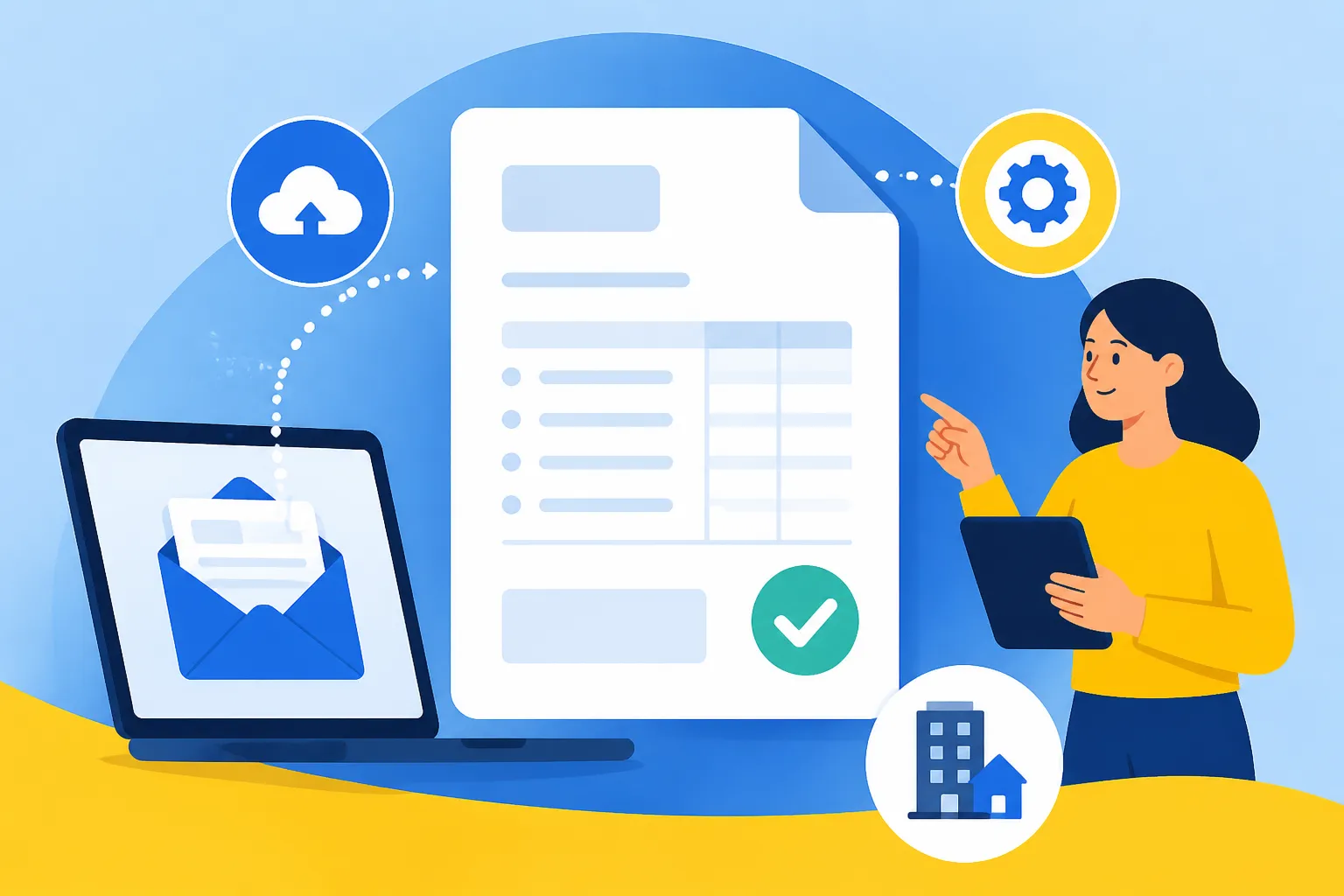
So, if it's not a paper bill and it's not just an email with a PDF attachment, what is an e-faktura? In the simplest terms, an e-faktura is a digital invoice that is sent directly from the billing company (your electricity provider, your landlord, the municipality) to your personal online banking account. It's not an email; it’s a structured data file, delivered securely within your bank's protected environment. This means it bypasses your email inbox (and potential spam filters) entirely and lands directly where you manage your money.
Think of it as a pre-filled payment form that appears magically in your internet bank, ready for your review and approval. All the critical information—the amount due, the due date, the recipient's bank details, and the unique OCR reference number—is already filled in for you. This eliminates the need for manual data entry, which is a huge benefit for anyone, but especially for expats who might still be grappling with Swedish company names and banking terminology. It’s secure, efficient, and once you get the hang of it, incredibly convenient. This direct digital delivery system is a cornerstone of how money moves in cashless Sweden, making transactions smoother and significantly reducing the chances of errors or missed payments.
How to Set Up and Manage Your E-faktura
Embracing the e-faktura system is probably one of the most significant steps you can take to streamline your financial life in Sweden. It’s all about getting those pesky bills organized and paid on time without the hassle of paper or manual input. But, like many things here, there are a few prerequisites and a specific process to follow.
Getting Started: The Prerequisites
Before you can dive into the wonderful world of e-faktura, there are a couple of fundamental things you absolutely need to have in place. These aren't just for e-faktura but for almost any serious financial or administrative interaction in Sweden.
First and foremost, you need a Swedish bank account. This might sound obvious, but for many newcomers, getting a bank account can be a bit of a hurdle in itself, often requiring a Personnummer. Once you have an account, you'll gain access to their online banking services. While all major Swedish banks like Swedbank, SEB, Handelsbanken, and Nordea offer excellent digital services, each has its own interface, so take some time to Choosing a Bank in Sweden: Swedbank, SEB, Handelsbanken, and Nordea to find one that suits you. Without a local bank account, you simply can't receive e-faktura, as they are tied directly to these accounts. If you're still in the process of setting this up, check out our guide on Opening a Bank Account in Sweden: A Step-by-Step Guide.
The second, equally crucial requirement is BankID. This is Sweden's digital identification system, and it's pretty much your digital passport, signature, and key to almost everything online – including approving your e-faktura. You'll use it to log into your online bank, sign up for services, and confirm payments. If you don't have BankID yet, it’s a top priority. You typically get it through your Swedish bank after you have your Personnummer. For a full rundown, our article on Getting BankID: Sweden's Essential Digital Identity is a must-read. Without BankID, your ability to manage e-faktura and many other online services will be severely limited. It really is the gateway to digital life here. And, as a reminder, to get BankID, you'll need your Getting Your Personnummer: The Gateway to Swedish Healthcare.
The Sign-Up Process: A Step-by-Step Guide
Once you have your Swedish bank account and BankID, signing up for e-faktura is surprisingly straightforward. It’s almost universally done through your online banking portal, regardless of which bank you use. Here’s a general step-by-step breakdown:
- Log into Your Online Bank: Use your BankID to securely log into your personal internet bank. This is where all the magic happens.
- Find the E-faktura Section: Look for a menu item or a tab often labeled "E-faktura," "Anslut E-faktura," "E-fakturaanslutningar," or something similar. Banks usually make this easy to find given its importance.
- Search for Billers: Within this section, you'll typically find a search function where you can look for companies and organizations that offer
e-faktura. This is where you'll type in the name of your electricity provider (like Vattenfall or E.ON), your internet provider (like Telia or Bredband2), your insurance company, your landlord's housing company, or even your municipality (kommun). You might need to be precise with the spelling. - Connect to the Biller: Once you find your specific biller, select them. You might be asked to provide some additional information to link your account, such as your customer number (kundnummer), contract number, or even your Personnummer. This step ensures that the
e-fakturagoes to your account and not someone else's. - Confirm and Activate: Review the details, confirm your agreement, and usually, you'll sign this digital agreement with your BankID. Once confirmed, you're set! The next time that company issues a bill to you, it should appear directly in your online bank as an
e-faktura.
It's important to remember that you usually have to do this for each company you want to receive e-faktura from. It's not a universal switch-on; it's a series of individual connections. Some smaller local businesses or certain one-off services might not offer e-faktura, so you'll still encounter occasional paper bills or other payment methods.
To give you a clearer idea of the types of companies that widely offer e-faktura, here's a table of common billers you'll likely interact with:
| Service Category | Common Swedish Billers (Examples) | Typical Information Needed for Sign-up |
|---|---|---|
| Electricity | Vattenfall, E.ON, Fortum, Ellevio | Customer Number, Personnummer |
| Internet/Mobile | Telia, Comviq, Telenor, Bredband2 | Customer Number, Personnummer |
| Housing/Rent | Large municipal housing companies (e.g., Svenska Bostäder), smaller private landlords | Customer Number, Apartment Number |
| Insurance | Länsförsäkringar, If, Folksam, Trygg-Hansa | Policy Number, Personnummer |
| Municipal Services | Your local kommun (e.g., Stockholm Stad) | Personnummer, Customer Number |
| Healthcare | Your region (e.g., Region Stockholm), 1177 | Personnummer, Patient ID |
| Loans/Credit Cards | Your Bank, Klarna, Resurs Bank | Agreement Number, Personnummer |
Managing and Paying E-faktura
Once you've signed up for e-faktura with your various service providers, the payment process becomes incredibly smooth. This is where the true beauty of the system shines. When a new e-faktura arrives, you'll typically receive a notification from your bank (either in your online banking inbox, via email, or sometimes SMS, depending on your bank's settings).
Logging into your online bank, you'll see a dedicated section for "Payments" or "E-faktura" where all your incoming digital invoices are listed. Click on an e-faktura, and you'll see a clear breakdown of the bill: the amount, the original sender, the due date, and a description of the service. All the payment fields are already pre-filled. This means no more squinting at paper bills trying to figure out which string of numbers is the OCR reference or which is the bankgiro. It’s all there, accurately presented.
All you need to do is review the details to ensure everything looks correct, and then, with a simple click or tap, approve the payment using your BankID. Most banks also allow you to schedule the payment for the actual due date, rather than paying it immediately. This is a smart move, as it keeps your money in your account for longer and ensures you never miss a deadline. This method stands in stark contrast to the old ways of manually entering payment details, which, let's be honest, could easily lead to mistakes and the dreaded late payment fees. The ease of managing these payments is a major reason why e-faktura has become so popular in Sweden and why it’s so beneficial for foreign residents navigating a new financial system.
E-faktura vs. Autogiro and Other Payment Methods
Navigating Swedish bills isn't just about finding the right digital method; it's also about understanding the nuances between them. While e-faktura is fantastic for control, you'll also encounter Autogiro, another popular digital payment method. Knowing the difference is key to managing your finances effectively in Sweden.
Understanding the Differences: E-faktura vs. Autogiro
It's common for newcomers to Sweden to confuse e-faktura with Autogiro (direct debit), or to wonder which one is better. Both are digital, both are convenient, but they operate on fundamentally different principles regarding your control over the payment.
With an E-faktura, you maintain active control over each payment. The invoice arrives in your online bank, pre-filled, but it will not be paid until you explicitly log in, review the details, and approve it with your BankID. This gives you a chance to scrutinize the amount, question any charges, or simply confirm that it looks correct before authorizing the transfer. For many expats, especially in the early days, this hands-on approach provides peace of mind. You are aware of every single transaction leaving your account.
Autogiro, on the other hand, is a direct debit system. Once you set up an Autogiro agreement with a company (which also usually involves signing up via your online bank or the company's website using BankID), you are giving that company permission to automatically withdraw the payment directly from your bank account on the specified due date. You receive no prior notification for each individual payment beyond your regular bill (which might still be a paper bill, an email PDF, or sometimes an e-faktura). While incredibly convenient for recurring, predictable payments (like your monthly rent or a subscription service), it means you surrender some immediate control. If an incorrect amount is charged, or if a service you thought you canceled continues to bill you, the money will be taken automatically. You'd then have to contact the company directly to dispute it and request a refund. We have a dedicated article on How Do I Set Up Autogiro for My Bills in Sweden? that delves deeper into this.
Many people choose to combine the two. For example, you might receive your electricity bill as an e-faktura (so you can review the usage and cost each month), but then also set up Autogiro so that once you've reviewed and approved the e-faktura, the payment is automatically taken on the due date. This offers the best of both worlds: oversight and automation. However, for bills that fluctuate wildly or from new providers you're not yet familiar with, e-faktura alone might be the safer bet until you're more comfortable.
The Pitfalls of Paper and Manual Payments for Expats
While e-faktura and Autogiro are the preferred digital methods, it's inevitable that you'll occasionally encounter paper bills or situations where you need to make a manual payment. For expats, these can quickly become a headache.
The most obvious pitfall of paper bills is simply getting them. If you’ve just moved and are still getting your address sorted, or if you frequently travel, physical mail can get lost or delayed. Sweden has a robust mail forwarding service (from Skatteverket when you do your Registering Your Move (Flyttanmälan) with Skatteverket), but it's not foolproof, and some mail might not be forwarded by companies. Missing a bill means missing a payment, and missing a payment in Sweden almost invariably leads to a påminnelseavgift (reminder fee), which is usually around 60 SEK, plus potential interest. These small fees can quickly add up and are a completely unnecessary expense.
Manual payments, where you receive a paper bill or an emailed PDF and have to key in the bank details and OCR number into your online bank, are another source of potential errors and stress. OCR numbers (Object Control Reference) are long, specific strings of numbers crucial for the recipient to match your payment to your account. Even a single digit wrong can mean your payment goes astray, causing delays, reminder fees, and the headache of chasing down where your money went. For those still adapting to Swedish, the language barrier can make deciphering a paper bill and identifying the correct numbers even more challenging. Relying on paper means relying on post, which can be slow and unreliable, and relying on manual entry means relying on human precision, which, let's be honest, isn't always perfect under pressure. While international money transfer services like Wise are excellent for sending money to Sweden if you haven't yet secured a local bank account, it’s not a solution for paying local bills via e-faktura, which absolutely requires a Swedish bank account and BankID.
Special Cases: Taxes and Other Government Bills
Government agencies in Sweden are, unsurprisingly, at the forefront of digital efficiency, and that includes how they send and collect payments. However, they can also be a special case that requires a little extra attention.
Skatteverket (the Swedish Tax Agency) is a prime example. For most individuals, especially when it comes to your annual tax return (deklaration), you won't necessarily receive a traditional e-faktura in your bank for your tax refund or any kvarskatt (residual tax) you might owe. Instead, Skatteverket prefers to communicate through their secure online portal, which you access with BankID. You might get an SMS or email notification that there's new information to view. If you owe money, the payment details will be clearly stated, and you'll typically pay it via a regular bank transfer from your online bank, ensuring you use the correct OCR number. Our guide on Filing Your Swedish Tax Return (Deklaration): What You Need to Know details this further. For more complex situations, especially if you have foreign income or specific tax scenarios, services like Taxes for Expats can be incredibly helpful in ensuring you understand your obligations and make the correct payments to Skatteverket, avoiding any kvarskatt surprises.
Similarly, Försäkringskassan (the Swedish Social Insurance Agency), which handles benefits like parental leave and sick pay, often communicates digitally via its portal or sends notifications. While they might issue payments to you, direct e-faktura from them for any specific charges is less common for individuals, though they do process payments for various social insurance contributions for employers.
Healthcare bills are another area to be aware of. When you visit a healthcare provider (like a vårdcentral or a hospital), you'll often pay a patient fee (patientavgift). Sometimes you can pay directly on-site, but many regions will send you an e-faktura for these fees. For instance, if you visit an emergency room or even your local vårdcentral, you might receive an e-faktura from your specific region or directly from 1177 Vårdguiden (Sweden's national health advice line and portal) via your online bank. This is a common way to pay for your doctor's visit or prescription costs, so keep an eye out for these. Always check your online bank’s e-faktura inbox after any healthcare interaction.
Benefits and Common Questions for Newcomers
When you're trying to find your feet in a new country, anything that simplifies administrative tasks is a blessing. E-faktura is one of those unsung heroes of Swedish life that, once mastered, will make your financial management significantly smoother and less stressful.
Why E-faktura is a Lifesaver for Expats
For us expats, navigating the labyrinthine administrative systems of a new country is often one of the biggest challenges. E-faktura directly addresses many of the common pain points, making it an absolute lifesaver.
Firstly, it drastically reduces your administrative burden. No more sorting through piles of paper mail, trying to understand Swedish terms on a physical bill, or remembering to manually enter long OCR numbers. Everything arrives in one secure, familiar place: your online bank. This centralizes your bill management, making it much easier to keep track of what's due and when. It frees up mental space that would otherwise be spent worrying about lost mail or incorrect entries.
Secondly, and crucially, e-faktura prevents missed payments and the associated fees. With everything pre-filled and visible in your bank, the chances of simply forgetting a bill or making an error in data entry are virtually eliminated. Those pesky påminnelseavgift (reminder fees) quickly become a thing of the past. For anyone dealing with a foreign financial system, this level of automation and error-proofing is invaluable.
Beyond personal convenience, there are broader benefits. E-faktura is inherently environmentally friendly, as it significantly reduces paper waste. Sweden is big on sustainability, so this aligns perfectly with the national ethos. It also offers increased security; since the invoice is delivered directly to your bank's secure portal, there's no risk of physical mail being intercepted or sensitive information being exposed in an email. This is a robust, safe way to handle your financial obligations.
Finally, getting comfortable with e-faktura means you're actively engaging with and getting familiar with online banking in Sweden. This familiarity is crucial, as almost every aspect of your financial life here, from checking your Understanding Your Swedish Payslip and Preliminärskatt to managing investments, will rely heavily on these digital tools. It's an important step in integrating into the local way of life.
Troubleshooting and Common Concerns
Even with its many benefits, newcomers often have questions or run into minor bumps when first adopting e-faktura. Here are some common concerns and how to address them:
-
"Why can't I find my specific biller when I try to sign up?"
Not every single company in Sweden offerse-faktura, especially smaller businesses or specific local services. However, the vast majority of major utility providers, internet companies, insurance companies, and public services (like regions for healthcare) do. If you can't find a company, it's worth checking their own website for payment options or contacting their customer service directly. They might still send a paper bill, an emailed PDF, or preferAutogiro. Don't despair if one or two companies don't offer it; focus on getting the biggest, most frequent bills ontoe-faktura. -
"What happens if I change banks in Sweden?"
This is an important one! Unlike your Personnummer or a general mailing address, youre-fakturaagreements are tied to the specific bank account where you registered them. If you switch banks, you will need to re-register all youre-fakturaagreements with your new online bank. It's a bit of a hassle, but a necessary step to ensure your bills continue to arrive digitally at the correct place. Remember to do this promptly after opening your new account. -
"I don't have BankID yet, what should I do in the meantime?"
BankID is truly critical fore-faktura. If you're still waiting to get your Personnummer or haven't yet applied for BankID, you'll have to rely on alternative payment methods. This might mean receiving paper bills (if the company offers them), receiving invoices via email (and manually entering details), or setting upAutogirofor critical recurring payments. Many banks offer provisional online access without BankID, but it's often limited. Prioritize getting your BankID as soon as you're eligible. -
"What if I have a question about the invoice itself, or think there's an error?"
Your bank is essentially just the messenger for thee-faktura. If you have a dispute about the amount, questions about the service, or believe there's an error on the bill, you need to contact the biller (the company that sent the invoice) directly. Look for their customer service contact details on thee-fakturaitself, or on their website. Do this before you approve the payment. -
"Can I get
e-fakturafor healthcare bills from 1177?"
Yes, absolutely! Many regions in Sweden use1177 Vårdguidenas a portal for healthcare information and often for accessing your patient records. When it comes to patient fees from your local clinic or hospital, you will frequently receive these ase-fakturadirectly into your online bank, or sometimes as a digital invoice through the 1177 portal itself (which you then pay via your bank). Always keep an eye on your bank’se-fakturasection after any healthcare visit. For a deeper dive into Sweden's healthcare system, you might want to read 1177 Vårdguiden: Navigating Sweden's National Health Advice Line and Portal.
By understanding these common scenarios and embracing the e-faktura system, you'll take a significant step towards seamless financial integration into your new Swedish life.
Disclaimer
The information provided in this guide is intended for general informational purposes only and does not constitute financial or legal advice. While we strive to ensure accuracy, the Swedish financial and administrative landscape can change, and individual circumstances vary. Always consult with relevant authorities, your bank, or a professional advisor for specific guidance tailored to your situation.