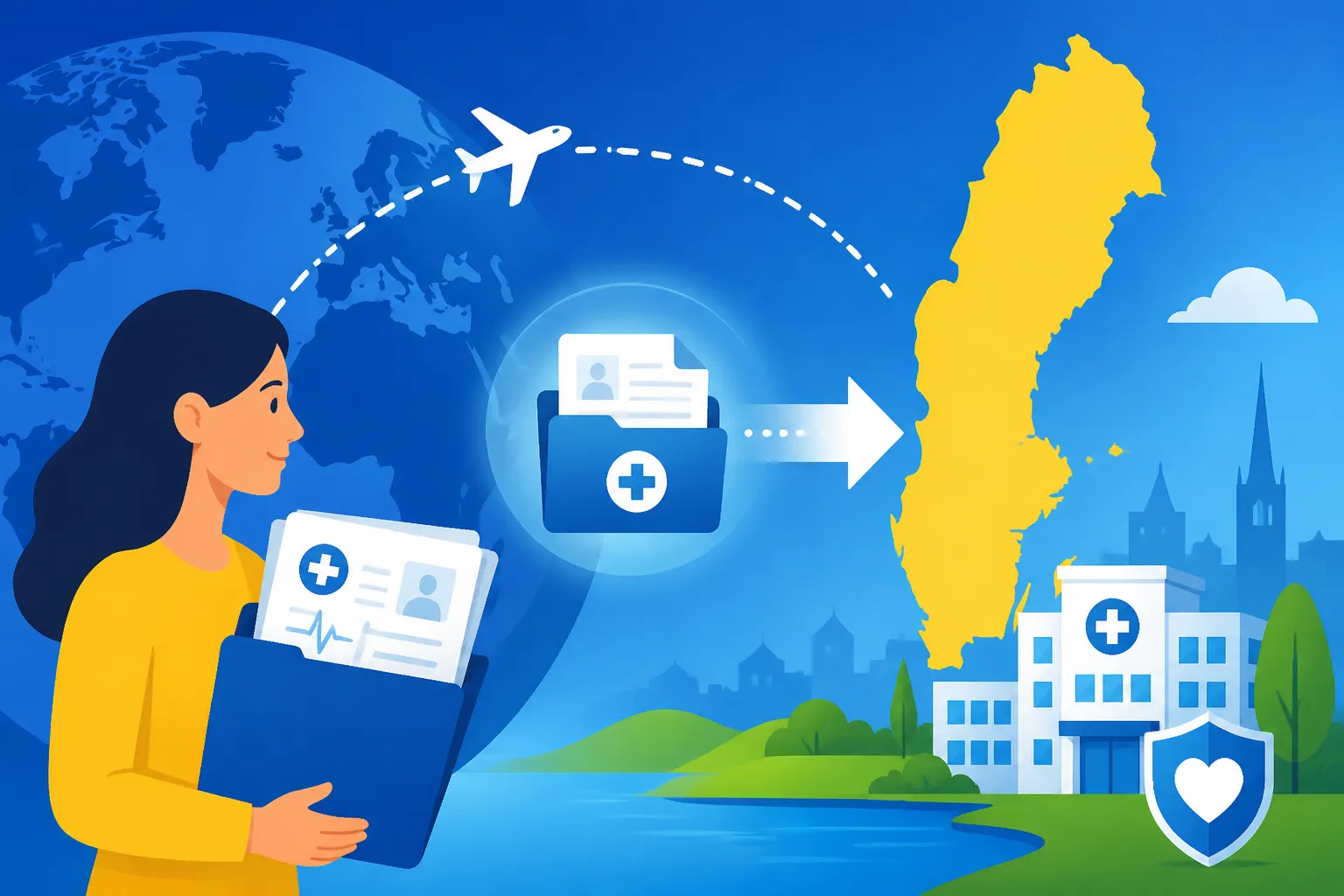
How Do I Transfer My Medical Records to Sweden from Abroad?
Moving to a new country is an administrative marathon, and one of the most overlooked hurdles is the "medical handoff." I remember sitting in a sterile Vårdcentral waiting room in Malmö, trying to explain a complex childhood diagnosis to a polite but puzzled doctor, only to realize my critical paperwork was thousands of miles away in a dusty archive. This guide solves that frustration by detailing the exact steps to transition your medical history into the Swedish healthcare system effectively.
The Reality of Sweden's Decentralized Digital Health System
When you first arrive, you might assume that a high-tech country like Sweden has a magical "upload" button for your foreign medical history. The reality is far more manual and region-specific. Sweden’s healthcare is managed by 21 different regions, and while they all use digital systems, these systems do not automatically communicate with foreign databases. In fact, they often struggle to communicate with each other across regional borders within Sweden.
When you are Registering with a Vårdcentral: Your Guide to Primary Care in Sweden, you are essentially starting a new digital file. A Swedish doctor cannot simply "import" a PDF or a data file from your home country into your 1177 profile. Instead, they must read your foreign records, summarize the relevant information, and manually enter it into your Swedish journal. This means the burden of proof rests entirely on your shoulders. You are the curator of your own medical history during this transition period.
It is also important to understand that the Swedish philosophy of care often leans toward "watchful waiting" compared to more interventionist systems in the US, Germany, or Brazil. If you bring a history of aggressive testing or specific specialist demands, your Swedish GP (General Practitioner) will still perform their own assessment. Having your records ready isn't just about showing what was done; it's about providing the clinical justification that helps a Swedish doctor understand your baseline.
Preparing Your Medical Passport Before You Leave
The most common mistake expats make is waiting until they are already in Sweden to request their records. Once you are abroad, dealing with hospital bureaucracies in your home country becomes a logistical nightmare of time zones and international postage. You need to create what I call a "Medical Passport" before you board your flight.
First, request a full "patient summary" or "problem list" from your current primary care physician. This should include all active diagnoses, a complete list of current medications with their generic names (brand names differ wildly in Sweden), and your vaccination history. In Sweden, Vaccinations in Sweden: The National Childhood Immunisation Schedule is the benchmark, and if you cannot prove your child has had specific shots, the school or healthcare provider may insist on re-vaccinating according to the Swedish timeline.
Secondly, gather "objective" data. Doctors in Sweden prioritize lab results, pathology reports, and imaging summaries (like X-ray or MRI findings) over a previous doctor's subjective notes. If you have a chronic condition, Managing a Chronic Condition in Sweden: Diabetes, Asthma, and More requires these objective baselines so your new Swedish specialist can track your progression without starting the diagnostic process from scratch.
| Document Type | Priority Level | Why it Matters in Sweden |
|---|---|---|
| Vaccination Records | Essential | Required for school enrollment and BVC visits. |
| Generic Medication List | Essential | Swedish pharmacists need generic names to find equivalents. |
| Surgical Summaries | High | Critical for surgeons to know what has been altered. |
| Lab Results (Last 12 months) | High | Establishes your "normal" range for chronic monitoring. |
| Specialist Letters | Medium | Helps your GP justify a How the Referral (Remiss) System Works for Seeing a Specialist in Sweden. |
| Routine Check-up Notes | Low | Often ignored unless they mention a specific new symptom. |
The Translation Dilemma and Language Barriers
A frequent question in expat forums is whether you need to pay for professional Swedish translations of every single page. The short answer is: usually not for English records. Most Swedish physicians are highly proficient in English and are comfortable reading medical terminology in English. However, if your records are in Spanish, Mandarin, Arabic, or any other language, you will almost certainly need a certified translation.
Even with English records, do not hand a 200-page stack of papers to a busy GP. They simply do not have the time during a standard 15-to-20-minute appointment to digest it. I’ve found that the best approach is to write a one-page "Executive Summary" yourself. List your surgeries by year, your chronic conditions, and your current medications. Attach the original records as "Appendix A, B, and C." This level of organization is highly respected in Swedish culture and ensures the doctor actually sees the most important bits.
While you are waiting for your Swedish documentation to be processed, which can take months, you might find yourself in a "coverage gap." During this time, Can I See a Doctor in Sweden Before I Get My Personnummer? is a valid question, but the costs can be high. This is where having private backup is vital. For digital nomads or those on shorter permits, a plan from SafetyWing can cover unexpected illnesses while you are "invisible" to the Swedish system. For those with more complex needs who want to ensure their transition is seamless, Cigna Global provides a more robust bridge that handles international records more fluidly than the public system might.
Navigating the Vårdcentral Visit with Your Records
Once you have your Personnummer and you have selected a clinic through Choosing and Switching Your Vårdcentral Through Vårdval, it is time to book your first "introductory" appointment. Do not wait until you are sick or out of medication to do this. Book a routine appointment to "establish care."
When you meet your new doctor, explain that you have moved to Sweden permanently and would like to have your history noted in your Swedish journal. Hand over your summary and offer the supporting documents. Be prepared for the doctor to ask why you were prescribed certain things. Sweden has very strict guidelines on antibiotics and certain pain medications. If your records show a long-term prescription for something the Swedish system is "restrictive" about, your doctor might suggest a "Swedish-style" alternative.
This is also the moment to discuss the 1177 Vårdguiden: Navigating Sweden's National Health Advice Line and Portal. Once the doctor enters your information, it will eventually appear in your digital "Journal" on the 1177 website, which you can access with BankID. However, don't expect the foreign documents themselves to be uploaded. The doctor will write a note like: "Patient presents foreign records showing a history of Type 1 Diabetes since 2015, managed with [Medication Name]." That note is now your official Swedish history.
Specialized Care and Prescriptions
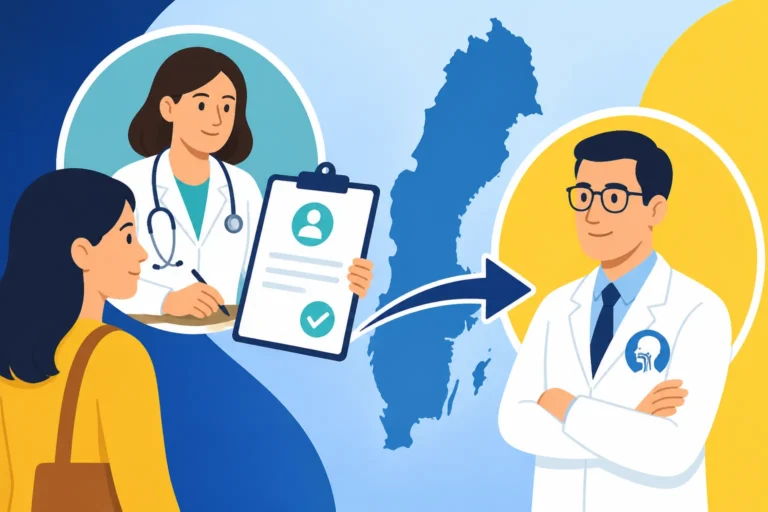
If you require ongoing specialist care, your records are your golden ticket. You cannot simply walk into a cardiologist’s office in Sweden; you generally need a referral from your GP at the Vårdcentral. This is where Finding a Doctor in Sweden: GPs, Specialists, and the Referral System becomes a lesson in patience. By providing clear, foreign specialist reports, you make it much easier for your GP to write a "Remiss" (referral) that will be accepted by the regional specialist clinic.
For medications, ensure you have at least a three-month supply from your home country before you move. The process of Prescription Medicines in Sweden: Recept, Refills, and the Cost Cap involves the doctor verifying your need, and sometimes they may want to run their own blood tests before issuing a Swedish "Recept." Having your foreign prescription bottle—with your name clearly printed on the pharmacy label—is often as important as the medical record itself.
If you are moving with children, the process is slightly different. You will deal with the Barnavårdscentral (BVC). They are the guardians of the childhood growth charts. When we moved, I brought my daughter’s "Yellow Book" of vaccinations and her growth curves. The nurse at the BVC manually plotted her past height and weight into the Swedish system to ensure she was following the expected trajectory. It’s these hyper-local details that make Child Health in Sweden: How Barnavårdscentralen (BVC) Supports Families feel much more personal.
Insurance Gaps and Financial Safety Nets
While Sweden has an incredible tax-funded system, the transition period is the "danger zone." If you arrive and haven't yet secured your Personnummer, you are often treated as a "non-resident," which means you pay the full, unsubsidized cost of care. For a simple GP visit, this might be 2,000 SEK or more. If you require emergency surgery, the bill can be astronomical.
Using a service like SafetyWing during your first 90 days can mitigate the risk of these high out-of-pocket costs while you wait for Skatteverket to process your residency. For those who prefer to skip the public queues for certain specialists, Cigna Global offers a way to access private clinics that might be more accustomed to dealing with international patients and their foreign records. While Private Health Insurance in Sweden: When Sjukvårdsförsäkring Is Worth It is a common debate, for a new arrival with a complex medical history, it can provide significant peace of mind.
Remember that even after you are in the system, the Högkostnadsskydd Explained: Sweden's Healthcare Cost Ceiling and Frikort will protect you from high costs, but it only counts expenses incurred within the Swedish public system. Anything you pay for privately or abroad will not count toward your "free pass" (Frikort).
Final Checklist for the Move
Before you close your suitcases, run through this final list to ensure your medical history isn't left behind:
- Digital and Physical Copies: Keep a USB drive with scanned PDFs of all records, but also bring one physical set of the most important summaries. Swedish doctors occasionally have "tech-free" days or firewalls that block external USBs.
- The One-Page Summary: Create a chronological list of your health history in English.
- Medication Proof: Carry original boxes and pharmacy labels, not just loose pills in a daily organizer.
- Insurance Documentation: Have your SafetyWing or Cigna Global policy details easily accessible in case of an accident on day one.
- Pediatric Records: Ensure children's records include the exact dates (YYYY-MM-DD) of every vaccination.
Transitioning your health records to Sweden isn't about moving a file; it's about translating your medical life into a new cultural context. Be patient, be organized, and remember that while the Swedish system moves slowly, it is designed to be thorough. Once you are "in," you are part of one of the most stable Healthcare in Sweden for Foreign Residents: The Complete System Guide (2027) in the world.
Medical Information Disclaimer
This article is for informational purposes only and does not constitute medical or legal advice. Healthcare regulations, regional policies, and insurance requirements in Sweden are subject to change. Always consult with a qualified medical professional or the Swedish Social Insurance Agency (Försäkringskassan) regarding your specific health needs and legal status. The mention of specific insurance providers does not imply a guarantee of coverage; individuals should review policy terms and conditions carefully before purchase.