What Postnatal Support Does Sweden Provide New Parents?
Bringing a brand-new baby home from a Swedish hospital can feel like being handed a very expensive, very fragile puzzle without an instruction manual. I remember sitting in my quiet apartment in Malmö, staring at my newborn and wondering why nobody had given me a "what happens next" checklist in English. This guide bridges that gap, explaining exactly how the Swedish postnatal support system works so you can focus on your baby instead of the paperwork.
The Barnavårdscentralen BVC Is Your New Command Center
The very first thing you need to understand about Swedish postnatal life is that your point of contact shifts almost immediately after birth. While your pregnancy was managed by a midwife at the Barnmorskemottagning (BMM), your child’s health now falls under the Barnavårdscentralen, commonly known as the BVC. This is a specialized clinic for children from birth until they start school.
The transition is usually seamless—the hospital sends your birth records to the BVC in your neighborhood—but it is wise to be proactive. Within a few days of coming home, you should receive a call from a BVC nurse. If you don't hear anything, don't panic; just give them a ring. This nurse will be your primary guide for the next several years. For many expats, this is a massive relief because it provides a consistent professional who knows your child’s history intimately. It is also worth checking Child Health in Sweden: How Barnavårdscentralen (BVC) Supports Families to understand the long-term role they play.
The First Home Visit Hembesök
One of the most unique aspects of the Swedish system is the "Hembesök" or home visit. Usually, within the first week or two of arriving home, your assigned BVC nurse will come to your house. I’ll be honest: as a new parent, the idea of a stranger coming into my messy, sleep-deprived chaos felt overwhelming. But in Sweden, this isn't a social services inspection of your cleaning habits.
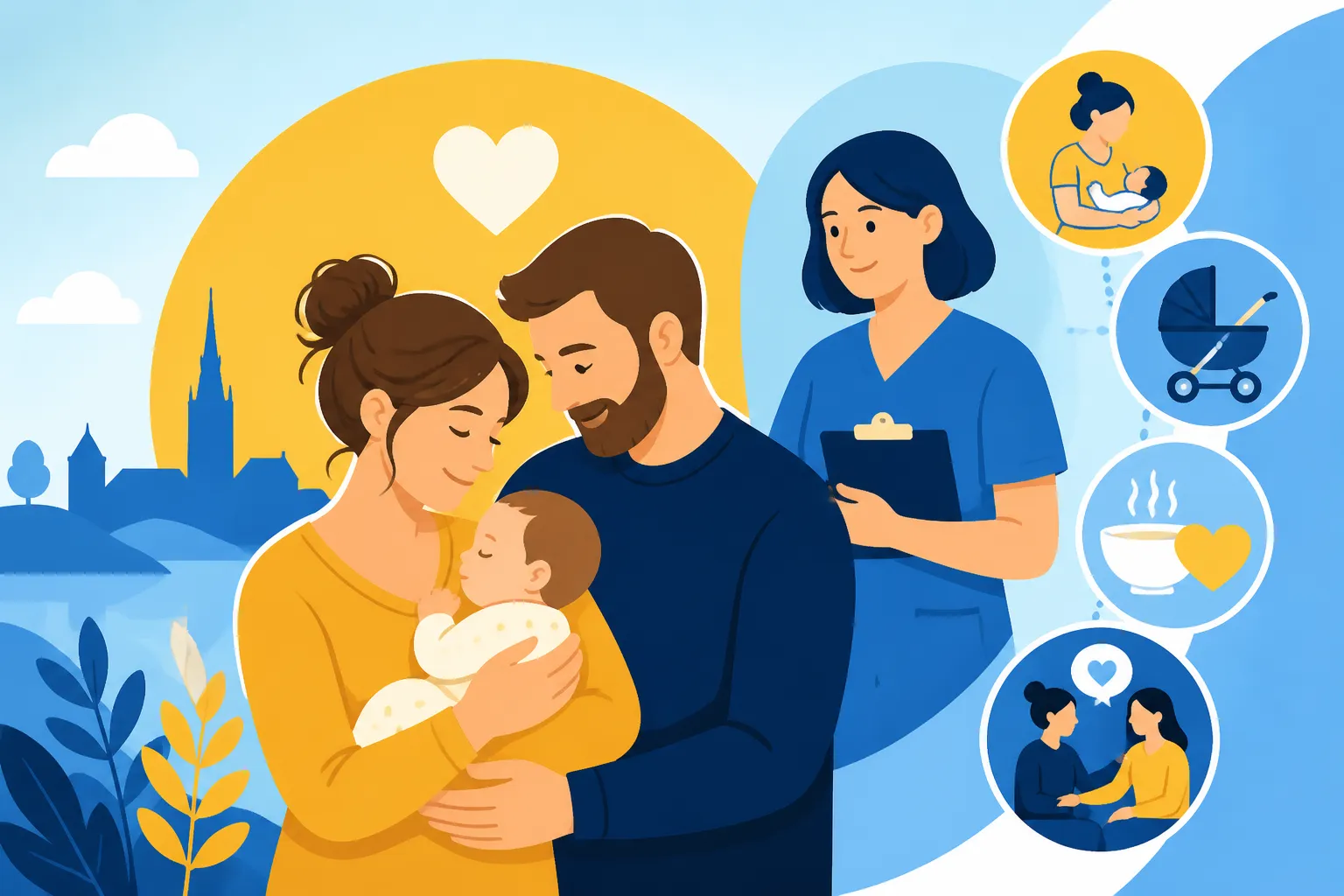
The nurse is there to weigh the baby, check how the umbilical cord is healing, and offer breastfeeding support. More importantly, they are checking on you. They want to see how you are settling in and if you have the support you need. They will usually bring the "Blue Book" (health record) and explain the upcoming vaccination schedule. If you are still waiting for your formal residency papers and are worried about coverage, some expats use SafetyWing to bridge the gap during these initial months, though the BVC system is generally accessible to those intending to live in Sweden.
Regular Check-ups and Growth Charts
After that first home visit, your appointments will move to the BVC clinic. In the beginning, these visits are frequent—often once a week for the first month just to track weight and feeding. Sweden uses very specific growth charts, and you will become very familiar with the "kurva" (the curve).
During these visits, you can ask about anything: sleep cycles, diaper rashes, or when to start solid foods. The nurses are generally very experienced, though you might find their advice leans towards the "natural and patient" side, which is a very Swedish approach to parenting. If you have specific concerns about your child's development, the BVC can also refer you to specialists, such as pediatricians or speech therapists, without you needing to go through a general GP at a Vårdcentral.
Physical Recovery and the Efterkontroll
While the BVC focuses on the baby, your own physical recovery is managed back at the midwife clinic where you had your prenatal care. Sweden provides a formal follow-up appointment called the "Efterkontroll" (after-control), usually 6 to 12 weeks after birth.
This appointment is crucial, yet I've noticed many expats skip it because they feel "fine" or are simply too busy with the baby. Don't skip it. The midwife will check your physical healing, discuss contraception, and perform a pelvic floor check. If you had any complications during delivery, such as significant tearing or a C-section, this is your time to ask for a referral to a specialist physiotherapist. You can read more about how the system handles specialized needs in Family and Children's Healthcare in Sweden: BVC, Mödravård, and Beyond.
Accessing Specialist Care and Physiotherapy
Postnatal physical therapy is one area where the Swedish system can be a bit of a "squeaky wheel" situation. If you are experiencing pelvic pain or issues with abdominal separation (diastasis recti), you often have to explicitly ask for help.
Sweden has excellent women's health physiotherapists, but the wait times in the public system can sometimes be frustrating. This is where some foreigners find that having supplemental insurance through a provider like Cigna Global is beneficial, as it can sometimes allow for faster access to private specialists who focus specifically on postnatal rehabilitation. Regardless of which path you take, ensure you advocate for your recovery; the "lagom" (just enough) approach isn't always what you need when it comes to physical therapy.
Breastfeeding Support and Amningsmottagningen
Sweden is a very pro-breastfeeding culture, but they also recognize that it doesn't always come naturally. If you are struggling, you don't have to suffer in silence. Most major hospitals have an "Amningsmottagning" (breastfeeding clinic) that you can visit in the first few weeks.
After that initial period, your BVC nurse is your first line of defense. They can help with latching issues or refer you to a specialist if there are concerns like tongue-tie. If you are ever unsure where to go in the middle of the night, calling 1177 Vårdguiden: Navigating Sweden's National Health Advice Line and Portal is the standard move. The nurses on the line can tell you which clinics are open or if your situation requires an urgent visit to a pediatric ER. For more specific details, check out Can I Get Help with Breastfeeding Through Swedish Healthcare?.
Mental Health and the Föräldragrupp
Postpartum depression and anxiety are taken very seriously in Sweden, but the dark winters can make these feelings even more intense for expats who are away from their home support networks. During your BVC visits, the nurse will eventually ask you to fill out a questionnaire (often the Edinburgh Postnatal Depression Scale).
It is vital to be honest on this form. There is no stigma attached to it in the Swedish medical community. If you are struggling, the BVC can provide direct access to a psychologist who specializes in the parent-child relationship. This support is typically free or heavily subsidized. If you're looking for broader information on psychiatric care, see Mental Health Support in Sweden: Psychologists, Therapy, and Referrals.
The Power of the Parental Group
To combat the isolation that often comes with new parenthood, the BVC organizes "Föräldragrupper" (parental groups). They usually group together 6–10 parents who had babies around the same time in the same neighborhood.
I cannot emphasize enough how important these groups are for expats. While the meetings at the BVC are led by a nurse and cover topics like first aid or dental care, the real value happens afterward. Most groups end up starting a WhatsApp thread and meeting for "barnvagnspromenader" (stroller walks) and fika. It is the most effective way to meet people going through the exact same milestones as you. Even if you feel shy or your Swedish is shaky, go anyway. Most Swedes are happy to switch to English to ensure everyone is included.
Comparison of Postnatal Support Services
| Service | Provided By | Timing | Primary Focus |
|---|---|---|---|
| Home Visit | BVC Nurse | 1-2 weeks post-birth | Baby's weight, cord care, parental well-being |
| Growth Checks | BVC Clinic | Ongoing (weekly/monthly) | Growth charts, vaccinations, development |
| Efterkontroll | Midwife Clinic | 6-12 weeks post-birth | Mother's recovery, contraception, pelvic health |
| Parental Groups | BVC | Starting at 2-4 months | Social connection, education, peer support |
| 1177 Advice | National Health Line | 24/7 | Urgent medical questions and triage |
| Mental Health | BVC Psychologist | As needed | Postpartum depression and anxiety support |
Financial Support and Parental Leave
Postnatal support in Sweden isn't just medical; it's also financial. The Swedish state is famous for its generous parental leave, but navigating the Försäkringskassan (Social Insurance Agency) website can feel like a part-time job in itself.
Once your baby is born and registered, you are entitled to 480 days of paid parental leave per child (to be shared between parents). The first 90 days are reserved specifically for each parent to ensure both are involved in the postnatal period. If you are new to the country and haven't worked long enough to qualify for the income-based pay, you will still receive a "minimum level" payment. For a deep dive into the numbers, read Parental Leave in Sweden: Föräldrapenning and the 480 Days.
The Partner’s Ten Days
Immediately following the birth, the partner (or a designated support person) is entitled to 10 days of paid leave to stay home with the new mother and baby. This is separate from the 480 days. These "ten days" are a lifesaver for expat families who don't have grandparents nearby to help with cooking or watching older siblings. It allows the birthing parent time to rest and recover while the partner handles the administrative hurdles, like How Do I Register a Newborn for Healthcare in Sweden?.
Barnbidrag: The Child Allowance
You don't actually have to apply for the "Barnbidrag" (child allowance). Once your child is registered with a Personnummer and linked to you, the payments usually start automatically. It is a monthly tax-free sum sent to help with the costs of raising a child. While it won't cover your entire grocery bill, it is a nice "welcome to Sweden" gesture that continues until the child turns 16. You can find more details on this in Is Maternity Care Really Free in Sweden?.
Navigating the System as a Non-Swedish Speaker
One of the biggest fears for new parents in Sweden is the language barrier. What if something is wrong and I can't explain it? The good news is that the Swedish healthcare system is highly proficient in English. Almost every BVC nurse and midwife will be able to communicate with you effectively.
However, if you feel more comfortable in your native language, you have a legal right to an interpreter. This service is free. You just need to tell the BVC or the midwife clinic in advance that you require a "tolk" for your appointment. They will either have someone join the call or sit in the room with you.
When to Consider Private Options
While the public system is comprehensive, some expats choose to maintain private health insurance. If you are moving frequently or want the peace of mind that comes with global coverage, Cigna Global offers plans that can complement the Swedish state system, particularly for elective procedures or if you prefer to see private specialists without a long wait for a referral. Similarly, SafetyWing is a popular choice for digital nomads or those in the very early stages of their Swedish residency who haven't yet secured their Personnummer.
Handling Emergencies
If your baby has a high fever or an injury after hours, you don't go to the BVC. You go to the "Akutmottagning" (Emergency Room), but specifically a pediatric one (Barnakuten) if you are in a major city like Stockholm, Gothenburg, or Malmö. Always call 1177 first unless it is a life-threatening emergency (in which case, call 112). The 1177 operators are excellent at telling you if you can wait until morning or if you need to move immediately.
Dealing with the Swedish medical system requires a bit of patience and a lot of trust in the "process." It can feel bureaucratic, but the level of care for infants is world-class. By staying engaged with your BVC nurse and joining a parental group, you’ll find that the support is there—you just have to know which door to knock on. For those still in the planning stages, understanding How Parental Leave and Healthcare Connect During Pregnancy in Sweden can help set expectations before the big day arrives.
Disclaimer
This guide is for informational purposes only and is based on personal experience and general research into the Swedish healthcare system as of 2026. Healthcare regulations and social insurance rules can change frequently. Always consult with officially recognized Swedish authorities, such as 1177.se, Försäkringskassan, or your local Vårdcentral, for the most current and personalized medical or legal advice.