Are Cancer Screenings Free in Sweden?
Navigating a new healthcare system while worrying about your long-term health is incredibly stressful, especially when you are staring at a letter in Swedish you do not fully understand. I remember my first invitation for a screening; I spent an hour on Google Translate wondering if I could even afford the bill. This guide clarifies exactly which cancer screenings are free, what minor costs you might face, and how the Swedish system manages preventative care for residents.
The Reality of National Screening Programs in Sweden
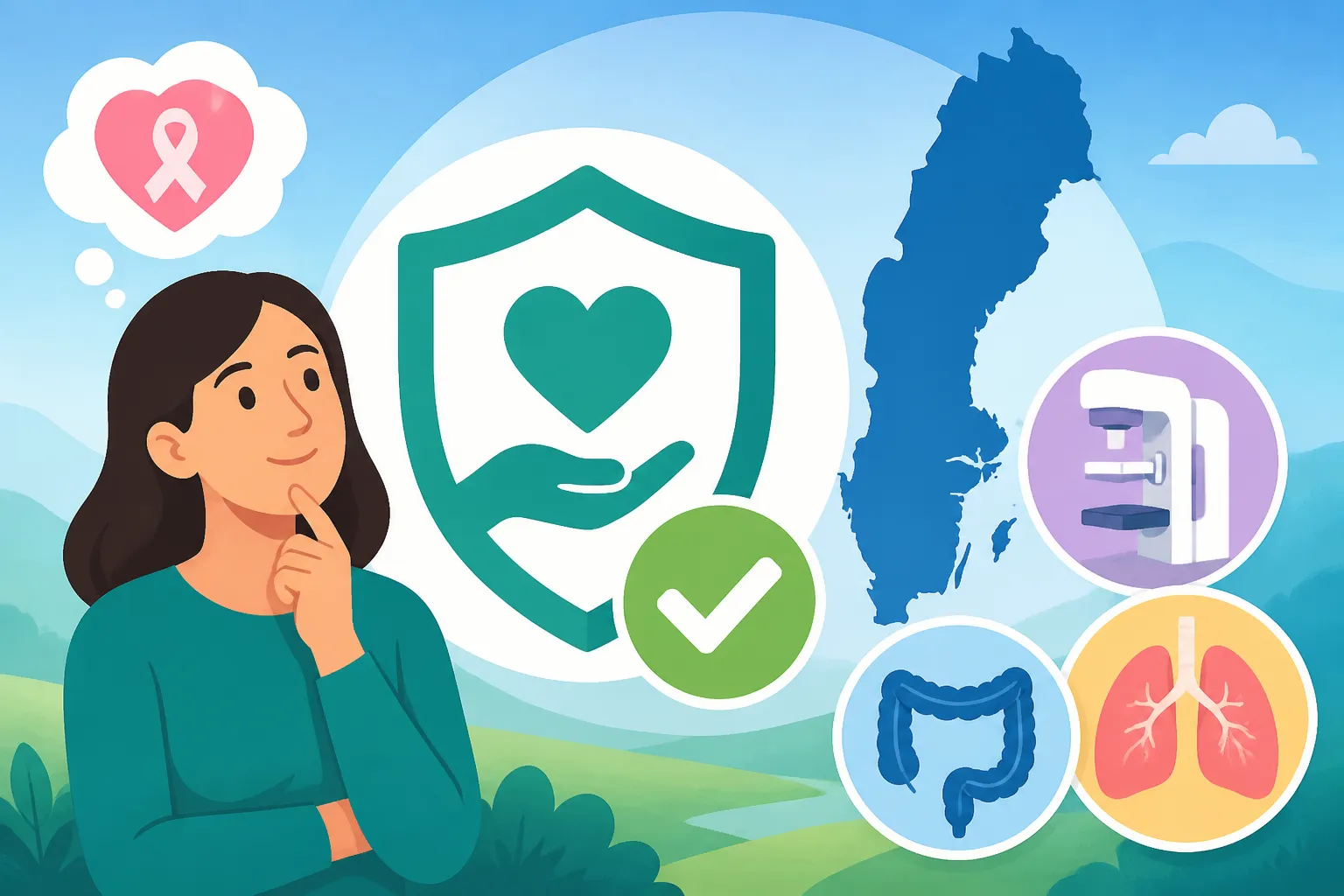
In Sweden, the philosophy of healthcare is built on the foundation of "prevention is better than cure." This means that for the most common types of cancer where early detection significantly changes the outcome, the government has established national screening programs. For most expats, the word "free" is the big question mark. Generally speaking, the primary screenings for cervical cancer and breast cancer are free of charge for residents across the entire country.
However, it is important to distinguish between the screening itself (the initial test) and the follow-up care. While the invitation you receive in the mail for a routine check is usually free, any subsequent diagnostic tests, biopsies, or specialist consultations resulting from that screening might incur a small patient fee, known as a patientavgift. This is where Understanding Patient Fees (Patientavgift) Across Sweden's 21 Regions becomes vital knowledge. These fees are capped annually, but they are not always zero.
The system relies heavily on your registration in the population register. If you are still waiting for your ID, you should read about Getting Your Personnummer: The Gateway to Swedish Healthcare to understand why that number is the "key" to receiving these invitations automatically. Without a personnummer, you essentially do not exist in the screening databases, which can be a massive source of anxiety for those on long-term visas.
Cervical Cancer Screening (Cellprov)
Cervical cancer screening, often called a "gynekologisk cellprovskontroll," is offered to everyone with a cervix between the ages of 23 and 70. Since 2017, the Swedish government mandated that these screenings be free of charge to encourage higher participation rates.
When you live here, you will receive an invitation (kallelse) in the mail with a pre-assigned time and location, usually at a local midwife clinic (barnmorskemottagning). If the time does not work for you, you can log into the 1177 Vårdguiden: Navigating Sweden's National Health Advice Line and Portal to reschedule. I’ve had to do this several times; the digital system is remarkably efficient once you have your BankID set up.
The frequency of these tests depends on your age:
- Ages 23–29: Every three years.
- Ages 30–49: Every three to five years (often including an HPV test).
- Ages 50–70: Every five to seven years.
Breast Cancer Screening (Mammography)
Mammography is the national screening program for breast cancer. In Sweden, this is free for women between the ages of 40 and 74. You will typically be invited every 18 to 24 months. Much like the cervical screening, this is an automated process. You get a letter, you show up at the designated mammography center, and you are usually out the door in 15 minutes.
One thing that surprised me as an expat was how "no-frills" the process is. It is clinical, efficient, and highly professional. Because it is free, there is no paperwork to fill out regarding insurance or payment at the front desk. If you are a newcomer and haven't received an invitation yet, you might want to look into How to Register with a Vårdcentral After Getting Your Personnummer to ensure your address is correctly linked to the local health authority.
Colorectal Cancer Screening
The screening for colorectal cancer (tarmcancer) is the newest addition to Sweden's national preventative strategy. It is currently being rolled out across all regions, targeting individuals between the ages of 60 and 74. Participants receive a kit in the mail to collect a stool sample at home, which is then sent back for analysis.
While the goal is for this to be free nationwide, some regions are still in the transition phase. If the test shows traces of blood, you will be invited for a colonoscopy. While the home test kit is free, the follow-up colonoscopy might involve a standard specialist visit fee. If you are worried about these minor costs, it is worth knowing that they all count toward your The Högkostnadsskydd Explained: Sweden's Healthcare Cost Ceiling and Frikort, ensuring you never pay more than a set amount per year for public healthcare.
How the Invitation System Works for Expats
The Swedish healthcare system is decentralized, meaning it is managed by 21 different regions. However, the screening programs are guided by national recommendations from Socialstyrelsen (The National Board of Health and Welfare). The "magic" of the system is the automated invitation. You do not need to call your doctor to ask for a screening; the system finds you.
But what if you are a digital nomad or an expat who just arrived and hasn't secured a personnummer yet? This is a common "limbo" state. In these cases, you won't be in the automated system. If you have a specific concern or a family history of cancer, you might need to take a proactive approach. Some people choose to use services like SafetyWing to cover their initial health needs while they are in the administrative waiting room, although these are typically for emergencies rather than routine screenings.
Once you have your personnummer, your data is pulled from the population register (folkbokföring). If you move from Stockholm to Gothenburg, your "spot" in the screening queue moves with you. If you feel you have been missed, your first point of contact should always be 1177. You can call them or log in to check your health records. If you are unsure about the digital side, read How Can I Actually Do on the 1177 Health Portal? for a step-by-step walkthrough.
What to Do If You Have Symptoms
It is a common misconception that you should wait for your screening invitation if you notice something is wrong. Screenings are for people with no symptoms. If you feel a lump, notice skin changes, or have persistent issues, you should not wait for a free screening. You should book an appointment at your Vårdcentral immediately.
This visit will cost the standard patient fee (usually between 100 and 300 SEK depending on the region), but it is the only way to get a How the Referral (Remiss) System Works for Seeing a Specialist in Sweden handled quickly. In the Swedish system, the GP (General Practitioner) acts as the gatekeeper. You cannot usually just walk into an oncologist's office; you need that remiss.
Comparing Screening Costs and Access
While the national programs cover the "big three" (cervical, breast, colorectal), other screenings like prostate cancer or skin cancer (melanoma) are not currently part of a universal, free, automated invitation program in the same way. For these, you must be proactive.
| Screening Type | Age Group | Frequency | Cost |
|---|---|---|---|
| Cervical Cancer | 23 – 70 | 3 – 7 years | Free |
| Mammography | 40 – 74 | 18 – 24 months | Free |
| Colorectal Cancer | 60 – 74 | 2 years | Free (most regions) |
| Prostate Cancer | N/A | Upon request/risk | Standard GP Fee |
| Skin Cancer | N/A | Upon request/risk | Standard GP Fee |
For those who want more frequent checks or screenings not covered by the national plan, Private Health Insurance in Sweden: When Sjukvårdsförsäkring Is Worth It is a relevant topic. Some expats prefer to use Cigna Global to gain faster access to private specialists for peace of mind, especially if they have a family history of a specific cancer that isn't covered by the "free" public screenings. While the public system is excellent, the wait times for non-urgent specialist consultations can be long, which is a major frustration for those used to faster systems.
Using a provider like Cigna Global can allow you to bypass the GP referral system in some cases, letting you see a specialist directly. However, for the majority of residents, the public screenings are the gold standard and are highly trusted.
Navigating the Cultural and Language Barriers
One of the hardest parts of being a "patient" in a foreign language is the fear of missing details. When you receive your kallelse, it will be in Swedish. It usually says "Inbjudan till screening" or "Kallelse." If you don't speak the language yet, it might look like just another bill or an advertisement.
Don't ignore it. If you are confused, you can take the letter to your local pharmacy. The staff there are usually incredibly helpful and speak excellent English. You can also read more about this in How Do I Get Care If I Don't Speak Swedish Yet?.
Another tip from my own experience: when you go to your screening, the midwife or nurse will ask a few standard questions about your health history. It is perfectly acceptable to ask, "Kan vi prata engelska?" (Can we speak English?). Most medical professionals in Sweden are fluent and will happily switch to accommodate you.
If you are particularly anxious, you can even check Can I Book a Doctor's Appointment in English in Sweden? to learn how to request an interpreter if you feel your Swedish isn't up to discussing medical results. While the screening itself is a simple procedure, understanding the results is where you want 100% clarity.
For those who are not yet covered by the Swedish system—perhaps you are here on a shorter-term contract or are a spouse waiting for a permit—having a plan like SafetyWing can provide a safety net for unexpected medical issues, even if it doesn't cover these specific "free" national screenings. Once you are fully integrated, the "free" nature of these tests becomes one of the best perks of living in Sweden. It removes the financial barrier to early detection, which is something I’ve grown to value deeply after the initial "paperwork shock" wore off.
Disclaimer
This guide is intended for informational purposes only and does not constitute professional medical or legal advice. Healthcare policies, patient fees, and screening protocols in Sweden can change and may vary by region. Always consult the official 1177 Vårdguiden website or your local Vårdcentral for the most current information regarding your specific health situation and rights.