Do Self-Employed People in Sweden Get the Same Healthcare?
Navigating the Swedish medical system as a freelancer often feels like trying to assemble flat-pack furniture without the instructions. I remember sitting in my home office in Södermalm, staring at a mounting fever and wondering if my lack of a corporate boss meant I was on my own for medical bills. This guide solves the confusion around whether self-employed residents receive the same healthcare protections as employees.
The Reality of Healthcare Equality for the Self-Employed
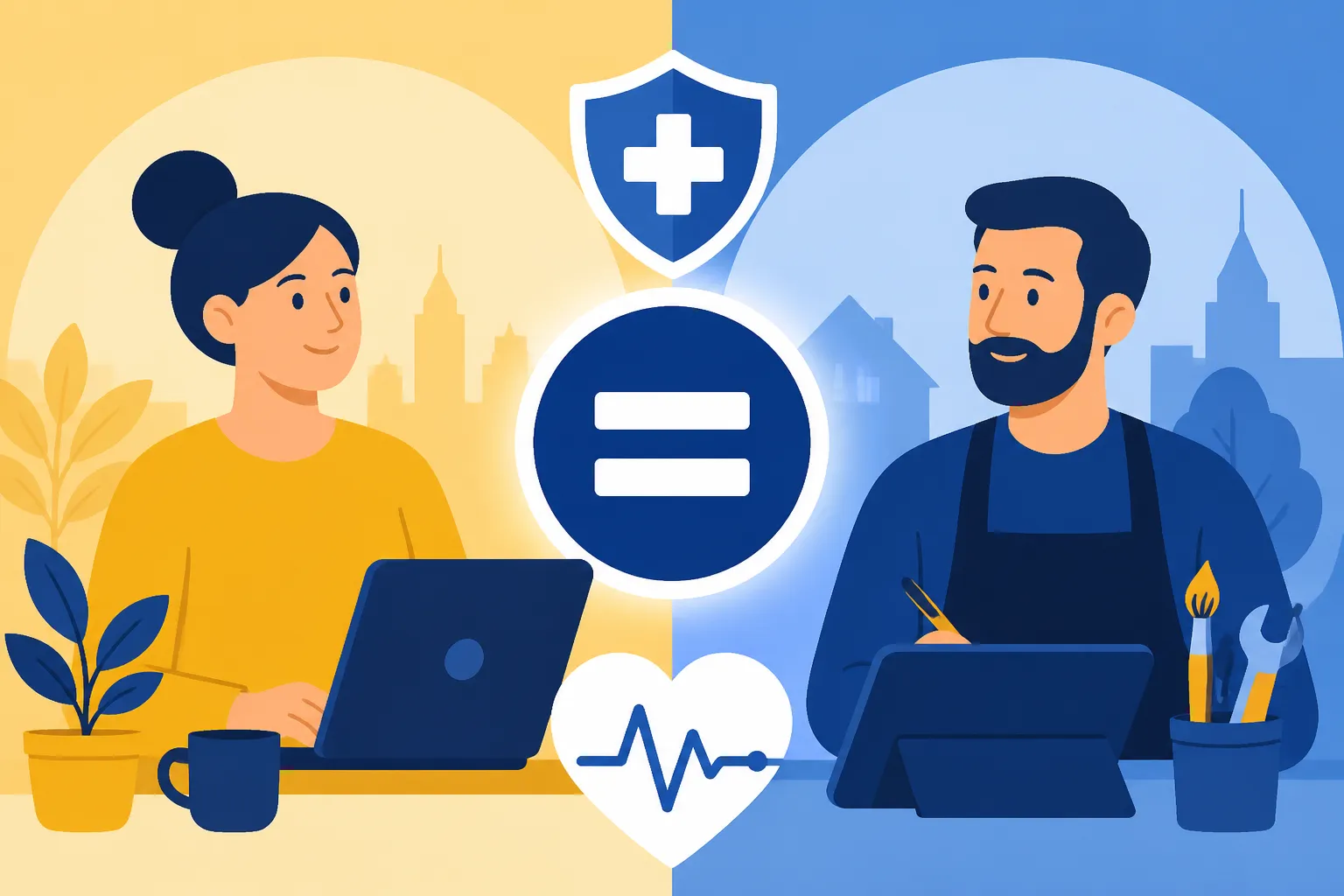
One of the most persistent myths among new arrivals is that Swedish healthcare is tied strictly to your employment contract. In many countries, losing your job or choosing the freelance life means losing your premium health coverage. In Sweden, the system is fundamentally different because it is based on residency, not your job title. If you are legally residing in the country and are registered in the population register, you have the exact same right to medical services as a CEO of a multinational corporation.
The administrative "glue" that holds this together is your personal identity number. Getting Your Personnummer: The Gateway to Swedish Healthcare is the single most important step for any self-employed person. Once you have this number, the system views you as a resident first and a worker second. Whether you are running a massive consultancy or selling handmade crafts, you access the same doctors, the same hospitals, and the same subsidies.
However, while the care is the same, the financial administration of your health—specifically how you get paid when you are too sick to work—is where the paths diverge. As a self-employed person, you are responsible for reporting your income to the tax agency (Skatteverket), which in turn informs the social insurance agency (Försäkringskassan) about your Sjukpenninggrundande inkomst (SGI). This SGI is the magic number that determines how much money you receive if you fall ill.
The Residency Based System vs Employment Based Insurance
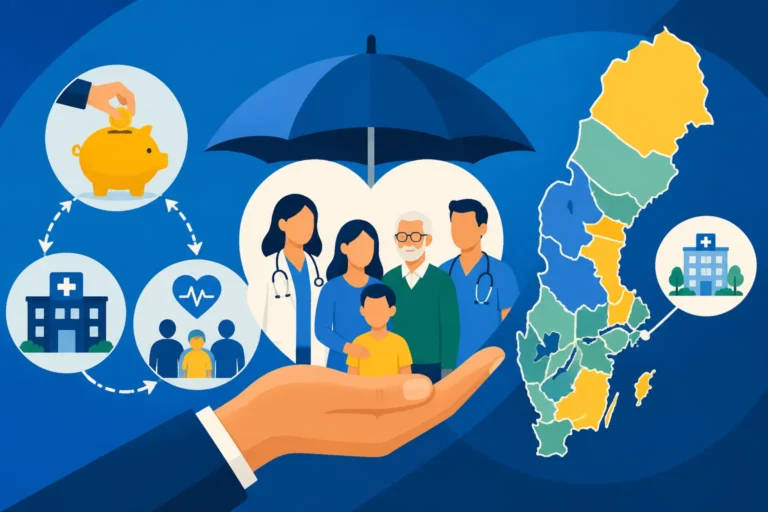
In Sweden, healthcare is tax-funded at the regional level. When you pay your taxes as a self-employed person—whether through egenavgifter (self-employed contributions) in a sole trader business or through employer contributions in your own limited company—you are paying into the national pot that funds the hospitals.
Because of this, you don't need to worry about "out-of-network" doctors or "employer-sponsored plans." You simply follow the standard procedure of Registering with a Vårdcentral: Your Guide to Primary Care in Sweden to ensure you have a home base for your medical needs. The doctors at these centers won't even ask who you work for; they only need your personnummer to access your records and bill the region for the visit.
Navigating Sick Pay as a Freelancer or Business Owner
This is where the "I've-been-there" reality check comes in: being sick as a freelancer is a logistical headache that employees rarely have to face. When an employee gets sick, their employer pays their sick pay for the first 14 days. When you are self-employed, you are the employer, but the rules change depending on your business structure.
If you operate as an Enskild firma (sole trader), your sick pay comes directly from Försäkringskassan. However, you have to choose your "karenstid" (waiting period). This is the number of days you must be sick before the government starts paying you. You can choose 1 day, 14 days, 30 days, 60 days, or even 90 days. I learned the hard way that while choosing a 90-day waiting period lowers your monthly tax social fees, it leaves you completely vulnerable if you catch a nasty flu that knocks you out for three weeks.
For those running an Aktiebolag (limited company), you are technically an employee of your own company. This means your company must pay your sick pay for the first 14 days, and then Försäkringskassan takes over. This requires having enough liquidity in your business account to cover your own salary while you aren't actually generating revenue. This is a critical distinction that many newcomers miss until they are too ill to look at a spreadsheet.
Understanding the SGI for New Businesses
For many expats, the biggest hurdle is the "start-up phase." If you have just moved and started your business, you might not have a history of earnings yet. Försäkringskassan usually looks at your expected income, but they can be skeptical. For the first 36 months of your business, you may be entitled to an SGI based on what an employee with similar skills and education would earn in the market. This is a life-saver for new freelancers, but it requires proactive communication with the authorities.
It is highly recommended to prioritize Registering with Försäkringskassan: When and Why You Need To as soon as your business is active. Do not wait until you are sick to try and establish your SGI. If you haven't established your income with them, your sick pay might default to the bare minimum, which is barely enough to cover a week of groceries in Stockholm.
| Business Type | Who Pays Sick Pay (Days 1-14) | Who Pays Sick Pay (Day 15+) | Insurance Funding Method |
|---|---|---|---|
| Employee | Employer | Försäkringskassan | Employer Contributions |
| Enskild Firma | None (Waiting period applies) | Försäkringskassan | Egenavgifter (Self-fees) |
| Aktiebolag | Your own company | Försäkringskassan | Employer Contributions |
| Unemployed | None | Försäkringskassan (if eligible) | General Taxation |
Accessing Care and Managing Costs
Regardless of your business structure, you benefit from the "Högkostnadsskydd." This is the national ceiling on healthcare costs that prevents anyone from going bankrupt due to medical bills. Even if you are a freelancer with a fluctuating income, your out-of-pocket expenses for doctor visits and prescriptions are capped annually.
You will pay a small "patientavgift" (patient fee) every time you visit a doctor. In most regions, this ranges from 200 to 400 SEK. Once you reach the threshold—usually around 1,300 to 1,400 SEK within a 12-month period—you receive a "frikort" (free card). The Högkostnadsskydd Explained: Sweden's Healthcare Cost Ceiling and Frikort is a fundamental part of why being self-employed here is less risky than in the US or other private-heavy systems.
Using Digital Tools to Save Time
As a business owner, your time is literally money. Spending four hours in a waiting room at a Vårdcentral is a luxury you might not have. This is where the digital side of Swedish healthcare becomes your best friend. Using 1177 Vårdguiden: Navigating Sweden's National Health Advice Line and Portal allows you to book appointments, renew prescriptions, and even message your doctor during breaks in your workday.
If you are just starting out and haven't secured your personnummer yet, you might feel like you're in a legal limbo. While waiting for the wheels of bureaucracy to turn, many freelancers use services like SafetyWing to bridge the gap. SafetyWing is particularly useful for digital nomads or those on "move to look for work" visas who aren't yet fully integrated into the Swedish social security net but still need to see a doctor for an acute issue without paying "non-resident" prices, which can be astronomical.
The Role of Private Health Insurance for Freelancers
While the public system is excellent for major issues, the waiting times for non-emergency specialist care can be frustrating. As someone running a business, waiting three months for a physical therapy appointment to fix a repetitive strain injury is not ideal. This is why many self-employed people in Sweden opt for a private "sjukvårdsförsäkring."
A private policy doesn't replace the public system; it sits on top of it. It typically guarantees that you will see a specialist within a few days rather than months. For a freelancer, this can be the difference between fulfilling a contract and losing a client. When considering Private Health Insurance in Sweden: When Sjukvårdsförsäkring Is Worth It, look for policies that offer "access care" (vårdförsäkring) rather than just "cash payment" insurance.
Comparing Global and Local Options
If your business involves a lot of travel outside of Sweden, you might find that local Swedish private insurance is too restrictive. In these cases, a more robust plan from Cigna Global can be beneficial. Cigna Global provides a level of continuity that local plans sometimes lack, especially if you plan on taking your business to other EU countries or back to your home country for part of the year.
For the budget-conscious freelancer who just wants a safety net for those first few months of "F-skatt" life, SafetyWing offers a flexible, month-to-month option. It’s a great way to handle the "what if" scenarios while you are still figuring out how to Registering with a Vårdcentral After Getting Your Personnummer. Once you are fully into the system, you can decide if the public "Vårdgaranti" (Care Guarantee) is enough for you or if you need the speed of a private specialist.
Practical Steps for the Self-Employed Newcomer
To ensure you don't fall through the cracks, there is a specific order of operations you should follow once you arrive in Sweden. Too many expats ignore the administrative side until they are actually sick, which turns a simple medical issue into a bureaucratic nightmare.
- Register with Skatteverket: You cannot access the full range of healthcare subsidies or the sick pay system without being "folkbokförd" (registered in the population register).
- Apply for F-skatt: This is your "business tax" status. It signals to the state that you are a professional and will be paying into the social system via your business.
- Establish your SGI: Contact Försäkringskassan and provide a realistic estimate of your earnings. Be prepared to show contracts or a business plan if your business is brand new.
- Choose your Vårdcentral: Don't wait until you have a 40-degree fever. Log into 1177 with your BankID and choose a clinic near your home or office.
- Set up your Karenstid: If you are a sole trader, log into the Försäkringskassan "Mina Sidor" and select your waiting period for sick pay.
If you are moving from another EU country, make sure you are Using Your EHIC for Care While Settling Into Sweden. The European Health Insurance Card can cover you for medically necessary care while your personnummer application is being processed by Skatteverket, which, as we all know, can take anywhere from a few weeks to several months.
Managing Mental Health as a Business Owner
The stress of running your own business in a foreign country shouldn't be underestimated. The "I've-been-there" reality is that the Swedish winter, combined with the pressure of a fluctuating income, can take a toll. The good news is that Mental Health Support in Sweden: Psychologists, Therapy, and Referrals is also included in the residency-based coverage.
As a self-employed person, you have access to the same therapy and psychiatric services as anyone else. You can start by talking to a GP at your Vårdcentral. If you find that the public waiting lists for therapy are too long—which they often are—this is another area where having supplementary insurance from a provider like Cigna Global can be a game-changer, as they often have their own networks of English-speaking therapists ready to help without the three-month wait.
Summary of Healthcare Rights for Self-Employed
To reiterate: the medical care you receive in a Swedish hospital is exactly the same regardless of whether you are a full-time employee or a freelance graphic designer. You will pay the same patient fees, have the same right to a specialist referral, and be protected by the same cost ceilings.
The only "inequality" lies in the financial safety net of sick pay. You are responsible for your own waiting periods and for ensuring the state knows exactly how much you earn so they can calculate your benefits correctly. If you take the time to handle the paperwork during your first few months, you can enjoy the freedom of the freelance life with the peace of mind that the Swedish state has your back if your health takes a turn for the worse.
Important Medical Disclaimer
This guide is intended for informational purposes only and is based on personal experience and current administrative rules in Sweden. Healthcare regulations, tax laws, and insurance requirements can change. Always consult with official sources such as 1177.se, Försäkringskassan, and Skatteverket for the most up-to-date and legally binding information regarding your specific situation. This article does not constitute legal, financial, or medical advice.