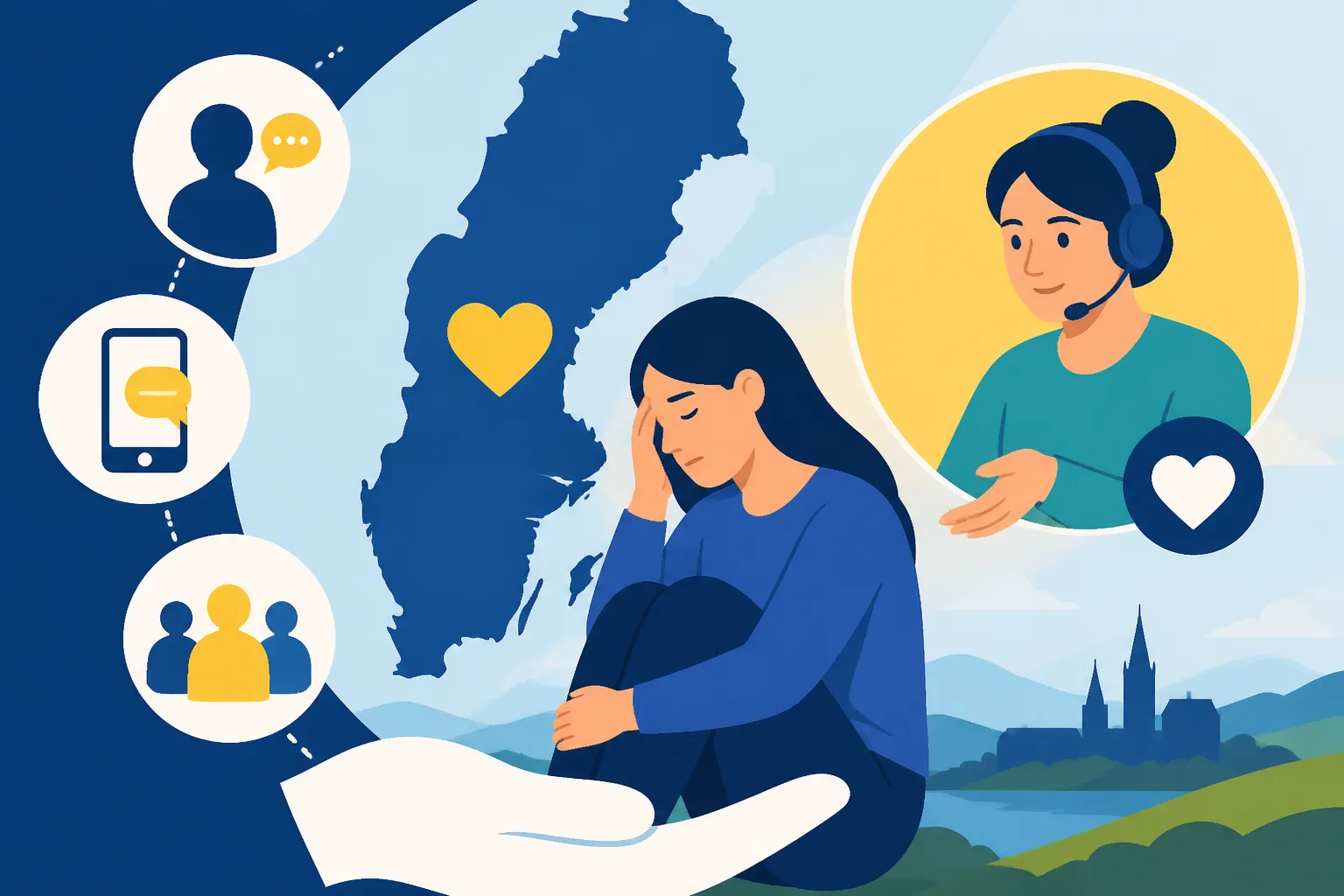
How Do I Access Mental Health Crisis Support in Sweden?
Navigating a mental health crisis in a foreign country can feel like trying to find a light switch in a pitch-black, unfamiliar room. I remember sitting on my apartment floor in Stockholm during my first winter, feeling completely overwhelmed by the "system" and not knowing if my distress warranted a phone call or a hospital visit. This guide provides the exact steps, phone numbers, and local insights you need to access urgent mental health support in Sweden right now.
Immediate Help The Emergency Numbers You Need Right Now
When you are in the middle of a crisis, your brain is likely not functioning at its usual capacity for administrative gymnastics. In Sweden, the first thing you need to know is the distinction between a life-threatening emergency and a situation where you need urgent medical advice. If you are in immediate danger of hurting yourself or someone else, or if you are witnessing someone else in that state, you must call 112 immediately. This is the universal emergency number for police, fire, and ambulance services. The operators speak excellent English and can dispatch a psychiatric ambulance (Psykiatrisk akutbil) if one is available in your region.
If your situation is urgent but not immediately life-threatening, your primary resource is 1177 Vårdguiden: Navigating Sweden's National Health Advice Line and Portal. By dialing 1177, you will be connected to a registered nurse who can provide psychiatric triage. They are trained to listen to your symptoms, assess the severity of your crisis, and tell you exactly which clinic or hospital is open and capable of seeing you. I have called them in the middle of the night before, and while the wait times can be frustrating, the nurses are generally very calm and methodical. They can also help you find an English-speaking practitioner if your Swedish isn't up to the task yet.
For those who are in Sweden on a shorter stay or are waiting for their residency to be finalized, you might find that the public system feels like a maze of requirements. If you have international coverage through a provider like SafetyWing, you may have more flexibility in accessing private urgent care or stabilization services. SafetyWing is often used by digital nomads who need that extra layer of security when the local bureaucratic wheels turn too slowly. However, in a true emergency, the public system is obligated to stabilize you regardless of your insurance status.
The Psychiatric Emergency Room Psykiatrisk Akutmottagning
If the nurse at 1177 determines you need immediate face-to-face intervention, they will likely direct you to a Psykiatrisk Akutmottagning. Unlike a general emergency room, these are specialized units dedicated solely to mental health crises. In major cities like Stockholm, Gothenburg, and Malmö, these units are often separate from the main hospital entrance. For example, in Stockholm, the St. Göran Psychiatric Emergency Ward is a primary hub. You do not always need a referral to go here; you can simply walk in if you are in crisis.
When you arrive at the psychiatric ER, you will go through a process called "triage." A nurse will sit with you to determine the level of urgency. Be prepared to wait, as these facilities are often understaffed and prioritize patients based on the immediate risk of harm. It is helpful to bring your ID or, if you have one, your Swedish ID card. If you are still in the process of Getting Your Personnummer: The Gateway to Swedish Healthcare, do not let that stop you from seeking help. The hospital will provide care and handle the billing or administrative details later.
What happens after triage depends on your specific needs. You might be given a "crisis plan," prescribed short-term medication to help you sleep or manage anxiety, or in more severe cases, you might be admitted for Slutenvård (inpatient care). If you have private insurance like Cigna Global, you should notify them as soon as you are stable, as they can sometimes help coordinate a transfer to a private facility or provide coverage for the specialized follow-up care that the public system might put on a long waiting list. Cigna Global is particularly useful for expats who want to ensure they have access to a broader range of specialists following an acute episode.
Non-Emergency but Urgent Getting Professional Help Quickly
Not every mental health struggle is a "midnight emergency," but that doesn't mean it isn't urgent. If you find your mental health deteriorating, your first point of contact should be your local primary care center. Registering with a Vårdcentral: Your Guide to Primary Care in Sweden is one of the most important things you can do when you move here. Most Vårdcentraler have their own "First Line" mental health teams, which include psychologists and counselors who can offer 3–5 sessions for acute issues like grief, stress, or mild to moderate depression.
The wait time at a Vårdcentral can vary wildly. In some regions, you can get an appointment within a week; in others, it might be a month. If you need something faster, Sweden has embraced digital healthcare. Apps like Kry or Doktor.se allow you to book video consultations with psychologists, and many of these are covered under the standard regional fee system. This is often the fastest way to get a professional opinion and a potential How Do I Get a Referral to a Specialist in Sweden if your condition requires more intensive psychiatric care.
For many expats, the cultural approach to mental health in Sweden can be a bit of a shock. The system tends to favor "self-management" and cognitive behavioral therapy (CBT) over long-term talk therapy or immediate heavy medication. If you are used to a different style of care in your home country, you might find the Swedish approach a bit clinical. This is where having a private plan from Cigna Global can be a lifesaver, as it allows you to bypass the standard "CBT-first" public route and seek out specific therapeutic modalities or doctors who share your cultural background and language.
Support Lines and Non-Profit Resources
Sometimes you just need someone to talk to who understands the specific weight of the Swedish winter or the isolation of expat life. Sweden has several excellent non-profit organizations that offer "listening ears" via phone or chat. Jourhavande Medmänniska is a famous national helpline that operates during the night. They aren't doctors, but they are trained volunteers who offer human connection when the world feels too quiet. Another vital resource is Mind, which operates the Självmordslinjen (Suicide Line) available via phone (90101) and chat 24/7.
These services are often staffed by people who speak English, although the primary language is Swedish. In my experience, if you start the conversation by asking, "Pratar du engelska?" (Do you speak English?), they will almost always pivot to accommodate you. There is also a specific service called SPES for those who have been affected by the suicide of a loved one, providing peer support that is invaluable when navigating the complex emotions of loss in a foreign land.
For younger expats or students, What Is an Ungdomsmottagning and Who Can Use It is a fantastic resource. These "Youth Clinics" are generally for those under 25 and offer free counseling, sexual health services, and mental health support. They are much less formal than a hospital or a GP clinic and are designed to be a safe space for young people to discuss anything from exam stress to identity crises.
Comparison of Mental Health Access Points in Sweden
| Service Type | Best For | Access Method | Estimated Cost |
|---|---|---|---|
| 112 Emergency | Life-threatening situations, immediate danger | Call 112 | Free |
| Psykiatrisk Akuten | Severe psychiatric crisis, suicidal ideation | Walk-in / Referral | ~200-400 SEK |
| 1177 Vårdguiden | Advice, triage, and finding open clinics | Call 1177 | Free advice |
| Vårdcentral | Moderate anxiety, depression, long-term care | Appointment | ~200-300 SEK |
| Helplines (Mind/SPES) | Emotional support, loneliness, suicidal thoughts | Call / Chat | Free |
| Private Insurance | Fast access to specialists, specific therapies | Provider Network | Depends on Plan |
Navigating the System as a Foreigner
One of the biggest hurdles for us expats is the fear of the bill. It is important to understand How Sweden's Tax-Funded Healthcare Works: Regions, Costs, and Coverage. Even if you are not yet fully registered in the system, emergency psychiatric care is accessible. If you have a personnummer, your costs will be tracked toward The Högkostnadsskydd Explained: Sweden's Healthcare Cost Ceiling and Frikort. This means that once you spend a certain amount (usually around 1,400 SEK) on healthcare visits in a 12-month period, the rest of your visits are free.
Language should never be a barrier to crisis care. Under Swedish law, you have the right to a medical interpreter if you do not speak Swedish well enough to understand your medical situation. When you book an appointment or arrive at the ER, you can request an "tolk" (interpreter). This is a free service provided by the state. In a crisis, doctors will often use English, but for complex psychiatric evaluations, having a professional interpreter ensures that nothing is lost in translation.
If you are a tourist or a temporary visitor, you should check your travel insurance. Services like SafetyWing are specifically designed to cover the unexpected, including psychiatric emergencies that might arise while you are traveling. While the public system will treat you, having SafetyWing can help cover the costs that might otherwise be billed to you as a "non-resident," which are significantly higher than the subsidized "patient fees" residents pay.
Practical Steps When You Feel a Crisis Coming On
If you feel your mental health slipping, do not wait until 2:00 AM to start looking for help. Start by contacting your Vårdcentral and asking for a "första linjen" (first line) assessment. If they are full, ask for a list of private clinics that have a contract with the region (entreprenad). These clinics charge the same subsidized fee as the public ones but often have shorter wait times. You can find these by searching on the 1177 website for "psykiatrisk mottagning" in your area.
Make sure your "emergency kit" is ready. This isn't a box of bandages, but a digital folder or a piece of paper with your Swedish ID number (if you have one), the address of the nearest psychiatric ER, and your insurance policy details—whether that is your EHIC card for EU citizens or your policy number for Cigna Global. Having this information ready can reduce the "administrative panic" that often accompanies a mental health episode.
Lastly, remember that Mental Health Support in Sweden: Psychologists, Therapy, and Referrals is a journey, not a single destination. The Swedish system is designed to be a safety net, but it is a net with many layers. You might have to advocate for yourself, or have a friend advocate for you, to ensure you get the follow-up care you need after the initial crisis has passed. Don't be afraid to be "besvärlig" (difficult) if it means getting the help you deserve.
Important Medical Disclaimer
The information provided in this guide is for educational and informational purposes only and is not a substitute for professional medical advice, diagnosis, or treatment. If you are experiencing a medical or mental health emergency, call 112 immediately or go to the nearest emergency room. Always seek the advice of your physician or another qualified health provider with any questions you may have regarding a medical condition or mental health concern. Never disregard professional medical advice or delay seeking it because of something you have read in this guide. Physical and mental health situations can change rapidly, and local healthcare policies in Sweden may vary by region or change over time.