Your Health Records and Privacy on Sweden’s Digital Health Platforms
Moving to Sweden often feels like you are signing away every ounce of your personal privacy to a central digital database. I felt that exact same panic the first time I realized a doctor in a city I’d never visited could technically see my medical history from three years ago. This guide deconstructs how Sweden's digital health platforms work, who sees your data, and how you can actually regain control over your medical records.
The Digital Backbone of Swedish Healthcare 1177 and Journalen
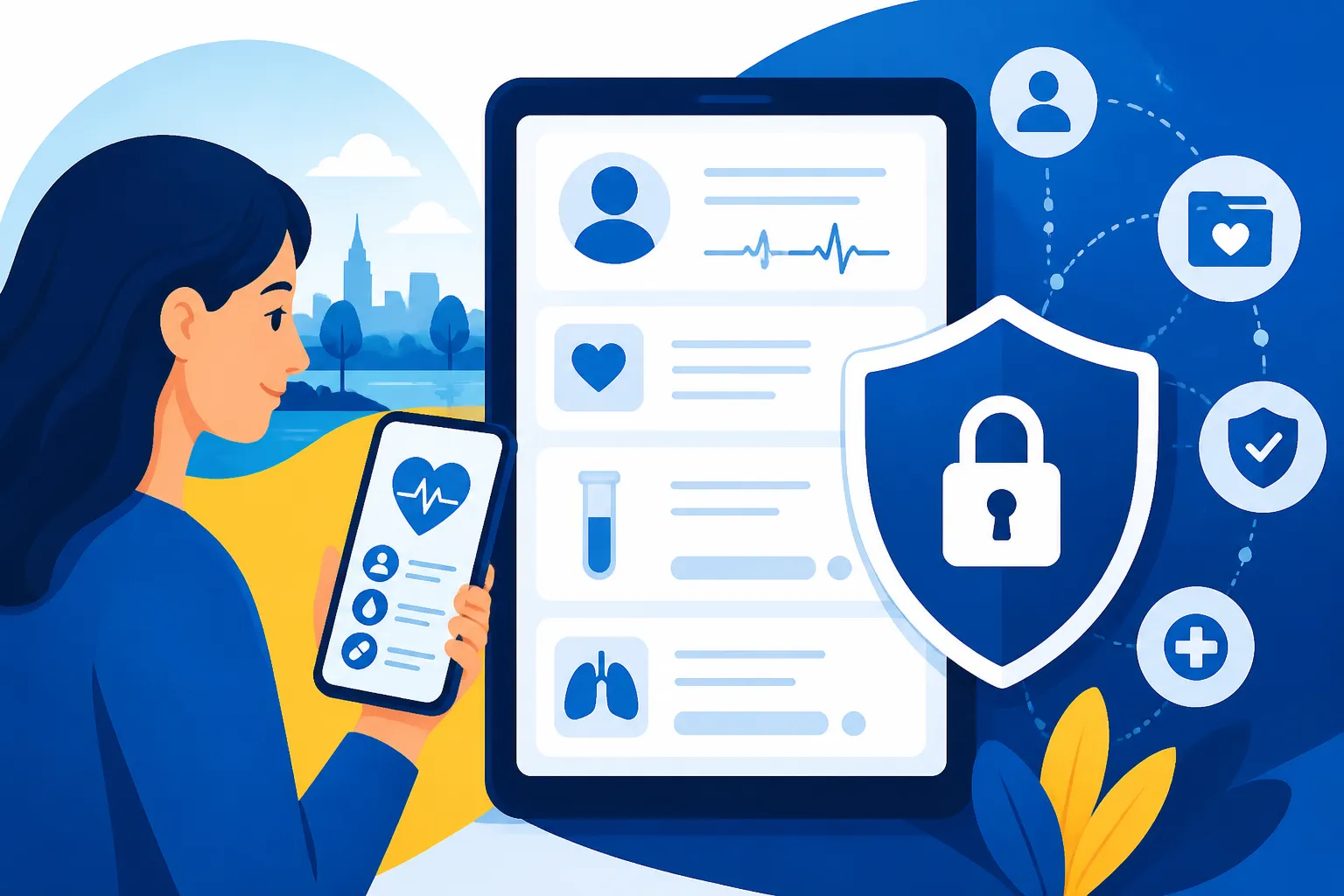
In Sweden, your medical life is centralized in a way that can be both incredibly convenient and slightly terrifying. The primary portal for this is 1177.se, which acts as the gateway to almost every public health interaction you will have. When you log in, you aren't just booking appointments; you are entering a space where every lab result, doctor's note, and prescription is logged. Understanding the infrastructure of 1177 Vårdguiden: Navigating Sweden's National Health Advice Line and Portal is the first step for any expat trying to make sense of the system.
What is the 1177 Patient Portal
The 1177 portal is more than just a website; it is the national hub for healthcare services. For us expats, it’s the place where we perform the Swedish ritual of "logging in with BankID." Once inside, you can see your current prescriptions, find historical records, and communicate directly with your Vårdcentral. I remember being shocked the first time a nurse told me I could just "read the doctor’s notes online" instead of waiting for a letter. This transparency is a core tenet of the Swedish system, but it requires you to be proactive about checking your own information.
The platform is divided into regional sections, as healthcare in Sweden is managed by 21 different regions. This means that while the interface looks the same, the data behind it might be stored on different regional servers. If you move from Stockholm to Gothenburg, you might notice a slight lag or a need to "request" records from your previous region. This is where How Do I Switch Vårdcentral When I Move to a New Swedish City becomes relevant, as your digital trail follows your physical move.
Navigating Journalen and Your Medical Records
"Journalen" is the specific service within 1177 where your medical records live. It is essentially a digital version of the old manila folders doctors used to keep. In Sweden, you have a legal right to access this information. You can see the exact words your GP used to describe your symptoms, the results of your blood tests, and even referrals sent to specialists. This level of access is meant to empower patients, but it can be jarring to read a clinical description of yourself without a doctor there to interpret the jargon.
It is important to know that not every single piece of data is uploaded instantly. Some regions have a "waiting period" for psychiatric notes or sensitive test results to ensure that a doctor has time to discuss them with you personally before you see them online. If you are ever confused about what you are reading, you should use the portal's messaging feature to ask for clarification. Navigating this is part of Managing a Chronic Condition in Sweden: Diabetes, Asthma, and More, where keeping a close eye on your longitudinal data is vital for long-term health.
The Essential Role of BankID in Medical Security
None of this digital access is possible without BankID. In Sweden, BankID is your digital soul. It is the highest level of security available to the public, and it is the only way to access the 1177 portal. This is why getting your Personnummer is so critical; without it, you can’t get a Swedish bank account, and without the bank account, you can’t get the BankID required to see your records.
For many of us who arrived and waited months for our paperwork, this "digital gatekeeping" was the most frustrating hurdle. While you are in that limbo period, your records still exist, but they are trapped in a "paper-only" or "internal-only" state at the clinic. If you are a digital nomad or waiting on your permit and using SafetyWing for your initial coverage, you need to understand that their private portals won't sync with the Swedish national system. You are essentially operating in two different digital universes until your BankID is active. Knowing How Do I Log Into 1177.se with BankID is the ultimate milestone of Swedish integration.
Who Exactly Has Access to Your Medical Information
The most common question I hear from new arrivals is, "Can my boss see my medical records?" The short answer is no. But the longer answer involves a complex system of "shared record keeping" (sammanhållen journalföring) that allows different healthcare providers to share your data to ensure you get safe care. Sweden operates on a "need-to-know" basis, but the definition of "need" can feel quite broad when you realize how many people are involved in a single hospital visit.
Access by Healthcare Providers and Internal Privacy
When you visit a specialist, they usually have the ability to look back at your history from your primary care doctor. This is designed to prevent drug interactions and redundant testing. For example, if you are looking into How the Referral (Remiss) System Works for Seeing a Specialist in Sweden, the specialist receiving the referral will naturally have access to the notes associated with that specific issue. However, Swedish law dictates "internal secrecy" (inre sekretess). This means that a staff member at a clinic is only allowed to look at your record if they are directly involved in your care.
Every time someone opens your file, it leaves a digital footprint. This is one of the strongest protections in the Swedish system. If a nurse who isn't treating you decides to snoop on your records out of curiosity, they are committing a crime. Hospitals and regions perform regular audits of these access logs to catch unauthorized browsing. This level of accountability is something I found quite reassuring once I understood that my data wasn't just sitting in an open digital field for anyone to graze on.
Patient Consent and the Right to Block Access
You are not a passive participant in this data sharing. You have the legal right to "block" (spärra) your records. If you have a sensitive medical history that you do not want shared between different clinics or regions, you can request a block through 1177 or by filling out a form at your Vårdcentral. This means that if you go to an emergency room, the doctors there will not be able to see your blocked records unless you explicitly give them permission at that moment, or if there is a life-threatening emergency.
Blocking your records comes with a trade-off. It can lead to slower care because doctors might have to repeat tests or ask you to recount your entire medical history from scratch. Some expats who blocked everything because they were worried about privacy, only to regret it when they had to spend twenty minutes explaining their history while in pain at an Akutmottagning. It’s a balance between absolute privacy and medical efficiency. You can read more about this in Your Health Records and Privacy on Sweden's Digital Health Platforms, which dives into the specific forms required to enact these blocks.
Tracking Who Has Viewed Your Records via Logglista
One of the coolest (and most Swedish) features of the 1177 portal is the "Logglista." This is a literal list of every person who has accessed your medical journal. You can see the name of the clinic, the date, and the time they looked at your file. If you see an entry from a clinic you’ve never visited, you have the right to demand an investigation.
This transparency acts as a major deterrent for privacy violations. When you look at your log list, don't be alarmed if you see several entries for one visit. It might be the receptionist checking your ID, the nurse recording your vitals, and the doctor writing the final note. Each interaction counts as an access event. Understanding What Can I Actually Do on the 1177 Health Portal helps you find this specific log feature so you can keep an eye on your own digital security.
Your Rights Under the Patient Data Act Patientdatalagen
Everything in the Swedish medical world is governed by the Patientdatalagen (Patient Data Act). This law is surprisingly robust and actually gives you more rights than many people realize. It’s not just about keeping things secret; it’s about ensuring that the data stored about you is accurate and that you have a say in how it’s managed. For those of us used to more "closed" systems, the rights provided here are a breath of fresh air.
The Right to Read and Copy Your Own Data
In many countries, getting your medical records involves a mountain of paperwork and a hefty fee. In Sweden, it’s a fundamental right. Beyond just viewing them on 1177, you can request a physical or digital copy of your entire medical record from any healthcare provider. This is particularly useful if you are moving back to your home country and need to bring your history with you.
If you are using a private provider through Cigna Global, they are also required to provide you with your records upon request. However, their internal systems might not be linked to the national 1177 portal, so you may need to ask them for a separate digital export or a paper printout. The Patientdatalagen applies to both public and private providers in Sweden, ensuring that your rights don't vanish just because you chose a private clinic.
Correcting Errors and Deleting Information
Have you ever looked at your record and seen a mistake? Maybe a doctor misheard how long you’ve had a symptom, or worse, recorded a diagnosis you disagree with. Under the Patient Data Act, you have the right to request that incorrect information be corrected. However, it is important to note that you cannot simply "delete" something you don't like if the doctor believes it is medically accurate.
If you and your doctor disagree on a note, the doctor is usually required to add your "patient's comment" to the record. This ensures that anyone reading the file in the future sees your side of the story alongside the clinical note. In extreme cases, you can apply to the Health and Social Care Inspectorate (IVO) to have a record destroyed entirely, but this is a high legal bar to clear. For those managing complex transitions, knowing How Do I Make a Complaint About Medical Care in Sweden is essential if you feel your records are being handled unfairly.
Data Portability and Moving Between Regions
Sweden’s 21 regions act like 21 mini-countries when it comes to IT systems. While 1177 is the national front-end, the back-end databases don't always talk to each other seamlessly. If you move from Skåne to Norrbotten, your new doctor might not automatically see your old records unless they use the "National Patient Overview" (NPÖ) system.
As a patient, you often have to give "active consent" for a doctor in a new region to pull your data from your old region. This is a crucial privacy protection, but it can be a headache. Always make sure to mention where you previously received care so the new clinic knows where to "fetch" the data from. This is a common hurdle discussed in Registering with a Vårdcentral: Your Guide to Primary Care in Sweden, as the registration process often triggers these data-sharing requests.
Privacy for Foreign Residents and Non-Citizens
The Swedish system is built for people with a Personnummer. If you are a newcomer, a tourist, or a temporary resident, you are essentially a "ghost" in the digital system for a while. This creates a unique set of privacy and access challenges that can make navigating healthcare feel like you're playing a game with half the rules missing.
Challenges of Managing Records Without a Personnummer
If you don't have a Personnummer yet, you will be issued a "Reserve Number" (reservnummer). This is a temporary ID used by the local clinic to track your care. The massive downside? You cannot use 1177.se with a reserve number. You won't be able to see your records online, book appointments digitally, or check your lab results from your couch.
During this phase, your records are effectively siloed within the specific clinic you visited. If you go to a different hospital, they won't be able to find your records using your reserve number from the first clinic. It feels very old-school; you often have to ask for paper copies of blood tests to carry to your next appointment. If you find yourself in this position, Can I See a Doctor in Sweden Before I Get My Personnummer? is the guide you need to read to understand how to bridge this gap.
Records for Private vs Public Healthcare
Sweden has a growing private healthcare sector. Many expats have private insurance through their employers, often provided by companies like Cigna Global. While these private clinics are excellent and often faster, they don't always "sync" their notes back to the national 1177 Journalen.
This means you might have a "split personality" in the Swedish medical system. Your GP at the public Vårdcentral might have no idea that you saw a private specialist for a back issue unless you tell them. From a privacy perspective, this is great—it's a natural firewall. From a medical perspective, it can be dangerous. Always ensure you are the "human link" between your private and public care, especially regarding Prescription Medicines in Sweden: Recept, Refills, and the Cost Cap, as prescriptions from private doctors still need to be managed within the national pharmacy database.
Handling Sensitive Information and Protected Identities
Sweden has very high protections for people who need a "protected identity" (skyddade personuppgifter). If you are in a situation where your safety depends on your address or location being hidden, the digital health platforms have special protocols. Your records will be "extra-locked," and even standard staff won't be able to see your contact details.
For the average expat, this might not seem relevant, but it shows the depth of the privacy system. Even if you aren't under a protected identity, you can request that sensitive visits—such as those for sexual health or mental health—be handled with extra care. Clinics like What Is an Ungdomsmottagning and Who Can Use It? or sexual health centers often have even stricter internal rules about who can access their specific records compared to a general hospital ward.
| Feature | Platform/System | Who Has Access? | Privacy Control Level |
|---|---|---|---|
| Medical Notes | 1177 Journalen | Treating staff only | High (Patient can block) |
| Prescriptions | Läkemedelskollen | All doctors & pharmacists | Medium (Needed for safety) |
| Lab Results | 1177 Patient Portal | You and the ordering doctor | High (Encrypted) |
| Access Logs | Logglistan | Only the Patient | Maximum Transparency |
| Private Insurance | Provider App (e.g. Cigna) | Insurance staff & you | Variable (Private contract) |
| Emergency Care | NPÖ (National Overview) | ER doctors (with consent) | Balanced for safety |
Digital Tools and Mental Health Privacy
Mental health is one of the areas where expats are most concerned about digital privacy. The fear that a "depression" diagnosis on your record might affect your future job prospects or residency status is a common anxiety. In Sweden, mental health records are treated with an even higher layer of sensitivity, but they are still part of the digital ecosystem.
Online Therapy Platforms and Record Keeping
Sweden has embraced digital health apps like Kry, Doktor.se, and Mindler. These are fantastic for getting an appointment in English without a three-month wait. However, these apps are "private" providers that contract with the regions. When you have a therapy session on an app, the notes are stored in the app's database.
Depending on the region, these notes may or may not be "pushed" to your national 1177 Journalen. Usually, a summary is sent to your primary care doctor to ensure "continuity of care." If you want your therapy sessions to remain strictly between you and the app, you need to check the privacy settings and ask the therapist what they intend to share with the wider system. For more on finding the right support, check out How Do I Find an English-Speaking Therapist in Sweden?.
Privacy for Sexual and Reproductive Health
Services for STIs, contraception, and pregnancy are highly digitalized. When you visit a Sexual and Reproductive Health Services in Sweden for Newcomers, the records are confidential, but they are still digital. Sweden has a very progressive view on this; for example, people under 25 can often access these services without them appearing in the "standard" journal that a regular GP might see, though this varies by region.
If you are pregnant, your "Mödravård" (antenatal) records are usually kept in a specialized system (like Obstetrix). While summaries appear in 1177, the granular details of every midwife visit are often in this side-database. This provides a layer of privacy, but it’s still important to know that these records are linked to your Personnummer. You can learn more about how this data is managed in Maternity Care in Sweden: Mödravård, Midwives, and Giving Birth.
Managing Records for Your Children
As a parent, you have "proxy" access to your children's records on 1177. Until a child reaches a certain age (usually 13), you can log in as yourself and switch to their profile to see their vaccinations and doctor's notes. This is a lifesaver when you can't remember which vaccine they got at the Barnavårdscentralen (BVC).
However, there is a "digital privacy gap" that catches many parents by surprise. When a child turns 13, parents' access to their online records is often restricted or cut off entirely. This is to protect the child's right to private consultations with a doctor (especially regarding mental or sexual health). Between ages 13 and 18, neither the parent nor the child can see the full journal online in many regions. Once the child turns 18, they get full access to their own BankID and their own records. This transition is a key part of Child Health in Sweden: How Barnavårdscentralen (BVC) Supports Families.
Practical Tips for Protecting Your Health Data in Sweden
Now that you know how the system works, how do you actually live in it without feeling exposed? It’s all about being an active participant in your data management rather than a passive observer.
First, check your 1177 settings today. Make sure your "notification" settings are turned on so you get an email or SMS whenever there is a new message or result in the portal. This prevents "surprises" where you find out about a diagnosis weeks after it was posted. Second, don't be afraid to ask your doctor, "What are you writing in my journal today?" It’s a perfectly normal question in Sweden and it reminds the doctor that you are reading what they write.
Third, if you are using private insurance like SafetyWing or Cigna Global, keep your own digital folder of their documents. Since these won't show up in your Swedish Journalen, you are the only one who has the "full picture." Being your own medical archivist is a small price to pay for the efficiency of the Swedish system. Finally, regularly check your "Logglista" just to ensure everything looks correct. It takes two minutes and gives you immense peace of mind.
Disclaimer
The information provided in this guide is for educational and informational purposes only and does not constitute legal or professional medical advice. While every effort has been made to ensure the accuracy of the information regarding Swedish digital health platforms and privacy laws as of 2026, regulations and platform features may change. Always consult with a qualified legal professional or the Swedish Healthcare Inspectorate (IVO) for specific concerns regarding your data rights. For medical concerns, always contact 1177 or a licensed healthcare provider.