What to Expect as a Patient at a Swedish University Hospital
Entering a massive Swedish university hospital for the first time can feel like being swallowed by a giant, high-tech machine when you are at your most vulnerable. I still remember the cold sweat I broke into while navigating the endless corridors of Karolinska, clutching a referral I could barely translate. This guide demystifies the specialized hospital experience in Sweden.
Understanding the Prestige and Purpose of Universitetssjukhus
In the Swedish healthcare hierarchy, a university hospital (Universitetssjukhus) is the pinnacle of the system. These are not just places where you go for a broken arm or a stubborn cough; they are massive hubs of research, education, and highly specialized clinical care. If you have been referred to one of these institutions—such as Karolinska in Stockholm, Sahlgrenska in Gothenburg, or Akademiska in Uppsala—it means your condition requires a level of expertise or technology that your local clinic simply cannot provide.
The atmosphere in these buildings is a unique blend of quiet efficiency and academic intensity. Because these are teaching hospitals, you will often find that your care team includes medical students, residents, and researchers. While this can feel a bit overwhelming if you are used to a single private doctor, it actually means you have some of the brightest minds in the country reviewing your case. It is a fundamental part of Healthcare in Sweden for Foreign Residents: The Complete System Guide (2027) to understand that these institutions are where the most complex medical puzzles are solved.
The Intersection of Research and Clinical Care
One thing that might surprise you is how often research is integrated into daily operations. You may be asked if you’d like to participate in a clinical trial or if your data can be used for a specific study. In Sweden, there is a high level of trust in the medical establishment, and most locals see this as a way to contribute to the "common good." However, as a foreigner, you might feel a bit hesitant. Rest assured, the consent process is incredibly rigorous, and your care will never be compromised if you choose to opt out.
The benefit of this research focus is that you often get access to cutting-edge treatments years before they become standard in smaller regional hospitals. If you are managing a chronic condition, the university hospital is where you will find the latest biological medications or surgical techniques. This level of care is a cornerstone of How Sweden's Tax-Funded Healthcare Works: Regions, Costs, and Coverage and is something the Swedes are rightly proud of.
Regional vs National Specialized Care
Not every university hospital does everything. Sweden uses a system of "National Specialized Medical Care" (Nationell högspecialiserad vård), where specific hospitals are designated as the sole providers for extremely rare or complex procedures. For example, pediatric heart surgery might be centralized in just two locations for the entire country. This ensures that the surgeons performing these high-stakes operations maintain a high volume of cases, which leads to better outcomes.
If you live in a smaller town and require one of these services, the region will often pay for your travel and accommodation to visit the university hospital. This is a logistical feat that can be confusing for newcomers, but it ensures that no matter where you live, you have access to the best care in the country. For those who are still navigating the system without a permanent permit, services like SafetyWing can provide a much-needed safety net for unforeseen costs during these transitions.
Getting Your Foot in the Door The Path to Specialized Care
In Sweden, you cannot simply walk into a university hospital and ask to see a specialist. The system is strictly gatekept by the referral, or "remiss." Usually, your journey begins at your local Vårdcentral, where a General Practitioner (GP) assesses your symptoms. If they determine that your case is beyond their scope, they will send an electronic remiss to the relevant department at the university hospital.
Understanding How the Referral (Remiss) System Works for Seeing a Specialist in Sweden is essential for managing your expectations. Once the referral is sent, a specialist at the hospital will "triage" it, deciding how urgently you need to be seen. You will then receive a letter in the mail (or a notification in the 1177 app) with your appointment time. This process can take anywhere from a few days to several months, depending on the severity of your condition.
The Reality of Waiting Times and the Care Guarantee
One of the most common frustrations for expats is the wait. Sweden has a "Care Guarantee" (Vårdgaranti), which stipulates that you should not have to wait more than 90 days to see a specialist once a referral has been issued. However, university hospitals are often at capacity, and "90 days" can feel like an eternity when you are in pain or anxious about your health.
If the university hospital cannot meet the 90-day deadline, they are technically required to offer you care at another facility, even if it is in a different region. Some patients are sent from Stockholm to Linköping just to get an MRI or a consultation faster. While the system tries to be fair, the bureaucracy can be taxing. For those who want to bypass these queues, having a policy through Cigna Global can sometimes facilitate faster access to private specialists who operate outside the standard public queue.
Emergency Admissions at University Sites
While most visits are planned, university hospitals also house the most advanced emergency departments (Akutmottagning). If you are involved in a major accident or experience a life-threatening event like a stroke, this is where the ambulance will take you. It is quite different from Emergency Medical Care in Sweden: 112, Akutmottagning, and Urgent Help at a smaller local hospital.
At a university site, the ER is divided into specialized "tracks"—trauma, neurology, cardiology, etc. The wait times for non-life-threatening issues in these ERs can be grueling—sometimes exceeding 10 or 12 hours—because they are constantly prioritizing the most critical cases coming in by helicopter or ambulance. If your situation is not an absolute emergency, always call 1177 first to see if you should go to a "Närakut" (urgent care) instead.
Navigating the Physical and Digital Hospital Space
Swedish university hospitals are often "cities within cities." They consist of dozens of interconnected buildings, some dating back a century and others looking like they belong in a sci-fi movie. Navigating these campuses requires patience. Most hospitals have a central "Information" desk near the main entrance, and I highly recommend stopping there to ask for a map or directions.
Most of these facilities are now entirely digital. You will often see self-service kiosks where you scan your ID card or enter your Personnummer to "check in" for your appointment. The kiosk will tell you which floor and waiting room to go to, and it will also handle the payment of the patient fee. If you haven't received your local ID yet, you should read up on How Do I Get a Swedish ID Card? to make these interactions smoother.
Language Support and Your Right to an Interpreter
One of the most comforting aspects of the Swedish system is that you have a legal right to a medical interpreter if you do not speak Swedish. This service is free of charge. When you receive your appointment notification, there is usually a number you can call to request an interpreter. They can be present in the room with you or join via a video link.
Even though most Swedish doctors speak impeccable English, it is wise to request an interpreter if the medical terminology is complex. There is a huge difference between "ordering a coffee" English and "discussing neurological pathology" English. Don't let your pride get in the way of clear communication; the doctors actually prefer having an interpreter present to ensure there are no misunderstandings.
Digital Integration with 1177.se
Everything that happens at the university hospital will be recorded in your digital journal. You can access these notes, test results, and even your referrals by logging into the 1177 Vårdguiden: Navigating Sweden's National Health Advice Line and Portal with your BankID. This transparency is incredible, but it can be a double-edged sword—sometimes you see your test results before the doctor has had a chance to call and explain them to you.
| Feature | University Hospital (Universitetssjukhus) | Regional Hospital (Länssjukhus) |
|---|---|---|
| Primary Focus | Research, Education, Highly Specialized Care | General Specialist Care, Surgery, Diagnostics |
| Referral Needed? | Yes, almost always | Yes, for most departments |
| Wait Times | Can be longer due to complexity | Generally follows the 90-day guarantee |
| Staffing | Professors, Researchers, Students, Specialists | Specialists, Resident Doctors, Nurses |
| Technology | State-of-the-art / Experimental | Modern and Standard |
The Inpatient Experience What to Expect if You Stay
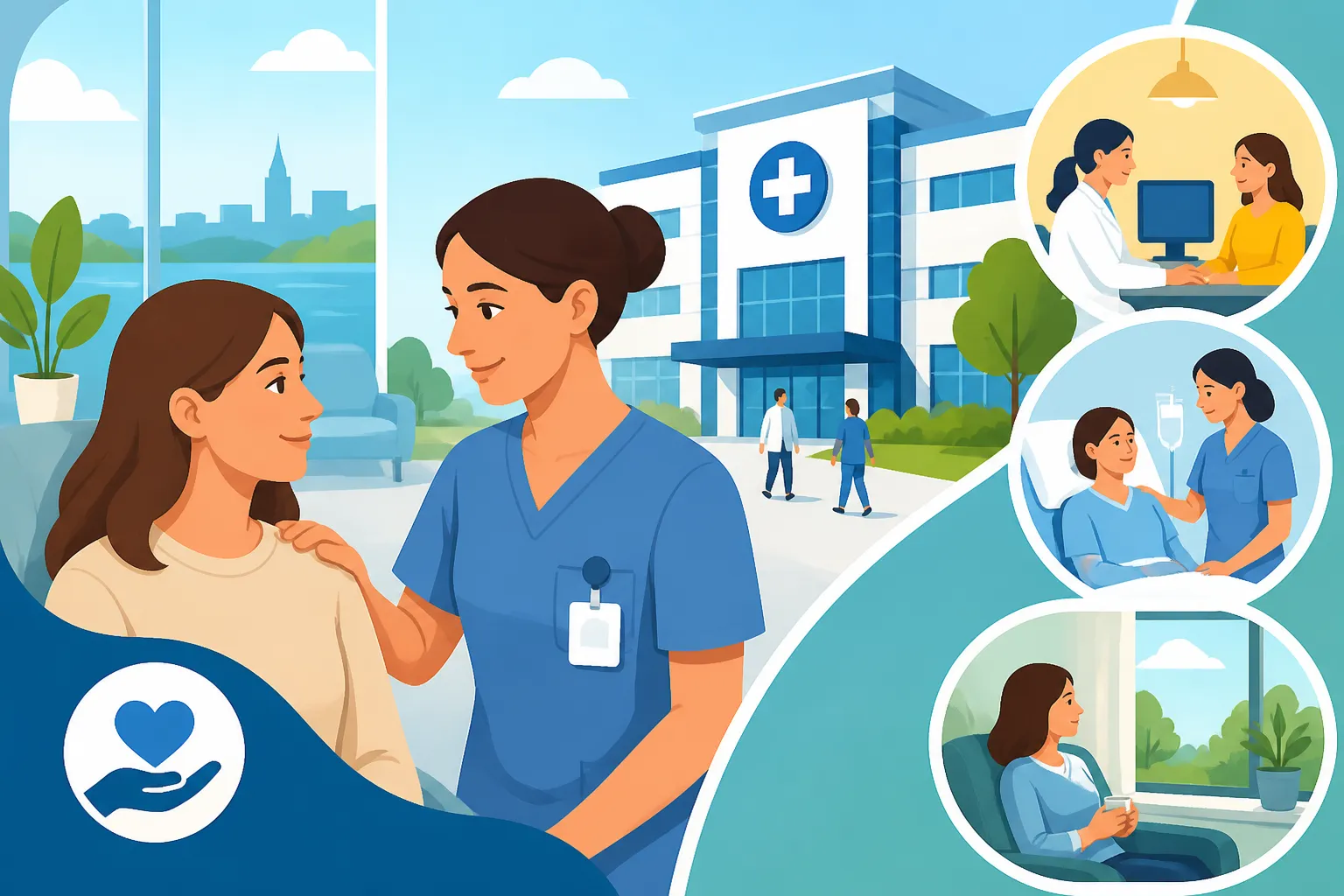
If you are admitted to a university hospital as an "inpatient" (inskríven), the experience is remarkably egalitarian. Whether you are a CEO or a student, you will likely be in a shared room. While some newer wings (like the New Karolinska Solna) offer private rooms for everyone to reduce infection risks, many wards still have 2-4 beds per room, separated by curtains.
The focus here is on clinical recovery, not luxury. You will be given a hospital gown, and you'll have a small locker for your belongings. Newcomers are advised to bring their own slippers, a long charging cable for their phone, and perhaps some of their own snacks. The hospital food is nutritious but famously "lagom" (moderate)—think boiled potatoes, fish, and crispbread.
The Multidisciplinary Team and Rounds
In a university setting, "The Doctor" is rarely just one person. You will be looked after by a team. "Rounds" (ronden) usually happen in the morning. This is when a senior consultant (överläkare), several specialist doctors, and nurses move from bed to bed to discuss each patient’s progress.
Don't be surprised if they discuss your case in Swedish right in front of you before switching to English to talk to you. You are encouraged to ask questions during this time. The "undersköterska" (assistant nurse) will be your primary point of contact for daily needs, while the "sjuksköterska" (registered nurse) handles medications and complex procedures. The level of professionalism is high, but the hierarchy is very flat compared to the US or UK.
The Patienthotell Concept
For patients who need to be close to the hospital for daily treatments but don't need 24/7 nursing care, Sweden uses "Patienthotell" (Patient Hotels). These are actual hotels located on the hospital campus. They offer a much more comfortable, private environment than a ward, and you can often have a family member stay with you for a small fee.
If you are traveling from another part of the country for specialized surgery, you might spend a few days in the ward and then move to the Patienthotell for your initial recovery. It’s a brilliant way to free up hospital beds while still keeping patients under the watchful eye of the medical staff. For those using international insurance like Cigna Global, check if your policy covers these "step-down" facilities, as they are an integral part of the Swedish recovery path.
Financial Logistics and Insurance Requirements
One of the greatest fears for foreigners is the cost. However, the Swedish system is designed to be affordable for residents. Every time you visit a specialist at a university hospital, you will pay a "patientavgift" (patient fee), which is usually between 300 and 400 SEK. If you are admitted to the hospital, the cost is around 130 SEK per day.
This is where The Högkostnadsskydd Explained: Sweden's Healthcare Cost Ceiling and Frikort becomes your best friend. Once you have paid a certain amount (currently 1,400 SEK) in a 12-month period for outpatient visits, you get a "Frikort," and all subsequent visits are free. The same applies to prescriptions, though the ceiling is higher.
Navigating Care Before Your Personnummer
The real "administrative hurdle" appears if you are a newcomer who hasn't yet received a Personnummer. If you are from the EU, your EHIC card will allow you to access care at the same price as a Swede. If you are from outside the EU and don't have your residency settled yet, the hospital may try to charge you the "full cost" of treatment, which can be thousands of dollars per day.
This is why having a plan like SafetyWing is so critical during your first few months. It covers those "in-between" periods before you are fully registered in the Swedish population register. If you are already working but waiting for your number, you should read Can I See a Doctor in Sweden Before I Get My Personnummer? to understand how to claim those costs back later.
Private Insurance and the University System
There is a small but growing private healthcare sector in Sweden. However, it is important to know that private insurance (Sjukvårdsförsäkring) is mostly used for elective surgeries like hip replacements or for faster access to physical therapy. For major trauma, cancer treatment, or complex heart surgery, everyone—private insurance holders included—goes to the university hospitals.
The public system has a monopoly on the most advanced care. Even if you have the most expensive Cigna Global policy, if you need a kidney transplant, you will be treated at a public university hospital alongside everyone else. The private insurance simply helps you get the initial diagnostics and specialist consultations faster, effectively helping you jump the "90-day" queue.
Patient Rights and Advocacy in the Academic Environment
Being a patient in a large institution can make you feel like a number. It is important to know that you have specific rights under the Swedish Patient Act (Patientlagen). This includes the right to information about your condition, the right to a second opinion for life-threatening or particularly serious illnesses, and the right to participate in decisions about your care.
If you feel that you have been treated unfairly or that a medical error has occurred, there are clear channels for complaints. Every region has a "Patientnämnd" (Patient Advisory Committee) that acts as an intermediary between patients and healthcare providers. They are independent and can help you navigate the grievance process without you needing to hire a lawyer.
Accessing Your Medical Records
As mentioned, you can see most of your records on 1177.se. However, university hospitals often have more extensive records, including imaging like CT scans or MRIs, that might not be fully viewable on the portal. You have a legal right to request a full copy of your medical records at any time.
This is particularly useful if you decide to move back to your home country or if you want to consult a specialist abroad. The hospital may charge a small administrative fee for printing or burning the data onto a disc, but they cannot refuse the request. Knowing this can provide a significant sense of control in a system that can otherwise feel very "top-down."
The Importance of the "Contact Nurse"
In specialized departments, especially oncology or chronic disease management, you will often be assigned a "Kontaktsjuksköterska" (Contact Nurse). This person is your lifeline. While it can be nearly impossible to reach a busy surgeon or senior consultant on the phone, your contact nurse is usually accessible and can answer questions about your treatment plan, side effects, and upcoming appointments.
They act as the glue that holds your care together in the vast university hospital system. If you haven't been assigned one, don't be afraid to ask, "Vem är min kontaktsjuksköterska?" (Who is my contact nurse?). Having this direct line of communication can reduce the stress of being a patient in a large, complex institution and ensures that you aren't lost in the digital shuffle.
Medical Disclaimer
The information provided in this article is for educational and informational purposes only and is not intended as medical advice. While every effort has been made to ensure the accuracy of the information regarding the Swedish healthcare system, healthcare policies and costs can change. Always consult with a qualified healthcare professional or your local Vårdcentral regarding any medical concerns. If you are experiencing a medical emergency, call 112 immediately. The author is an expat sharing personal experiences and research, not a licensed medical practitioner.