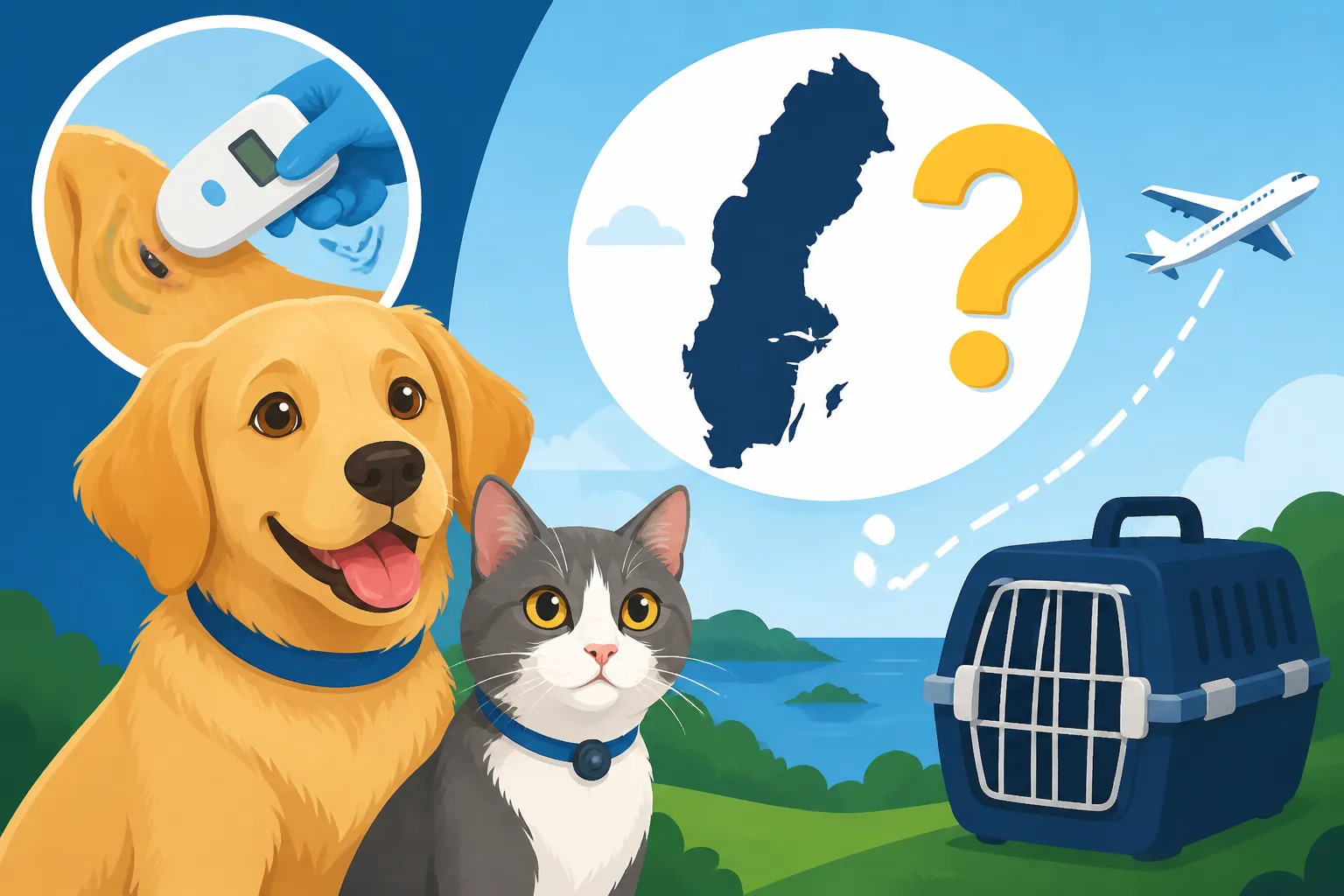
Do Pets Need to Be Microchipped to Move to Sweden?
Moving to a new country like Sweden with your beloved pet can feel like navigating a bureaucratic obstacle course. The paperwork, the timings, the specific rules – it's enough to make even the most organized expat feel a bit overwhelmed. But rest assured, bringing your furry, feathered, or scaled friend to Sweden is absolutely doable, provided you understand and follow the clear regulations. One of the most fundamental requirements, and often the first hurdle, is ensuring your pet is properly identified. This guide will meticulously break down the crucial role of microchipping in the Swedish pet import process, explaining exactly what you need to do to make sure your animal companion can join you on your new adventure.
The Non-Negotiable Requirement: Microchipping Your Pet for Sweden
When it comes to bringing your pet into Sweden, think of microchipping as their version of a personnummer – it's their unique, official identification that links them directly to you. Without it, you simply cannot proceed with the other necessary steps, like vaccinations. This isn't just a Swedish quirk; it's a standard requirement across the entire European Union.
Why Microchipping Isn't Optional for Your Furry Friend
Sweden, like all other EU member states, strictly adheres to EU regulations regarding the movement of pet animals. At the core of these regulations is reliable identification, and that means a microchip. This tiny device, implanted under your pet's skin, carries a unique 15-digit code that can be read by a standard scanner. The purpose is multifold: it's vital for public health control, helping to track animals in case of disease outbreaks, and it's a critical tool in preventing illegal trade and abandonment. For you, it's peace of mind, knowing that if your pet ever gets lost in a new, unfamiliar environment, they can be identified and returned.
It's absolutely essential that the microchip complies with ISO standards 11784 and 11785. These are the international standards that ensure the chip can be read by universal scanners. Most modern microchips meet this criterion, but it’s always wise to double-check with your veterinarian. If your pet has an older, non-compliant chip, or one that doesn't meet the ISO standard, you'll either need to ensure you carry a compatible scanner with you on your journey (which can be a hassle) or, more commonly, have a new, compliant microchip implanted. The problem is, if you get a new chip, any vaccinations recorded before that chip was registered under the new number become invalid, and you'll have to start the vaccination process all over again, including waiting periods. This is a common pitfall for newcomers, so get it right the first time!
This emphasis on unique, verifiable identification parallels the importance of getting your own personnummer once you arrive. Just as your personal identity number is the gateway to accessing services like Healthcare in Sweden for Foreign Residents: The Complete System Guide (2027) or opening a bank account, your pet's microchip is their gateway to legal entry and safety within Sweden. It’s an administrative hurdle, yes, but a necessary one for integrating into Swedish life.
Age and Timing: When Your Pet Needs to Be Chipped
The order of operations here is critical, and messing it up can cause significant delays and frustration. Your pet must be microchipped before or at the same time as their rabies vaccination. I repeat: before or at the same time. The microchip number has to be explicitly recorded on the official rabies vaccination certificate issued by your vet. If the rabies vaccination is administered before the microchip is implanted and officially registered, that vaccination is considered invalid by Swedish authorities. This means you'll have to get your pet re-chipped (if necessary) and then re-vaccinated for rabies, which will restart the entire waiting period.
Most veterinarians will advise chipping puppies and kittens fairly early, often before they reach 8-12 weeks of age. This ensures the chip is in place well before they are old enough for their first rabies vaccine. For a pet to receive its first valid rabies vaccination for travel purposes, it must be at least 12 weeks old. Following this primary vaccination, there's a mandatory 21-day waiting period before your pet is eligible to enter Sweden (or any other EU country). This means, realistically, your pet needs to be at least 15 weeks old and have waited 21 days after their shot before they can even think about setting paw in Sweden.
Consider a hypothetical scenario: you get your beloved puppy, Luna, vaccinated for rabies at 10 weeks, but the microchip isn't implanted until she's 14 weeks old. Even if the chip is ISO-compliant, that initial rabies vaccine is void for travel to Sweden because the chip wasn't in place first. You'd then need to get Luna chipped, wait until she's at least 12 weeks old again (which she would be), and then get her a new rabies vaccination, followed by the 21-day waiting period. Suddenly, your travel plans are delayed by weeks, and you're footing an extra vet bill. It’s a common, heartbreaking mistake, so always confirm this order with your vet, especially if they are not familiar with EU import regulations.
Beyond the Chip: Other Essential Pet Import Requirements for Sweden
While the microchip is the absolute foundation, it's just one piece of a larger puzzle. Sweden has several other vital requirements designed to ensure the health and safety of both your pet and the local animal population. Neglecting any of these can lead to your pet being refused entry, quarantined, or even sent back to your country of origin – a situation no pet parent wants to face.
Rabies Vaccination: A Key Health Hurdle
Once your pet is microchipped (and only then!), the next crucial step is the rabies vaccination. As mentioned, your pet must be at least 12 weeks old to receive this vaccination. The vaccine must be an approved, inactivated vaccine, or a recombinant vaccine, and administered by an authorized veterinarian. After the primary vaccination, there is a mandatory 21-day waiting period before your pet can travel. This waiting period allows sufficient time for immunity to develop.
For pets that have previously been vaccinated against rabies, it's important that their booster shots are kept up-to-date and administered within the validity period of the previous vaccination. If a booster is given even a day late, the entire vaccination protocol is considered reset, and you'll have to observe another 21-day waiting period from the date of the "late" booster. Your pet's microchip number must appear on all rabies vaccination records, clearly linking the vaccination to that specific animal. This is why getting the microchip in first is so vital; if the chip isn't on the original vaccination certificate, the entire thing is null and void for international travel.
Imagine moving to Sweden and expecting to simply use your foreign health documents without any local registration. It’s a bit like trying to navigate Healthcare in Sweden for Foreign Residents: The Complete System Guide (2027) without having registered with a vårdcentral or obtained your personnummer. The system simply won't recognize your pet's health status unless it follows the prescribed sequence and documentation.
The EU Pet Passport or Health Certificate
Depending on where you're moving from, your pet will need one of two main documents to attest to their health and vaccination status:
-
For pets from EU/EEA countries: Your pet will require an EU Pet Passport. This standardized document is a blue booklet issued by an authorized veterinarian in an EU/EEA country. It contains all the essential information: your pet's microchip number, details of rabies vaccinations (dates, vaccine manufacturer, validity period), your contact information, and often records of other vaccinations or treatments. It's designed to make travel between EU/EEA countries relatively straightforward. If your pet already has one, ensure all details are current and correctly filled out.
-
For pets from non-EU/EEA countries: This is where things get a bit more involved. Your pet will need an official veterinary health certificate. This document is more detailed and typically follows a specific format mandated by the EU. It must be issued and signed by an official veterinarian (often a government-certified vet or one approved by the competent authority in your home country) within a very strict timeframe – usually no more than 10 days before your pet's arrival in Sweden. This certificate confirms that your pet meets all the health requirements for entry, including the microchip, rabies vaccination, and any other necessary treatments (such as tapeworm treatment, which is sometimes required depending on the country of origin). It’s crucial to get this certificate right; any missing signatures, stamps, or incorrect dates can lead to significant problems at the border. Always check the latest requirements on the Swedish Board of Agriculture (Jordbruksverket) website.
Declaring Your Pet to Swedish Customs (Tullverket)
Upon arrival in Sweden, your pet must be declared to Swedish Customs, known as Tullverket. This is a non-negotiable step and one that many first-time pet travelers mistakenly overlook. There are generally two ways to do this, depending on your origin country and how you're traveling:
- Online Declaration: For many countries, particularly outside the EU, you can pre-notify Tullverket of your pet's arrival through their online e-service. This is highly recommended as it can streamline the process upon arrival. You'll input your pet's details, microchip number, and expected travel information.
- Physical Declaration at the Border: If you're arriving from an EU/EEA country or have not pre-notified, you must proceed through the "Red Channel" at the airport or ferry port upon arrival. Do not, under any circumstances, go through the "Green Channel" (nothing to declare). Present all your pet's documentation (EU Pet Passport or health certificate, vaccination records) to a customs officer. They will verify the documents and ensure your pet meets all requirements. Even if you've done an online declaration, you should still be prepared to show all original documents if requested.
Failure to declare your pet can result in fines, the pet being sent back, or even being placed in quarantine at your expense. It's a serious matter, and Swedish authorities are very strict about it. Think of it as a mini Registering Your Move (Flyttanmälan) with Skatteverket for your pet; it's about making their presence known and legal within the country.
Life with Your Pet in Sweden: What to Expect
Once your pet has successfully navigated the entry requirements, a new chapter begins! Sweden is generally a very pet-friendly country, particularly towards dogs, and you'll find plenty of opportunities for walks, socialisation, and outdoor adventures. However, there are still a few local administrative steps and cultural norms to be aware of to ensure a smooth transition for both of you.
Registration, Insurance, and Local Rules
One specific Swedish requirement for dog owners is registration with the Swedish Board of Agriculture (Jordbruksverket). All dogs in Sweden must be registered in their central dog registry. This is separate from the microchip database and is intended to track ownership and help reunite lost dogs with their owners. There's a small fee for this registration, and it's something you should take care of relatively soon after your arrival and settling in. This step is also a good parallel to how important it is for you to register with various authorities, like Registering with Försäkringskassan: When and Why You Need To, to gain full access to societal benefits.
While not strictly mandatory by law, dog insurance (hundförsäkring) is incredibly common and highly recommended in Sweden. Veterinary care can be expensive, and a good insurance policy can cover a significant portion of unexpected medical bills, from accidents to illnesses. There are several reputable pet insurance providers in Sweden, and many Swedes wouldn't dream of having a dog without one. It’s akin to getting Home Insurance (Hemförsäkring): Why It's Essential in Sweden – it protects you from unforeseen financial burdens.
Local rules regarding leashing, public access, and waste disposal also exist. While Sweden boasts the "allemansrätten" (the right of public access to nature), which allows for great walks, dogs often need to be kept on a leash in certain areas or during specific times of the year (e.g., nesting seasons for birds). Public transport generally allows dogs, often with specific seating restrictions or a small fee, but rules can vary by city and transport company (e.g., Stockholm's SL system usually allows dogs in specific sections of carriages). Always check the local regulations for your specific municipality and public transport provider.
Finding a vet for routine care or emergencies is also a crucial step. Veterinary clinics, or djursjukhus (animal hospitals) and veterinärkliniker, are common throughout Sweden. Many vets will speak English, especially in larger cities, but it's always a good idea to confirm when booking an appointment. Expect costs for routine check-ups and treatments to be comparable to other Western European countries.
Here's a handy table summarizing the key requirements:
| Requirement | Applies to EU/EEA Pets | Applies to Non-EU/EEA Pets | Key Details & Timing |
|---|---|---|---|
| Microchip | Yes | Yes | Must be ISO 11784/11785 compliant (15-digit). Must be implanted before or at the same time as rabies vaccination. |
| Rabies Vaccination | Yes | Yes | Pet must be at least 12 weeks old. Vaccination must be given after microchip. 21-day waiting period after primary vaccination (or after late booster). Must be documented in passport/certificate with microchip number. |
| Pet Passport / Health Certificate | EU Pet Passport | Official Veterinary Health Certificate | EU Pet Passport: Issued by EU/EEA vet, contains ID & vaccine records. Health Certificate: Issued by official vet in origin country, typically valid for 10 days from issue to entry. Must be EU-specific format, signed and stamped. |
| Customs Declaration | Advised to go Green/Red channel (depending on rules/airline) or pre-notify if specified | Mandatory Red Channel declaration or online pre-notification | Must declare your pet upon entry. Use Tullverket's online service for pre-notification or the Red Channel at arrival points. Failure to declare can result in fines/quarantine. |
| Jordbruksverket Registration (Dogs) | Yes (post-arrival) | Yes (post-arrival) | Mandatory for all dogs in Sweden. Register with the Swedish Board of Agriculture after arrival. There is a small fee. |
| Tapeworm Treatment (Echinococcus multilocularis) | Check specific country requirements (e.g., Finland, Norway require it) | Check specific country requirements (especially for UK, Ireland, Malta, or non-listed countries). Not typically for direct entry from many countries. | Administered by a vet 1-5 days before entry if required. Record must be in passport/certificate. Always check the latest Jordbruksverket rules for your specific origin country. |
The Social and Cultural Side of Pet Ownership
Sweden embraces pet ownership with a generally welcoming attitude. You'll quickly notice that dogs, especially, are integrated into many aspects of daily life. During summer, you'll see dogs enjoying outdoor uteserveringar (patios) at cafes, and many shops will indicate if they are dog-friendly. The vast natural landscapes provide endless opportunities for long walks, hikes, and exploring with your dog, whether it's through a local park or a sprawling forest. This can be a wonderful way to discover your new surroundings and get some much-needed fresh air, especially during the colder, darker months.
Swedes are often respectful of other people's space, including their pets. It's common courtesy to ask before petting someone's dog, and generally, people keep their dogs under control. Pet food and supplies are readily available in supermarkets like ICA, Coop, and Willys, as well as specialized pet stores. The cost of living in Sweden, including pet ownership, can be higher than in many other countries, so factor in expenses for food, vet visits, and insurance when budgeting. This is an important part of understanding Everyday Living in Sweden: Groceries, Recycling, and Local Customs.
The joy of having your pet with you in Sweden truly outweighs the initial administrative headaches. Once you've navigated the microchip, vaccinations, and paperwork, you'll find a welcoming environment for your animal companion, allowing you both to settle into your new Swedish life. The detailed process for Bringing a Pet to Sweden: Rules, Microchips, and Jordbruksverket is extensive, but remember it's all designed to ensure the well-being of animals and people.
Disclaimer
Please note that immigration and animal import regulations can change. While I strive to provide the most accurate and up-to-date information, it is always your responsibility to verify all requirements directly with the relevant Swedish authorities, such as the Swedish Board of Agriculture (Jordbruksverket) and Swedish Customs (Tullverket), well in advance of your planned travel. This guide is for informational purposes only and does not constitute legal advice.