Is There a Queue for Förskola in Swedish Cities?
One of the most anxiety-inducing topics for expat parents arriving in Sweden, especially in the larger cities, is the elusive förskola spot. You hear whispers of long queues and impossible waits, and it can feel like trying to crack a secret code just to get your little one into preschool. This guide is here to cut through the confusion, explain the realities of förskola applications in Swedish cities, and arm you with practical strategies to navigate the system, easing that parental stress we all feel.
Understanding the Swedish Förskola System
Before we dive into the nitty-gritty of queues, let's get on the same page about what förskola actually is and its fundamental role in Swedish society. It’s more than just a daycare; it’s a cornerstone of the welfare state, designed to provide every child with a stimulating, pedagogical environment that lays the groundwork for lifelong learning.
What Exactly is Förskola?
Förskola translates to "preschool" or "nursery school," and it caters to children aged one to five, right up until they start förskoleklass (pre-school class, which is part of the compulsory school system). The overarching goal of förskola is not just to supervise children while parents work, but to actively contribute to their development and learning through play-based education. They follow a national curriculum, which emphasizes language development, social skills, mathematics, technology, and understanding nature, all within a playful and inclusive framework.
For many expat families, förskola is also a child’s first real immersion into Swedish language and culture. It’s often where they pick up their first Swedish words and begin to integrate socially. The environment is typically nurturing, with a strong focus on outdoor play, creativity, and fostering independence. Don't expect rote learning or strict academic pressure; it's all about exploration and discovery at this age.
The Legal Right to a Place
Here’s where the "queue" concept gets a bit nuanced. In Sweden, all children from the age of one have a legal right to a förskola place if their parents are working, studying, actively seeking employment, or if the child needs it for their own development (e.g., due to special needs or language support). This is enshrined in Swedish law. However, this right comes with a caveat: the municipality has up to four months from the date of application to offer a place.
This four-month guarantee is crucial. It means you will eventually be offered a spot, but it doesn't guarantee a place at your preferred förskola, or even in your immediate neighbourhood. This is often the source of parental frustration, particularly in popular urban areas where demand far outstrips supply for certain well-reputed or conveniently located preschools. Many parents apply and then spend those four months nervously waiting, hoping for news, and sometimes having to accept an offer that isn't ideal.
Public vs. Private Förskola
The vast majority of förskolor in Sweden are municipal (public), run by the local authority. These adhere strictly to the national curriculum and are funded by taxes, with parental fees capped by the maxtaxa system. Alongside these, there are also private förskolor, often run by parent cooperatives, foundations, or private companies. Critically, these private options still operate under the same national curriculum and are subject to the municipality's oversight and regulations, including fee caps.
What this means for the "queue" is important: many private förskolor in cities integrate into the municipal application system. You often apply for both public and private through the same online portal, and they draw from the same applicant pool, albeit sometimes with their own additional selection criteria (e.g., preference for siblings, or a pedagogical profile that aligns with the family's values). So, while some might hope private förskolor offer a shortcut, it’s rarely a completely separate pathway in terms of securing a spot.
The Reality of Förskola Queues in Swedish Cities
Let's address the elephant in the room: yes, it often feels like there's a queue, especially in bustling Swedish cities. But it's not always a straightforward line where the first person in gets the first available spot. It's a more complex interplay of factors that make it challenging for new arrivals.
Why the Perception of a "Queue" Exists
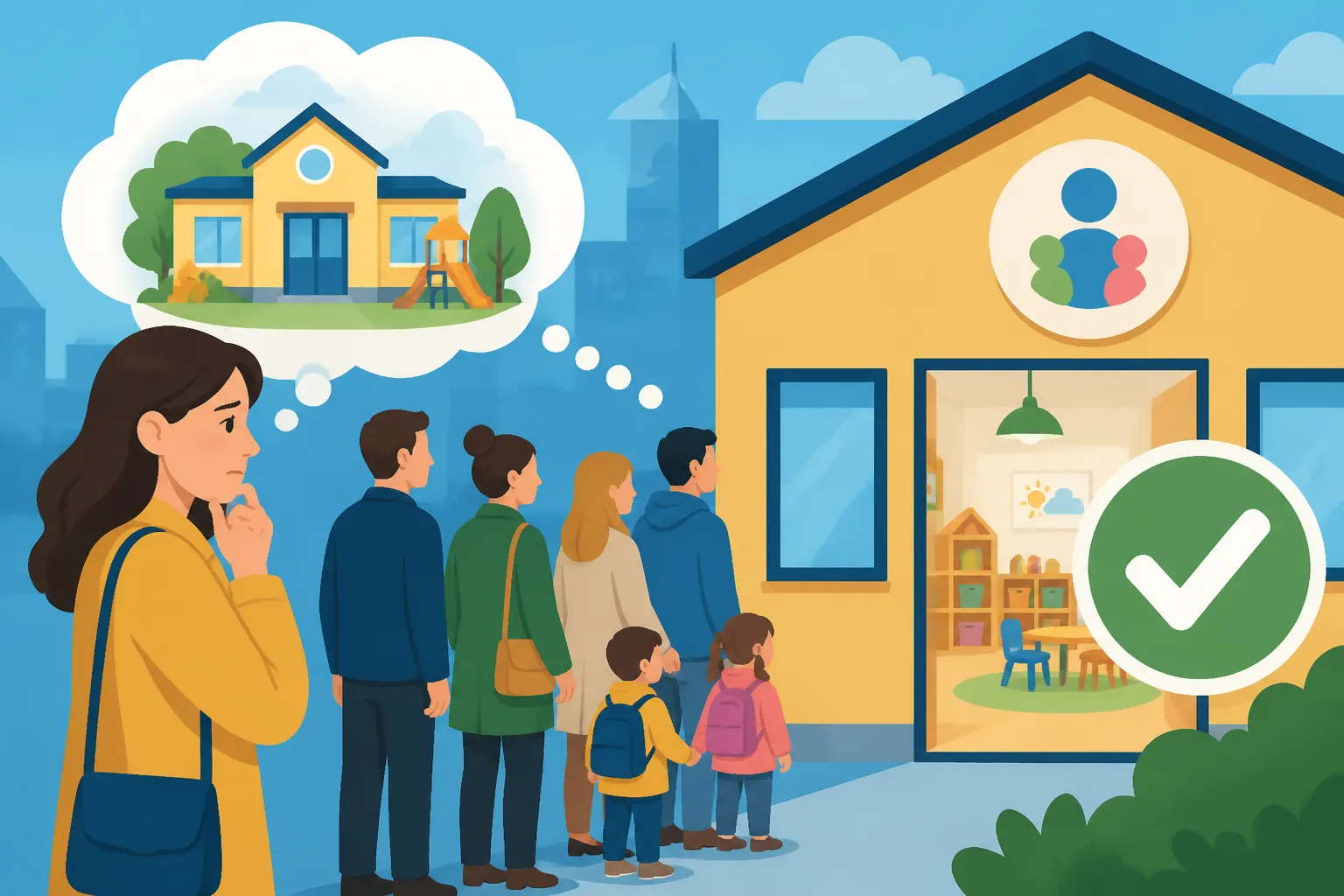
The idea of a long "queue" for förskola is very real for many parents, particularly in high-demand urban areas like Stockholm, Gothenburg, and Malmö. While the municipal guarantee ensures a spot within four months, the scarcity of desirable places creates a competitive environment. It’s less about a chronological waiting list (though some municipalities do operate partially on "queue days" for municipal förskolor) and more about matching available spaces with applicant preferences, statutory rights, and sometimes specific local criteria.
Imagine this scenario: you've just moved to an attractive neighbourhood in central Stockholm, perhaps having found your apartment through platforms like Spotahome. You've heard great things about the förskola just down the street. You apply, and then you discover that 50 other parents have also applied for the same 2-3 spots for 1-year-olds opening up in the autumn. This is where the "queue" mentality kicks in. It's a supply-and-demand issue, exacerbated by parents' natural desire for a convenient, well-regarded förskola close to home or work.
Factors Influencing Waiting Times
Several variables significantly impact how long you might "wait" and what kind of offer you eventually receive:
- Location, Location, Location: This is paramount. Inner-city areas, popular suburbs with good transport links (like Hammarby Sjöstad in Stockholm or Majorna in Gothenburg), and areas with many young families simply have higher demand. Conversely, some less central or newer residential areas might have more availability. The density of families with small children directly affects the competition for spots.
- Age of the Child: Securing a spot for a 1-year-old can often be the trickiest, as this is when most children transition from parental leave. Places for 3, 4, or 5-year-olds might be slightly easier to come by as children move up through the system or families relocate. If you're arriving in Sweden with a toddler, you'll need to be particularly proactive.
- Desired Start Date: The autumn term (August/September) is by far the most competitive period, as this is when new cohorts of 1-year-olds are often ready to start, and many older children move on to förskoleklass. Applying for a mid-year start might, in some cases, offer slightly better chances, though this is not a guarantee.
- Number of Applicants for a Specific Förskola: Some förskolor gain reputations for excellent pedagogical approaches, a high number of English-speaking staff, fantastic outdoor spaces, or simply being incredibly convenient. These popular options will naturally have many more applicants than available places, making them harder to get into.
- Municipality's Own Capacity and Criteria: While all municipalities must adhere to the four-month rule, how they allocate places can vary. Some might prioritize siblings already attending a förskola, children with special educational needs, or those in foster care. It's essential to check your specific municipality's rules, as they can sometimes break a tie or shift priorities.
The Four-Month Guarantee – What It Means in Practice
As mentioned, the legal right to a förskola place comes with a four-month timeframe. In practice, this means your municipality must present you with an offer within that period. However, this offer might not be for your top choice, or even your second or third. It could be for a förskola across town, requiring a longer commute, or one you hadn't even considered.
This can be incredibly frustrating for expat families who might not yet have a car, or who are still grappling with learning the public transport system. You might find yourself commuting a significant distance or taking public transport, perhaps navigating with an app while using an eSIM from a provider like Airalo to ensure you have data, just to drop off your child. The key takeaway is to manage your expectations: you will get a place, but it might not be the ideal one immediately. Many families accept the first offer, then remain in the application system to try and move to a preferred förskola later if a spot opens up.
Navigating the Application Process and Strategies
So, how do you actually get through this system without losing your mind? It takes preparation, persistence, and a healthy dose of flexibility.
Step-by-Step Application Guide
Getting your child into förskola involves a few crucial steps, many of which depend on having your basic Swedish administrative ducks in a row.
- Personnummer is Essential: This cannot be stressed enough. Both the parent applying and the child absolutely need a Getting Your Personnummer: The Gateway to Swedish Healthcare before you can even think about applying for förskola. Without it, you're essentially invisible to the municipal system. If you're still waiting for your personnummer, you'll need to explore temporary private childcare options or delay your child's start.
- Contact Your Municipality: Every municipality (kommun) in Sweden manages its own förskola applications. Whether you live in Stockholm, Gothenburg, Malmö, Uppsala, or a smaller town, you'll need to go to their specific website and application portal. Search for "[Your City's Name] + förskola ansökan" or "barnomsorg" (childcare). The process is usually entirely online, often requiring a BankID for authentication (which also requires a personnummer and Swedish bank account).
- Apply Broadly and Early: As soon as your child has their personnummer, and you know roughly when you'd like them to start, submit your application. Even if you think you won't need a spot for another six months, get in the system. When applying, you'll typically be asked to list several preferred förskolor. Apply to a wide range – don't just stick to the two closest to your apartment. Include municipal and private options in different parts of your general area. This increases your chances of getting an offer that aligns somewhat with your needs within that four-month window.
- Express Preferences, but Be Flexible: On the application, you'll indicate your preferred förskolor and your desired start date. While it's good to list your top choices, mentally prepare to be flexible. If you reject an offer, you generally remain in the queue, but the four-month guarantee clock may reset, or you might have to wait even longer for another offer. Most parents accept the first reasonable offer, even if it's not perfect, and then stay in the queue for their desired förskola. You can always change förskola later if a spot opens up.
Practical Tips for Improving Your Chances
Navigating the förskola labyrinth can feel isolating, but there are ways to be proactive and improve your family’s chances of securing a good spot.
- Network with Other Parents: Seriously, this is gold. Join local expat groups on Facebook, visit playgrounds, and strike up conversations. Other parents who have been through the system in your area are an invaluable resource. They can tell you which förskolor are notoriously difficult to get into, which ones might have slightly shorter "queues," or even tips on lesser-known options. They might also share insights on what it's like Raising Children in Sweden: Förskola, School, and Family Life in different areas.
- Visit Förskolor: If possible, visit some of your preferred förskolor. While this might not directly move you up a waiting list, it shows genuine interest and can help you make a more informed decision when an offer comes. It also allows you to gauge the atmosphere and meet some of the staff, which can be reassuring. Some förskolor hold open days; others might allow you to arrange a short visit.
- Consider Private Options (Strategically): As discussed, many private förskolor are part of the municipal system. However, some might have slightly different internal criteria, or a particular pedagogical profile (e.g., Waldorf, Montessori, or a specific language focus) that means their applicant pool is smaller. It's worth researching these options in your area, but don't assume they are a guaranteed faster track.
- Be Persistent and Polite: Follow up with your municipality’s förskola placement office a few weeks after applying, and perhaps again if your four-month window is approaching. A polite check-in can ensure your application hasn't fallen through the cracks and reminds them you're actively looking. However, don't badger them daily; a well-timed, polite query is usually sufficient.
- Leverage Local Knowledge: Understanding the local geography can be a huge advantage. Choosing Where to Live in Stockholm: Neighbourhoods for Newcomers or Living in Gothenburg and Malmö: What Newcomers Should Know articles might give you an idea of areas where new förskolor are being built, or where the population density of young children is slightly lower, potentially leading to more available spots. Sometimes, accepting a spot just one or two tram stops further away can significantly reduce your wait.
What to Do While You Wait
Waiting for a förskola spot can feel like an eternity, especially if you’re eager to return to work or study. It's essential to have a plan B, or even a plan C.
- Temporary Childcare Solutions: If you need childcare immediately and the four-month wait is too long, you might explore private alternatives like nannies, au pairs, or independent family daycares (familjedaghem). Be aware that these can be considerably more expensive than förskola fees and might not always adhere to the same pedagogical standards. Some parents also rely on family or friends for a temporary period.
- Parental Leave: If one parent is eligible for Swedish parental leave benefits (föräldrapenning), this is often the most common way to bridge the gap. Sweden’s generous Parental Leave in Sweden: Föräldrapenning and the 480 Days system allows parents to take time off work to care for young children, which can effectively cover the period until a förskola spot becomes available.
- Language Development at Home: While waiting, seize the opportunity to immerse your child in Swedish at home if you're comfortable. Reading Swedish books, listening to children’s songs, and watching age-appropriate Swedish TV shows can give them a head start and make the transition to förskola smoother when the time comes. This can be particularly beneficial for children who haven't had much exposure to Swedish.
Costs, Support, and Beyond the Queue
Once you've navigated the application and secured a spot, what comes next? Let’s briefly touch upon the financial aspects and the future educational journey.
Understanding Förskola Fees (Maxtaxa)
One of the great benefits of the Swedish förskola system is the maxtaxa, or maximum fee. This means that fees are income-based, but there's an upper limit to how much you can be charged, regardless of how high your income is. This ensures that childcare remains affordable and accessible to nearly everyone. Typically, the fee is a percentage of the household's gross income, with the percentage decreasing for the second and third child. The fourth child (and subsequent) is usually free.
This system is a huge relief for many families, especially when comparing it to childcare costs in other countries. You can read more about it in depth in articles like How the Maxtaxa Cap Childcare Costs in Sweden?. It’s important to declare your income accurately to the municipality to ensure you're charged the correct fee.
Support for Children with Special Needs
Sweden’s förskola system is designed to be inclusive. If your child has special needs, the förskola is obligated to provide the necessary support and adaptations to ensure they can participate fully and thrive. This might involve extra staff, specialized equipment, or tailored pedagogical approaches. It's crucial to communicate any special needs during the application process so the municipality can allocate resources appropriately and find a förskola that is best equipped to support your child.
Transitioning to Grundskola
Förskola is just the beginning of a child's educational journey in Sweden. After förskola, children typically transition to förskoleklass (pre-school class) at age six, which is the first non-compulsory but highly recommended year of the public school system. This year focuses on preparing children for grundskola (compulsory school), which begins at age seven.
The transition is usually well-managed, with förskolor and schools often collaborating to make the move smooth for the children. You can learn more about the next steps in their education by reading guides such as Starting Grundskola: The Swedish School System for Families.
Here’s a quick overview of förskola application considerations in different urban settings:
| Feature / Location | Major City Center (e.g., Central Stockholm) | Major City Suburb (e.g., Kista, Lundby) | Smaller City (e.g., Växjö, Luleå) |
|---|---|---|---|
| "Queue" Reality | Highly competitive; long wait for preferred spots; offers often further away | Competitive but more options; potentially shorter waits for non-premium spots | Generally shorter waits; higher chance of getting a preferred spot |
| Key Factors | High population density, limited space, high demand for specific profiles | New developments, varying family densities, local reputation of förskola | Lower population density, more consistent availability, community focus |
| Application Strategy | Apply very early, apply broadly to many förskolor, be very flexible | Apply early, consider a slightly wider geographical area | Apply well in advance, still list preferences but less need for extreme flexibility |
| Four-Month Guarantee | Often results in an offer for a non-preferred förskola further out | Likely results in an offer, possibly for a nearby but not top-choice förskola | High chance of an offer in your preferred area or a top choice |
| Fees (Maxtaxa) | Standardized across Sweden based on income, capped by maxtaxa | Standardized across Sweden based on income, capped by maxtaxa | Standardized across Sweden based on income, capped by maxtaxa |
Navigating the förskola system in Swedish cities as a newcomer can be daunting, but it’s entirely doable. By understanding how the system works, being proactive in your applications, and staying flexible, you'll find a place for your child. Remember, the Swedish system is designed to provide high-quality, accessible childcare, even if the path to securing that perfect spot feels a little convoluted at times!
Disclaimer
The information provided in this guide is intended for general informational purposes only and does not constitute legal, financial, or medical advice. While we strive to provide accurate and up-to-date information, regulations and procedures in Sweden can change. We recommend consulting official government sources, such as Migrationsverket, Skatteverket, Försäkringskassan, and your local municipality, or seeking professional advice for your specific situation.