How Much Does Preschool Cost in Sweden?
Navigating the financial landscape of a new country is always daunting, and when you add the complexities of childcare, it can feel like trying to solve a Rubik's Cube blindfolded. One of the most common worries for expat parents I meet in Sweden is, "How much is preschool going to hit my wallet each month?" Forget the generic answers; this guide will deep-dive into the actual costs of preschool in Sweden, known as förskola, breaking down the system, explaining the famous 'maxtaxa' cost ceiling, and giving you a realistic picture of what to expect.
Understanding Sweden's Preschool System (Förskola)
Before we even talk about costs, it’s vital to understand what förskola actually is in Sweden. It’s not just a place to drop off your kids while you work; it’s a cornerstone of Swedish society, a highly valued educational institution in its own right, firmly rooted in a pedagogical framework. For many expat parents, this difference in philosophy is one of the first things that stands out.
The Concept of Förskola: More Than Just Daycare
In Sweden, förskola translates directly to "preschool" but encompasses a much broader concept than what many might expect from a typical daycare or nursery abroad. It's a structured educational environment for children aged 1 to 5 years, focusing on play-based learning, social development, language acquisition, and early academic skills, all guided by a national curriculum. The teachers, or förskollärare, are university-trained educators, and there’s a strong emphasis on outdoor play, creativity, and fostering a sense of democracy and equality among the children.
Many parents arriving from other countries are pleasantly surprised by the quality and approach. It’s designed to be a supportive and stimulating environment where children learn through exploration and interaction, rather than rote memorization. This focus on holistic development means that children aren't just being "looked after"; they are actively learning and growing in a professional setting. It’s a significant investment in the future of the children, and the costs reflect a societal commitment to accessible, high-quality early childhood education.
You’ll find that children at förskola spend a lot of time outside, regardless of the weather – something that can initially be a bit of a shock for parents used to indoor-centric care. They also often bake, do crafts, sing, tell stories, and engage in various projects. The aim is to build a strong foundation for lifelong learning, social competence, and curiosity before they even step into primary school.
Eligibility and Enrollment for Foreign Residents
So, who can actually enroll their children in förskola? The good news is that generally, all children residing in Sweden are entitled to a place in förskola from the age of one, provided at least one parent is working, studying, or actively seeking employment. This right is pretty universal, making Sweden’s system highly inclusive. However, for foreign residents, there are a few bureaucratic hurdles you’ll need to clear first.
The most critical step is getting your child a Getting Your Personnummer: The Gateway to Swedish Healthcare and ensuring your family is Registering Your Move (Flyttanmälan) with Skatteverket. Without these, your application for a förskola place, and indeed accessing many public services, becomes significantly more challenging, if not impossible. Your personnummer is your key to the entire Swedish administrative system, including the local municipality's childcare services.
Once you have your personnummer, you’ll typically register your child with your local municipality (kommun) for a förskola place. Each municipality has its own application process and queue system. This is where the wait can begin, especially in popular urban areas. It's common for families to put their child's name down even before they are born, or as soon as they receive their personnummer, to start accumulating queue days. The more time you've spent in the queue, the better your chances of getting into your preferred förskola. You can learn more about this process in our guide on Enrolling Your Child in Förskola (Preschool) in Sweden.
The "Maxtaxa" Principle: Sweden's Cost Ceiling
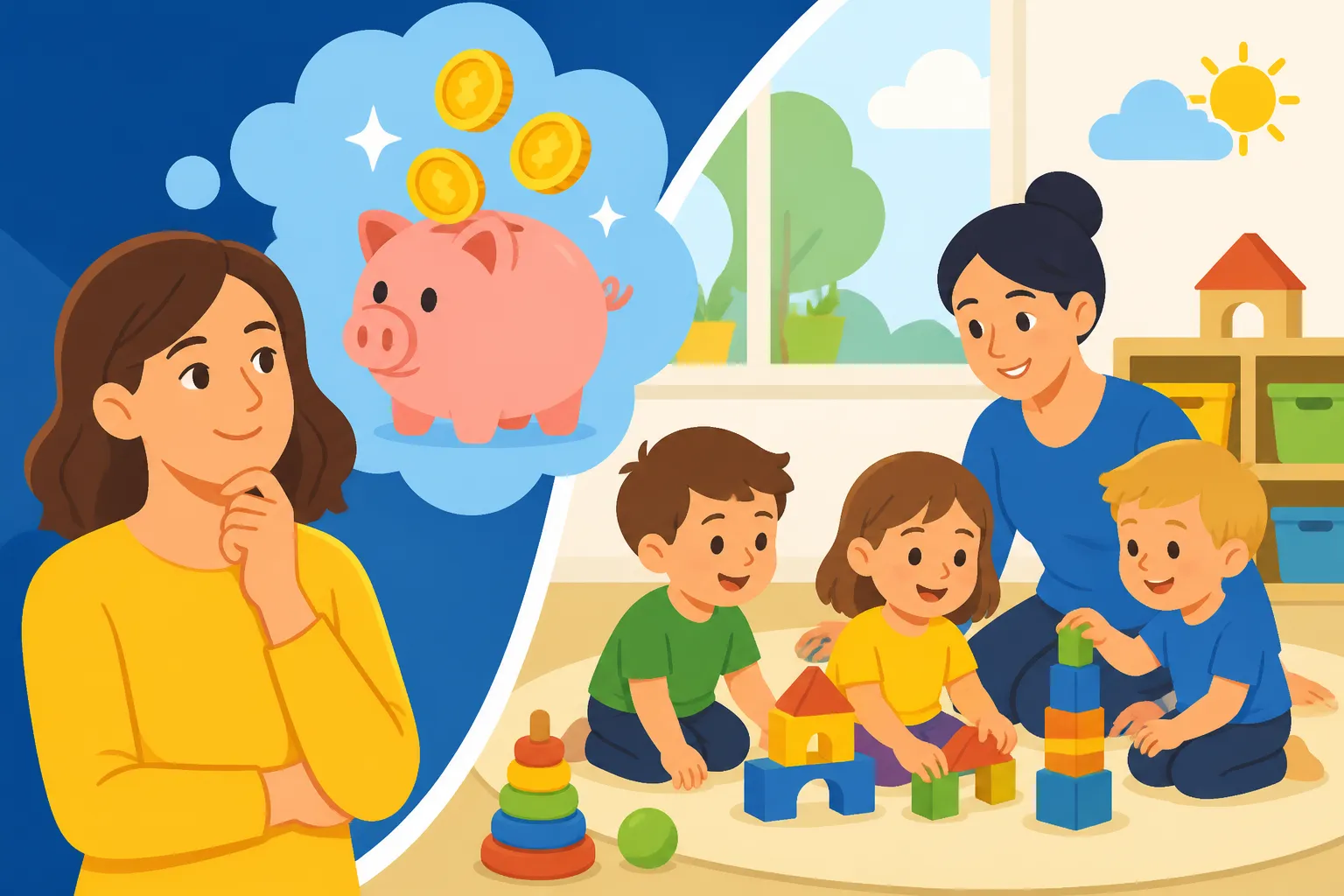
The true magic behind Sweden's affordable förskola system is the "Maxtaxa," or Maximum Fee, principle. This is a government-mandated cost ceiling that ensures no family pays more than a certain amount for public preschool, regardless of their income, and critically, caps the percentage of your income that goes towards childcare. This system is designed to make förskola accessible to everyone, promoting gender equality in the workplace and ensuring all children have access to high-quality early education.
How the Maxtaxa System Works
The Maxtaxa system operates on a sliding scale, meaning the fee you pay is directly linked to your household's gross income before tax, up to a certain maximum. The idea is that those with higher incomes contribute more, but only up to a point where it remains affordable and doesn't become a barrier to employment or study. The municipal government then subsidizes the remaining cost. This is a huge relief for many families, especially those with multiple children, as it prevents childcare costs from spiraling out of control.
Each year, the government sets a maximum chargeable income level, and a maximum fee for the first, second, and third child. Any income above this set level is not included in the calculation – so if your combined household income is, for example, 60,000 SEK per month, but the maximum income considered is 56,250 SEK, you will only be charged based on the 56,250 SEK. This means that even very high-income earners benefit from the cap. This system is a clear demonstration of Sweden's commitment to social welfare and family support, quite distinct from many other countries where childcare costs can easily become a second mortgage. For a deeper dive into how this cap impacts your budget, take a look at our article, How the Maxtaxa Cap Childcare Costs in Sweden?.
Let’s say a family has a combined monthly gross income of 40,000 SEK. Under the Maxtaxa system, they would pay a certain percentage of this income, up to the maximum fee. If another family earns 80,000 SEK per month, they would also pay a percentage of their income, but the total amount would stop at the Maxtaxa ceiling, meaning they wouldn't pay double the amount just because they earn double. This equitable approach ensures that childcare is not a luxury, but a right.
Income Calculation and Family Status
When calculating your förskola fee, the municipality primarily looks at your household's gross income before tax. This typically includes salaries, income from self-employment, parental benefits (Parental Leave in Sweden: Föräldrapenning and the 480 Days), unemployment benefits, sickness benefits, and certain taxable allowances. What’s important to understand is that it’s often the combined income of both parents living at the same address, regardless of whether they are married or sambo (cohabiting partners), that counts. This can sometimes be a surprise for newcomers who might be used to individual income assessments.
For new arrivals, especially those just starting work, understanding how their income will be assessed can be tricky. You might be asked to provide an employment contract or an estimate of your expected income. If your income fluctuates, or if one parent is initially unemployed, it’s crucial to communicate this clearly with your municipality. They are generally quite understanding and will guide you on what documentation is needed. Your actual Understanding Your Swedish Payslip and Preliminärskatt will be a key document here.
It's your responsibility to inform the municipality of any significant changes in your income or family situation that might affect your fee. Forgetting to do so, or delaying notification, could lead to incorrect billing – either you paying too much, or, more problematic, you being undercharged and then receiving a hefty back-payment demand later on. This happened to a friend of mine who started a new job with a much higher salary and simply forgot to update the municipality for several months. The retrospective bill was not a fun surprise! So, stay on top of your income reporting.
Current Fee Levels for the Oldest and Subsequent Children
The Maxtaxa system also factors in the number of children you have in förskola at the same time. The fee is generally highest for the oldest child, and then decreases for subsequent children, up to the third child. Any fourth child or more usually attends for free. This tiered structure is another way Sweden makes it financially viable for families to have multiple children and access childcare.
As of 2024, the maximum income on which the fee is calculated is 56,250 SEK per month per household. The percentages applied to this income (or your actual income, if lower) are as follows:
- Child 1 (Oldest): Maximum 3% of the income, up to 1,688 SEK per month.
- Child 2: Maximum 2% of the income, up to 1,125 SEK per month.
- Child 3: Maximum 1% of the income, up to 563 SEK per month.
- Child 4 onwards: Free.
Let's put this into a table for clarity:
| Child Order (in Förskola) | Percentage of Gross Income | Maximum Monthly Fee (as of 2024) |
|---|---|---|
| Oldest Child | 3% | 1,688 SEK |
| Second Child | 2% | 1,125 SEK |
| Third Child | 1% | 563 SEK |
| Fourth Child onwards | 0% (Free) | 0 SEK |
Note: These figures are based on the maximum chargeable income of 56,250 SEK/month. If your household's gross income is lower than this, the percentages will apply to your actual income, up to your income level.
This means that even if you have three children in förskola simultaneously and your combined gross income is above 56,250 SEK, your absolute maximum monthly cost for all three children would be 1,688 + 1,125 + 563 = 3,376 SEK. Compared to childcare costs in many other developed nations, this is incredibly affordable. It's a genuine safety net that significantly reduces the financial burden on working families.
Beyond Public Förskola: Other Options and Considerations
While public förskola is the most common choice, it's not the only option, and there are a few other cost-related aspects to be aware of. The system is comprehensive, but knowing the alternatives and nuances can help you make the best decision for your family.
Private Förskola and Parental Cooperatives
It might sound contradictory, but even "private" förskola institutions in Sweden often operate under the same Maxtaxa principle. This is because most private förskola providers receive public funding from the municipality. In return for this funding, they are required to adhere to the national curriculum and charge fees according to the Maxtaxa rules. So, for your wallet, there's often little to no difference in the monthly fee between a municipal and a private förskola, as long as the private one is publicly funded.
However, there are exceptions. A truly independent, privately run förskola that receives no municipal funding could set its own fees. These are far less common, especially outside the major cities, because parents usually opt for the more affordable, publicly subsidized options. If you do encounter a private förskola that doesn't follow Maxtaxa, be prepared for significantly higher costs. It's always best to clarify their fee structure directly with the institution during your research.
Parental cooperatives (föräldrakooperativ) are another form of förskola where parents are typically involved in the day-to-day operations or administrative tasks, alongside professional staff. These also generally fall under the Maxtaxa system for fees. The main difference lies in the parental involvement – you might be expected to contribute a certain number of hours per month to tasks like cleaning, maintenance, or substitute teaching if a staff member is ill. While the direct financial cost is the same, this parental commitment is a "hidden cost" in terms of your time, but can also be a rewarding way to be involved in your child's early education and build community.
Hidden Costs and Other Childcare Alternatives
While the monthly förskola fee is relatively low thanks to Maxtaxa, it's wise to consider if there are any other costs that might pop up. Generally, Swedish förskola is very inclusive, and most things are covered. Meals, snacks, and most activities are included in the fee. You typically won't find requests for "school supplies" or compulsory "field trip fees" that are common in some other countries. However, very occasionally, a förskola might ask for a small voluntary contribution for a special outing or project. These are usually minimal and entirely optional.
The main "hidden" costs are really about personal equipment. You’ll need to provide appropriate clothing for all weather conditions (rain gear, warm winter clothes, good shoes) as children spend a significant amount of time outdoors. Swedish parents are masters of layering! You’ll also need to ensure your child has a change of clothes, perhaps a small backpack, and any specific comfort items they need. These aren't costs to the förskola but necessary expenses for participating fully in the förskola experience.
Beyond förskola, there are other childcare alternatives, though they are less common for full-time care. Some municipalities still offer familjedaghem (family daycare), where a trained childminder looks after a small group of children in their own home. The fees for these are also generally covered by the Maxtaxa system. For more flexible or occasional care, you might find öppen förskola (open preschool), which is free and unstructured, allowing parents and children to drop in, play, and socialize. These are fantastic for new parents or those with younger children not yet in regular förskola, but they don't replace full-time care.
The "Allmän Förskola" for Older Children
Here’s another fantastic perk of the Swedish system: the allmän förskola, or general preschool. This provides 15 hours of free preschool per week for all children aged 3 to 5 years, starting from the autumn semester of the year they turn three. This is not tied to parental employment or income; it's a universal right.
If your child is already in förskola full-time and falls into this age group, their monthly fee will automatically be reduced to account for these 15 free hours. For instance, if your fee was calculated based on 40 hours per week, it would effectively be reduced to 25 hours. If you only need part-time care, you can choose to send your child for just the 15 free hours, making it entirely free for three, four, and five-year-olds. This is a huge benefit, especially for stay-at-home parents or those with very flexible working arrangements.
The allmän förskola entitlement typically follows school terms, meaning there might be a break during summer, Christmas, and Easter holidays, unlike regular förskola which often operates year-round with limited closures. It’s always good to clarify the exact terms and holiday schedules with your municipality or chosen förskola. This benefit is a clear signal of Sweden’s dedication to ensuring all children receive a good start in life, regardless of their family’s financial situation. This is part of the broader system that helps families manage finances, alongside benefits like Child Allowance (Barnbidrag) and the Large-Family Supplement in Sweden.
Practical Steps for Newcomers Regarding Preschool Costs
Stepping into the Swedish förskola system as a newcomer can feel like a lot to take in. There's the application process, understanding the bills, and keeping up with administrative changes. But once you get the hang of it, it's quite straightforward and incredibly supportive.
Getting Your Child a Place and Understanding Your Bill
The very first step, as mentioned, is getting that all-important personnummer for your child and ensuring your family is properly registered with the local population registry. After that, you'll need to contact your municipality's education or childcare department to register your interest and apply for a förskola place. Each municipality has its own system, often involving an online portal where you can list your preferred förskolor and join the queue. Don't be shy about asking for help; most municipalities have staff who can assist in English. Our guide on How Do I Get My Child a Place in Förskola in Sweden? provides detailed steps.
Once your child is offered and accepts a place, you’ll start receiving monthly bills for the förskola fee. These bills, often sent digitally through your online bank or by mail, will detail the calculation based on your declared income and the number of children in care. They might look a bit different from utility bills or rent statements you're used to, but the key is to look for the "avgift för förskola" or similar wording. Don't hesitate to contact the municipality's förskola administration if anything on your bill is unclear or seems incorrect. They are usually very helpful in explaining the charges.
It's also worth noting that the fees are generally for a full calendar month, regardless of how many days your child actually attends. If your child is sick or you go on holiday, the fee remains the same. This is standard practice across Sweden. However, if your child is absent for a very long period (e.g., several months due to extended travel), it's worth discussing with the municipality, as there might be specific rules or the possibility of temporarily withdrawing your child from the förskola and re-applying later (though this might mean losing your place).
What Happens if Your Income Changes?
Life happens, and income can change. You might get a raise, change jobs, or one parent might start working after a period of unemployment. It is absolutely vital that you report any significant changes in your household's gross income to your municipality's förskola administration as soon as possible. As an expat, this is a crucial administrative detail that can easily be overlooked, leading to complications.
If your income increases and you don't report it, the municipality might discover the discrepancy later (e.g., through tax records) and demand retrospective payment for the undercharged period. This can be a substantial sum and can be a very stressful situation. Conversely, if your income decreases, reporting it promptly means your förskola fee can be adjusted downwards, saving you money. You want to ensure your contributions align with your actual financial situation, and the Swedish system relies on your active participation in providing accurate information.
For example, if you declared an income of 35,000 SEK when your child started förskola, but then six months later you receive a promotion and your salary jumps to 50,000 SEK, you must inform the municipality. They will then recalculate your fee based on the new income, starting from the month after your notification. This proactive communication ensures you're paying the correct amount and avoids any nasty surprises down the line. It's just one of those quirks of the Swedish system that you get used to, but it's important to be aware of from the outset. Understanding the broader The Swedish Tax System Explained: Rates, Returns, and Filing can help you grasp why this kind of income transparency is so fundamental in Sweden.
Disclaimer
The information provided in this article is intended for general guidance only and is based on current regulations as of the last update. While we strive to provide accurate and up-to-date information, rules and fees related to förskola in Sweden can change and may vary slightly between different municipalities. For the most precise and current information applicable to your specific situation, always consult official sources such as your local municipality (kommun), Skatteverket (Swedish Tax Agency), and Försäkringskassan (Swedish Social Insurance Agency).