Getting Broadband and Mobile Service in Sweden
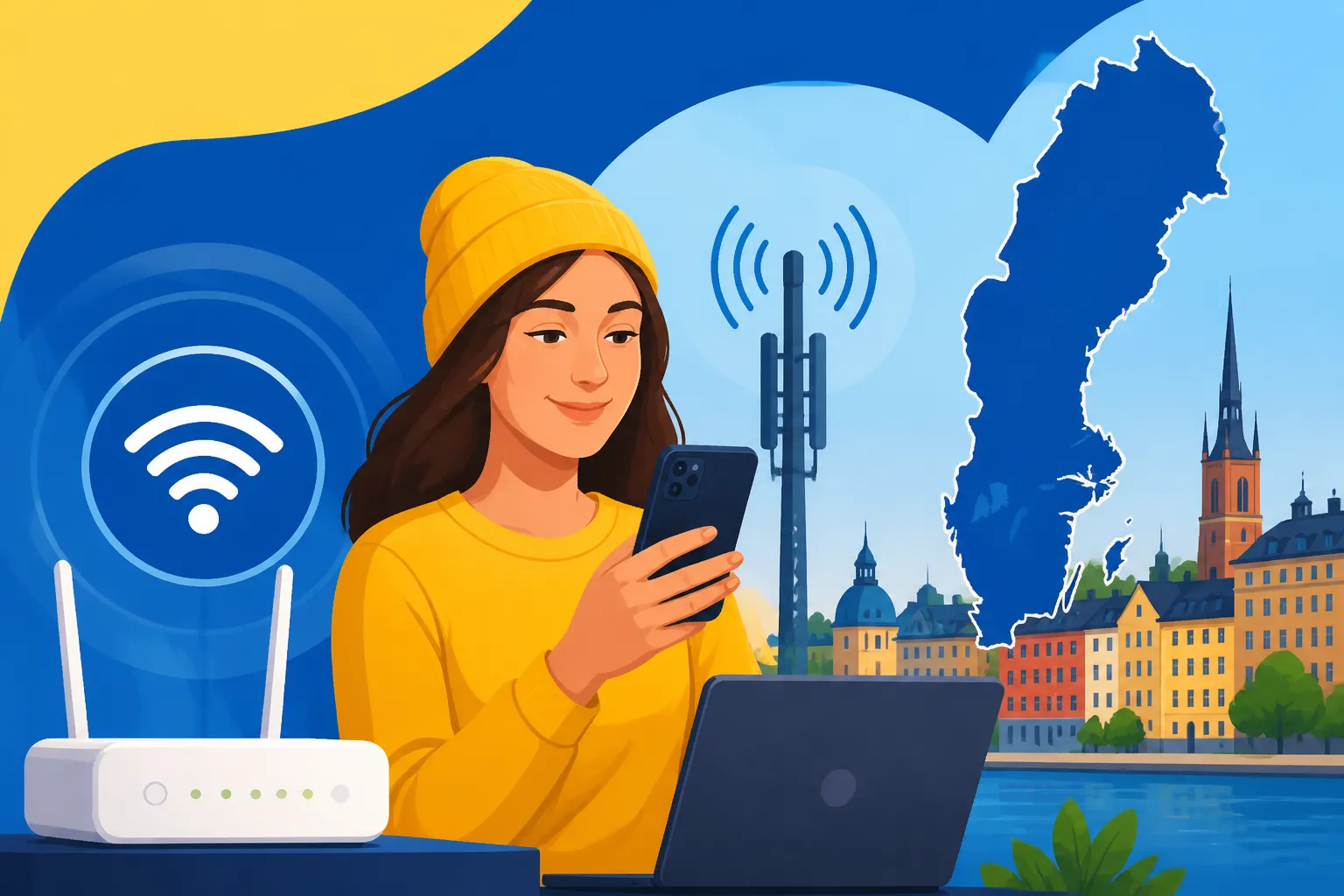
One of the first things you realize when you land in Sweden, especially if you’re coming from outside the EU, is how much you rely on being connected. From navigating public transport to finding a grocery store, or simply telling loved ones you’ve arrived safely, a functional phone and internet connection aren't luxuries; they're immediate necessities. This guide will walk you through everything you need to know about getting broadband internet for your home and setting up mobile service, cutting through the Swedish administrative fog.
Mobile Connectivity for Newcomers
Getting your mobile phone sorted is often the very first step to feeling settled, long before you even consider home internet. You’ll need it for everything from scanning QR codes at the supermarket to eventually setting up BankID. The options can seem a bit overwhelming at first, but it boils down to two main choices: prepaid (kontantkort) or subscription (abonnemang).
Navigating Prepaid (Kontantkort) Options
When you first arrive, before you have a coveted personnummer or even a Swedish bank account, a prepaid SIM card is your best friend. It’s quick, easy, and requires minimal personal information, usually just your passport. This is the temporary lifeline that keeps you connected while you jump through all the other bureaucratic hoops of setting up your new life here.
Many major providers in Sweden, like Comviq, Hallon, Telenor, and Telia, offer prepaid options. You typically buy a SIM card at a convenience store like Pressbyrån or 7-Eleven, or even a supermarket. Then, you top it up with a certain amount of data, calls, and texts for a fixed period, usually 30 days. It's incredibly flexible; you’re not tied into any long-term contracts, which is perfect for those initial weeks or months. For instance, if you're just looking for data to get around, Comviq often has competitive deals, and their top-ups are readily available. If you're coming from abroad and need immediate connectivity even before you get a physical SIM, consider an eSIM service like Airalo. It allows you to download a local data plan directly to your phone, giving you internet access from the moment your plane touches down, which can be a huge relief for immediate navigation and communication needs. It's a fantastic temporary solution to bridge the gap until you can get a Swedish SIM card.
The downside, of course, is that it can sometimes be more expensive per gigabyte than a subscription, and you have to remember to top it up regularly. Forgetting to do so means you might find yourself suddenly cut off, which is never ideal when you're trying to figure out how to get to your next appointment. However, for a short-term solution, or if you prefer strict control over your spending without credit checks or commitment, kontantkort is definitely the way to go.
Understanding Mobile Subscriptions (Abonnemang)
Once you've secured your personnummer, and ideally a Swedish bank account and BankID, the world of mobile subscriptions opens up. This is where most long-term residents end up, as subscriptions generally offer better value, more generous data allowances, and often come with perks like international calls or roaming included.
Applying for a subscription involves a credit check, which is why a personnummer is essential. The provider needs to verify your identity and assess your financial reliability, just like when you're looking into something like Borrowing and Credit in Sweden: Loans, Mortgages, and Your UC Score. You’ll commit to a contract, usually for 12 or 24 months, in exchange for a lower monthly price compared to prepaid options with similar benefits. The major players—Telia, Telenor, Tele2, and Tre (3)—all have various plans, often bundled with new phones or family discounts. Smaller, often more budget-friendly providers like Hallon, Vimla, and Comviq (which is owned by Tele2 but operates with its own brand and plans) also use the networks of the larger companies, offering similar coverage but often at a lower price point. It pays to compare plans carefully based on your data usage, international call needs, and whether you want a new phone as part of the deal. Look closely at the small print regarding data caps, throttling, and international roaming charges, especially if you travel frequently outside Sweden.
A common scenario is that you'll start with an Airalo or other prepaid solution to get by for the first few weeks, then once your Getting Your Personnummer: The Gateway to Swedish Healthcare is finalized and you've got your How to Open Your First Swedish Bank Account Without a Personnummer sorted, you can transition to a more stable, cost-effective subscription plan. This staggered approach is often the smoothest path for newcomers.
Home Broadband Internet Solutions
Beyond keeping your phone connected, a stable home internet connection is crucial for most modern households. Whether it's for work, streaming, online learning, or just staying in touch, reliable broadband is as fundamental as electricity. Sweden has excellent infrastructure, with fibre optic internet being widely available, especially in urban areas.
Fibre Optic (Fiber) Broadband
Fibre optic internet is the gold standard in Sweden, offering incredibly fast and stable connections. Most apartment buildings and newer homes are connected to fibre networks. It’s not uncommon to find speeds of 100 Mbps, 250 Mbps, 500 Mbps, or even 1000 Mbps (1 Gbps) readily available and affordable. The competition among providers means that prices are generally competitive, especially for the speeds offered.
When you move into an apartment, you'll often find that the building itself is connected to a specific fibre network, sometimes managed by a housing association (BRF) or a municipal company. This network, known as an "open fibre network" (öppet fibernät), means you have a choice of several different internet service providers (ISPs) that operate on that same infrastructure. Companies like Bahnhof, Bredband2, Telenor, Telia, and Boxer are common ISPs that offer services over these open networks. This model is fantastic because it fosters competition, driving down prices and improving service quality. You simply go to your network operator's portal (which your landlord or BRF should provide) and select an ISP and a plan. The process is usually quite streamlined, often requiring just a few clicks online after you've completed your Registering Your Move (Flyttanmälan) with Skatteverket. If you're moving into a newly built property or one that hasn't had fibre before, there might be an initial installation fee and a waiting period, but for existing connections, it's typically plug-and-play.
The speed and reliability of fibre make it ideal for households with multiple users, heavy streaming, or remote work. You'll rarely experience buffering or lag, even during peak usage times. This is the internet experience you want if you can get it.
Other Broadband Options: DSL and Mobile Broadband
While fibre is dominant, not every home has access to it, particularly in older buildings or more rural areas. In these cases, you might encounter DSL (ADSL/VDSL) or mobile broadband as alternatives. These options are still viable, though they come with their own set of pros and cons.
DSL internet uses traditional copper telephone lines. It's a more dated technology compared to fibre, meaning speeds are generally much lower, often maxing out around 30-60 Mbps, and can be less stable depending on your distance from the exchange. However, DSL is often available in areas where fibre hasn't yet been rolled out. Providers like Telia still offer DSL, sometimes bundled with landline phone services. While it's slower, it's perfectly adequate for basic browsing, email, and lighter streaming for one or two users. For instance, if you're in a charming but older apartment in a smaller town, DSL might be your only wired option. It’s always worth checking the availability at your specific address, as performance can vary significantly even within the same neighborhood.
Mobile broadband, on the other hand, utilizes the same 4G or 5G cellular networks that your phone uses. It's incredibly flexible and portable, making it a great option for temporary housing, students, or those who travel frequently within Sweden. You get a special SIM card (often a data-only one) that goes into a USB dongle, a dedicated mobile router (MiFi device), or even directly into some laptops or tablets. Speeds can be quite good, especially with 5G coverage, but they can fluctuate depending on network congestion and your signal strength. Data caps are also a significant consideration; while unlimited data plans exist, they are often more expensive than wired broadband. For someone just moving into a place and still sorting out long-term utilities, mobile broadband can provide immediate internet access, much like an Airalo eSIM can bridge the gap for your mobile phone. It is a lifeline solution that gets you online fast when waiting for a fixed-line connection isn't an option, or if your rental agreement is short-term and you want to avoid lengthy contracts, which is a common concern when Renting a Home in Sweden: How the First- and Second-Hand System Works.
Comparison of Broadband Types
To give you a clearer picture, here's a quick comparison of the common broadband types you'll encounter in Sweden:
| Feature | Fibre Optic (Fiber) | DSL (ADSL/VDSL) | Mobile Broadband (4G/5G) |
|---|---|---|---|
| Speed | Very High (100 Mbps – 1 Gbps) | Moderate (Up to 60-100 Mbps, typically lower) | High (Dependent on coverage & network, up to 500+ Mbps) |
| Reliability | Very High, stable | Moderate, can be affected by distance | Variable, can be affected by congestion/signal |
| Cost | Moderate to High (excellent value for speed) | Low to Moderate | Moderate to High (data caps often make it more expensive) |
| Availability | Widespread in urban areas, increasingly rural | Declining, mostly in older infrastructure | Very High across most of Sweden |
| Installation | Easy (if fibre already installed), plug-and-play | Usually simple, might need a technician | Instant (with SIM card), plug-and-play with device |
| Best For | Heavy users, multiple devices, streaming, gaming | Basic browsing, light use, backup | Portability, temporary solutions, areas without fixed lines |
Choosing the Right Provider and Plan
With so many choices, picking the right broadband and mobile provider can feel like a mini-project in itself. It’s not just about the cheapest price; you need to consider coverage, customer service, contract terms, and how well it fits your actual usage patterns.
Factors to Consider for Mobile Services
When it comes to mobile, coverage is paramount. While Sweden generally has excellent network coverage, there can still be "dead zones" depending on your exact location, especially in more remote areas or even inside certain buildings. The big four (Telia, Telenor, Tele2, Tre) all have robust networks, but their performance can differ. Ask colleagues or neighbors in your specific area about their experiences. Websites like Mastsan.se (a crowd-sourced map) or directly checking the coverage maps on each provider's website can give you an idea. For initial flexibility, especially before Getting BankID: Sweden's Essential Digital Identity and a long-term contract, a prepaid option like Comviq or a data-focused eSIM from a service like Airalo gives you a low-commitment way to test the waters. This allows you to assess the real-world coverage in your daily haunts before you commit to a long-term plan.
Data allowance is another big one. Are you a heavy streamer on the go? Do you primarily use Wi-Fi and just need data for maps and messages? Plans range from a few gigabytes to truly unlimited. Be mindful of hidden fees for exceeding data caps or for international calls/roaming if you travel back home frequently. Many providers also offer student discounts or family plans, so always inquire about those if they apply to you. Some providers like Hallon are known for straightforward plans without a lot of bells and whistles, often at a lower price point, while Telia, being the former state monopoly, often has a reputation for premium coverage and customer service, though at a higher cost.
Selecting Home Internet Providers and Speeds
For home internet, the primary considerations are speed, reliability, and price, all within the context of what's available at your address. As mentioned, if you have fibre, you’ll likely choose from a list of ISPs operating on an open network. Visit your address's specific service portal (often provided by your BRF or landlord, or you can find it on sites like Bredbandskollen.se) to see what's available.
Don’t necessarily jump for the fastest possible speed if you don’t need it. For a single person or a couple doing basic browsing, email, and some streaming, 100 Mbps is usually more than enough. If you have a family, multiple devices, heavy gaming, or are working from home with video conferences and large file transfers, 250-500 Mbps might be a better fit. Speeds beyond that, like 1 Gbps, are fantastic but often overkill for most residential users. Price comparisons are relatively easy online, but always look for any introductory offers, contract lengths, and equipment rental fees. Some providers might offer free installation if you commit to a longer contract. Check for specific customer reviews for reliability and support, as having a problem with your internet and struggling to get help in English can be a real headache. Remember, while a service like Housing and Living in Sweden: The Complete Newcomer's Guide (2027) can help with finding a place, sorting out the actual internet provider is a separate, though equally important, step.
Installation, Activation, and Technical Support
Once you’ve chosen your providers, the next hurdle is getting everything set up. This process can vary significantly between mobile and home internet, and it’s where a little patience and clear communication often come in handy.
Setting Up Your Mobile Service
For a prepaid SIM (kontantkort), activation is usually as simple as inserting the SIM card into your phone. The instructions for topping up and activating a specific data package are usually provided with the SIM card itself, or can be found on the provider's website. You'll typically send an SMS with a code or visit an online portal to choose your package. Remember that many phones are locked to specific regions or carriers from your home country, so make sure your phone is "unlocked" to accept any SIM card. This is a common issue that catches many new expats off guard!
For a mobile subscription, once your application is approved (which, as mentioned, usually requires a personnummer and a credit check), the provider will mail you a SIM card. Sometimes, if you apply in person at a store, you can get the SIM on the spot. Activation then involves inserting the SIM and possibly a quick call or online registration to confirm your identity. It's usually very straightforward. If you encounter any issues, most major providers have English-speaking customer support lines, though hold times can vary. Don't hesitate to use them, especially if you're struggling with Swedish.
Activating Home Broadband and Router Configuration
If you've opted for fibre, and your apartment already has an active fibre connection, setting up is remarkably easy. Most modern fibre installations come with an "active fibre converter" (often called an mediakonverter or CPE) box on your wall. You simply plug your router into this box's internet port. Once you activate your subscription online with your chosen ISP, the service usually becomes active within minutes or hours. You might need to plug in the router, wait for it to boot up, and then connect to its Wi-Fi network using the default password, which is typically found on a sticker on the router itself. After that, you're usually good to go!
If you're using DSL or mobile broadband, the setup might involve a bit more. DSL requires connecting a special modem (often provided by the ISP) to your phone line and then connecting your Wi-Fi router to the modem. Mobile broadband usually involves inserting the SIM into a portable router or USB dongle. In either case, the ISP will usually send you the necessary equipment with clear instructions. If you face any technical difficulties, don't hesitate to reach out to the provider's customer service. They are usually well-equipped to guide you through the process, and many offer English support, which can be a huge relief if you're still working on your Swedish. Sometimes, if it's a new installation or there are issues with the building's wiring, a technician might need to visit, but this is less common for existing connections.
Common Challenges and Solutions for Foreigners
Moving to a new country always presents its unique set of challenges, and getting connected in Sweden is no exception. Beyond the technical aspects, there are cultural and administrative hurdles that can make things a bit tricky for newcomers.
The Personnummer Predicament
We've mentioned it a few times already, and for good reason: the personnummer is your golden ticket in Sweden. Without it, many services, especially long-term contracts like mobile subscriptions or home broadband plans, are either difficult or impossible to obtain. This is because providers need a reliable way to identify you and conduct credit checks. It’s a frustrating Catch-22 for many expats: you need a phone and internet to get settled, but you need to be settled (with a personnummer) to get the best phone and internet deals.
The solution, as frustrating as it might be, is patience and leveraging temporary options. Start with a prepaid SIM or an eSIM from Airalo for your mobile needs. For home internet, if you don't have a personnummer yet, you might need to rely on mobile broadband for a while, or see if your landlord or a Swedish-speaking friend can help you get a basic fibre contract initially, though this is rare as the contract will be in their name. Understand that How Long Does It Take to Get a Personnummer After Moving to Sweden? can vary wildly, so plan for a few weeks or even months of using these interim solutions. Once you have your personnummer, you can then switch to more permanent, cost-effective plans.
Language Barriers and Customer Service
While many Swedes speak excellent English, relying on that in every customer service interaction isn't always foolproof. There will be times when you encounter someone who struggles with English, or when technical terms in Swedish are thrown your way, leaving you feeling utterly lost. This is a common pain point for foreigners trying to navigate any administrative process, whether it's setting up utilities or even Understanding Your Swedish Payslip and Preliminärskatt.
My best advice here is to prepare. Have your account details, personnummer, and any relevant contract numbers ready. Try to articulate your issue simply and clearly. If you hit a wall, don't be afraid to ask if there's someone else available who speaks English, or if you can call back. Sometimes, bringing a Swedish-speaking friend or colleague to a physical store (if you're going that route) can make a world of difference. Many providers, especially the larger ones, explicitly state they offer English support on their websites, so look for those cues. Online chat functions can also sometimes be easier than phone calls, as translation tools can assist in a pinch. Remember, they want your business, so they should make an effort to communicate effectively.
Moving Homes and Transferring Services
Sweden has a dynamic rental market, and it's not uncommon for expats to move homes at some point. This means dealing with cancelling or transferring your internet and mobile services. This often starts with checking Your Notice Period and How to End a Tenancy in Sweden, as that will dictate your timeline for informing utility providers.
For mobile services, if you have a subscription, you'll need to check your contract terms regarding early termination fees if you cancel before the contract period is over. Often, you can transfer your subscription to your new address without issue, or simply keep your current plan if you're staying in the same general area and coverage remains good. For prepaid, there's obviously no contract to worry about. For home broadband, transferring service depends entirely on the type of connection and the new address. If your new place is in an "open fibre network," you might be able to simply switch your current ISP's service to the new address, or choose a new ISP entirely. If you're moving to an area without fibre, you might have to cancel your fibre contract and set up a new one for DSL or mobile broadband. Always contact your provider well in advance of your move to understand your options and avoid being stuck without internet during the transition. Make sure to formally terminate old contracts in writing if required, and keep records, to avoid any unexpected bills later on, like dealing with a surprise What Happens If I Owe Back Taxes (Kvarskatt) in Sweden? situation, but for your internet bill instead.
Disclaimer
The information provided in this guide is for general informational purposes only and does not constitute professional advice. While we strive to keep the information accurate and up-to-date, regulations, policies, and market offerings in Sweden can change. Always consult official sources, service providers, or legal professionals for the most current and specific information regarding your personal situation.