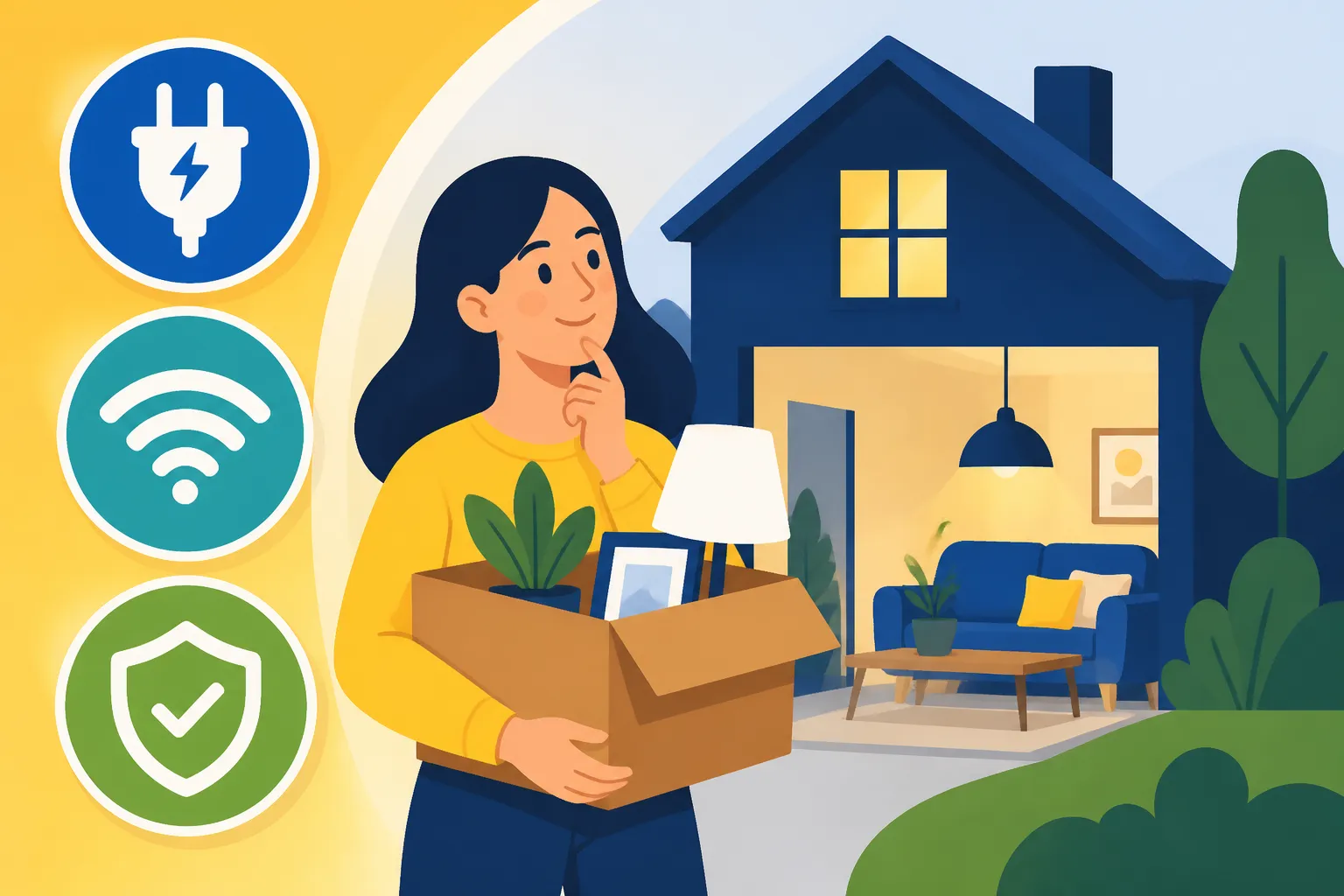
Setting Up Your Home in Sweden: Utilities, Internet, and Insurance
So, you’ve landed in Sweden, found yourself a roof over your head – whether it’s a tiny student room or a spacious family apartment – and now the real fun begins: making it an actual home. It’s easy to feel overwhelmed by the sheer volume of new administrative hurdles, from sorting out your electricity to figuring out what a "BankID" even is. Don't worry, you're not alone in that feeling. This guide is here to untangle the often confusing web of utilities, internet, and insurance, helping you get properly settled into your new Swedish abode without losing your mind in the process.
Navigating Sweden's Utility Landscape
One of the first things you’ll encounter when moving into your new Swedish home, especially if it's not a fully serviced hotel or short-term rental, is the need to set up your utilities. This often starts with electricity, but heating, water, and waste management are also key components you need to understand.
Connecting Your Electricity (El-avtal)
Ah, electricity in Sweden. This is often where the first real administrative headache sets in for many newcomers. Unlike some countries where you just have one provider and one bill, Sweden operates with a split system that can be quite confusing at first glance. You essentially pay two separate entities: the grid owner (nätägare) and the electricity supplier (elhandelsbolag). The grid owner is responsible for physically getting the electricity to your home through the power lines, and their fees are fixed based on your geographical location. You can’t choose your grid owner; it’s determined by where you live. The electricity supplier, however, is who you choose to buy your actual electricity from. This is where you have options and can compare prices.
Finding a good electricity supplier can feel like a maze. There are dozens of companies vying for your business, and it’s tempting to just pick the first one you see. Providers like Vattenfall, E.ON, Fortum, and Skellefteå Kraft are some of the larger, more well-known ones, but there are many smaller, regional players too. When you sign an "el-avtal" (electricity contract), you’ll need to decide between a fixed-price contract (fast pris), a variable-price contract (rörligt pris), or sometimes a mixed option. A fixed-price contract locks in your rate for a set period, offering predictability, which can be great if you’re on a tight budget or fear price spikes. However, if market prices drop, you might be paying more than necessary. A variable-price contract, on the other hand, fluctuates with the market. This can lead to lower bills when prices are low but higher bills when they spike, particularly during cold winters or periods of high demand.
The biggest hurdle for many expats is often the timing. If you move into a new place and don't sign an electricity contract right away, a temporary default supplier (anvisningsavtal) will usually be assigned to you. While convenient, these default contracts are almost always significantly more expensive than those you can actively choose yourself. So, as soon as you have your lease agreement and know your move-in date, start comparing. Websites like Elskling.se or Compricer.se are fantastic resources for comparing different suppliers and contract types, making the process much less daunting. You'll typically need your new address and, ideally, your Personnummer to get the best offers and set up direct debit payments. If you haven't received your Personnummer yet, some suppliers might allow you to sign up using your coordination number (samordningsnummer) or even just your passport and rental contract, but it might be a slightly more manual process.
Heating Your Swedish Home
Once your electricity is sorted, the next crucial utility, especially when those long Swedish winters roll in, is heating. Unlike electricity, heating arrangements in Sweden vary significantly depending on the type of housing you have. If you’re renting an apartment, chances are that heating is already included in your monthly rent. This is very common, especially in older buildings or those connected to district heating networks. District heating (fjärrvärme) is a highly efficient and widespread system in Sweden, where heat is produced centrally and then distributed through a network of pipes to multiple buildings. It’s convenient for residents as it usually means a consistent temperature and no separate heating bill to worry about.
However, if you're renting a house, or a newly built apartment where utilities might be separate, you’ll need to clarify how heating is managed. For houses, electricity is often the primary source of heating, especially through heat pumps (värmepumpar) or direct electric heating. In such cases, your electricity bill will naturally be much higher in the colder months. Some houses might also use geothermal heating (bergvärme) or air-to-water heat pumps (luft-vattenvärmepumpar), which are more energy-efficient but have higher upfront installation costs. It’s crucial to understand your heating source and its implications for your budget well before winter hits. Asking your landlord or the previous tenant about average winter heating costs can give you a realistic expectation.
Regardless of the system, insulation is key in Sweden. Buildings are typically well-insulated to withstand the cold climate, but older properties might have less efficient windows or ventilation. Learning to manage your thermostat effectively and not leaving windows open for extended periods in winter will make a noticeable difference to your energy consumption and, consequently, your heating costs, especially if you’re paying for it directly. A few degrees can save a lot of money and prevent unnecessary energy waste. Even if heating is included in your rent, being mindful of energy use is a good habit, contributing to Sweden's strong environmental ethos.
Water and Waste Management
For most apartment dwellers in Sweden, water is usually included in the monthly rent (hyra) or the monthly fee (avgift) if you own a bostadsrätt. This means you won't typically receive a separate water bill. The building management or the bostadsrättsförening (BRF) handles the collective water usage and costs for the entire property, often factored into the overall operational expenses. This simplifies things considerably for residents, removing one more utility bill from your plate. However, if you live in a detached house, or sometimes even in newer apartments with individual metering, you might receive separate bills for water and sewerage directly from your municipality. These bills usually cover both the consumption of fresh water and the treatment of wastewater.
Waste management, or "källsortering" (source sorting), is a cornerstone of Swedish daily life and something you'll quickly become familiar with. Sweden has one of the most advanced recycling systems in the world, and residents are expected to sort their waste diligently. This means separating food waste, paper packaging, plastic packaging, metal packaging, glass (coloured and clear), newspapers, and sometimes even textiles, batteries, and light bulbs into designated bins or bags. Many apartment buildings have dedicated recycling rooms (soprum or miljörum) with multiple bins for different types of waste. For those in houses, municipalities typically provide separate bins for different waste categories, often collected on different schedules.
Beyond the household recycling, Sweden also has the "pant" system, a deposit-return scheme for plastic bottles and aluminum cans. When you buy a drink in one of these containers, you pay a small deposit (usually 1 or 2 SEK). You get this deposit back when you return the empty container to a reverse vending machine, commonly found in supermarkets. It’s an efficient system that encourages recycling and provides a small incentive, and you'll see Swedes diligently collecting their 'pant' for return. Familiarizing yourself with your local municipality's recycling rules is vital, as improper sorting can sometimes lead to fines or, more commonly, a stern note from your building manager. You can usually find detailed information on your municipality's website or in your apartment building's common areas.
Getting Connected: Internet and Mobile Services
In Sweden, staying connected is not just a convenience; it's practically a necessity. From banking with BankID to communicating with authorities and simply navigating daily life, reliable internet and mobile services are fundamental. Luckily, Sweden boasts excellent digital infrastructure.
Securing Your Broadband Connection
When it comes to home internet, Sweden is largely a fibre optic nation. Most urban and even many rural areas benefit from high-speed fibre connections, offering impressive upload and download speeds. The concept of an "öppet nät" (open network) is also very common. This means that while your building or area has a fibre connection provided by one infrastructure owner, you're usually free to choose your actual internet service provider (ISP) from a range of companies operating on that open network. This fosters competition and gives you more choice.
You'll find familiar names like Telia (which often owns the underlying infrastructure in many areas), Bahnhof, Bredband2, and Comviq, among others, offering broadband services. To get started, you'll typically need to know which network your building is connected to. Your landlord or bostadsrättsförening can provide this information. Once you know the network, you can visit comparison sites or the network's own portal to see which ISPs offer services in your exact address and compare their speeds and prices. Signing up usually involves a quick online process, and often, the service can be activated remotely within a few days, sometimes even on the same day if the previous tenant had service.
A common scenario for expats is that some landlords or BRFs might include a basic broadband package in your rent or avgift. While this is convenient, it’s always worth checking the speed and if you can upgrade or switch providers if you need more bandwidth or a different package. For example, some may find a bundled 100/100 Mbps sufficient, while heavy gamers or those working from home might prefer 500/500 Mbps or even 1000/1000 Mbps. Getting your broadband set up promptly is crucial, as much of your further digital integration in Sweden hinges on having a stable internet connection.
Choosing a Mobile Phone Plan
Just like with broadband, Sweden offers a wide array of choices when it comes to mobile phone plans, catering to every need and budget. The major network operators are Telia, Telenor, Tele2, and Tre (3), which provide comprehensive coverage across the country, including 5G in most urban areas. Alongside these giants, there are numerous virtual network operators (MVNOs) like Comviq, Hallon, and Vimla, which typically offer more budget-friendly plans by using the infrastructure of the major networks.
Your first decision will likely be between a prepaid SIM card (kontantkort) and a subscription plan (abonnemang). For new arrivals without a Personnummer, a prepaid SIM is often the easiest starting point. You can pick one up at supermarkets, convenience stores, or electronics retailers, top it up with credit, and you’re good to go. This provides immediate connectivity and allows you to use essential apps and stay in touch. However, for a long-term solution, a subscription plan usually offers better value, more data, and often includes unlimited calls and texts. To sign up for a subscription, you will almost certainly need a Personnummer, a Swedish bank account, and sometimes even a credit check. Once you have your Personnummer, securing a subscription plan becomes straightforward.
If you're still waiting for your Personnummer and need to hit the ground running with reliable, cost-effective data for your phone, consider an eSIM service. Brands like Airalo offer convenient and affordable eSIM data packages that you can activate instantly on compatible phones. This is a fantastic way to ensure you have internet access for maps, communication, and essential information from the moment you land, without the hassle of finding a physical SIM or navigating a local store in a new language. You can often purchase these before you even arrive in Sweden. Once you’re more settled and have your Personnummer, switching to a local Swedish subscription will be seamless.
The Importance of a Personnummer for Connectivity
It’s impossible to overstate just how central the Personnummer is to virtually every aspect of life in Sweden, and especially for getting fully connected with utilities and financial services. Many expats experience what is often referred to as the "Personnummer paradox" or the "chicken and egg" problem: you need a Personnummer for everything, but getting one can take time, and in the interim, you’re stuck in a bureaucratic limbo. For your internet and mobile services, this manifests in several ways.
Without a Personnummer, your options for broadband might be limited. Some providers might allow you to sign up with a coordination number (samordningsnummer) or even just your passport and rental contract, but it often involves a more manual process, sometimes requiring a higher upfront payment or a shorter contract term. The best deals and the smoothest sign-up experiences are invariably tied to having a Personnummer. It acts as your unique identifier, allowing companies to easily verify your identity, perform credit checks, and link you to your registered address (Folkbokföring). This trust and ease of identification mean providers are more willing to offer their standard, competitive contract terms.
For mobile phone plans, the Personnummer is almost a strict requirement for getting a post-paid subscription. While prepaid options are always available, these generally don’t offer the same value or convenience as a full subscription. Without a Personnummer, you also cannot get a BankID, which is Sweden's national electronic identification system. BankID is essential for logging into almost all online services, including your mobile operator's portal, utility company accounts, and government websites. This interconnectedness means that delaying your Personnummer application can effectively delay your full integration into Sweden's digital ecosystem. It is truly the gateway, not just to healthcare and taxes, but to everyday digital life. You can read more about it in our guide on Getting Your Personnummer: The Gateway to Swedish Healthcare.
Essential Home Insurance for Expats
Navigating the world of insurance in a new country can feel like a chore, but in Sweden, hemförsäkring (home insurance) is not just recommended; it's practically non-negotiable, even for renters. This comprehensive policy offers a safety net for many unforeseen events and is a cornerstone of responsible living here.
Understanding Hemförsäkring Home Insurance
Swedish hemförsäkring is much more than just insurance for your physical home or belongings; it's a remarkably comprehensive package designed to cover a wide array of personal and property-related risks. For most people, especially those renting an apartment, it combines several crucial elements:
- Property Coverage (Egendomsskydd): This is what most people think of as "home insurance." It protects your personal belongings – furniture, electronics, clothes, jewellery, etc. – against damage or loss due to fire, theft, water damage, and other unexpected events. If your laptop gets stolen from your apartment, or a pipe bursts and ruins your sofa, this part of the policy steps in.
- Liability Insurance (Ansvarsskydd): This is incredibly important. It covers you if you accidentally cause damage to someone else's property or injure another person, for which you are legally responsible. For example, if you leave the tap running and cause water damage to the apartment below yours, or if your child accidentally breaks an expensive item in a friend's home, your liability insurance would cover the costs.
- Legal Aid Insurance (Rättsskydd): Should you find yourself in a legal dispute, for example, with your landlord over a deposit or with a neighbour over noise, this coverage can help with legal fees, usually up to a certain amount.
- Travel Insurance (Reseskydd): Surprisingly, most Swedish hemförsäkring policies include basic travel insurance for a certain number of days (often 45 days) for trips abroad. This covers things like emergency medical care, luggage loss, and personal liability while travelling. It’s worth noting that this is usually basic coverage, so for longer trips or specific needs, a separate, more comprehensive travel insurance might still be advisable.
- Assault Protection (Överfallsskydd): This covers you if you are a victim of assault and suffer physical or psychological injury, providing compensation.
It's clear that hemförsäkring provides a holistic safety net, often far more extensive than basic contents insurance in other countries. You can often tailor your policy with additional riders, like extended travel insurance or coverage for specific valuable items, but the standard package is robust enough for most. To learn more about this vital protection, check out our detailed guide on Home Insurance (Hemförsäkring): Why It's Essential in Sweden.
Choosing the Right Insurance Provider
With the importance of hemförsäkring established, the next step is to choose a provider. Sweden has a well-developed insurance market with several reputable companies offering competitive policies. Some of the biggest and most established players you’ll encounter include Folksam, If, Länsförsäkringar, and Trygg-Hansa. These companies often have English-speaking customer service and offer online tools to get quotes and manage your policy, which is a huge relief for newcomers.
When comparing providers, it’s not just about the price tag. While cost is certainly a factor, pay close attention to:
- Deductible (Självrisk): This is the amount you have to pay out-of-pocket before your insurance kicks in. A higher deductible usually means a lower monthly premium, but be prepared to pay more if you need to make a claim.
- Coverage Limits: Check the maximum payout for different categories, especially for valuables, liability, and travel. Ensure these limits align with the value of your possessions and your lifestyle.
- Specific Exclusions: Always read the fine print. Are there any conditions or situations not covered by the policy that might be relevant to you?
- Customer Service Reputation: While subjective, looking at reviews or asking other expats about their experiences can be helpful. A company with good, accessible customer service can make a world of difference when you actually need to make a claim.
Most insurance companies have user-friendly websites where you can get a quote in minutes by entering your address, the size of your home, and an estimate of your belongings' value. Remember, your Personnummer will make this process much smoother, allowing you to establish a secure contract and direct debit payments. Some banks also offer home insurance packages, sometimes with a discount if you bundle it with other financial services. It's often worth getting quotes from at least three different providers to ensure you're getting the best value for money.
Specifics for Renters vs. Homeowners/Bostadsrätt Owners
The type of housing you have in Sweden will influence the specifics of your hemförsäkring needs and what you should pay attention to.
For Renters (Hyresrätt):
If you are renting an apartment with a "hyresrätt" (first-hand contract) or "andrahand" (second-hand contract), your hemförsäkring is primarily focused on protecting your personal belongings and providing liability coverage. The landlord or building owner is responsible for insuring the physical structure of the building itself. Therefore, your hemförsäkring won't cover damage to the walls, roof, or shared areas, but it's absolutely crucial for everything inside your rented space and for protecting you against claims if you cause damage to the property or others. Many landlords actually require tenants to have hemförsäkring as part of the rental agreement, and for good reason – it protects both you and them. Imagine a fire starting in your apartment due to an electrical fault; your hemförsäkring would cover the cost of your damaged items and the liability for damage caused to the building or neighbouring apartments.
For Homeowners (Villa/Radhus) and Bostadsrätt Owners:
If you own a detached house (villa) or a townhouse (radhus), your hemförsäkring will be more extensive. In addition to covering your personal belongings and providing liability and legal aid, it will also include property insurance (fastighetsförsäkring), covering the physical structure of your house itself, including the roof, walls, foundations, and fixed installations. This is similar to building insurance in other countries.
For bostadsrätt owners – which is a very common form of homeownership in Sweden, essentially owning a share in a housing cooperative that grants you the right to live in a specific apartment – the situation is slightly different and requires careful attention. The bostadsrättsförening (BRF), the cooperative you are a member of, usually has a collective property insurance policy that covers the building's structure and common areas. However, as an individual bostadsrätt owner, you are typically responsible for the interior of your apartment, including fixed installations like kitchen cabinets, bathroom fixtures, and internal walls. This is where a crucial additional component, bostadsrättstillägg (bostadsrätt add-on), comes into play. This add-on extends your hemförsäkring to cover the interior parts of your apartment that the BRF's main policy doesn't. Without it, you could be left footing the bill for significant repairs if, for example, a water leak damages your kitchen or bathroom. Make sure to clarify with your BRF and insurance provider whether your BRF has a collective bostadsrättstillägg (which means you don't need your own) or if you need to add it to your individual policy, which is the more common scenario. You can learn more about this unique ownership type in Understanding Bostadsrätt: Buying into a Swedish Housing Co-op.
Navigating Digital Registration and Paperwork
Sweden is an incredibly digitized country, and getting your home set up involves a significant amount of online interaction. Mastering this digital landscape is key to a smooth integration.
Registering Your Address with Skatteverket Folkbokföring
The absolute cornerstone of establishing yourself in Sweden, beyond finding a place to live, is registering your address with Skatteverket (the Swedish Tax Agency). This process is called "Folkbokföring," and it means being registered in the Swedish Population Register. It’s not just a formality; it’s the legal basis for your residency and the gateway to virtually all public services and many private ones. Without being Folkebokförd at a specific address, you cannot get a Personnummer (personal identity number), which is the unique 10-digit identifier that opens countless doors.
Once you have a rental contract or proof of ownership for a place you plan to live in for at least one year, you must notify Skatteverket of your move (flyttanmälan). This involves filling out an online form or visiting a Skatteverket service office. You’ll need to provide your personal details, your new address, and documentation proving your right to reside in Sweden (e.g., residence permit or EU/EEA right of residence). The Folkbokföring directly impacts everything from your eligibility for healthcare, your tax obligations, and social benefits like child allowance (barnbidrag), to even getting a library card or being able to join sports clubs. It's often the first major bureaucratic hurdle new arrivals face, but once it's done, everything else starts to fall into place. You can read more about this essential step in Registering Your Move (Flyttanmälan) with Skatteverket.
It’s important to understand that the date you are registered as Folkebokförd is often the date your entitlement to various services begins, not necessarily your arrival date in Sweden. So, applying as soon as you have a stable address and meet the requirements is crucial. The processing time can vary, so patience is key. Once your Folkbokföring is complete and you receive your Personnummer, you will be able to access the vast array of digital services that define modern Swedish life.
Getting Your Swedish ID Card
After successfully navigating the Folkbokföring process and receiving your precious Personnummer, your next vital piece of plastic should be a Swedish ID card (ID-kort). While your foreign passport is a valid form of identification, having a local Swedish ID card simplifies countless daily interactions. It's universally accepted as proof of identity within Sweden, whereas some establishments might hesitate with foreign passports or driver's licenses.
You apply for a Swedish ID card at a Skatteverket service office. The process involves booking an appointment, having your photo taken (they usually have a photo booth on-site or a dedicated photographer), providing proof of identity (your foreign passport and residence permit are essential here), and verifying your Personnummer. There's a fee involved, and the card is typically valid for five years. The card is highly secure and is crucial for many administrative tasks, such as opening a bank account (if you haven't already with just your Personnummer), picking up parcels at postal agents, proving your age for purchases, and most importantly, applying for BankID.
Without a Swedish ID card, getting a BankID – the national e-identification system – is extremely difficult, if not impossible. And without BankID, you're essentially locked out of Sweden's digital public services and secure online banking. Think of it as your digital passport for everyday life. So, as soon as your Personnummer arrives, make getting your Swedish ID card a top priority. Our guide on Getting a Swedish ID Card After Your Personnummer provides a step-by-step walkthrough to make this process smoother.
Setting Up Digital Mail and Payment Services
Sweden operates on a highly cashless and largely paperless system, so getting familiar with digital mail and payment services is not just a convenience, but a necessity. Once you have your Personnummer and, ideally, your BankID, a whole new world of digital convenience opens up.
Kivra: This is Sweden's leading digital mailbox service. Many government agencies (like Skatteverket, Pensionsmyndigheten, Försäkringskassan) and private companies (banks, utility providers, insurance companies) send official mail and bills to your Kivra account instead of physical mail. It’s secure, environmentally friendly, and ensures you don't miss important correspondence. Signing up for Kivra is free and incredibly easy once you have BankID. You simply download the app or visit their website, log in with your BankID, and activate your account. You'll then start receiving digital letters, often with direct payment links, straight to your phone or computer.
Autogiro and E-faktura: When it comes to paying bills, paper invoices are rapidly becoming a thing of the past. "Autogiro" is Sweden's direct debit system. Once set up, it automatically deducts recurring payments (like rent, utility bills, or gym memberships) from your bank account on the due date. This prevents late fees and ensures your bills are always paid on time. "E-faktura" (e-invoice) takes this a step further: instead of receiving a paper or PDF invoice, the invoice is sent directly to your online banking portal. You review it there and approve the payment with a click, usually using your BankID. Most major companies offer both Autogiro and E-faktura options, which you can typically set up directly through your online bank once you've received your first bill from a service provider.
BankID: This ubiquitous app is not just for logging in; it's central to authorizing digital payments and agreements. Whether you're approving an e-faktura, signing a digital contract, or making an online purchase, BankID is your trusted digital signature. It's issued by Swedish banks, so opening a bank account (which itself requires a Personnummer and Swedish ID card) is a prerequisite. The integration of BankID with everything from your mobile phone to government services means you’ll use it multiple times a day. Getting BankID: Sweden's Essential Digital Identity is a must-read for understanding this crucial tool.
Practical Tips for Settling In
Beyond the official paperwork, there are countless small adjustments and practicalities that make a real difference when setting up your home in Sweden.
Decoding Your First Bills and Contracts
Your first few bills in Sweden can look like a cryptic message, especially if you’re not yet fluent in Swedish. Terms like "faktura," "förfallodatum," "referensnummer," "moms," "kWh," and "nätavgift" will appear regularly. Don't panic! Most major utility companies and service providers offer their websites and sometimes their customer service in English. If not, Google Translate is your best friend for deciphering the essentials.
Here’s a quick breakdown of what to look for:
- Faktura (Invoice): This is your bill.
- Total belopp (Total amount): How much you owe.
- Förfallodatum (Due date): When the payment is expected.
- Bankgiro/PlusGiro (Payment accounts): These are the numbers you’ll use to make payments through your online bank. They are similar to account numbers but specific to billing in Sweden.
- OCR-nummer/Referensnummer (Reference number): This unique number identifies your payment. Always include it when paying a bill to ensure it’s correctly attributed to your account.
- Moms (VAT): Sweden's value-added tax, usually 25% on services, will be listed.
- kWh (Kilowatt-hours): For electricity bills, this is your unit of consumption.
- Nätavgift (Network fee): The fixed charge from your grid owner for electricity.
If something on your bill looks completely off, or you simply don't understand it, don't hesitate to contact the company's customer service. Most larger companies have dedicated lines for English speakers, or at least staff who can assist. It's always better to clarify a strange charge than to ignore it and risk late payment fees or service disruption. Many companies also offer online portals (often accessible with BankID) where you can track your usage and view past bills, which can help in understanding your consumption patterns.
Tackling Recycling and Waste Like a Local
Recycling in Sweden, or "källsortering," is less of a suggestion and more of a deeply ingrained cultural expectation. It’s one of those things that, once you get used to it, feels incredibly efficient and logical, but the initial learning curve can be steep. You'll likely encounter multiple bins for various materials in your building's recycling room (soprum or miljörum) or at local recycling stations (återvinningsstation).
Here’s a typical breakdown of what goes where:
- Matavfall (Food waste): Often collected in special compostable paper bags, used for biogas production.
- Restavfall (Residual waste): Everything else that cannot be recycled (e.g., diapers, hygiene products, vacuum cleaner bags). This is incinerated for energy.
- Pappersförpackningar (Paper packaging): Cereal boxes, egg cartons, cardboard, paper bags.
- Plastförpackningar (Plastic packaging): Yogurt containers, plastic bottles (non-pant), plastic bags, cling film. Clean them as much as possible.
- Metallförpackningar (Metal packaging): Cans (non-pant), aluminium foil, metal lids.
- Glasförpackningar (Glass packaging): Sorted into coloured (färgat glas) and clear (ofärgat glas). Labels can usually stay on.
- Tidningar (Newspapers): Magazines, advertising flyers, brochures.
- Batterier (Batteries) & Småelektronik (Small electronics): Often collected separately in designated bins at recycling stations or sometimes in grocery stores.
- Glödlampor/Lågenergilampor (Light bulbs/Energy-saving lamps): Also separate collection.
The key is to rinse or clean packaging as much as possible to avoid odors and contamination. You might find yourself with a growing collection of small sorting bins in your kitchen – it's just part of Swedish apartment living! For larger items like furniture, appliances, or hazardous waste, you’ll need to take them to a municipal recycling centre (återvinningscentral or tippen). The "pant" system, mentioned earlier, for plastic bottles and cans, is also a daily ritual for many. Getting into the habit of proper källsortering not only helps the environment but also avoids issues with your building management or municipality.
Finding Furniture and Household Essentials
When you first move into an unfurnished place, the sheer amount of things you need to buy can feel daunting and expensive. Luckily, Sweden has a strong culture of sustainability and second-hand use, making it easier to furnish your home without breaking the bank.
IKEA: Of course, the Swedish icon needs no introduction. IKEA is often the first stop for many expats, offering affordable and functional furniture, kitchenware, and home decor. They have large stores outside most major cities, often with bus connections, and offer home delivery, though assembly is usually up to you!
Second-Hand Stores (Loppis/Second Hand): For more unique finds, vintage charm, or just seriously good bargains, Sweden’s second-hand scene is thriving. Look for charity shops like Myrorna and Erikshjälpen, which have multiple locations in larger cities and offer a wide range of furniture, clothes, books, and household items. Local "loppis" (flea markets) are also popular, especially during summer months. These stores are not only wallet-friendly but also contribute to a circular economy, aligning with Swedish values.
Online Marketplaces: For a more targeted search, online platforms are incredibly useful:
- Blocket.se: This is Sweden's equivalent of Craigslist or Gumtree. You can find everything from cars to furniture, electronics, and clothing. It's a treasure trove for second-hand items. Be prepared to arrange transport yourself and always be cautious of scams by insisting on seeing items in person.
- Facebook Marketplace/Groups: Local "Buy Nothing" or "Second Hand [City Name]" Facebook groups are excellent for free items or cheap purchases within your community. It’s a great way to connect with neighbours and get rid of unwanted items or find things you need.
- Tradera.com: A popular auction and classifieds site, similar to eBay, for a wider range of goods, often including more specialized or vintage items.
Remember, patience and a willingness to travel a bit for collection can yield fantastic results. Furnishing your home doesn't have to be an immediate, expensive ordeal. Also, if you’re looking for a temporary place that’s already furnished while you get your bearings, services like Spotahome can be a great option. They specialise in mid-to-long term furnished rentals, which can provide a comfortable landing pad before you commit to buying furniture and setting up a more permanent home.
Troubleshooting Common Settling-In Challenges
Even with all the preparation, moving to Sweden comes with its unique set of challenges. Knowing some common pain points and how to navigate them can save you a lot of stress.
The "No Personnummer" Predicament
This is perhaps the single biggest source of frustration for many new arrivals in Sweden. The Personnummer is so deeply embedded in Swedish society that its absence creates a bewildering array of obstacles. You'll hear this phrase repeated endlessly: "You need a Personnummer for that." And it's true for almost everything that requires a secure, verified identity.
Without a Personnummer, getting basic services like a standard bank account can be incredibly difficult, although some banks are starting to offer more flexible options with a coordination number (samordningsnummer) or passport. This then impacts your ability to get BankID, which in turn means you can’t easily pay bills, access public digital services, or even get a proper mobile phone subscription. Utility companies might also hesitate to give you the best contracts, sometimes requiring larger deposits or offering less favorable terms because they lack a reliable way to verify your identity and creditworthiness.
Strategies for Coping:
- Prioritize your Personnummer application: As soon as you have a stable address and meet the requirements, apply at Skatteverket. This is covered in detail in Getting Your Personnummer: The Gateway to Swedish Healthcare.
- Prepaid SIM cards: For mobile connectivity, these are your lifeline. Brands like Comviq, Hallon, or Lyca Mobile are readily available at supermarkets and kiosks.
- Temporary banking solutions: Some digital banks or specific branches might offer limited accounts without a Personnummer, or with a samordningsnummer. Researching this heavily beforehand can save you headaches. Our guide How to Open Your First Swedish Bank Account Without a Personnummer provides options.
- Cash (in limited scenarios): While Sweden is rapidly becoming cashless, having some cash for small purchases can occasionally be helpful, especially if card issues arise early on.
- Lean on your employer/university: If you moved for work or study, your organization might have resources or contacts to help you navigate initial setup difficulties.
Embrace the frustration as a shared expat experience, and remember that it will eventually get sorted. Patience is truly a virtue here.
Language Barriers and Customer Service
While a high percentage of Swedes speak excellent English, especially in larger cities and among younger generations, you will inevitably encounter situations where language becomes a barrier. This can be particularly stressful when dealing with administrative matters, complex contracts, or troubleshooting technical issues with a utility provider.
What to Expect:
- Websites: Many major companies and public agencies (like Skatteverket, Migrationsverket, Försäkringskassan) offer their websites in English, or at least key sections. Always look for a globe icon or "EN" button.
- Customer Service: Most larger companies, especially in telecommunications, banking, and utilities, have English-speaking customer service representatives. It might take a moment to get to them (sometimes pressing '9' or '#', or asking "Do you speak English?"), but they are usually available.
- Written Communication: Be prepared for some official letters or emails to still be primarily in Swedish. This is where online translation tools become indispensable.
- Smaller Businesses/Local Services: In smaller towns or with independent shops, English might be less common.
Tips for Success:
- Be polite and patient: A friendly attitude goes a long way.
- Use translation apps: Have Google Translate or a similar app ready on your phone for quick translations of documents or spoken phrases.
- Prepare key phrases: Learning some basic Swedish phrases, especially for identification ("Jag heter…", "Jag har ett Personnummer…"), can be helpful and appreciated.
- Ask for help: Don't be afraid to ask a Swedish-speaking friend or colleague to help you read a document or make a phone call if you're truly stuck.
Remember that most Swedes are generally happy to switch to English if they can, especially if they see you're struggling. It's often more about finding the right channel or person.
Unexpected Costs and Budgeting
Sweden has a reputation for being an expensive country, and while this isn't always entirely true, certain costs can catch newcomers off guard. When setting up your home, a realistic budget is crucial to avoid financial surprises.
Common Unexpected Costs:
- Electricity: Especially during winter if you have electric heating or a variable-rate contract. Hidden charges might include fixed monthly fees from both the grid owner and the supplier, not just per-kWh consumption.
- Internet installation fees: Some providers might charge a one-time fee for connection or equipment.
- Insurance deductibles: Remember your självrisk (deductible) if you need to make a claim.
- Initial furnishing: Even with second-hand options, the cumulative cost of everything from cutlery to bed linens adds up quickly.
- TV licence (obsolete but historical example): While the TV licence fee (radiotjänst) was abolished in 2019 and replaced with a general public service fee via taxes, historical examples like this show how easily unexpected fees can exist. Always check what's mandatory.
- Adult dental care: Unlike healthcare, adult dental care in Sweden is not heavily subsidized and can be very expensive, as highlighted in Why Is Adult Dental Care So Expensive in Sweden? This is not directly related to home setup but a crucial part of broader budgeting.
Budgeting Tips:
- Track everything: For your first few months, meticulously track all your expenses. Apps or simple spreadsheets can help you see where your money is actually going.
- Factor in fixed vs. variable costs: Clearly separate your fixed monthly expenses (rent, mobile plan, insurance) from variable ones (electricity, groceries, transport).
- Utilize comparison sites: For utilities (Elskling.se, Compricer.se), and even groceries (compare prices between ICA, Coop, Willys).
- Embrace the "lagom" lifestyle: "Lagom" means "just right" or "in moderation." It encourages conscious consumption and avoiding excess, which can be a great mindset for budgeting.
- Build an emergency fund: Have a buffer for unexpected large expenses, like a high winter electricity bill or a självrisk payment.
The upfront costs of settling in can feel substantial, but with careful planning and an awareness of typical Swedish expenses, you can manage your finances effectively.
Disclaimer
Please note that while this guide aims to provide accurate and up-to-date information for foreign residents in Sweden, regulations and processes can change. It is always recommended to consult official sources such as Skatteverket, Migrationsverket, Försäkringskassan, relevant utility providers, and insurance companies for the most current information applicable to your specific situation. This guide is for informational purposes only and does not constitute legal or financial advice.