How to Register for the Housing Queue (Bostadskö) in Sweden
Oh, the Swedish housing market! It’s one of those things that, as an expat, can feel like a riddle wrapped in a mystery, especially when you first arrive. You’ve probably heard whispers about the "housing queue" and how vital it is, but actually figuring out what it is and how to get on it can be a real head-scratcher. This guide is here to demystify the entire process of registering for the Swedish housing queue, or bostadskö, so you can start accumulating those precious queue days from the moment you set foot in the country.
Understanding Sweden's Housing Queue System (Bostadskö)
Let's be honest, finding a place to live in Sweden, particularly in the bigger cities, isn't just tricky – it can feel like a Herculean task. Forget about strolling into a rental office and signing a lease; that's simply not how it works here. The bostadskö is the linchpin of the rental market for what's known as "first-hand" contracts, and understanding it is absolutely non-negotiable for anyone planning a long-term stay.
What is a Bostadskö and Why is it Essential?
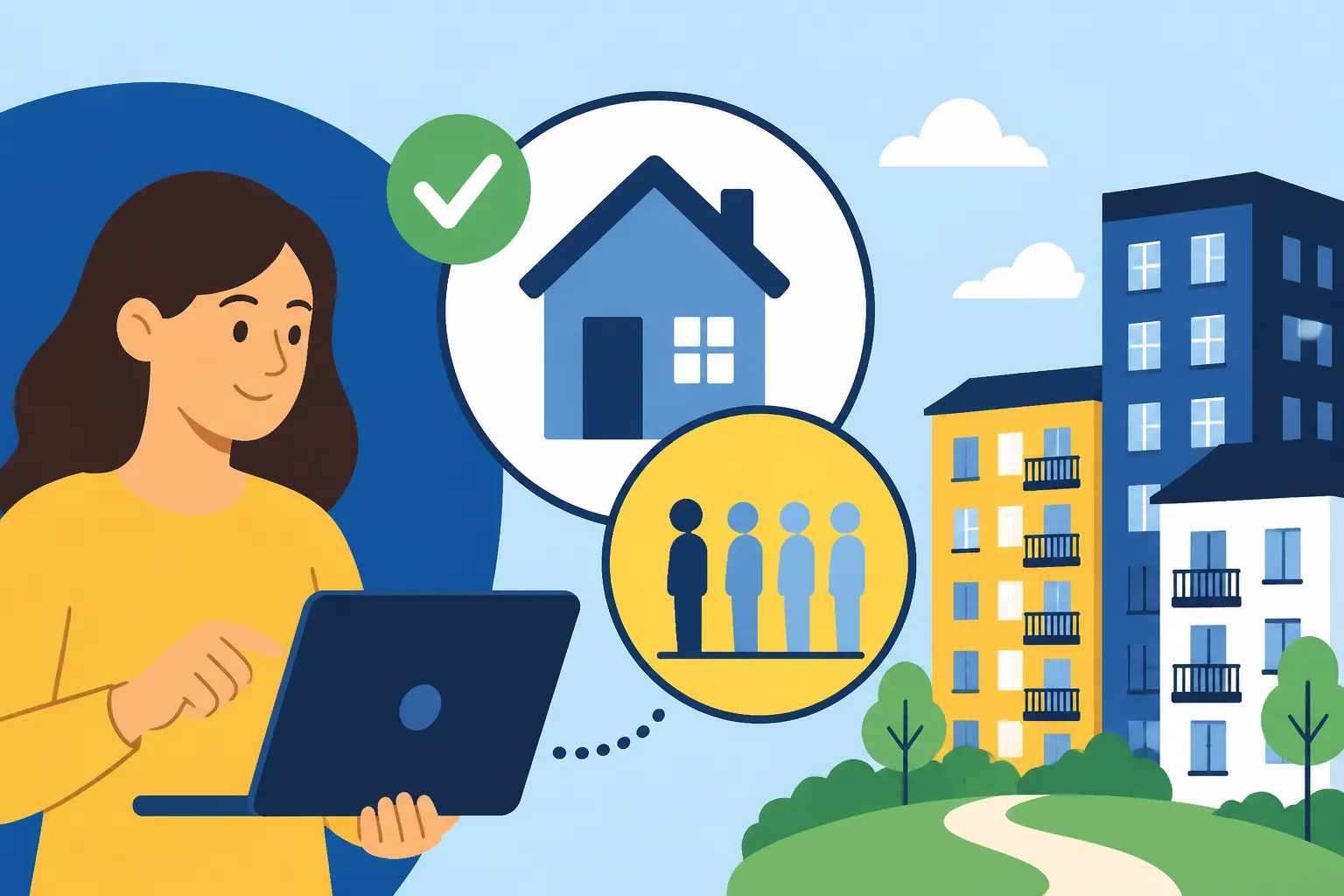
At its heart, a bostadskö is a waiting list managed by municipal housing companies or private landlords, designed to allocate first-hand rental contracts (förstahandskontrakt) in a fair and transparent way. Imagine a giant, very slow-moving line where the person who has been waiting the longest gets the first pick. That's essentially it.
Why is this queue so essential? Because a first-hand contract is the holy grail of Swedish housing. It offers security, stability, and often significantly lower rent compared to what you'd pay for a second-hand contract (andrahandskontrakt). With a first-hand contract, you rent directly from the property owner – usually a municipal housing company or a large private landlord – for an indefinite period, with strong tenant protections. This is vastly different from a second-hand contract, where you rent from another individual who holds a first-hand contract or owns the apartment. Second-hand contracts are typically for a limited time, are often more expensive, and offer fewer rights. While you might start with a second-hand rental, the ultimate goal for most expats planning to stay is to secure a first-hand contract, and that almost exclusively happens through the bostadskö. You can dive deeper into the nuances of Renting a Home in Sweden: How the First- and Second-Hand System Works.
The "Queue Day" System: Your Golden Ticket
The entire bostadskö system revolves around one critical concept: queue days (ködagar). The longer you are registered in the queue, the more queue days you accumulate, and the higher your chances of being offered a first-hand contract. It's a simple, albeit often frustratingly slow, system. Time is literally currency here.
Every day you are registered and active in the queue, you earn another queue day. When an apartment becomes available, it's advertised on the housing queue provider's portal, and people with the most queue days who have expressed interest in that specific apartment are offered it first. It's not about who you know, or how much you offer, or how charming your application letter is. It's purely about the number of days you've been waiting. This means that if you're a newcomer, you're at a significant disadvantage compared to someone who registered years or even decades ago, perhaps even as a teenager. That's why the absolute best advice you'll get about Swedish housing is to register immediately, even if you don't plan to move for years. Every single day counts. For a more detailed look, check out Accumulating Queue Days: Why You Should Register Today in Sweden.
Different Queues for Different Regions/Cities
One of the most common misconceptions among new arrivals is that there's one big, national housing queue for all of Sweden. Sadly, no such convenient system exists. Instead, the country operates on a highly decentralized model, with most major cities and regions having their own independent housing queue systems. This means if you want to find an apartment in Stockholm, you register with Stockholm's housing queue, and if you later decide to move to Gothenburg, you'll need to register with Gothenburg's queue from scratch.
Here are some of the most prominent examples:
- Stockholm: The main actor here is Bostadsförmedlingen i Stockholm. This is a municipal company that mediates first-hand contracts for apartments from various landlords across the greater Stockholm area. It's incredibly popular and notoriously competitive, with waiting times for central, desirable apartments often stretching into decades.
- Gothenburg: Boplats Göteborg is the equivalent service for Sweden's second-largest city. Like Stockholm, it aggregates listings from many landlords and allocates them based on queue time.
- Malmö/Lund Region: For the southern region, you might interact with platforms like Boplatssyd or specific municipal housing companies directly.
The rules, fees, and even the user interface can differ slightly between these platforms, but the core principle of queue days remains the same. It's crucial to identify the correct housing queue for the specific municipality or region where you intend to live. If you're flexible about location within Sweden, you could theoretically register in multiple regional queues, accumulating days in each, though this might incur multiple annual fees.
Step-by-Step Guide to Registering for the Housing Queue
Alright, let's get down to business. Registering for the housing queue isn't complicated in terms of steps, but it does require attention to detail and a bit of patience.
Eligibility Requirements for Registration
Before you even start, it's good to know what's generally expected of you to register for a bostadskö:
- Age: Almost all housing queue providers require you to be at least 18 years old to register. This is a pretty standard legal requirement for entering into rental agreements.
- Personnummer: This is where it gets a bit tricky for absolute newcomers. Many larger housing queue portals, especially for expressing interest in available apartments, will require you to have a Swedish Personal Identity Number (Personnummer). However, some services do allow you to register and start accumulating queue days with a Coordination Number (Samordningsnummer) or even just a foreign passport and temporary contact details initially, especially for just "signing up" for the queue itself. When it comes to actually applying for a specific apartment and signing a contract, a Personnummer is almost always essential. It's your key to most administrative functions in Sweden, including getting proper Healthcare in Sweden for Foreign Residents: The Complete System Guide (2027). The sooner you get your Getting Your Personnummer: The Gateway to Swedish Healthcare, the smoother your housing journey will be.
- Address: While you might not need a permanent Swedish address to register for the queue, you will need one when it comes to signing a rental contract. Often, they'll ask for a current mailing address, which can be your temporary accommodation in Sweden or even a foreign address if you're registering before moving. Just make sure it's an address where you can reliably receive mail.
Always check the specific requirements for the queue you're interested in, as they can vary slightly.
Choosing Your Housing Queue Provider
As we discussed, there isn't one universal queue. Your first task is to identify the correct housing queue for your desired location.
- For Major Cities:
- Stockholm: Head directly to Bostadsförmedlingen i Stockholm. This is your primary point of contact for first-hand rentals in the capital region.
- Gothenburg: Your go-to will be Boplats Göteborg.
- Malmö: Look for Boplats Syd which covers Malmö, Lund, and other municipalities in Skåne.
- For Smaller Towns or Rural Areas: You might not find a centralized municipal housing queue like the big cities. In these cases, you'll often need to contact the local municipal housing company (kommunala bostadsbolaget) directly or individual private landlords in that area. A quick search for "bostadsbolag [municipality name]" or "hyreslägenheter [municipality name]" will usually point you in the right direction.
It's wise to spend a little time researching the housing situation in your target area before you arrive. This will help you understand whether a queue system is the dominant method for securing first-hand contracts, or if other avenues are more common.
The Online Registration Process
Once you've identified your queue provider, the registration process is typically straightforward and done online. Here's a general walkthrough:
- Visit the Website: Navigate to the official website of your chosen housing queue provider (e.g., Bostadsförmedlingen.se for Stockholm).
- Find the Registration Section: Look for links like "Registrera dig," "Bli kund," or "Kötid."
- Fill in Your Details: You'll be asked to provide personal information. This usually includes:
- Full Name
- Date of Birth
- Email Address
- Phone Number
- Current Address (as mentioned, this can be foreign or temporary)
- If you have a Personnummer, you'll enter it here. If not, they might offer an alternative registration path, or you might need to contact them directly for guidance.
- Accept Terms and Conditions: Read through these carefully. They will detail how queue days are accumulated, fees, and rules for applying for apartments.
- Pay the Annual Fee: This is a crucial step. Almost all official housing queues charge an annual fee to maintain your registration and continue accumulating queue days. This fee typically ranges from SEK 100 to SEK 300 per year. You'll usually pay with a Swedish debit/credit card, or sometimes by invoice.
- Important: Your queue days only start accumulating once this fee is successfully paid. If you let your membership lapse by not paying the annual fee, you will lose all your accumulated queue days and have to start over if you re-register. Don't let that happen!
- Confirmation: You should receive a confirmation email shortly after successful registration and payment. This email will often include your customer number and instructions on how to log in to your account.
From this point, you're officially in the queue! Now, the long wait begins. Remember, while you're waiting, having reliable internet, perhaps using an eSIM from a provider like Airalo, can be really helpful for managing applications and staying connected to relevant updates online.
Navigating the Housing Queue: Fees, Rules, and Expectations
Joining the queue is just the first step. Understanding how to stay active, how the application process works, and setting realistic expectations will save you a lot of grief.
Annual Fees and Staying Active in the Queue
We've touched on this, but it bears repeating: the housing queue isn't a free ride. To maintain your hard-earned queue days, you must pay an annual fee. This fee is non-refundable, and it's your responsibility to ensure it's paid on time.
- Payment Reminders: Most providers will send you reminders via email or regular mail a few weeks before your annual fee is due. Make sure your contact information is always up-to-date in their system.
- Consequences of Non-Payment: If you miss the payment deadline, your membership will typically be cancelled, and all your accumulated queue days will be forfeited. There are usually no second chances or ways to recover lost queue days, so mark your calendar or set up recurring reminders! This is a common pitfall for newcomers who might not realize the strictness of the system.
- Example: Imagine you've been in the Stockholm queue for three years, patiently accumulating 1095 queue days. You forget to pay the SEK 200 annual fee, and your membership is cancelled. All those days are gone. If you re-register, you start again at zero. It’s a harsh reality, but it’s how the system works.
Understanding the Application Process for Available Homes
Being in the queue doesn't mean apartments are automatically assigned to you. You still need to actively search and apply for them.
- Apartment Listings: Housing queue providers regularly publish available first-hand rental apartments on their online portals. You'll log into your account to view these listings.
- Filtering: You can usually filter by municipality, size, number of rooms, rent level, and sometimes even specific amenities or districts. This helps narrow down the options to those that suit your needs and where your queue days might be competitive.
- Expressing Interest: When you find an apartment you're interested in, you "express interest" or "apply" for it directly through the portal. You typically have a limited number of ongoing applications you can make at any one time.
- Ranking: After the application period closes (usually a few days), the system ranks all applicants based on their queue days. The person with the most queue days who applied for that specific apartment will be at the top of the list.
- Viewings and Offers: The top-ranked applicants (often 3-5 people) will be invited for a viewing of the apartment. This might be a group viewing or individual appointments. After the viewing, the landlord typically offers the contract to the person with the longest queue time among those who are still interested and meet any other specific requirements (like income).
- Accepting/Declining: If you're offered a contract, you'll have a short window to accept or decline. If you decline, the offer moves to the next person on the list, and your queue days remain intact (unless the specific rules of that queue state otherwise, which is rare for first refusal). If you accept, you'll sign the contract, and in many queues, your queue days will then be reset or frozen for a certain period for that specific housing provider, as you've successfully secured a first-hand contract.
Realistic Expectations: Waiting Times and Competition
This is where I have to be brutally honest, as a veteran expat. The waiting times for first-hand contracts in desirable areas of Sweden, especially Stockholm, Gothenburg, and Malmö, are extremely long. We're talking years, often a decade, and for prime locations, potentially two or three decades.
Consider this table, which shows rough average queue times for first-hand contracts in major cities. Keep in mind these are averages, and specific apartments can vary wildly:
| City/Region | Main Housing Queue Provider | Average Queue Time (Years) | Notes |
|---|---|---|---|
| Stockholm (Central) | Bostadsförmedlingen i Stockholm | 10-20+ | Studio/1-bed: 5-10+. Family size: 15-20+. Prime areas: 20-30+. |
| Gothenburg | Boplats Göteborg | 5-15+ | Varies greatly by area and size. More competitive in central parts. |
| Malmö/Lund | Boplats Syd | 3-10+ | Shorter than Stockholm, but still significant for popular areas. |
| Smaller Cities/Towns | Local Municipal Housing Companies | 0-5+ | Can be much shorter, sometimes immediate availability. |
Why so long? A few key reasons:
- Security of Tenure: First-hand contracts are for an indefinite period, meaning people rarely move unless they buy a home or relocate. This creates very low turnover.
- Rent Control: Rents for first-hand contracts are generally regulated and significantly lower than market rates for second-hand rentals. This makes them highly desirable.
- Population Growth: Major cities are growing, and housing construction often struggles to keep up with demand.
What does this mean for you?
- Start Early: Register for the queue the day you know you're coming to Sweden, or even before if possible.
- Initial Housing: Do not expect to secure a first-hand contract from the queue for your initial move. You will almost certainly need to rely on the Finding a Second-Hand Rental (Andrahand) in Sweden Safely market, student housing, or employer-provided accommodation first.
- Patience: The queue is a long-term investment, like a slow-growing savings account. You might get lucky with a less popular apartment sooner, but generally, expect a long wait. You can get a better sense of this by looking at How Long Is the Housing Queue in Stockholm Really?.
Strategies for Maximizing Your Chances in the Queue
Given the long waiting times, you need to be strategic about how you approach the housing queue and what other housing avenues you explore.
Register Early, Register Often (Where Applicable)
This cannot be stressed enough: register for the housing queue the moment you consider moving to Sweden, or as soon as you arrive. Every single day you delay is a day lost in the queue, pushing you further back. You never know when circumstances might change and you'll need a first-hand contract, so it's best to have those queue days ticking away.
- Multiple Queues: If your plans are flexible and you're open to living in different major cities or regions in Sweden, consider registering for multiple queues. For example, if you're not entirely set on Stockholm versus Gothenburg, you could register with both Bostadsförmedlingen and Boplats Göteborg. Just remember that each queue has its own annual fee, and managing multiple registrations requires diligence. This strategy is more about increasing your future options rather than speeding up any single queue.
Being Flexible with Location and Type of Home
While a central, newly built apartment in Södermalm might be your dream, the reality is that such apartments demand astronomical queue times. To increase your chances of securing a first-hand contract sooner, you need to be flexible:
- Geographic Flexibility: Look beyond the most popular, central districts. Areas further out from the city centre, or in smaller municipalities that are still within commuting distance, often have significantly shorter queue times.
- Example: In Stockholm, while a flat in Östermalm might require 25+ years, a similar apartment in a suburb like Botkyrka or Södertälje might be available after just a few years, or even months for less desirable options.
- Property Type and Size: Be open to different types of apartments and sizes. A smaller studio or a slightly older building might not be your ideal, but it could be your gateway to a first-hand contract much sooner. Often, larger apartments (3+ rooms) also have longer queue times because they are less common and more in demand by families.
- New Production (Nyproduktion): Some housing queue platforms also list newly constructed apartments. While these might have slightly higher rents (though still regulated), they often have their own specific queue paths or attract a different set of applicants, sometimes resulting in slightly shorter waiting times than older, highly sought-after units. Keep an eye out for these.
Combining Queue Strategy with Other Housing Options
For most newcomers, the housing queue is a long-term strategy, not an immediate solution. You absolutely need a plan for where you're going to live while you wait for those queue days to accumulate.
- Second-Hand Market: This will likely be your primary option for initial housing. Websites like Blocket Bostad, Qasa, and Facebook groups (e.g., "Stockholm Expats Housing") are popular for finding second-hand rentals. Be extremely vigilant against scams, as the demand creates opportunities for dishonest individuals. Platforms like Spotahome can also be useful for finding verified, furnished apartments for short to medium-term stays, often popular with expats, which can serve as a crucial stepping stone while you navigate the public queue system.
- Student Housing: If you are moving to Sweden as a student, apply for student accommodation immediately. Universities often have their own queues or partnerships with student housing providers, which are separate from the general public housing queues and generally have much shorter waiting times.
- Employer-Provided Housing: Some employers, particularly large international companies, might offer temporary accommodation or assistance in finding housing for new employees. This is relatively rare but worth inquiring about if you have a job offer.
- Sublets and Short-Term Rentals: For your very first few months, you might need to consider short-term sublets or even hostels/hotels until you can secure something more stable in the second-hand market.
Remember, the goal is to get your foot in the door in Sweden and start building those queue days, even if your initial housing isn't your dream apartment.
What Happens After You Get a First-Hand Contract?
Congratulations! You’ve diligently waited, accumulated your queue days, applied, and finally secured a first-hand contract. This is a significant milestone, but there are still a few things to understand about your new situation.
Understanding Your New First-Hand Contract
A first-hand contract is more than just a piece of paper; it's a gateway to stability and a deeper integration into Swedish life.
- Security of Tenure (Besittningsskydd): This is one of the most significant benefits. Your contract is indefinite, meaning the landlord cannot simply terminate it without a very good reason (e.g., you fail to pay rent, cause severe disturbances, or significantly violate the terms). This protection gives you immense peace of mind compared to the often precarious nature of second-hand rentals.
- Rent Setting and Increases (Bruksvärde): Your rent will be set based on the apartment's "utility value" (bruksvärde), which takes into account factors like size, layout, standard, and location. Rent increases are regulated and typically negotiated annually between tenant organizations (like Joining Hyresgästföreningen: Should You Become a Member?) and landlords. They are usually modest and predictable, unlike the often arbitrary increases seen in the second-hand market.
- Tenant Rights: As a first-hand tenant, you have strong rights. You're generally allowed to make minor alterations to your apartment (like painting), and the landlord is responsible for major maintenance. If disputes arise, institutions like The Hyresnämnden: Resolving Rental Disputes in Sweden (Rent Tribunal) are there to mediate.
- Notice Periods: If you decide to move, the standard notice period for a first-hand contract is three calendar months, even if you find a new tenant.
What Happens to Your Queue Days?
This is a critical point that often catches people off guard. When you accept a first-hand contract through a housing queue, your accumulated queue days for that specific housing provider are almost always affected:
- Reset: In most major queues (like Stockholm's Bostadsförmedlingen), once you accept and sign a first-hand contract through their system, your queue days with them will be reset to zero. This means if you ever want to move to another first-hand apartment through the same provider, you'll be starting from scratch in their queue.
- Frozen/Dormant: Some smaller queues or specific programs might "freeze" your queue days, allowing you to reactivate them later without starting from zero, but this is less common for the main municipal queues.
- Why the Reset? The idea is to give other long-waiting applicants a chance and to prevent individuals from hoarding multiple first-hand contracts or continuously moving within the queue system. It ensures fairness.
Implication: If you plan to move again within Sweden in the future, it's worth considering re-registering for the queue(s) of interest again immediately after securing your first contract to start accumulating new queue days. This foresight can be invaluable years down the line.
Setting Up Your New Home
Once you have the keys to your new first-hand apartment, there are a few essential administrative steps to make it truly your home:
- Electricity (El-avtal): In most cases, electricity is not included in the rent, and you'll need to sign your own electricity contract. You'll typically choose both an electricity network company (fixed by your location) and an electricity supplier (you can choose from several). This needs to be done before or shortly after moving in. Learn more about Setting Up Electricity (El-avtal) in Your Swedish Home.
- Broadband and Mobile: Arrange for internet service. Sweden has excellent infrastructure and many providers. You'll also want to ensure you have a local Swedish mobile number, which is practically essential for daily life.
- Home Insurance (Hemförsäkring): This is absolutely crucial, even if not legally mandatory for renters. It protects your belongings from theft, fire, and water damage, and typically includes liability insurance (if you accidentally damage someone else's property) and travel insurance. Do not skip this! Find out why Home Insurance (Hemförsäkring): Why It's Essential in Sweden is so important.
- Folkbokföring: Make sure your address is registered with the Swedish Tax Agency (Skatteverket) by submitting a "Flyttanmälan" (notification of move). This officially changes your registered population address and is vital for everything from mail delivery to access to services. If you haven't yet registered with How Do I Register with Försäkringskassan When Moving to Sweden?, you'll likely do so around this time as well.
Common Pitfalls and Misconceptions for Newcomers
Navigating any new system can be daunting, and the Swedish housing queue is no exception. There are some common traps and misunderstandings that newcomers often fall into.
The Myth of "Quick First-Hand Contracts"
Let's clear this up once and for all: there is no such thing as a quick first-hand contract for a desirable apartment in a major Swedish city. Anyone telling you otherwise is misinformed or trying to scam you.
The reality of the queue times (as shown in the table above) means that expecting to get a first-hand contract within a few months of arriving, or even a couple of years, is simply unrealistic for most. While exceptions exist (e.g., extremely unpopular areas, very specific small apartments, or new production with different rules), they are not the norm. Manage your expectations, accept the long wait, and focus on securing stable second-hand housing initially.
Beware of Scams and Unrealistic Offers
Because the first-hand market is so tight, the second-hand market becomes a hotbed for scams. Be extremely cautious, especially when you are new and perhaps desperate.
- Never Pay for Queue Days: Legitimate housing queues charge an annual fee for membership, not a fee to "jump" the queue or buy more queue days. Anyone offering to "sell" you queue days or a guaranteed first-hand contract for a large sum is a scammer.
- Verify the Landlord/Property: Always ensure the person renting the apartment to you actually has the right to do so. For second-hand rentals, ask to see their first-hand contract or their Bostadsrättförening's (housing co-op) permission to sublet. If they are evasive, walk away.
- Beware of Pressure Tactics: Scammers often try to rush you into making decisions or sending money by claiming there are many other interested parties. Take your time, ask questions, and never feel pressured.
- No Upfront Payments Without a Contract: Never transfer a deposit or first month's rent before you have seen the apartment, verified the landlord's legitimacy, and signed a formal contract. Be particularly suspicious if they claim to be abroad and can't show the apartment.
- Unrealistically Low Rent: If an apartment in a prime location is advertised at a rent that seems too good to be true for a second-hand contract, it probably is. Compare it to other similar listings to get a feel for average prices. You can also research Avoiding Rental Scams in Sweden's Tight Housing Market for more tips.
Language Barriers and Navigating the System
While many Swedes speak excellent English, the housing queue portals and official communications are predominantly in Swedish. This can add another layer of complexity for newcomers.
- Translation Tools: Utilize browser-based translation tools (like Google Translate or DeepL) when navigating websites and reading apartment descriptions. While not perfect, they can provide a good enough understanding.
- Learn Basic Swedish Housing Terms: Familiarize yourself with key Swedish terms related to housing (e.g., hyresrätt, bostadsrätt, förstahandskontrakt, andrahandskontrakt, ködagar, uppsägningstid). This will help you understand applications and contracts better.
- Seek Local Help: If you have Swedish friends, colleagues, or an employer, don't hesitate to ask for help in understanding complex documents or making phone calls to housing providers. Many expat groups online can also offer advice.
The housing queue is a long game, but an essential one for long-term living in Sweden. Register early, stay diligent, and complement your queue strategy with realistic short-term housing solutions, and you’ll be well on your way to securing your place in the Swedish system.
Disclaimer
The information provided in this guide is intended for general informational purposes only and does not constitute legal or professional advice. While we strive to ensure the information is accurate and up-to-date, rules and regulations regarding housing in Sweden can change. Always consult official sources like the Swedish Tax Agency (Skatteverket), Migrationsverket, municipal housing companies, or a qualified legal professional for specific advice tailored to your situation.