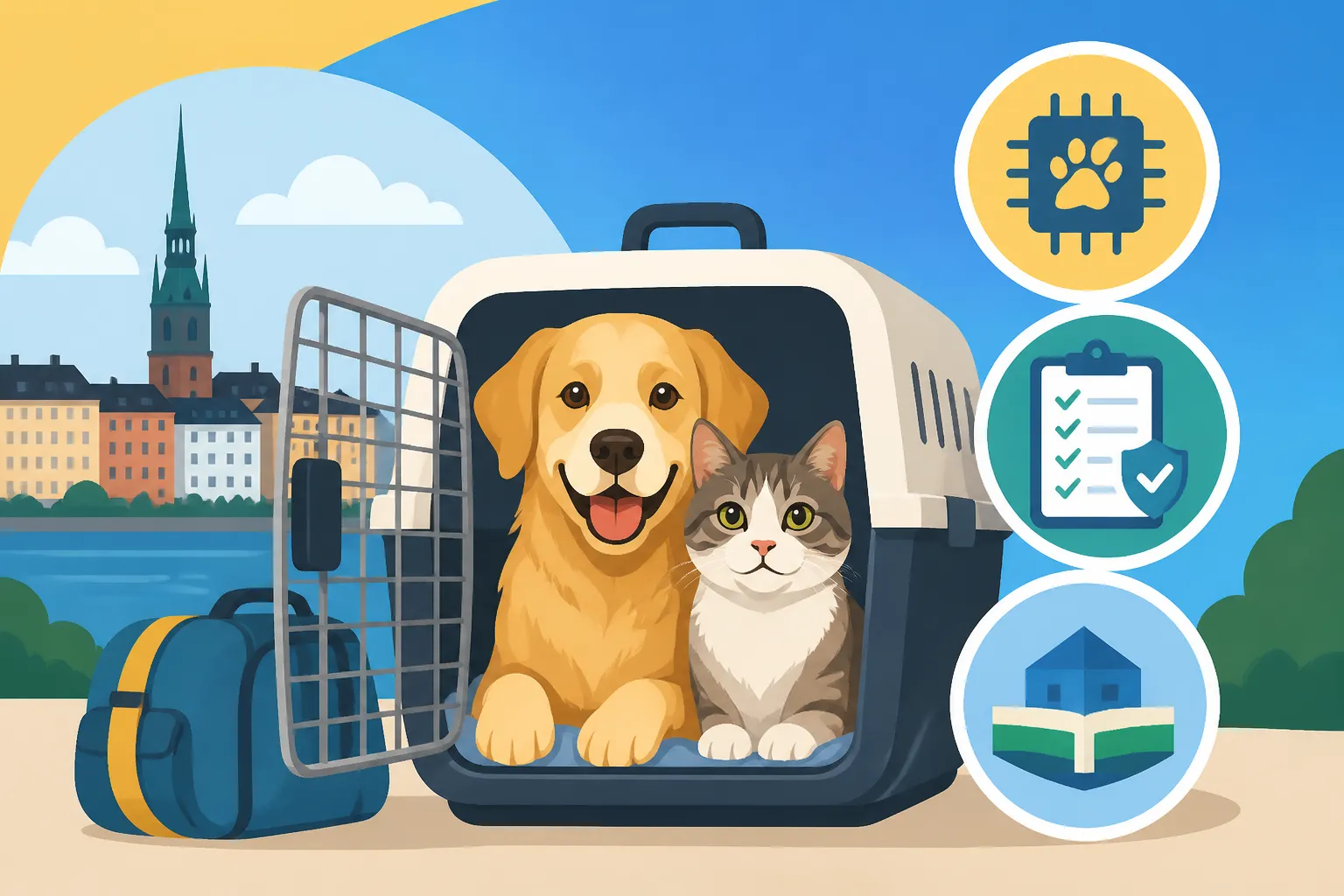
Bringing a Pet to Sweden: Rules, Microchips, and Jordbruksverket
Bringing your beloved furry, feathered, or scaled family member to a new country can feel like navigating a bureaucratic labyrinth, and believe me, Sweden is no exception. The rules and regulations around pet import are notoriously strict, often leaving even the most organised expats scratching their heads and worrying about their cherished companions. This guide aims to cut through the confusion, demystifying the essential steps involving microchips, vaccinations, paperwork, and the Swedish Board of Agriculture (Jordbruksverket), so you can bring your pet safely home to Sweden.
Understanding the Swedish Pet Import Regulations: Why They're So Strict
Moving your pet to Sweden isn't just a matter of hopping on a plane; it's a meticulously planned operation that requires adherence to very specific rules. Many new arrivals find these regulations daunting, and sometimes, a little over the top. But once you understand the underlying philosophy, it makes a bit more sense – even if it doesn't make the process any less stressful for you!
The Philosophy Behind Swedish Pet Laws
At its heart, Sweden's strict approach to pet import is rooted in a deep commitment to animal welfare and public health. This country prides itself on being free from certain diseases, most notably rabies, which is a constant threat in many parts of the world. Imagine the catastrophic impact if rabies were to re-enter Sweden – it would be devastating for both animals and humans. So, every single requirement, from the microchip to the waiting periods after vaccination, is designed to minimise the risk of bringing in diseases that could harm the local animal population or even spread to people.
This emphasis on disease prevention means that the Swedish authorities, particularly Jordbruksverket, leave very little room for error. They are not trying to be difficult; they are simply safeguarding their biosafety. This also extends to other parasites, like the tapeworm Echinococcus multilocularis, which is why dogs from certain regions have specific treatment requirements. While it might feel like an endless checklist, remember that it's all part of ensuring Sweden remains a safe and healthy environment for all its inhabitants, two-legged and four-legged alike. It can feel like a heavy burden when you're trying to manage your own Getting Your Personnummer: The Gateway to Swedish Healthcare and finding a home, but your pet's health is just as important in their eyes.
Who Is Jordbruksverket and What Do They Do?
When it comes to pet import, Jordbruksverket, the Swedish Board of Agriculture (Statens jordbruksverk), is the central authority you’ll be dealing with, or at least whose rules you’ll be following. Think of them as the gatekeepers for animal health and welfare in Sweden. Their mandate includes everything from farming regulations to pet identification and import/export controls. They are the ones who publish and update the specific requirements for bringing animals into the country.
Their website is the official source for all the detailed regulations, forms, and guidelines. It’s absolutely crucial to consult their latest information, as rules can change, sometimes without much public fanfare. Ignorance of the rules is never an excuse, and Swedish authorities are not known for their flexibility when it comes to these matters. Misinterpretations or omissions can lead to severe consequences, such as your pet being denied entry, sent back to your country of origin, or in extreme cases, even euthanised – though this is truly a last resort for severe non-compliance. So, while it adds another layer to your Housing and Living in Sweden: The Complete Newcomer's Guide, understanding Jordbruksverket's role and following their directives to the letter is paramount for a smooth arrival.
The Core Requirements for Bringing Your Pet to Sweden
Regardless of where your pet is coming from, there are several foundational requirements that apply to almost all dogs, cats, and ferrets entering Sweden. These are the absolute non-negotiables that form the bedrock of the import process.
Microchipping and Identification
First things first: your pet needs to be properly identified. This isn't just about having a name tag; it's about a permanent, tamper-proof form of identification. Every dog, cat, or ferret coming to Sweden must have an ISO 11784/11785 compliant microchip. This is an international standard, meaning most modern microchips implanted in North America, the EU, or other developed countries should be compatible. If your pet has an older or non-standard chip, you'll need to either have a new, compliant chip implanted or carry your own microchip reader that can read the non-standard chip. Trust me, you don't want to get to the border only to find out your pet's chip can't be read.
The timing of the microchip implantation is also critical. It must be implanted before any rabies vaccination that is considered valid for entry into Sweden. If your pet was vaccinated, then microchipped, you’ll need to revaccinate them for rabies after the microchip is in place, and then restart all the associated waiting periods. This often catches people out and causes significant delays. Always ensure your veterinarian records the microchip number accurately on all vaccination certificates and health documents. Beyond the physical chip, it's also a very good idea to have your pet's microchip registered with a national pet database in your home country, and update it with your new Swedish contact details once you're settled. This helps greatly if your pet ever gets lost, both before and after your move.
Rabies Vaccination and Antibody Titre Test
This is arguably the most crucial step, especially for pets arriving from non-EU countries. All pets entering Sweden must be vaccinated against rabies. The vaccination needs to be administered when the pet is at least 12 weeks old, and by an authorised veterinarian. There's a mandatory 21-day waiting period after the primary rabies vaccination before your pet can travel. If your pet has had previous rabies vaccinations, ensure they are up-to-date and that the boosters haven't lapsed, as this could also trigger a requirement for a new primary vaccination and the full 21-day wait.
For pets from countries not listed as rabies-free or low-risk by the EU (which includes many countries outside the EU/EEA, such as the USA, Canada, and Australia, though these are "listed" in a separate context by the EU), a rabies antibody titre test is mandatory. This blood test measures the level of antibodies against rabies in your pet's system, confirming that the vaccination was effective. This test must be performed by an EU-approved laboratory (your vet will know which ones these are). The blood sample for this test cannot be taken earlier than 30 days after the rabies vaccination. Crucially, if you're coming from a non-listed country, there's also a three-month waiting period from the date of the successful blood sample collection before your pet is allowed to enter Sweden. This means if you get the blood test on January 1st, your pet cannot enter Sweden before April 1st. This specific waiting period is frequently overlooked and causes immense stress and significant delays. Careful planning, sometimes more than half a year in advance, is absolutely essential.
The EU Pet Passport or Health Certificate
Finally, your pet needs the right travel documents. For pets coming from another EU/EEA member state, an EU Pet Passport is the standard. This passport is a standardised document containing all your pet's essential information: microchip number, vaccination records (including rabies), and details of any other treatments (like tapeworm). It's issued by an authorised veterinarian within the EU/EEA. Make sure all entries are clear, legible, and properly signed and stamped by the vet. Any missing information or illegible handwriting can cause problems at the border.
If your pet is travelling from a country outside the EU/EEA, you'll need an official veterinary health certificate. This isn't just any certificate; it must be a specific model (often an EU model health certificate) that is completed and signed by a government-approved official veterinarian in your departure country. This means it might be signed by your regular vet, but then it needs to be endorsed or stamped by a government veterinary authority in your home country (e.g., USDA in the US, CFIA in Canada, DEFRA in the UK). This certificate typically has a limited validity period for travel (often 10 days from issue for entry into the EU, then four months for onward travel within the EU), so timing its issue correctly before your departure is vital. Getting this document exactly right is paramount; even small errors like a missing stamp or incorrect date can lead to your pet being refused entry.
Specific Regulations Based on Origin Country and Pet Type
While the core requirements are universal, the process can vary significantly depending on where your pet is coming from. Sweden, as part of the EU, adheres to broader EU regulations, but also has some specific national rules.
Pets from EU/EEA Countries
If you're moving to Sweden from another EU or EEA member state (like Germany, France, or Norway), the process is generally the most straightforward. You’ll primarily need three things: your pet must be microchipped, have a valid rabies vaccination, and possess a correctly filled-out EU Pet Passport. The rabies vaccination must be current, and the 21-day waiting period after the primary vaccine must have passed. Good news here is that for pets moving within the EU/EEA, a rabies antibody titre test is typically not required, provided the previous vaccinations were done correctly.
However, there's a specific twist for dogs coming from certain EU countries (Finland, Ireland, Malta) and non-EU countries like Norway, the UK, or Northern Ireland: they require a tapeworm treatment (Echinococcus multilocularis). This treatment must be administered by a veterinarian within 1 to 5 days (24 to 120 hours) before the dog's scheduled entry into Sweden. The vet administering the treatment must record it in the pet passport, including the date and time of administration, the product name, and their signature and stamp. If you're planning a shorter trip, you can even opt for a "continuous treatment scheme," where the dog is treated at least twice, 28 days apart, and then regularly every 28 days, allowing for repeated entries without the 1-5 day rule each time. This is a common requirement for preventing the spread of a parasite that can pose risks to human health.
Pets from Non-EU Listed Countries (e.g., USA, Canada, Australia)
Moving your pet from countries like the USA, Canada, Australia, Japan, or Switzerland – which are considered "listed" third countries by the EU (meaning they have good rabies control) – involves a few more hoops. Beyond the microchip, rabies vaccination, and the 21-day waiting period after vaccination, your pet will need the rabies antibody titre test. The good news is that if the test result is satisfactory, there is no additional three-month waiting period from the date of the blood sample if the pet is coming directly from one of these listed countries. This is a crucial distinction from non-listed countries.
You will also need an official veterinary health certificate, not an EU Pet Passport. This certificate must be completed by a private veterinarian and then officially endorsed by the government veterinary authority in your home country. For example, in the US, this would involve your vet filling out the USDA health certificate, and then you taking it to a USDA Endorsement Office. This government endorsement verifies that the vet is legitimate and that the information is accurate according to the country's regulations. You’ll also need to pre-notify Swedish Customs (Tullverket) of your pet's arrival. This involves completing a specific form online before your journey. This extra layer of scrutiny ensures that all conditions are met before your cherished companion steps paw on Swedish soil. While finding the perfect Renting a Home in Sweden: How the First- and Second-Hand System Works might seem like the biggest challenge, coordinating these pet documents can definitely give it a run for its money!
Pets from Non-EU Non-Listed Countries
Bringing a pet from a country that is not on the EU's approved "listed" third country list is the most complex scenario. These are countries where the rabies situation is less controlled, and the risks are considered higher. The requirements are the same as for listed countries, but with one critical difference: there is a mandatory three-month waiting period from the date of the successful rabies antibody titre test before your pet is allowed to enter Sweden or any other EU country.
This waiting period cannot be circumvented. For instance, if your vet takes the blood sample on January 1st and the results are good, your pet cannot enter Sweden until April 1st. This means you must plan many months, sometimes even six to seven months, in advance if you're coming from one of these regions. This can be particularly challenging for expats on a tight moving schedule, often requiring family members or friends to care for the pet until the waiting period is over. As with listed countries, an official veterinary health certificate endorsed by the government authority of your departure country is required, along with mandatory pre-notification to Swedish Customs. In some extremely high-risk cases, or if regulations are not met, pets from non-listed countries may face additional quarantine measures upon arrival or even outright denial of entry. It's a tough pill to swallow, but these measures are in place to protect Sweden's entire animal population.
Here's a quick overview of the key differences:
| Requirement | Pets from EU/EEA Countries | Pets from Non-EU "Listed" Countries | Pets from Non-EU "Non-Listed" Countries |
|---|---|---|---|
| Microchip (ISO Compliant) | Yes | Yes | Yes |
| Rabies Vaccination (12+ weeks, 21-day wait) | Yes | Yes | Yes |
| Rabies Antibody Titre Test | No (generally) | Yes (no 3-month wait after test) | Yes (mandatory 3-month wait after test) |
| EU Pet Passport | Yes | No (official health certificate) | No (official health certificate) |
| Official Health Certificate Endorsement | N/A | Yes (by government vet in departure country) | Yes (by government vet in departure country) |
| Tapeworm Treatment (Dogs) | Yes, if from specific countries (e.g., UK, Finland, Norway) | No (unless transiting through high-risk area) | No (unless transiting through high-risk area) |
| Pre-notification to Swedish Customs | No (generally, unless specific exceptions) | Yes | Yes |
| Direct Entry into Sweden | Yes | Yes, after meeting requirements | Yes, after meeting requirements and 3-month waiting period |
The Journey: Travel, Customs, and Arrival in Sweden
Once all the paperwork is in order and your pet has met all the health requirements, the focus shifts to the actual journey and what happens upon arrival in Sweden. This phase is just as critical for your pet’s well-being and for ensuring a smooth entry into the country.
Choosing Your Transport Method and Pet Carrier
The method of transport and the quality of your pet's carrier can make a world of difference to their stress levels and safety. If you’re flying, you'll need to decide if your pet is small enough to travel in the cabin with you (usually under the seat in an airline-approved soft carrier), or if they will need to travel as checked baggage or cargo. Airlines have very specific rules regarding pet travel, often stricter than national regulations. These include crate size requirements (IATA standards), ventilation, labels, food and water dishes, and even temperature restrictions. Always check with your chosen airline well in advance, as policies can change, and some breeds (like brachycephalic or "snub-nosed" dogs and cats) may be restricted due to breathing difficulties.
For longer journeys by road or ferry, consider your pet’s comfort and safety. Ensure they have enough space, access to water, and regular opportunities for bathroom breaks. Research the pet policies of any ferries or train lines you plan to use, as these can vary. While you're sorting out travel logistics, don't forget your own connectivity needs! Having a reliable data connection, perhaps through an eSIM service like Airalo, can be invaluable for navigating maps, checking ferry schedules, or even contacting family while on the move. Your pet's journey should be as stress-free as possible, and careful planning of transport is key to that.
Notifying Swedish Customs (Tullverket)
This is an administrative but absolutely vital step for pets arriving from outside the EU/EEA. You must notify Swedish Customs (Tullverket) of your pet's arrival before you enter the country. This pre-notification typically involves submitting a specific form online via Jordbruksverket's portal, providing details of your pet, their documents, and your estimated arrival time and port of entry.
When you arrive in Sweden, you cannot simply walk through the "green channel" (nothing to declare) at the airport or ferry terminal. You must proceed through the "red channel" (goods to declare) to have your pet and their documents inspected by a customs officer. This inspection is crucial for verifying that all the rigorous health and identification requirements have been met. Attempting to bypass customs by using the green channel is a serious offence and can lead to severe penalties, including fines, immediate re-export of your pet, or even prosecution. They are looking for everything to be perfectly in order, from the microchip number matching the paperwork to the correct stamps and signatures on the health certificate. Make sure you have all original documents readily accessible.
Settling Your Pet Into Swedish Life
Once you and your pet have successfully cleared customs, a new chapter begins! The first thing I'd recommend is a visit to a local veterinarian for a general check-up. This allows a Swedish vet to familiarise themselves with your pet and provide any initial advice, especially if your pet has endured a long or stressful journey. They can also advise on local parasite prevention, such as tick treatments, which are important in Sweden.
If you've brought a dog, you have an additional step: registering your dog with Jordbruksverket's central dog register (Jordbruksverket's Hundregister). This is separate from the import process and is a legal requirement for all dog owners in Sweden. There's a small fee for this registration, and it helps ensure lost dogs can be reunited with their owners. Getting Registered in the Population Register (Folkbokföring) is a big step for you, and registering your dog is a big step for them!
Finally, help your pet adjust to their new Swedish surroundings. This might mean getting used to quieter neighbourhoods compared to a bustling city, or adapting to the seasonal changes, especially the long, dark winters. Finding pet-friendly areas and parks is essential, and considering pet insurance from a Swedish provider like Agria, Sveland, or Folksam is a smart move to cover unexpected vet costs. Just like when you're navigating Everyday Living in Sweden: Groceries, Recycling, and Local Customs, getting your pet settled is all about learning the local way of life.
Common Pitfalls and Essential Tips for Pet Owners
Bringing a pet to Sweden is an achievement, but it's fraught with potential issues. Learning from common mistakes and preparing thoroughly can save you a lot of heartache.
Avoiding Delays and Denials at the Border
The single biggest reason for pets being delayed or denied entry to Sweden is incomplete or incorrect paperwork, or a failure to adhere to the strict timelines. There are many accounts of expats arriving with their cherished pets, only to be turned away because a vaccination date was off by a day, a signature was missing, or the rabies titre test waiting period wasn't respected. The Swedish authorities are incredibly precise, and they will not compromise on these health regulations.
Therefore, the most essential advice is: plan early. Start preparing your pet's documents and health treatments many months, even up to a year, before your planned move. Double-check every single date, signature, stamp, and microchip number against the requirements on Jordbruksverket's website. Work with a veterinarian in your home country who has experience with international pet travel regulations – they can be an invaluable resource. If possible, consider getting a second pair of eyes (another vet, or a pet relocation specialist) to review all your documents before you travel. The consequences of non-compliance can be devastating: your pet could be quarantined at your expense, sent back to your country of origin, or in truly extreme cases of severe health risk or fraudulent paperwork, euthanised. No one wants to face that, so diligence is your best friend.
Pet-Friendly Living and Resources in Sweden
Once your pet is officially a Swedish resident, you’ll want to ensure they have a happy and comfortable life here. One of the first challenges can be finding pet-friendly accommodation. While it’s becoming more common, finding a rental that explicitly allows pets can be tricky, especially in popular cities like Stockholm or Gothenburg. Many landlords have a strict no-pet policy, so be prepared for a longer search or to potentially pay a higher deposit. When searching for rentals, services like Spotahome sometimes list pet policies, but it's always best to clarify directly with the landlord or housing association (BRF) before committing. Don't be afraid to clearly state you have a pet when looking for a home, as honesty is always the best policy.
Sweden is generally a very pet-friendly country once you're settled in. There are numerous dog parks, vast natural areas perfect for walks (though always clean up after your pet, of course!), and a good network of veterinary clinics and emergency animal hospitals. Major pet store chains like Arken Zoo and Zoo.se can be found in most towns, offering everything from food to toys and grooming services. For routine care, you can choose a local vet clinic, and for emergencies, there are usually larger animal hospitals in or near major cities. Just as it's important to understand your Healthcare in Sweden for Foreign Residents: The Complete System Guide (2027), having a good plan for your pet's health is paramount. Be mindful of the climate; How Cold Does It Really Get in a Swedish Winter? is a good read, and remember that shorter, more frequent walks might be necessary for some breeds during the colder months, and protective gear like dog coats and paw balm can be useful.
Disclaimer
Please note that the information provided in this guide is for general informational purposes only and does not constitute legal or veterinary advice. Pet import regulations are subject to change and vary based on specific circumstances, animal type, and origin country. Always consult the official website of Jordbruksverket (the Swedish Board of Agriculture) and your veterinarian for the most accurate and up-to-date requirements applicable to your specific situation before planning to bring your pet to Sweden.