What Should I Do in My First Week After Moving to Sweden?
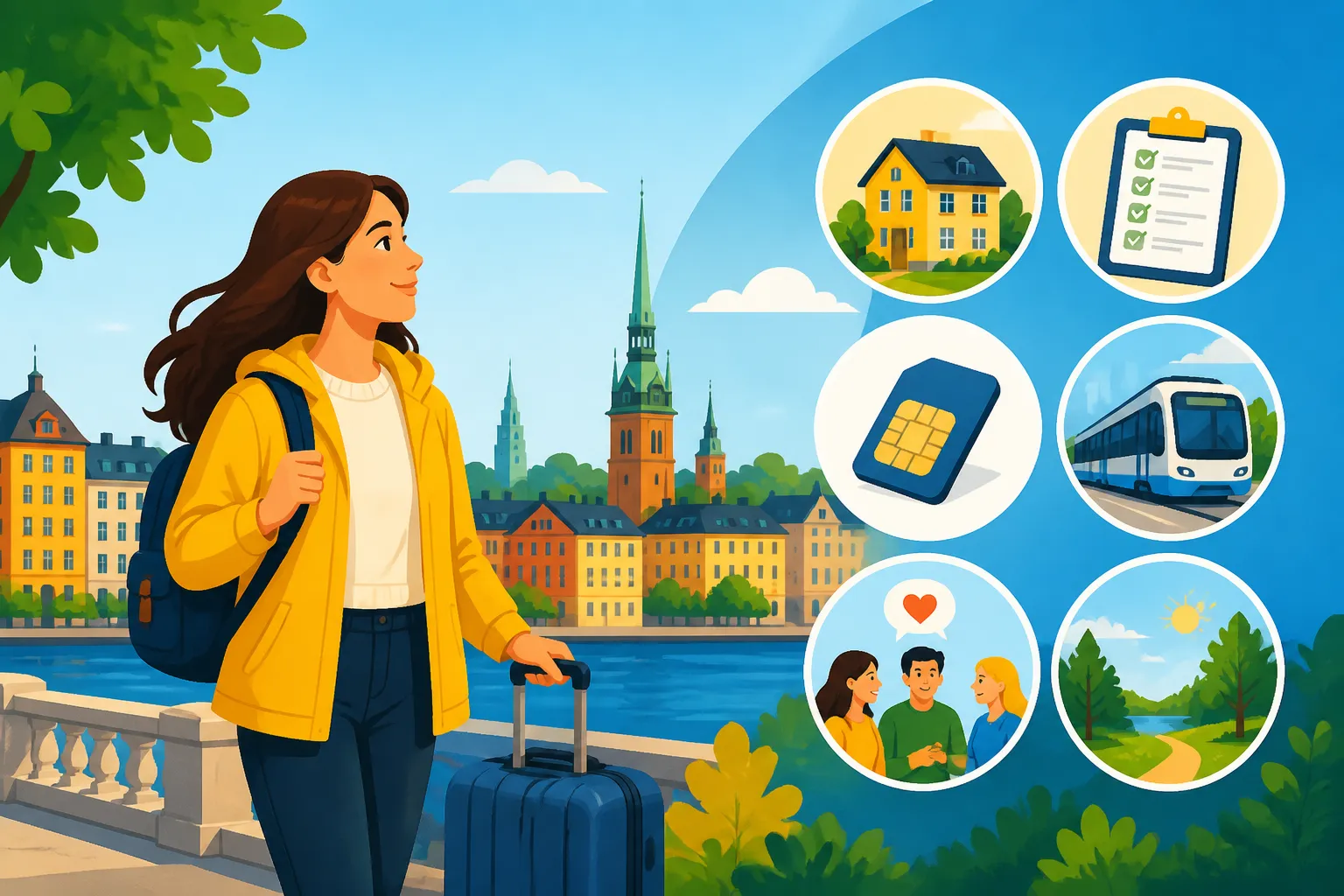
Alright, my friend, so you've made it. You've landed in Sweden, maybe you've just stepped off the plane, or perhaps you're still sitting in your temporary accommodation, looking out at the lagom landscape and wondering, "Now what?". That initial rush of excitement often quickly gives way to a sense of overwhelming administrative confusion and a fair bit of "What am I even supposed to do first?". Trust me, every single one of us who's moved here has been there. This guide is here to cut through that fog and walk you through those critical first seven days, making sure you tackle the essentials and don't get lost in translation (or bureaucracy).
Landing Smoothly: Your Immediate Arrival Checklist
The moment you step off that plane, a hundred little things are probably buzzing in your head. Where do I go? How do I get there? Will I be able to buy food? Let's get those fundamental logistics sorted so you can breathe a little easier.
Getting from the Airport to Your First Temporary Home
Sweden's airports are generally quite efficient, but knowing your options beforehand can save you a lot of stress after a long journey. If you've flown into Stockholm Arlanda Airport (ARN), you'll find several ways to get into the city. The Arlanda Express is super-fast but pricey, whisking you to Stockholm Central Station in about 20 minutes. Then there are the Flygbussarna (airport coaches), which are a more economical choice, offering routes to various points in Stockholm, including the city centre, in about 45 minutes.
For those landing in Gothenburg Landvetter (GOT) or Malmö Sturup (MMX), similar coach services operate, like Flygbussarna or Nettbuss. Public transport connections using regional buses are also usually available, though they might take a bit longer. If you're coming to a smaller city, research the local public transport options in advance. Taxis are always an option, of course, but be prepared for Swedish prices – they're not for the faint of heart, especially after converting your home currency. Always ask for a fixed price before you get in if you choose a taxi, as meters can sometimes run surprisingly high.
Having your initial accommodation details easily accessible – address, contact person, check-in instructions – is paramount. Don't rely on Wi-Fi being immediately available or your phone plan working perfectly. Print it out or save it offline. This simple step can prevent frantic searching with luggage in tow, especially if you arrive late at night or when services are limited. The goal is to get to your temporary safe haven with minimal fuss.
Sorting Your Phone and Internet Access
This one is absolutely non-negotiable. In Sweden, being digitally connected isn't just a convenience; it's practically a survival tool. You'll need it for navigation, communicating with your temporary landlord, checking bus times, and later, for banking and official services. Don't underestimate how quickly you'll feel cut off without it.
For your immediate needs, an eSIM is a godsend. Services like Airalo allow you to buy a data plan online before you even arrive, and you just activate it on your phone. This means you have internet access the moment your plane lands, letting you call that first taxi, check maps, or message family without scrambling for airport Wi-Fi. It’s a small upfront investment that pays huge dividends in peace of mind.
Once you're a bit more settled, you can look into getting a local physical SIM card. Brands like Comviq and Hallon are popular choices for prepaid plans, offering decent data packages without needing a Swedish Personnummer right away. You can usually pick these up at supermarkets, convenience stores, or dedicated phone shops. Just make sure your phone is unlocked and compatible with European networks. Having a local number eventually becomes crucial for things like registering with services or even applying for longer-term accommodation.
Your First Swedish Food Run: Navigating the Supermarket
After the journey, you're likely going to be hungry, and eating out daily will quickly drain your wallet. So, a trip to the supermarket is probably one of your very first real-world interactions with Swedish daily life. The major chains you'll encounter are ICA, Coop, and Willys. ICA is generally seen as having a wider selection and being slightly more expensive, while Willys is often the budget-friendly option. Coop falls somewhere in between.
Don't be surprised by some of the differences. You'll probably find that many products you're used to from home are either absent or very expensive. Embrace the local fare! Pick up some fil (a type of soured milk, great for breakfast), knäckebröd (crispbread), pålägg (cold cuts or spreads for open-faced sandwiches), and maybe some local cheese. You'll also notice the "pant" system for bottles and cans. Most plastic bottles and aluminium cans have a small deposit (pant) that you get back when you return them to recycling machines, usually located at the entrance of supermarkets. Save your empties; that pant money adds up!
It's a good idea to buy a reusable shopping bag too, as plastic bags cost money. Take your time, explore the aisles, and get a feel for prices. This first grocery run is more than just about food; it's about starting to understand the rhythm and cost of living here. It's a small victory, I promise, successfully navigating those foreign labels and coming out with a basket of Swedish essentials.
Kicking Off the Bureaucracy: Early Admin Steps
This is where Sweden can feel a bit like a game of administrative chess, with the Personnummer being the queen piece. While you won't get everything done in your first week, you need to understand the path ahead and start laying the groundwork.
Starting the Personnummer Journey
Ah, the fabled Personnummer. It's the unique 10-digit personal identity number that is, quite simply, the key to unlocking almost everything in Sweden. Without it, you're essentially a ghost in the system, unable to properly register for healthcare, open a full bank account, get a phone subscription, or even rent an apartment easily. It's often the biggest hurdle newcomers face, and the good news is, you can start the process in your first week.
Your first step is to visit Skatteverket (the Swedish Tax Agency) to apply for one. You'll need to prove your identity, your right of residence (if you're an EU/EEA citizen), or your residence permit (if you're from outside the EU/EEA), and your intention to live in Sweden for at least one year. Bring your passport, your residence permit card (if applicable), your job contract or university admission letter, and your marriage certificate if you're applying with a spouse. It sounds like a lot, and it is, but being prepared makes a world of difference. For a deeper dive, check out our guide on Getting Your Personnummer: The Gateway to Swedish Healthcare.
Be realistic: you won't get your Personnummer in your first week. It can take anywhere from a few weeks to several months, depending on your situation and how busy Skatteverket is. Your first week is about submitting the application, getting confirmation that it's been received, and understanding what documents they might still need. This initial submission is a huge psychological step, marking your formal entry into the Swedish system.
Temporary Accommodation and Housing Search
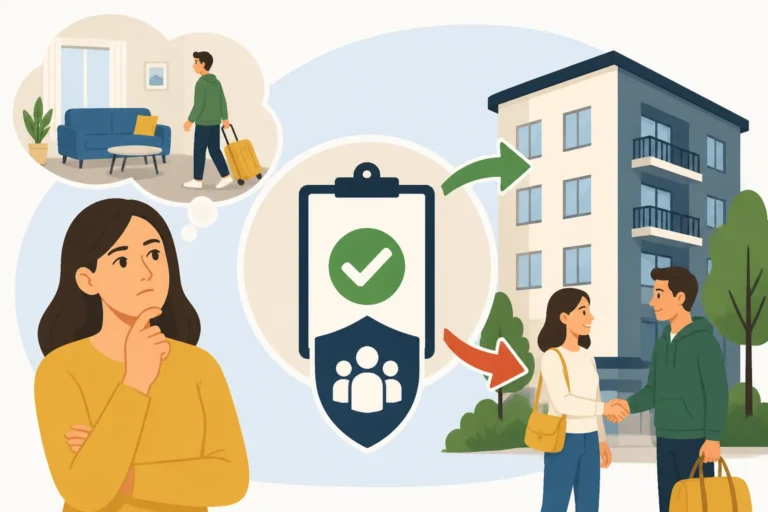
Unless you're incredibly lucky and have a first-hand rental contract lined up (which, let's be honest, is about as rare as spotting a moose on your balcony in central Stockholm), you'll likely be in temporary accommodation when you arrive. This could be a hotel, an Airbnb, a hostel, or staying with friends. Your first week is crucial for transitioning from this temporary state to something more stable.
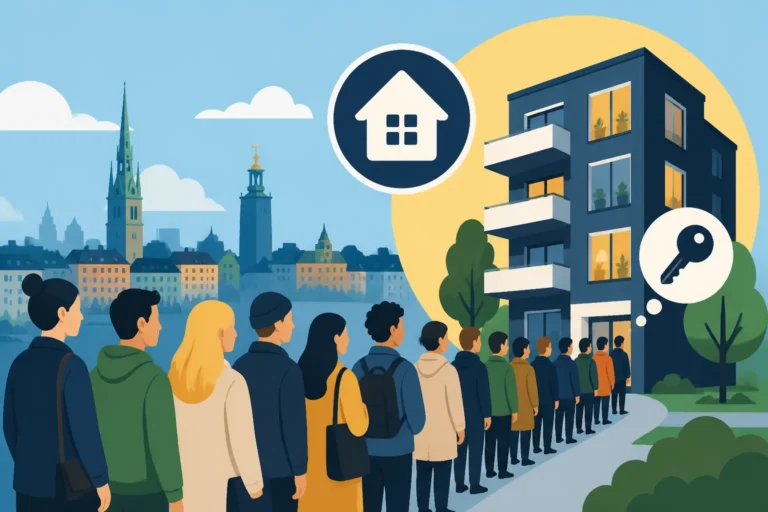
Even if you've done some initial online searching from home, the Swedish housing market is notorious, especially in major cities. A first-hand contract (hyresrätt) through the municipal housing queue (bostadskö) can take years to secure. This means most newcomers start with second-hand rentals (andrahand), which are often shorter-term and pricier. Sites like Blocket Bostad, Qasa, and sometimes even Facebook groups are common places to look. However, be extremely wary of scams – never pay a deposit before seeing the place, meeting the landlord, and verifying their identity.
If you haven't secured anything longer-term, platforms like Spotahome can be a lifesaver. They offer verified mid-term rentals, often furnished, which can give you a stable base for a few months while you navigate the bewildering world of Swedish housing queues and second-hand contracts. It's a great way to avoid rushing into a dodgy deal and to actually have time to physically attend viewings and understand the market. For more on navigating this tricky landscape, read our comprehensive guide on Renting a Home in Sweden: How the First- and Second-Hand System Works.
Initial Bank Account Setup (The Catch-22)
This is a classic "chicken and egg" situation for many expats. You need a bank account to get paid, but you often need a Personnummer (and sometimes even a Swedish ID card) to open a proper bank account. It can be incredibly frustrating.
In your first week, you might not be able to open a full account, but you should at least understand the process and what banks might offer limited services. Some banks, like SEB or Handelsbanken, might allow you to open a basic account with just your passport and residence permit, but don't count on it being easy or quick. Others, like Swedbank or Nordea, are often stricter. You'll be asked about your purpose for opening an account and might face a fair bit of scrutiny due to anti-money laundering regulations.
My advice for week one: make sure you have enough cash or readily accessible funds via international credit/debit cards. Sweden is largely cashless, so a functional card is essential. While you can often pay with foreign cards, watch out for foreign transaction fees. Use your first week to gather the required documents (passport, residence permit, employment contract, address proof) and perhaps try visiting a few bank branches to understand their specific requirements. For a deeper look at this challenge, check out How to Open Your First Swedish Bank Account Without a Personnummer.
Here's a quick summary table of key administrative steps and their status in your first week:
| Task | Status in Week 1 | Notes |
|---|---|---|
| Apply for Personnummer | Initiate application | Crucial first step, but expect delays. Gather all documents. |
| Secure Long-term Housing | Start active search / Secure temporary | Market is tough. Use platforms like Spotahome for interim. Beware of scams. |
| Open Bank Account | Research, attempt basic account | Challenging without Personnummer. Rely on foreign cards initially. |
| Phone/Internet Access | Set up eSIM / Buy local prepaid | Essential for navigation & communication. Airalo is great for immediate data. |
| Familiarize with Transport | Buy single tickets/day pass | Understand local system (SL, Västtrafik etc.). |
| Grocery Shopping | Initial stock-up | Learn store layouts, understand 'pant' system. |
Getting Around and Settling In: Practicalities and Culture Shocks
Beyond the heavy lifting of bureaucracy, your first week is also about getting a feel for daily life and subtle cultural nuances.
Navigating Public Transport and Getting a Travel Card
Public transport in Sweden is generally excellent – punctual, clean, and extensive. In your first week, you'll rely heavily on it. In Stockholm, the system is run by SL (Storstockholms Lokaltrafik), offering buses, metros (Tunnelbana), commuter trains (Pendeltåg), and trams. Gothenburg has Västtrafik, and Malmö/Skåne has Skånetrafiken.
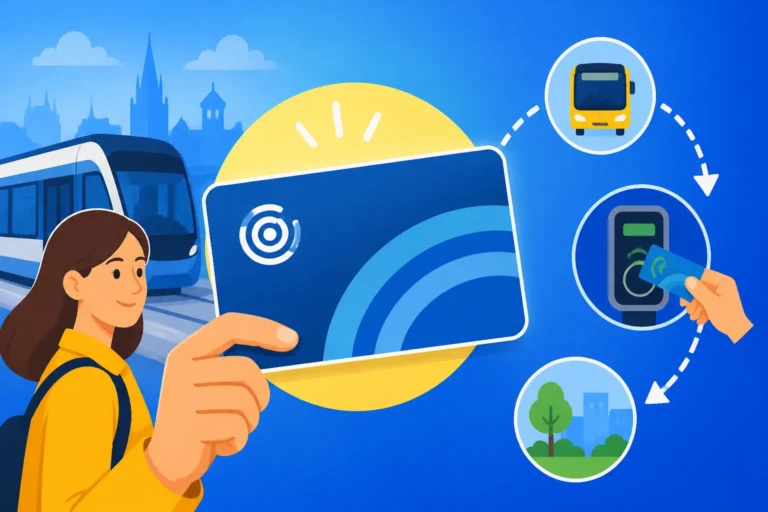
While you might start with single-use tickets or paying directly with a tap-and-go foreign credit card (if available and cost-effective), quickly familiarizing yourself with the local travel cards and apps is smart. For instance, in Stockholm, you can buy an SL card and load it with travel money or a weekly pass. The SL app lets you buy tickets directly on your phone, making it incredibly convenient. This saves you money in the long run compared to buying single-use tickets. Understanding how these systems work will empower you to explore your new city and alleviate some of the initial disorientation. We have a detailed article on Public Transport in Sweden: SL, Regional Cards, and Apps that you might find very useful.
Don't be afraid to just hop on a bus or metro and go a few stops. It's a great way to get your bearings, see different parts of the city, and understand the flow of movement. You'll quickly learn which lines go where and how to transfer. Also, pay attention to the etiquette: let people off before you get on, and don't take up more space than you need.
The Laundry Room & Recycling: Early Cultural Adjustments
Welcome to some of Sweden's unique living quirks! If you're staying in an apartment building, especially in a city, you'll likely encounter a shared laundry room, or tvättstuga. This isn't a walk-in, whenever-you-feel-like-it affair. Oh no, it's a highly organized system where you book specific time slots, often on a physical board or a digital system. Failing to respect your booked time or leaving the room messy can earn you the silent disapproval of your neighbours – a powerful force in Sweden. Make sure to clean the machines and lint traps after your session!
Recycling is another area where Sweden excels, and you'll be expected to participate. Your building will likely have dedicated bins for various categories: food waste, paper, plastic packaging, metal, glass (often separated by colour), and sometimes even electronics or light bulbs. The pant system for bottles and cans, which I mentioned earlier, is a key part of this. Your first week is a good time to observe and learn how things are sorted in your building or local recycling station. Embracing these habits early on is a great way to feel more integrated into the Swedish way of life. Dive deeper into this topic with Everyday Living in Sweden: Groceries, Recycling, and Local Customs.
Embracing Fika and Social Norms
Swedish culture is often described as lagom – not too much, not too little, just right. Your first week is a fantastic opportunity to start observing these subtle norms. One of the most delightful aspects is fika, which isn't just a coffee break; it's a social institution. It's a moment to pause, have a coffee (or tea) and a pastry, and chat with colleagues or friends. Don't decline an invitation for fika! It’s a crucial social lubricant.
Beyond fika, observe things like queueing politely, respecting personal space, and the general quietness in public spaces (especially on public transport). Swedes value efficiency and directness, but also a certain modesty. Don't be afraid to ask simple questions if you're genuinely confused, but try to avoid being overly loud or boisterous in public. Your first week is all about absorbing the atmosphere and trying to blend in, even if clumsily at first. It’s a learning curve for everyone, and a bit of humility goes a long way.
Disclaimer
The information provided in this guide is intended for general informational purposes only and does not constitute legal, financial, or medical advice. Regulations and procedures in Sweden can change rapidly, and individual circumstances vary. Always consult official sources such as Skatteverket, Migrationsverket, Försäkringskassan, or professional advisors for the most accurate and up-to-date information pertaining to your specific situation. We strive to keep our content current, but cannot guarantee that all details reflect the absolute latest legal or administrative changes.